
Every couple in Adelaide soon realises that turning a dream venue into a seamless wedding experience takes more than just good taste. From securing your booking to handling vendor arrivals, each detail matters if you want your big day to run smoothly. By focusing on practical venue logistics and clear communication with suppliers, you can sidestep last-minute stress and create the relaxed atmosphere you want for your celebration.
Quick Summary
| Main Insight | Detailed Explanation |
|---|---|
| 1. Confirm Venue Access Early | Ensure you secure your venue access details, including setup times and contact info, well in advance to avoid day-of stress. |
| 2. Create Detailed Checklists | Develop comprehensive lists for decor, furniture, and deliveries to track what’s needed and ensure everything arrives on time. |
| 3. Assign a Delivery Coordinator | Choose one person to manage vendor arrivals and logistics on your wedding day, facilitating smooth communication and flow. |
| 4. Conduct Thorough Equipment Tests | Before guests arrive, verify all equipment functions properly and complies with safety regulations to prevent issues during the event. |
| 5. Final Walk-Through Ahead of Time | Perform a final venue check to confirm setup accuracy and address any last-minute problems before guests arrive. |
Step 1: Secure your wedding venue and coordinate access
You’ve found the perfect venue in Adelaide. Now comes the practical work of locking in your booking and ensuring smooth access on your wedding day. This step involves submitting applications, understanding approval timelines, and coordinating logistics with your venue manager.
Start by confirming availability with your chosen venue and understanding their booking requirements. Most venues will ask you to sign a contract outlining terms, payment schedules, and access arrangements. Before you commit, clarify a few critical details:
- What time you can access the venue for setup
- Whether the venue provides keys or if staff will be present
- Any restrictions on vendor arrival times or parking areas
- Emergency procedures and contact numbers for day-of issues
If your wedding involves use of public land or outdoor spaces in South Australia, you may need to comply with local council regulations. Submitting your applications well in advance, typically 16 weeks prior, allows time for assessment and permit issuance. This timeline gives you breathing room if additional approvals are needed.
Coordinate with your venue to confirm who holds responsibility for different tasks. Will the venue coordinate access for caterers, florists, and your photographer? Will you need to arrange keys in advance? Understanding these details prevents confusion and delays on your wedding morning.
Book your venue contract review well before signing. Understanding access requirements now saves stress on the day itself.
Create a simple access checklist and share it with your venue coordinator. Include vendor arrival times, the number of people needing access, parking arrangements, and emergency contact information. This document becomes invaluable if questions arise.
Once your booking is confirmed, request written confirmation of all access details. Follow up with your venue one month before the wedding to reconfirm arrangements. Changes happen, and a quick conversation prevents surprises.
Pro tip: Request a key or access code from your venue at least two weeks before your wedding, then do a test run with your bridal party to confirm parking, setup areas, and any access challenges you might face.
Step 2: Organise décor, furniture, and essential equipment
Now that your venue access is confirmed, it’s time to plan what goes where. Organising décor, furniture, and essential equipment requires coordinating with suppliers, creating detailed checklists, and ensuring everything arrives on time and meets safety standards.
Start by making a comprehensive inventory of everything you need. This includes tables, chairs, lighting, floral arrangements, sound equipment, and decorative elements. Breaking this into categories helps you track each item and assign responsibility.

Create a detailed timeline for deliveries and setup. Most venues have specific windows for vendor access, so confirm these dates and times with your suppliers early. Coordinate with caterers, florists, and rental companies to ensure deliveries don’t overlap and cause congestion.
When organising your setup, remember that equipment must meet safety standards and comply with venue regulations. Check that furniture doesn’t block emergency exits or fire escape routes. Your venue coordinator can advise on placement restrictions and safety requirements.
Develop a floor plan showing where each element will be positioned. This visual guide helps your setup team understand the vision and work efficiently. Share this plan with your venue manager and key vendors so everyone knows what to expect.
Create a prioritised checklist organised by delivery date and setup phase. Include contact details for each supplier, expected arrival times, and any special instructions. This becomes your command centre on the day.
A detailed floor plan and delivery schedule prevent last-minute scrambling and ensure your vision comes to life smoothly.
Confirm all orders two weeks before your wedding. Verify quantities, colours, and delivery times with each supplier. Request written confirmation of what’s arriving and when, then share this schedule with your venue coordinator.
Arrange a walkthrough with your decorator or setup coordinator one week beforehand. Discuss exactly how items will be positioned and identify any potential challenges. This planning session catches problems before they become day-of disasters.
Pro tip: Create a colour-coded spreadsheet with supplier names, delivery times, and equipment descriptions, then share it with your venue coordinator and key team members so everyone stays aligned throughout setup.
Step 3: Oversee vendor deliveries and on-site arrangements
Your décor and equipment are ready to arrive. Now comes the critical work of managing vendor deliveries, ensuring everything complies with safety regulations, and coordinating on-site logistics so your wedding day runs without a hitch.
Assign one person to oversee all deliveries on your wedding day. This could be you, a trusted family member, or your venue coordinator. This person becomes the central point of contact for vendors and manages the flow of arrivals to prevent bottlenecks and confusion.
Create a detailed delivery schedule listing each vendor’s name, expected arrival time, contact number, and what they’re delivering. Share this with your venue coordinator at least one week beforehand. Having this information in writing prevents miscommunication and keeps everyone accountable.
When vendors arrive, ensure they comply with safety regulations and proper site management. Check that their equipment is safe and appropriately positioned. Confirm they’re not blocking emergency exits, fire routes, or areas required by your venue’s safety plan.
Inspect each delivery as it arrives. Verify quantities, check for damage, and confirm everything matches your order. Take photos of high-value items as proof of condition. This protects you if damage occurs and provides documentation for insurance claims.
Manage space allocation strategically to avoid congestion and conflicts between vendors. Designate specific areas for storage, setup, and staging. Clear pathways for movement so caterers, florists, and musicians can work without getting in each other’s way.
A single point of contact for all vendors prevents confusion and keeps your wedding day setup running on schedule.
Build in buffer time between deliveries. If your florist arrives at 10 am, schedule your caterer for 11 am. This spacing prevents overlapping arrivals and gives each vendor room to work.
Maintain a checklist and tick off vendors as they arrive and complete setup. This simple system helps you track progress and identify any missing deliveries quickly. Keep this checklist accessible throughout the day.
Communicate promptly with vendors if delays occur. If someone is running late, notify the next vendor in sequence so they can adjust their timing accordingly. Clear communication keeps the whole operation flowing smoothly.
Pro tip: Assign your most organised and calm team member as the delivery coordinator, give them a printed schedule with vendor phone numbers, and position them near the main entrance to greet arrivals and direct them to their designated setup areas.
Here’s a summary of key roles and their responsibilities during the venue setup process:
| Role | Main Responsibility | Typical Tasks |
|---|---|---|
| Venue Coordinator | Oversee site requirements | Manage access, confirm bookings, advise on safety |
| Delivery Coordinator | Manage vendor arrivals | Direct deliveries, maintain schedule, resolve issues |
| Setup Team Member | Prepare and arrange décor | Position furniture, assemble decorations |
| Supplier/Vendor | Deliver equipment or services | Provide goods, follow access and safety guidelines |
Step 4: Verify setup accuracy and finalise all details
Setup is nearly complete. Before your guests arrive, you need to conduct a thorough final inspection to ensure everything is accurate, safe, and ready for your celebration. This verification step catches problems while there’s still time to fix them.
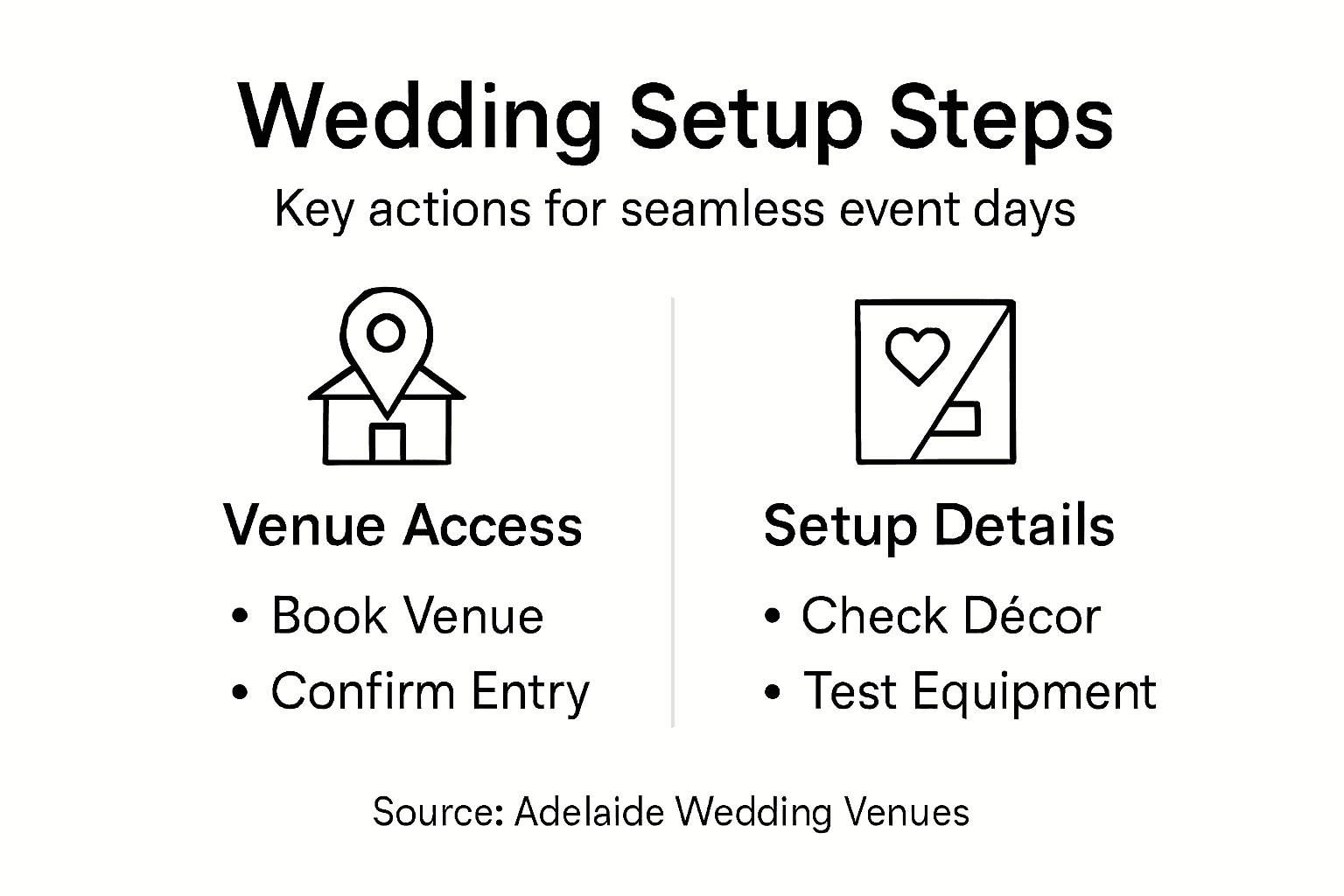
Walk through your venue systematically with your venue coordinator and key team members. Check that all décor is positioned correctly and matches your vision. Verify that tables are at the right heights, chairs are arranged properly, and centrepieces are exactly where you planned.
Test all equipment to confirm it functions properly. Have your photographer check lighting, ask your caterer to verify kitchen setup, and request that your DJ test sound systems. Equipment failures discovered now are fixable problems.
Conduct a comprehensive safety and risk assessment of your setup. Verify that emergency exits remain clear and accessible. Check that pathways are unobstructed and guests won’t trip on cables or decorative elements. Ensure nothing blocks fire extinguishers or emergency equipment.
Confirm that all required permits and documentation are in place and accessible. Have copies of approvals, insurance certificates, and safety documentation ready if needed by venue staff or authorities.
Conduct a final staff and vendor briefing with everyone involved in your wedding. Clarify timing, responsibilities, and emergency procedures. Make sure everyone knows who to contact if problems arise during your celebration.
A thorough final walk-through gives you confidence that everything is perfect and ready for your guests to arrive.
Document any outstanding issues on a simple checklist. If something isn’t quite right, address it immediately or plan a quick fix. Recording these items prevents them from being forgotten.
Use this table to quickly check common setup or delivery issues and how to address them:
| Issue | Potential Cause | Fast Solution |
|---|---|---|
| Late vendor arrival | Traffic or scheduling error | Contact next vendor, adjust sequence |
| Blocked emergency exits | Incorrect furniture layout | Relocate items immediately |
| Missing décor item | Supplier oversight | Notify supplier, arrange urgent delivery |
| Equipment malfunction | Power or setup issue | Test with backup, call technician |
Communicate final confirmations to all vendors and staff. Send a brief message confirming arrival times, parking details, and any last-minute changes. This final touch keeps everyone aligned.
Take a moment to step back and assess the whole picture. Does your venue feel welcoming? Are the sightlines good for your ceremony and reception? Are guests going to feel comfortable and celebrated? Trust your instincts.
Pro tip: Schedule your final walk-through for 30 minutes before guests arrive, create a simple checklist of critical items to verify, and have your venue coordinator present so they can address any issues immediately.
Simplify Your Wedding Venue Setup with Expert Support
Planning a flawless wedding event setup involves managing venue access, coordinating vendor deliveries, and overseeing décor arrangements. These challenges can feel overwhelming, especially when timing and safety are critical. The article highlights essential steps such as securing venue access early, organising detailed floor plans, and maintaining clear communication with your setup team. You deserve a seamless process that lets you focus on enjoying your special day without stress.
Discover how Adelaide Wedding Venues can help streamline your wedding planning journey. Our comprehensive online directory connects you with a wide selection of trusted venues across Adelaide and South Australia. With easy-to-use filters and expert insights, you can find the perfect venue that aligns with your setup needs and vision. Start planning today and take control of your wedding event setup with confidence by exploring wedding venues in Adelaide. Act now to avoid last-minute hurdles and secure your ideal location early.
Ready to master your wedding setup? Begin your search at Adelaide Wedding Venues and turn your wedding day dreams into reality with the right venue at your fingertips.
Frequently Asked Questions
How do I secure my wedding venue for the event?
To secure your wedding venue, confirm its availability and understand the booking requirements. Submit a booking application, sign the contract, and coordinate access details at least 16 weeks before the wedding day.
What are the key logistics to coordinate with my venue manager?
Coordinate logistical details such as setup access times, vendor parking arrangements, and emergency procedures with your venue manager. Create a checklist to clarify responsibilities and share it with all involved parties.
How can I organise décor and equipment effectively for my wedding?
Start by creating a comprehensive inventory of all décor, furniture, and equipment needed. Develop a detailed timeline for deliveries and setup coordination with suppliers to ensure everything arrives on time and meets safety standards.
What should I do to oversee vendor deliveries on my wedding day?
Assign a dedicated person to manage all vendor deliveries, ensuring they arrive on schedule and comply with safety regulations. Maintain a detailed delivery schedule and check off each vendor as they arrive to keep the setup flowing smoothly.
How do I verify that the setup is accurate before my wedding guests arrive?
Conduct a final walkthrough with your venue coordinator and team to inspect all decorations and equipment. Use a checklist to verify that everything is positioned correctly and safely, addressing any issues immediately.
What steps should I take if a vendor arrives late on my wedding day?
If a vendor arrives late, promptly notify the next vendor in the schedule to adjust their timing accordingly. Maintain a flexible delivery schedule with buffer times between vendor arrivals to accommodate potential delays.
Recommended
- Behind the Scenes: A Look at the Wedding Venue Setup and Teardown Process – Adelaide Wedding Venues
- Master the Wedding Location Decision Process Easily
- Wedding Planning Made Easy: The Only Checklist You’ll Ever Need – Adelaide Wedding Venues
- Post-Wedding Survival Guide: How to Stay Organized and On Top of Your Tasks – Adelaide Wedding Venues
