
Every Adelaide Hills wedding needs three things locked in before the invitations go out: a venue with a wet-weather fallback that feels intentional rather than apologetic, a named person who has the authority to call the switch, and a written contract clause confirming that moving indoors costs nothing extra. Get those three right and rain becomes a scheduling issue, not a crisis.
The Bureau of Meteorology’s long-term data shows why this matters more in the Hills than in the city: elevation and cloud cover make rain more likely and more sudden than couples expect on a spring or winter date. Talk to your venue manager and photographer early, because they’ve seen what actually works on the day and what falls apart under pressure.
Three things to do this week:
- Ask your venue directly what the indoor fallback space looks like set up for a full reception, not just a corridor with some chairs.
- Get the decision-maker and deadline in writing — who calls it, and how many hours before the ceremony.
- Build a small guest comfort kit: umbrellas, a few towels, and a plan for wet shoes at the door.
Key Takeaways
A rain plan for an Adelaide Hills wedding works when the venue’s indoor fallback is built for the full guest list, a named person controls the decision with a firm deadline, and the contract confirms there’s no extra cost to switch.
| Point | Details |
|---|---|
| Confirm the fallback is real | Walk the indoor space during your tour and check it fits your full guest count, not a reduced version. |
| Name a decision-maker | Agree in writing on who calls the switch and by when, typically 24 to 48 hours before the ceremony. |
| Get costs and roles in writing | Confirm no switching fee and clarify who moves furniture and décor during changeover. |
| Check the season and station data | Cross-reference BOM rainfall data with your venue’s specific elevation and microclimate. |
| Use a directory built for this | Adelaideweddingvenues lets couples filter Hills venues by indoor capacity and covered space to shortlist rain-ready options. |
What does a rain plan for an Adelaide Hills wedding actually need to include?
A rain plan is not the same as a backup venue. Plenty of Adelaide Hills properties will tell you they have “an indoor option,” but that phrase can mean anything from a beautifully dressed barrel room to a function hall with fluorescent lighting and stacked chairs against the wall. The gap between those two outcomes is the entire point of planning for wet weather properly.
The measure that matters is whether the fallback protects the experience you were planning, not just the guest count. A strong plan preserves atmosphere: the lighting feels considered, the seating plan still makes sense, the ceremony backdrop doesn’t look like an afterthought. A weak plan just moves bodies out of the rain and calls it a day.
The components of a fallback that actually works
- A space built for the full guest list, indoors, from day one. Not a marquee bolted onto the car park at short notice, and not a room that only fits half your numbers.
- A pre-agreed layout the venue can set up fast. Ask to see the floorplan for the indoor version, not just hear it described.
- Staff who know the changeover sequence. If the venue’s own team has to figure out logistics on the spot, you’re the trial run.
- A contingency timeline built into your run sheet, so the ceremony, photos, and reception shifts don’t collide with each other.
Industry guidance on wet-weather weddings consistently points to the same fix: agree on a named decision-maker and a firm deadline well before the day, because indecision in the moment costs far more time than the weather does.
When you tour a venue, ask to actually walk through the fallback space, not just hear about it. Close the doors. Picture your own ceremony inside it. Ask the venue manager for examples of weddings they’ve run this way in the past twelve months, including photos if they have them. A venue that has done this well will usually be proud to show you, not defensive about the question.
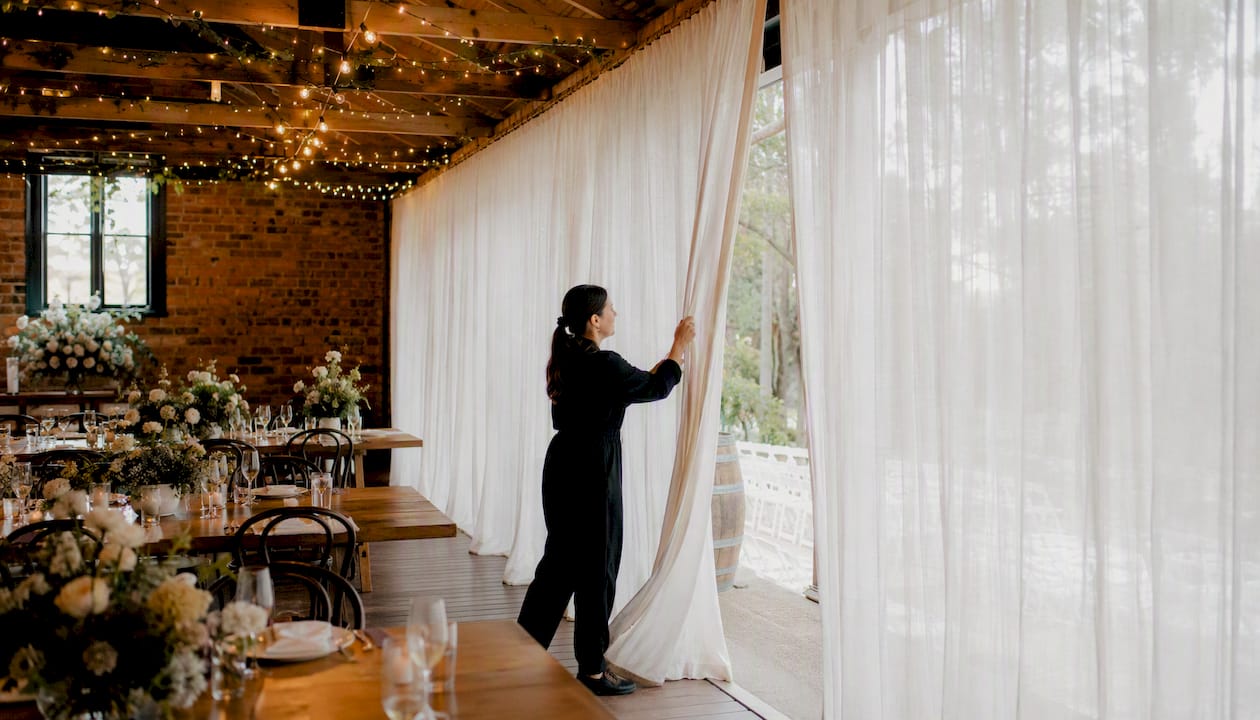
There’s a flow-on effect worth understanding too: a solid wet-weather plan shapes how your other vendors operate. Photographers plan portrait routes around covered walkways. Caterers know which service style survives a fast pivot indoors. Musicians and MCs build in a buffer for a possible mid-ceremony move. None of that happens well if the fallback is an afterthought discovered on the morning of the wedding.
Pro Tip: Ask your venue to run through the changeover as if it were happening right now, with times attached to each step. If they can’t give you rough minutes for each stage, that’s a sign the plan hasn’t actually been tested.
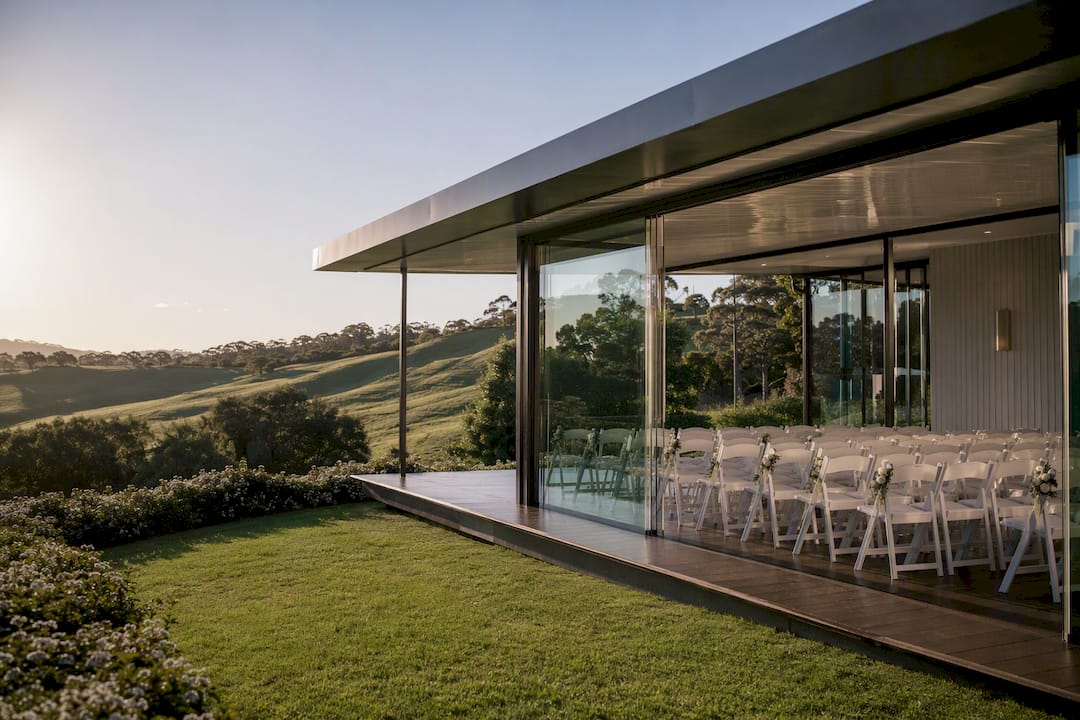
Couples weighing outdoor venues against indoor-flexible ones often find the best sites blur the line entirely, with covered decks and glass-walled pavilions that work in almost any weather.
Adelaide Hills weather snapshot and seasonal timing
Rain risk in the Hills isn’t evenly spread across the calendar, and the difference between your best month and your riskiest one is significant. The Hills sit a few degrees cooler than Adelaide year-round, and that cooler air holds more cloud and mist at elevation, which changes both your risk and your photos.
Winter concentrates the bulk of South Australia’s rainfall, while autumn (March to May) and parts of spring tend to deliver the most settled, reliable conditions for outdoor ceremonies.
BOM’s long-term climate tables for Adelaide track mean monthly rainfall and the mean number of rain days per month, and those figures are the most reliable baseline for choosing a date, even though the Hills themselves run wetter than the city station. For a site-specific check, local station pages covering Uraidla give a closer read on rainfall at elevation than the city figures alone.
A few practical points worth building into your date selection:
- Spring is genuinely variable in the Hills. A dry, warm week can be followed by a wet one, so treat spring as a season that needs a real Plan B, not an optional one.
- Winter weddings concentrate rainfall risk but reward couples who plan for it properly, with heating, an indoor-first layout, and cosy styling that leans into the season rather than fighting it.
- Higher elevation venues around Uraidla, Cudlee Creek, and the surrounding hills can experience fog and low cloud even when Adelaide proper is clear, which affects both guest travel and outdoor photo timing.
- Autumn remains the most dependable stretch for outdoor ceremonies, though it’s also the most booked, so early venue enquiries matter.
If you’re set on a particular month, cross-check the Adelaide Hills seasonal weather guide against the specific station nearest your venue rather than relying on general Adelaide averages alone. A few kilometres of elevation change can shift your actual risk more than the calendar does.
Venue checklist and contract points to confirm before you book
The questions you ask during a venue tour matter less than the answers you get in writing afterwards. A verbal assurance that “we’ll sort it out on the day” is not a rain plan. Here’s what needs to be nailed down before you sign anything.
Decision authority and timing
- Who has the authority to call the move to the indoor plan, and is that person on-site on the day?
- What’s the deadline for that decision? Most experienced venues and planners work to a 24 to 48 hour window before the ceremony, with a final call possible closer to the time if conditions are borderline.
- Does the venue coordinator or your own wedding planner make the final call, or is it a joint decision with you?
Space and layout
- Can you see the actual floorplan for the wet-weather setup, not just a verbal description?
- Does the indoor space comfortably fit your full guest count, including the ceremony seating arrangement you actually want?
- Is the covered access between spaces (car park to venue, ceremony space to reception) genuinely weatherproof, or just partially sheltered?
Cost and responsibility
- Confirm in writing that switching to the fallback plan carries no additional fee. Some venues quietly charge for “reconfiguration,” and that’s a conversation you want before the contract, not after.
- Clarify who is responsible for moving furniture, décor, and signage during a changeover. If it’s your florist or stylist’s job, they need to know that in advance, not on the morning.
- Ask about drainage and flooring in outdoor areas that guests will cross even in the indoor plan; slippery timber decking or gravel underfoot is a real hazard when wet.
Vendor coordination
- Confirm the venue allows photographer access to covered vantage points for portraits during a shift indoors.
- Check whether marquee specifications (if a marquee is part of the fallback) include full walls, flooring, and heating, not just a roof.
- Ask how caterers are briefed on service style changes when the layout shifts from outdoor to indoor at short notice.
These questions overlap with broader venue budgeting considerations, since a changeover fee buried in the fine print can quietly blow out your final invoice. Get every one of these points confirmed in the contract, not just discussed on the phone.
Day-of playbook and run sheet: roles, timings and communication
A wet-weather shift works when everyone already knows their job. It fails when five people are all waiting for someone else to make the call. Build this timeline into your run sheet weeks in advance, not the night before.
A workable decision timeline:
- 48 hours before: Check the forecast together with your venue coordinator. No decisions yet, just awareness.
- 24 hours before: Confirm with the named decision-maker whether conditions look borderline. If they’re clearly fine or clearly bad, lock in the plan now.
- 3 to 4 hours before: Final check for genuinely marginal calls. Most experienced coordinators won’t leave this later than necessary, because a fast, confident pivot beats a delayed one every time.
- On arrival: If light rain starts after guests are seated outdoors, many venues simply pause and wait it out. Short showers pass, and moving the whole event for a ten-minute drizzle often costs more than it saves.
Who does what:
- The couple or their appointed agent (planner, parent, or bridal party lead) gives final sign-off on the call.
- The venue coordinator manages the physical changeover: furniture, signage, and staff.
- The MC or celebrant relays the updated plan to guests calmly, without drama.
- The photographer adjusts the shot list and timing, often building in a short indoor or covered-portrait window.
- The caterer shifts service style if needed, from canapés on the lawn to a plated indoor arrangement.
Fast-change logistics worth pre-staging:
- Have indoor furniture and floral arrangements pre-positioned nearby, not stored across the property.
- Use clear signage directing guests to the new ceremony or reception space.
- Keep a covered walking route mapped out in advance so guests aren’t dashing across open lawn.
A simple guest message template, sent by SMS or relayed by the MC: “Due to weather, we’re moving the ceremony indoors to [space name]. Please follow the covered walkway from the car park. Starting at [time].” Short, clear, no apology needed.
Vendors should receive an updated one-page run sheet the moment the call is made, not a verbal update passed along secondhand.
Guest comfort, styling and photography solutions for rainy or overcast days
Guest comfort is where a lot of otherwise good rain plans fall down. Umbrellas at the door matter, but so does somewhere dry to put them once guests are inside. A simple umbrella stand or a designated corner near the entrance solves a problem that otherwise turns into a soggy mess by the coat rack.
- Set up an umbrella and towel station near the entrance for guests arriving in rain.
- Provide a shoe-change or ground mat solution at any outdoor-to-indoor transition point.
- Keep a covered waiting area available if guests arrive before doors officially open.
- For winter dates, add outdoor heaters, throw blankets on seating, and a warm drink service such as mulled wine.
Overcast light is far kinder to photographs than most couples expect. Direct sun creates harsh shadows and squinting; soft, diffused cloud light flatters skin tones and reduces contrast problems entirely. Photographers experienced in the Hills often prefer it, and many will plan short 10 to 20 minute portrait windows between showers rather than writing off outdoor shots altogether.
Pro Tip: Ask your photographer in advance which covered spots on the property they’d use for portraits in rain. A venue with a good veranda, breezeway, or barrel room gives them options that don’t look like a compromise in the final gallery.
How to assess wet-weather readiness when you tour a venue
Judge the fallback with your own eyes, not just the sales pitch. Walk into the indoor space, close the doors, and picture your actual ceremony happening there, guests seated, music playing, the room dressed the way you’d want it.
- Check covered access between the car park, ceremony space, and reception, and ask how long a full changeover genuinely takes.
- Ask for references or past wet-weather wedding photos taken at the venue, not just marketing shots of the outdoor space on a sunny day.
- Get the changeover commitment, including timing and cost, confirmed in writing before you sign.
- Watch for red flags: vague answers about timing, any mention of an extra fee for switching plans, or a fallback room that’s clearly secondary in size or presentation.
Details like built-in indoor-outdoor flow separate venues that treat rain as routine from those that treat it as an inconvenience to be managed reluctantly.
A photographer’s-eye view of Adelaide Hills rain plans
Adelaide Wedding Venues is built with input from photographers who work these properties regularly, and their feedback consistently flags the same features as the difference-makers: covered verandas, barrel rooms with real charm rather than just shelter, and marquees with full walls rather than open sides.
- Look for venues listing indoor capacity that matches your full guest count, not a reduced fallback number.
- Filter for covered outdoor areas that function as genuine ceremony or photo space, not just a smoker’s corner.
- Ask listed venues directly whether their fallback has hosted a full wedding before, and how recently.
A note on rainy wedding days
Some of the most talked-about Adelaide Hills weddings have been the wet ones, not despite the rain but partly because of it. Moody light, a cosy indoor reception, guests laughing under shared umbrellas: none of that needs sunshine to feel right.
The couples who handle it best aren’t the ones who got lucky with the forecast but those who understand South Asian wedding traditions when incorporating cultural elements into their ceremony. They’re the ones who had a plan sorted weeks earlier and didn’t have to think about it on the day. Do the groundwork now, ask the hard questions of your venue, and use the directory to check which properties genuinely have this covered.
— Steven
Find Adelaide Hills venues built for wet-weather backup
A wedding planner charges a fee to do exactly what you can do yourself in an afternoon: cross-reference venues by indoor capacity, covered outdoor space, and heating. Adelaideweddingvenues gives Adelaide Hills couples the same shortlist power for free, filtering by the specific features that matter for a credible rain plan instead of scrolling through generic venue photos hoping to spot a barrel room in the background.
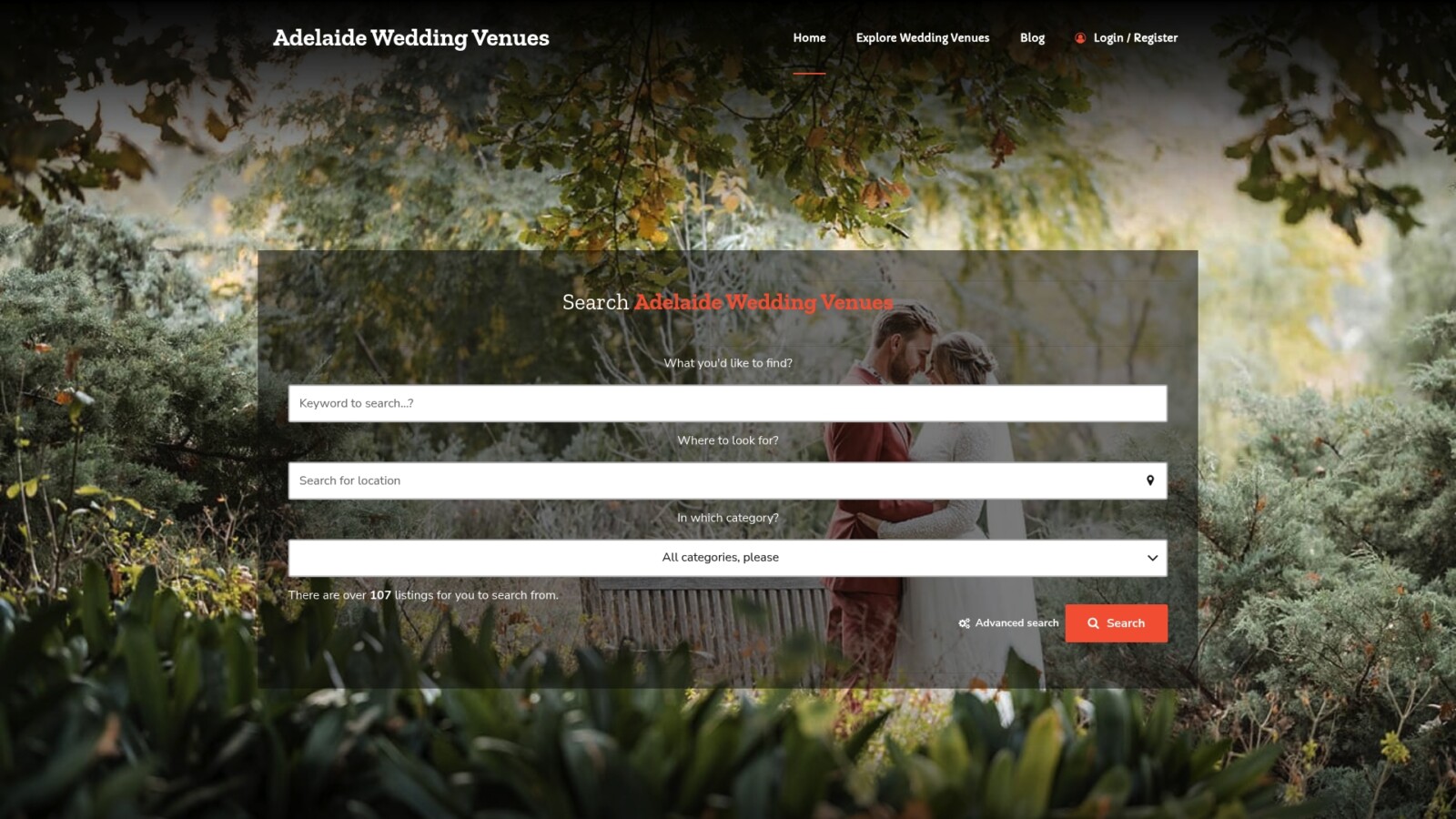
Search by indoor capacity, covered area, and heating to build a shortlist of three or four venues worth touring in person. When you visit, use the venue checklist to request the fallback floorplan and written changeover policy from each one before you compare quotes. For a deeper look at what separates a genuinely flexible venue from one that just has a spare room, the guide on choosing your ideal wedding venue walks through the features worth prioritising. Start your search today and get the fallback conversation settled before you sign anything.
Sources
For long-term seasonal averages, the Bureau of Meteorology’s Adelaide climate tables give mean rainfall and rain-day figures by month. For a closer read on Hills-specific microclimate, check station pages covering Uraidla, Hahndorf, and Cudlee Creek, since elevation shifts conditions noticeably from the city baseline. For seasonal planning advice specific to South Australian weddings, Wedding SA’s monthly guide and its winter wedding planning guide cover practical timing and heating considerations in more depth.
- What to do if it rains on your wedding day — Onstage Entertainment
- Uraidla climate statistics — WillyWeather
FAQ
How much does a wedding planner cost in Adelaide?
Costs vary widely depending on the level of service, from partial “month of” coordination through to full planning, so couples should treat any figure they see online as a rough guide rather than a fixed rate. Getting quotes directly from a few South Australian planners is the only reliable way to budget accurately.
What is the 30-minute rule for weddings?
There’s no single official rule, but many Adelaide Hills coordinators build in a buffer around ceremony and changeover times to absorb delays without derailing the rest of the day. It’s a practical scheduling habit, not a formal industry standard.
Is $5,000 a good budget for a wedding?
A budget that tight will limit venue and vendor options significantly in South Australia, particularly for a Hills wedding with full catering and styling. It can work for a very small, simple ceremony, but couples should check venue minimums and vendor rates early rather than assuming the figure will stretch across every category.
Who decides if the wedding moves indoors for rain?
The strongest rain plans name a specific decision-maker before the day, usually the couple’s chosen representative working with the venue coordinator, and agree on a deadline of roughly 24 to 48 hours before the ceremony. Adelaideweddingvenues recommends confirming this in writing as part of the venue contract, not as a verbal understanding.
Does switching to the indoor wet-weather plan cost extra?
It shouldn’t, and couples should confirm this in writing before signing any venue contract. A credible fallback plan is priced into the original booking, not treated as a paid upgrade triggered by bad weather.
