
TL;DR:
- Event planners carefully evaluate venues based on capacity, accessibility, and logistics to ensure operational success. They use AI tools and long-term partnerships to streamline sourcing, reduce costs, and improve decision accuracy. Planners protect couples from costly mistakes by thoroughly reviewing contracts and defining non-negotiables early in the process.
Event planners are defined as professional coordinators who translate a client’s vision into a logistically sound, budget-aligned venue selection. The role of event planners in venue choice goes well beyond scrolling through pretty photos online. Planners act as strategic matchmakers, weighing capacity, accessibility, vendor compatibility, and contract terms against what a couple actually needs on their wedding day. In 2026, that process is sharper than ever, with AI-powered sourcing tools and a growing focus on attendee experience reshaping how professionals approach the venue selection process from the very first brief.
What key factors do event planners evaluate when choosing a venue?
Event planners assess venues through a lens that most couples never consider. Aesthetics matter, but they sit at the bottom of a long checklist. The industry term for this process is venue sourcing, and it covers everything from power supply to parking.
Planners evaluate these core factors during every site visit:
- Capacity and layout. The venue must comfortably hold the confirmed guest count with room for a dance floor, catering stations, and a ceremony space. A room that looks large in photos can feel cramped with 120 guests and a live band.
- Accessibility. 74% of planners now prioritise accessibility higher than they did in previous years. That means step-free access, accessible bathrooms, and proximity to public transport.
- In-house services. Venues that include catering, audio-visual equipment, and furniture reduce the number of external vendors a couple must coordinate. Fewer vendors means fewer contracts and fewer potential points of failure.
- Budget transparency. Venue costs account for 25–30% of a total wedding budget. Planners request fully itemised cost estimates before any site visit to avoid surprises later.
- Logistical access. Load-in and load-out windows, freight lift availability, and vendor access hours can determine whether a venue is operationally viable. These details rarely appear in a venue’s marketing brochure.
Pro Tip: Before visiting any venue, use a venue checklist to document your non-negotiables. This prevents decision fatigue and keeps every site visit focused.
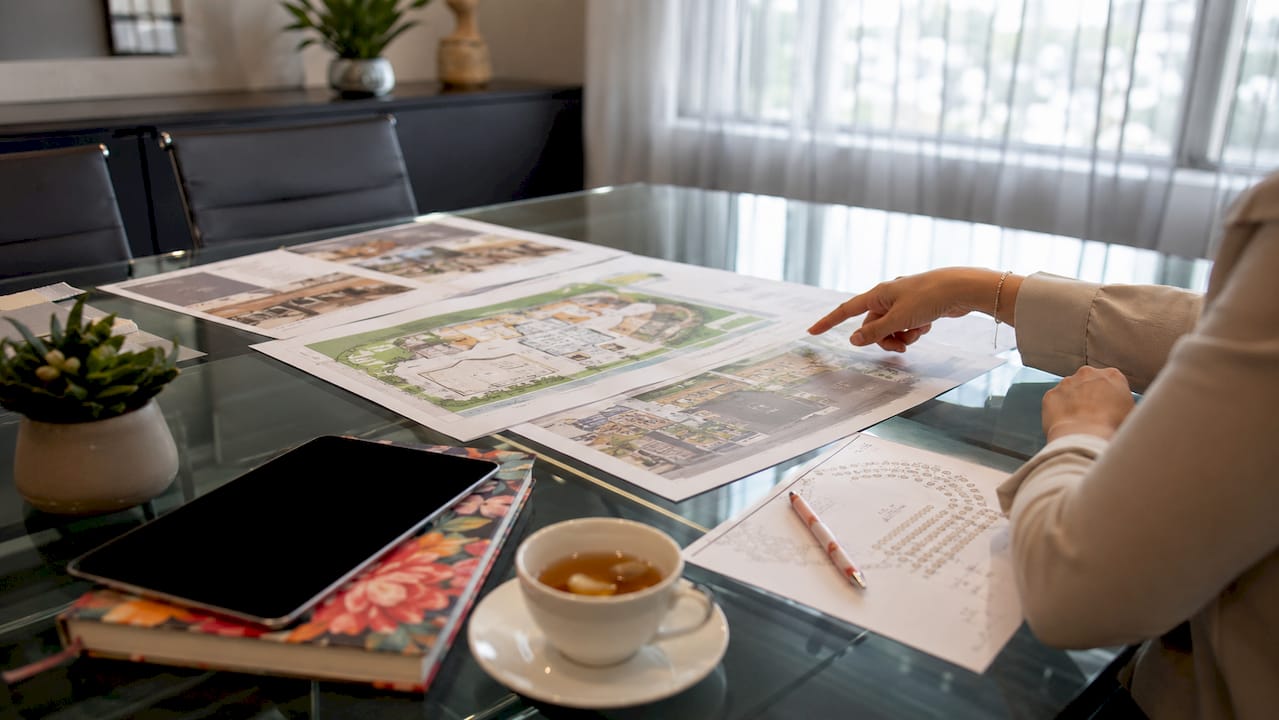
Planners also use structured data collection during site visits. Floor plans, capacity charts, and itemised service menus are requested in writing. A venue that cannot supply these documents promptly signals disorganisation, which is a red flag for event-day reliability.
How do planners use technology and partnerships in venue sourcing?
Technology has fundamentally changed how professional planners source venues. As of Q1 2026, 75% of planners use AI tools for venue searches, request-for-proposal generation, and bid comparisons. That shift means planners can evaluate more venues in less time and with greater accuracy.
The practical benefits of AI-assisted sourcing include:
- Faster shortlisting based on capacity, location, and budget filters
- Automated RFP distribution to multiple venues simultaneously
- Side-by-side bid comparisons that highlight cost differences and service gaps
- Digital collaboration tools that allow couples and planners to review options together in real time
Beyond technology, long-term venue partnerships are one of the most underrated assets a planner brings to the table. Planners who work regularly with a venue build trust with the events team, which translates into better pricing, greater flexibility on setup times, and faster problem-solving on the day.
Pro Tip: When comparing venue bids, ask each venue to confirm their communication response time in writing. Communication speed signals professionalism and predicts how reliably they will perform under event-day pressure.
Planners also treat venue selection as a procurement exercise rather than a shopping trip. They document every interaction, track response times, and score venues against a consistent set of criteria. This approach removes emotion from the process and produces decisions grounded in evidence.
Why does planner expertise protect couples from costly venue mistakes?
Engaged couples face a specific set of risks when booking a venue without professional support. The most common mistake is booking based on social media aesthetics before confirming whether the venue meets the couple’s actual requirements. A stunning Instagram feed does not guarantee adequate parking, a commercial kitchen, or a noise curfew that works for a late-night reception.
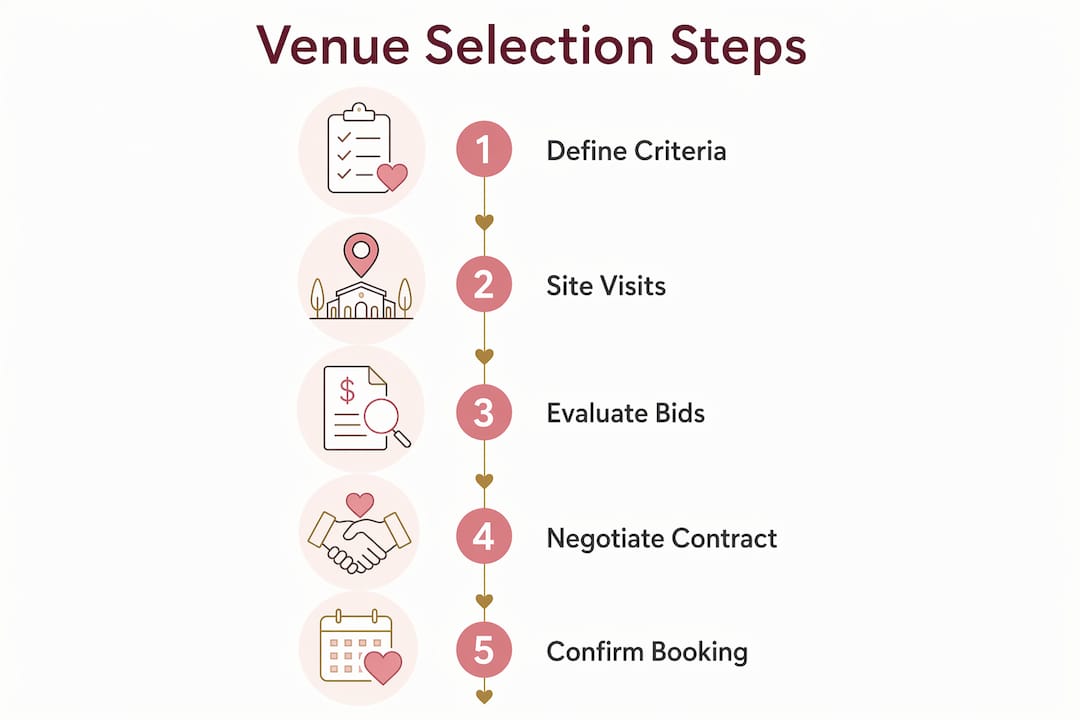
Professional planners protect couples by following a structured decision process:
- Define non-negotiables first. Guest count, budget ceiling, date flexibility, and must-have services are confirmed before any venue is contacted. This prevents couples from falling in love with a venue that cannot accommodate their needs.
- Review contracts thoroughly. Hidden fees for overtime, external catering, or security staff can add thousands to a final invoice. Planners read every clause and negotiate terms before signing.
- Evaluate the on-site coordinator. The venue’s own coordinator manages logistics on the day. Planners assess their experience, communication style, and knowledge of the space during site visits.
- Check references. Speaking with couples who have held events at the venue reveals service quality that no brochure will disclose.
- Confirm full-day logistics. Ceremony, cocktail hour, reception, and bump-out must all fit within the venue’s available hours. Planners map the full timeline against the venue’s operational constraints before committing.
Pro Tip: Use the Adelaide wedding venue requirements guide to define your criteria before attending any open days. Couples who arrive with a clear brief make faster, better decisions.
Neglecting budget controls and contract details upfront is the single most common cause of cost overruns for couples planning without professional support. A planner’s contract review alone can save more than their fee.
Traditional hotel venues versus non-traditional options: what planners consider
The venue selection process in 2026 looks very different from a decade ago. 48% of planners now source non-traditional venues, including restaurants (45%), bars (23%), and wineries (19%). That shift reflects both cost pressures and a genuine desire for more distinctive attendee experiences.
The table below outlines how planners weigh the two categories:
| Factor | Traditional hotel venues | Non-traditional venues |
|---|---|---|
| In-house services | Full catering, AV, and accommodation on site | Often limited; external vendors usually required |
| Flexibility | Standardised packages with less room to customise | Greater creative freedom but more coordination needed |
| Cost structure | Transparent pricing with bundled packages | Variable; costs depend heavily on vendor mix |
| Logistical complexity | Lower; venue manages most logistics internally | Higher; planner must coordinate more moving parts |
| Attendee experience | Familiar and comfortable | Memorable and distinctive |
| Negotiation leverage | Planners with repeat bookings secure better rates | Relationships matter but venues are less accustomed to negotiation |
Event planners translate client desires into practical logistics, and that translation looks different depending on the venue type. A winery in the Adelaide Hills requires a different operational plan than a city hotel ballroom. Planners assess power supply, catering infrastructure, wet weather contingencies, and vendor access for each venue type individually.
The decision between traditional and non-traditional venues is not purely aesthetic. It comes down to how much logistical complexity the couple and planner are prepared to manage, and whether the venue’s operational reality supports the event’s goals.
Key takeaways
The role of event planners in venue choice is to align client vision with operational reality, protecting couples from costly mistakes while securing the best possible outcome for their event.
| Point | Details |
|---|---|
| Venue sourcing is a structured process | Planners evaluate capacity, accessibility, logistics, and budget before aesthetics. |
| AI tools are now standard practice | 75% of planners use AI for venue searches and bid comparisons as of Q1 2026. |
| Non-negotiables must come first | Defining guest count, budget, and must-haves before visiting venues prevents poor decisions. |
| Long-term venue partnerships add value | Planners with established venue relationships secure better pricing and greater flexibility. |
| Contract review prevents budget overruns | Hidden fees and unclear service terms are the leading cause of unexpected costs for couples. |
Why venue sourcing deserves more respect than it gets
I have watched couples spend months choosing a florist and forty minutes choosing a venue. That imbalance causes more wedding-day problems than almost anything else I have seen in this industry.
The venue is not just a backdrop. It sets the ceiling on everything else. The catering, the guest experience, the timeline, the photography. Every other decision flows from it. When a planner is involved early in the venue selection process, the whole event benefits. When couples go it alone and book on emotion, the problems usually surface six months later when the contract is re-read and the hidden costs appear.
What I find most valuable about working with a planner on venue sourcing is the shift from reactive to proactive decision-making. Planners do not wait for problems to surface. They ask the uncomfortable questions during the site visit, not on the morning of the wedding. They ask about noise restrictions, about what happens if it rains, about whether the kitchen can handle the caterer you have already hired.
The 2026 trend toward AI-assisted sourcing is genuinely useful, but it does not replace the judgement call a planner makes when they walk through a venue and sense that the operations team is disorganised. Technology surfaces options. Experience filters them.
My advice to any couple reading this: bring a planner into the venue conversation before you fall in love with a space. It is far easier to assess a venue clearly before your emotions are invested than after you have already imagined your ceremony there.
— Steven
Start your Adelaide venue search with confidence
Finding the right venue is the most consequential decision in your wedding planning process. Adelaideweddingvenues exists to make that search faster, clearer, and far less overwhelming for South Australian couples and their planners.
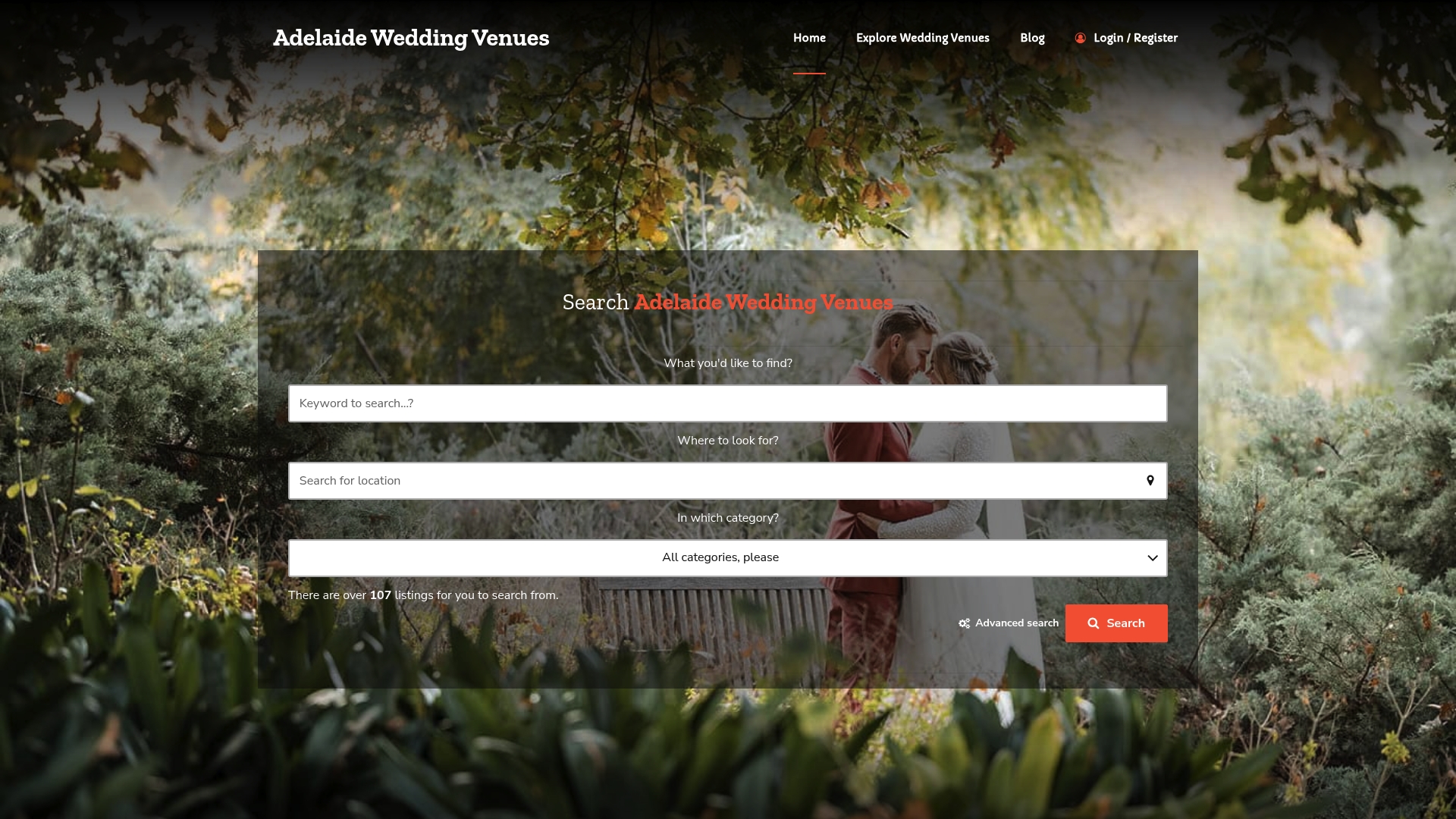
The Adelaideweddingvenues directory covers everything from rustic barns to beachside locations, with filters for location, capacity, style, and budget so you can shortlist venues that genuinely match your brief. The platform is built and maintained by wedding industry professionals with deep local knowledge of Adelaide and South Australia. Whether you are working with a planner or researching independently, Adelaideweddingvenues gives you the tools to approach every site visit prepared. Explore the full venue guide for 2026 and take the guesswork out of your search today.
FAQ
What is the role of event planners in venue choice?
Event planners evaluate venues against a structured set of criteria including capacity, accessibility, budget, logistics, and contract terms. Their role is to match the client’s vision with a venue that is operationally capable of delivering it.
How much of a wedding budget should go toward the venue?
The venue typically accounts for 25–30% of a total wedding budget. Planners recommend obtaining fully itemised cost estimates before any site visit to avoid unexpected charges later.
Why do planners prioritise accessibility in venue selection?
74% of event planners now rank accessibility higher than in previous years, reflecting a broader shift toward inclusive event experiences. Accessibility covers step-free entry, accessible bathrooms, and convenient transport links.
What is the difference between traditional and non-traditional venues?
Traditional venues like hotels offer bundled services and lower logistical complexity, while non-traditional venues such as wineries and galleries offer more distinctive experiences but require greater coordination. Planners assess both types against the event’s specific operational needs.
How do event planners use AI in the venue sourcing process?
As of Q1 2026, 75% of planners use AI tools to search venues, generate requests for proposal, and compare bids side by side. AI speeds up shortlisting but does not replace the on-site judgement an experienced planner applies during a venue visit.
