
Choose the coast for dramatic seascapes, open light, and sunset photography; choose a winery for a wine-forward long lunch, reliable weather backup, and bundled catering. According to the Attorney-General’s Department, the legal steps are identical either way, so the real decision comes down to guest logistics, budget shape, and the atmosphere you want, which Adelaide Wedding Venues sees couples weigh constantly when shortlisting venues.
TL;DR:
- Winery venues typically offer bundled packages with catering, wine, and coordination, which can provide better overall value than high headline hire fees at coastal sites.
- Coastal venues often have limited or no on-site parking, require careful tide and permit checks, and are more exposed to wind and weather risks that may affect the ceremony and photos.
- Winery weddings usually have more consistent indoor backup spaces and can scale efficiently for larger guest counts, while coastal weddings are better suited for smaller, casual gatherings focused on scenery.
- Transport planning is crucial, as wineries are in remote areas requiring pre-arranged shuttles, whereas coastal venues often lack parking and need beach-specific vehicle access considerations.
- Accurate cost comparisons demand full line-item estimates and questions about weather backup, parking, and vendor restrictions, rather than relying solely on base hire fees.
Coastal vs winery wedding at a glance
Before you book a single site visit, it helps to see how these two venue styles stack up against each other on the factors that actually affect your day.
- Aesthetic: Coastal gives you open horizons, sea breeze, and natural drama; winery gives you rolling vines, established gardens, and a softer, structured look.
- Cost shape: Coastal venues often separate hire fees from catering and hire equipment; winery packages tend to bundle food, wine, and coordination into one line item.
- Guest experience: Coastal favours a relaxed, barefoot vibe with cocktail-style flow; winery suits a seated long-lunch or long-dinner format with a slower pace.
- Best guest counts: Coastal sites often cap numbers due to council permits and open-air seating; wineries frequently scale from intimate (30 guests) to large (200-plus) with marquee options.
- Weather risk: Coastal weddings are more exposed to wind and sun with fewer indoor fallback spaces; wineries usually have a barrel room, cellar door, or function space as backup.
- Transport and parking: Coastal venues frequently have limited or no on-site parking; wineries usually offer defined parking but sit further from town, so guests need a lift.
- Accommodation nearby: Coastal towns often have dense short-stay accommodation within walking distance; wineries increasingly offer on-site stays but can be spread across a region.
Best for sunset photos: the coast, hands down. Best for a long, unhurried reception: a winery, every time.
Coastal weddings: the pros, the practical headaches, and who they suit
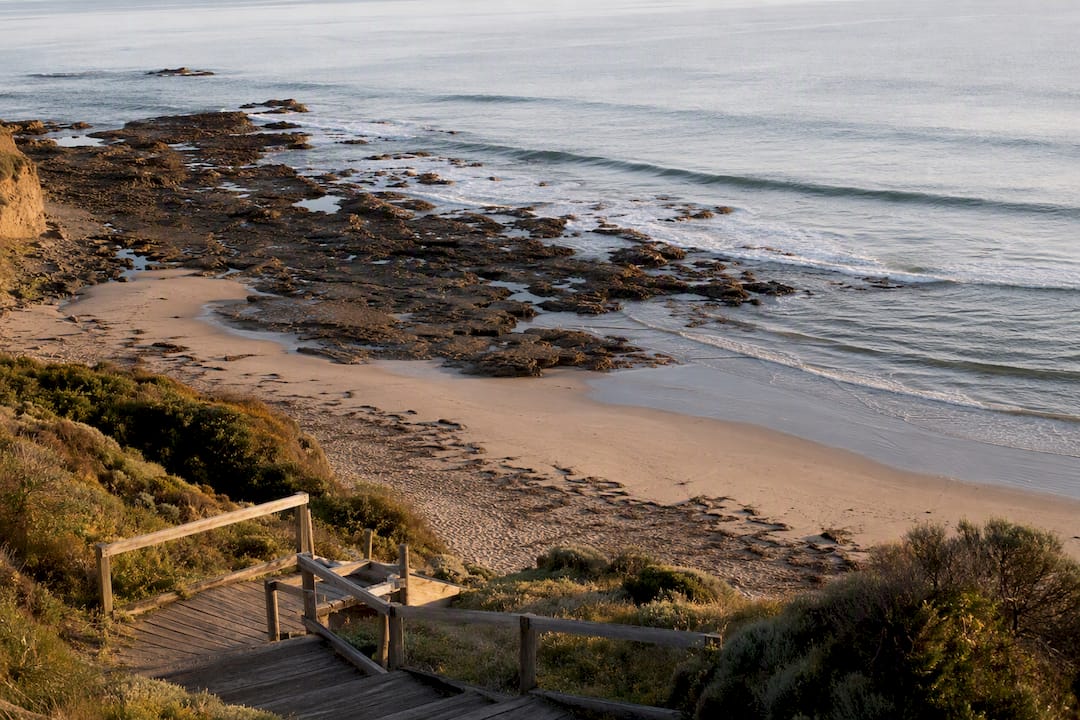
A coastal wedding gives you a backdrop no stylist can fake. Cliff edges, tidal pools, and that particular gold light bouncing off water make for photos that look effortless, even though the planning behind them rarely is.
What works in your favour:
- Dramatic, ever-changing scenery that photographs beautifully without much styling.
- A naturally relaxed atmosphere that suits a barefoot ceremony and casual reception.
- Wide-open light for most of the day, which is a gift for photographers working quickly.
What catches couples out:
- Wind can wreck hair, veils, and audio for vows within minutes.
- Sand access often means no vehicles near the ceremony point, so gear and guests with mobility needs both need a plan.
- Parking is frequently scarce or non-existent at the most scenic spots.
- Councils often enforce noise curfews and permit conditions on public beaches and reserves, particularly for amplified sound after dark.
- Tides shift ceremony timing on the day itself, not just in the planning stage.
Before you fall for a location, ask the venue or council directly about access tracks, permit conditions, noise cut-off times, and where the nearest accommodation cluster sits. A beach that looks perfect in photos can be a logistical nightmare if the only parking is a fifteen-minute walk away.
A coastal wedding is the better match when guest experience is secondary to visual impact, when your dress code is casual to begin with, and when your photography wishlist leans heavily on golden hour seascapes rather than formal garden portraits.
Pro Tip: Visit your shortlisted coastal site at the same time of day and, ideally, the same tide stage as your planned ceremony time. What looks like a wide, golden beach at 10am can be a narrow strip of exposed rock at 5pm.
Winery weddings: the pros, the practical headaches, and who they suit
A winery wedding trades raw drama for reliable beauty. Vines, established gardens, and stone cellar buildings offer a backdrop that barely needs extra decor, and that consistency is exactly why so many couples land here after a few disappointing coastal site visits.
What works in your favour:
- Built-in scenery across multiple locations on one property, so ceremony, photos, and reception can happen in different, equally photogenic spots without leaving the venue.
- Food and wine bundled into a single package, often with the venue’s own label poured at the reception.
- Indoor backup spaces such as barrel rooms or function halls that make weather a non-issue.
- Multiple photo backdrops within a short walk, which speeds up the photography schedule considerably.
What to plan around:
- Rural access means guests almost always need transport, since public transport rarely reaches these properties.
- Heat, flies, and the odd wasp are part of the deal in warmer months, particularly around dessert service.
- Very remote cellar-door venues sometimes have a smaller pool of preferred suppliers, which can limit choice for catering or styling if you go outside their recommendations.
Most winery packages include venue hire, tables and chairs, a house wine or beverage package, and on-site coordination on the day. That bundling is worth more than it looks on paper: a winery wedding cost guide notes that comparing a winery’s all-in quote against a coastal venue’s bare hire fee understates the winery’s real value, because you would otherwise be sourcing catering, glassware, and staff separately.
A winery wedding suits couples who want a focused, wine-forward reception, who value a genuine weather backup plan, and who like the idea of guests settling in for a full day or weekend rather than a few hours. If you are drawn to a wine-region venue, this is usually where the decision starts to feel obvious.
What does each venue type actually cost?
Base hire fees only tell part of the story, and comparing them directly between coastal and winery venues can be misleading.
Boutique winery venue hire typically runs from $3,000 to $8,000, with per-person packages commonly landing between $150 and $300 depending on what is included, according to the winery wedding cost guide. Coastal venues vary more wildly because so many are council land or private reserves rather than dedicated event businesses. Some charge a modest permit fee and leave you to source everything else; others, particularly beachfront function centres, charge closer to winery rates once catering is added.
Where the money actually goes: Venue costs can represent about 46% of total wedding expenditure, and national averages swing widely depending on location and what a package includes. South Australian couples often spend less on average than their metropolitan counterparts, which changes the maths on both venue types.
Winery packages tend to bundle catering, beverage service, tables, chairs, and coordination into one quote. Coastal venues more often separate these costs, so your headline hire fee looks cheap until you add a caterer, marquee, generator, portable toilets, and furniture hire on top.
Ask every venue for a full line-item estimate before you compare prices. Beyond the base fee, weigh up:
- Parking and transport costs for guests
- Nearby accommodation availability and rates
- On-site coordination or day-of management
- Furniture, styling, and backup weather infrastructure
- Supplier restrictions that might force you to use in-house caterers or preferred vendors
Transport, accommodation and getting your guests there
Guest flow is where coastal and winery weddings genuinely diverge, and it is usually the deciding factor once couples get past the aesthetics.
For rural wineries, organising transport for out-of-town guests usually means auditing who actually needs a ride, mapping the distance between accommodation and the venue, and running a hybrid model: a chartered shuttle or coach for the bulk of guests, with rideshare or taxis as backup for stragglers, according to advice on organising guest transport. Rideshare coverage thins out fast once you leave town, so pre-booking a shuttle for the return trip late at night is not optional at most vineyard properties.
- Confirm whether the venue has on-site parking, and if not, where the nearest lot sits.
- Book a shuttle or coach for guest pickup and, critically, the late-night return leg.
- Check whether the venue offers on-site accommodation, which cuts both transport cost and coordination headaches.
- Plan photo runs and guest arrival times around when transport actually drops people off, not your ideal schedule.
Coastal venues bring a different problem: sand-appropriate vehicle access, council permits, and tide timing all need confirming well before the day. Some beach venues have no guest parking at all, which makes a shuttle service from a central point almost mandatory rather than a nice-to-have.
Pro Tip: If your venue offers on-site accommodation, book it even if most guests are staying elsewhere. Having a base for the bridal party removes an entire transport leg from your wedding morning.
How photography and timing differ between the two settings
Light behaves differently depending on where you stand, and that changes your whole day’s schedule.
At the coast, golden hour is short, unpredictable, and entirely dependent on cloud cover and tide. A vineyard’s layout tends to offer more forgiving light for longer, plus several distinct photo backdrops (vine rows, cellar doors, gardens) within a short walk, which lets photographers work a fuller shot list without racing the sun.
- Ask your photographer to visit the site at the same time of day you have booked, since afternoon light at a winery and pre-sunset light on a clifftop behave very differently.
- Confirm how many distinct photo locations the venue actually offers, and whether any require extra permission or time.
- Ask about an indoor backup shot list in case of wind, rain, or harsh midday sun.
- Walk the site with your photographer before booking, not after.
Decision checklist: coastal or winery for your wedding
Score each venue against your own priorities rather than trusting Pinterest inspiration alone.
- Guest convenience — how far is the venue from where most guests are staying, and what transport does it demand?
- Budget shape — does the venue bundle catering and coordination, or will you be sourcing everything separately?
- Photo priority — do you want dramatic, brief golden-hour shots, or a longer, more varied shot list across multiple backdrops?
- Weather resilience — is there a genuine indoor backup, or does “backup plan” mean moving under a tree?
- Accommodation — can most guests stay within a short trip of the venue, or does the whole day hinge on transport running to schedule?
Bring a short, direct list of questions to ask your venue to every walkthrough:
- What access exists for vehicles, and where does guest parking sit?
- What exactly is included in the package, and what costs extra?
- Are there noise curfews or council restrictions on amplified sound?
- What is the actual weather backup, not just the stated policy?
- Which suppliers are preferred or mandatory, and which are open to outside vendors?
Walk away if a venue cannot answer the parking or weather backup question clearly, or if the “package inclusions” keep shifting between conversations. Once you have chosen, lock in transport bookings and finalise your guest list against the venue’s real capacity, not its marketing number.
Why trust this venue advice?
This guide comes from Steven at Adelaide Wedding Venues, a platform built with input from working wedding photographers who spend their weekends at exactly these venues. That photographer-sourced view is why the advice leans practical: parking, light, and backup plans, not just inspiration.
Adelaide Wedding Venues compiles venue details with filters and category selections so couples can compare coastal and winery options side by side rather than relying on scattered blog posts. Pair this article with the venue questions checklist and the venue disaster-avoidance checklist before your first site visit.
What the coastal vs winery debate gets wrong
Most advice on this topic treats coastal and winery weddings as a purely aesthetic choice, as if you are picking a filter for a photo. That framing undersells the decision. The couples who end up happiest with their venue are the ones who picked based on guest logistics and seasonality first, then let the aesthetic follow.
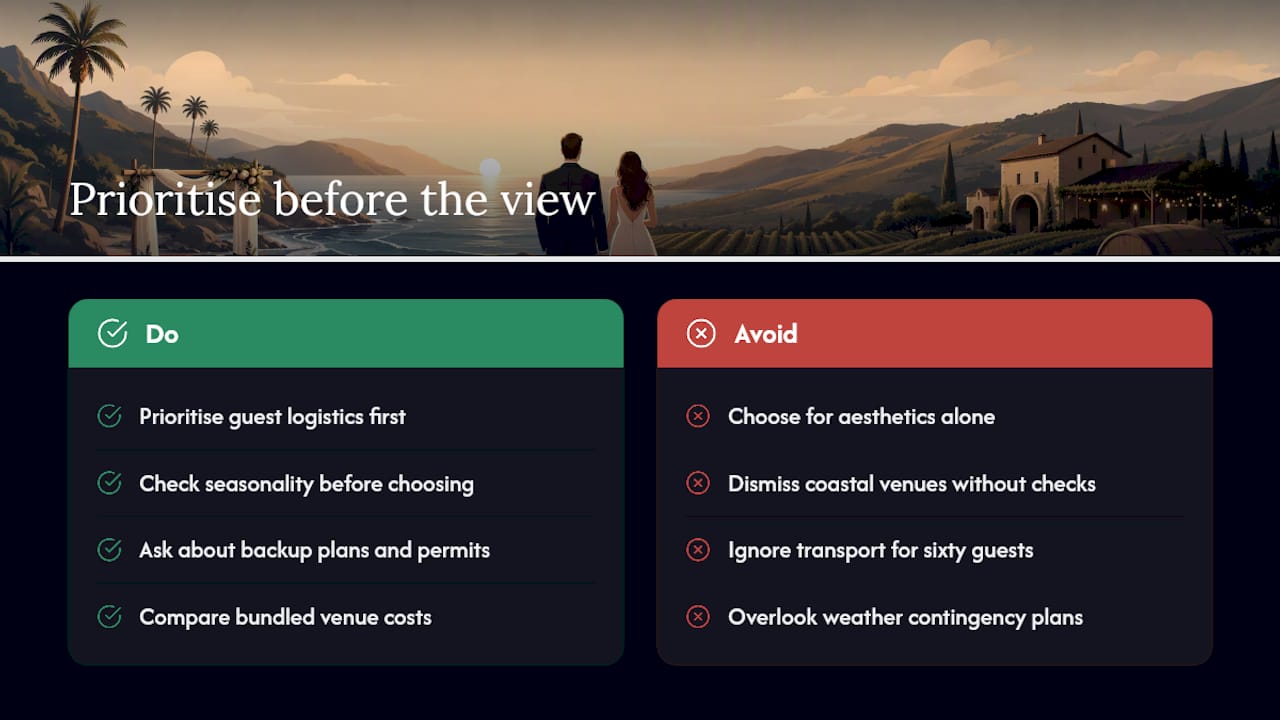
Here is what gets underweighted constantly: a winery’s bundled package often beats a coastal venue on total cost even when the headline hire fee looks higher, because you are not separately sourcing catering, furniture, and weather contingency. Conversely, coastal venues get unfairly dismissed as “too risky” by couples who have never actually asked about permit conditions or checked a tide chart for their date.
If you take one thing from this comparison, prioritise the backup plan and the guest transport question before you fall in love with a view. A beautiful backdrop you cannot get sixty guests to safely, or one with no plan B for wind, will cost you more stress on the day than any styling choice ever could.
— Steven
How Adelaide Wedding Venues helps you shortlist the right style
Adelaide Wedding Venues is the fastest way to compare coastal and winery options side by side, without spending weeks chasing individual venue websites for pricing and inclusions. The directory lets you filter by venue type, guest capacity, budget range, and amenities, so you can build a shortlist of both coastal and winery venues in one sitting rather than juggling browser tabs.
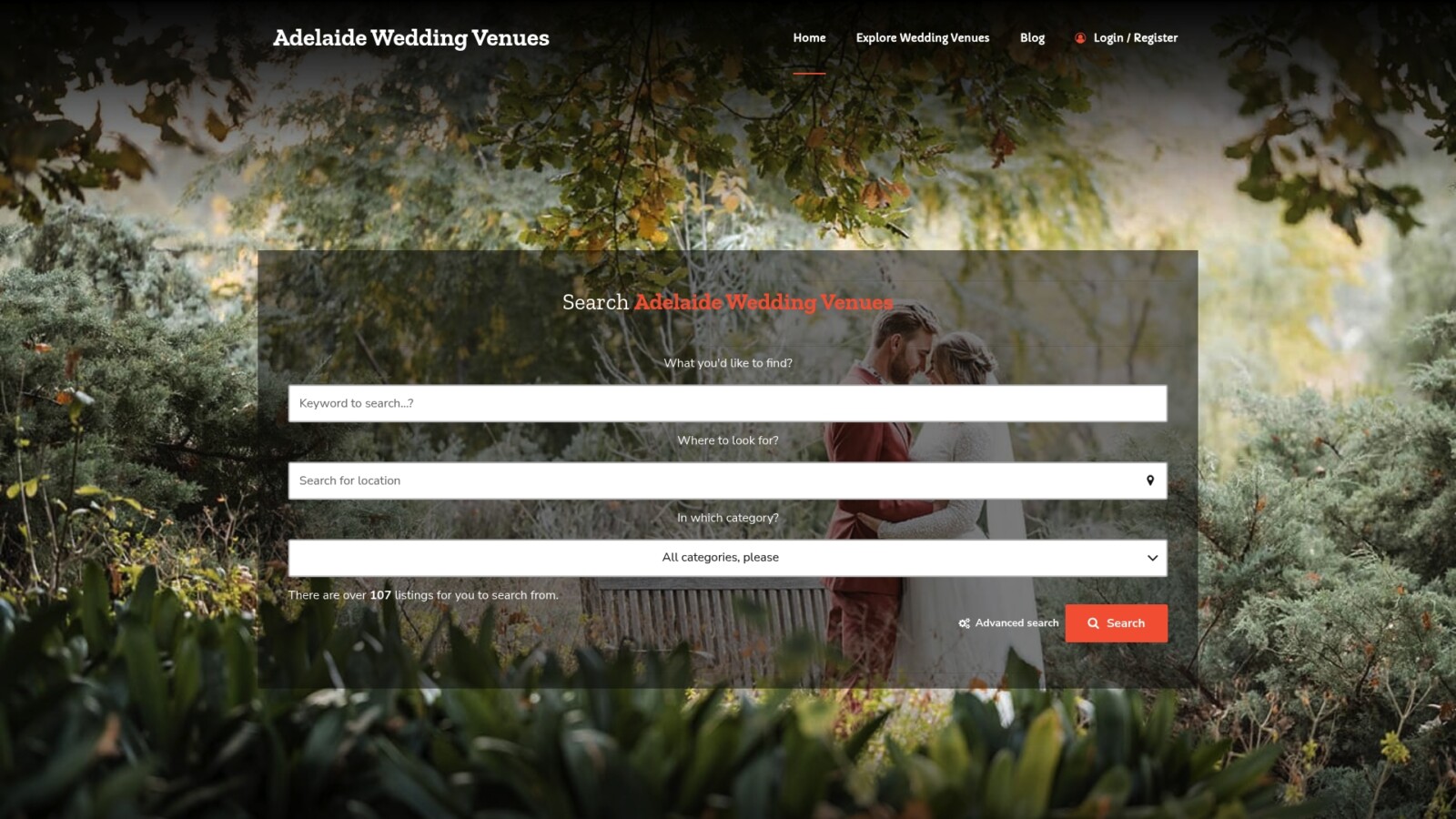
Once you have a shortlist, run the decision checklist from this article against each venue’s listing: check stated capacity, ask about parking and weather backup directly, and compare package inclusions rather than base hire fees alone. If you are still torn between the two styles, the guide on choosing your ideal wedding venue walks through the same trade-offs with real South Australian venue examples. Start your search on Adelaide Wedding Venues today and turn your shortlist into confirmed site visits within the week.
Sources
- Winery wedding cost guide — Millon Wines
- How to organise transport for out-of-town wedding guests — Luxury Limousine Chauffeurs
- Ag
FAQ
Is $5,000 a good budget for a wedding?
A budget on the smaller side suits a very small, low-frills wedding, likely a coastal ceremony with minimal catering, since venue hire alone can absorb a significant share once the 46% average venue-cost share is factored in.
Is $10,000 a good amount for a wedding?
A budget in the mid-range gets you closer to a modest winery package or a coastal wedding with proper catering and hire, but you will still need to prioritise guest numbers carefully given typical winery per-person costs ranging from $150 to $300.
What is the rarest month to get married in?
Winter months, particularly July, tend to see the fewest weddings in Australia, which can work in your favour for venue availability and negotiating rates at both coastal and winery venues.
What is the taboo colour for wedding guests to wear?
White remains the colour guests are expected to avoid, since it is traditionally reserved for the bride at both coastal and winery weddings.
How do I start comparing coastal and winery venues near me?
Use a searchable directory such as Adelaide Wedding Venues to filter by venue type, guest capacity, and budget, then apply the decision checklist from this guide to each shortlisted property.
