
Most Adelaide wedding venues allow drones only with written permission, proof of insurance, and confirmation of the operator’s qualifications. Public and heritage sites, including the Botanic Gardens, generally prohibit drones outright for casual or general use. Couples should request venue permission in writing and check operator insurance and licensing before booking, and start the process early. Some venues recommend submitting permit applications well in advance to allow sufficient time for consideration.
TL;DR:
- Most Adelaide wedding venues require written permission, proof of insurance covering aerial work, and operator licensing before allowing drone use.
- Public and heritage sites like Botanic Gardens generally prohibit drones without special approval and permits, often needing at least five business days for processing.
- Operators must provide evidence of qualifications, such as ARN or RePL, and adhere to defined flight zones, times, and contingency plans set by venues.
- Couples should request drone approval early by submitting detailed applications with flight plans, safety measures, and written conditions before booking any operator.
- Venue policies should be documented upfront, and listing drone rules on platforms like Adelaideweddingvenues helps reduce last-minute refusals and manage expectations.
Drone policy checklist for Adelaide couples and planners
A drone-friendly reception photo looks effortless, but the approval behind it rarely is. Getting it right means treating the request like a small procurement job, not a casual ask to the venue manager during a site visit.
- Ask in writing. Email the venue directly and ask whether drones are permitted, and who has authority to approve or refuse the request.
- Collect operator evidence. Get your photographer or videographer to supply public liability insurance that explicitly covers aerial work, ARN or RePL/ReOC documentation where relevant, and a written flight plan.
- Share the details. Pass on the date, flight times, proposed flight area, and operator contact information, then ask the venue to set out its conditions in writing.
- Lock in a decision before booking the operator. Wait for written approval, or a clear refusal, before you commit to a drone package, and have a non-drone backup ready either way.
This sequence protects everyone. Venues get a paper trail if a neighbour complains about noise; couples avoid paying for a drone package that gets knocked back on the morning of the wedding. Adelaideweddingvenues’ guide to venue photo restrictions is worth checking early, since some venues publish drone rules alongside general photography limits.
Why venues ask for permits, insurance, and licences
Venue drone policies exist because a single mishap, a startled guest, a scratched heritage roof, a complaint from next door, becomes the venue’s problem long after the couple has left on honeymoon. That is why most venues build their approval process around five recurring checkpoints.
- Written consent. Approval from a manager or function coordinator, sometimes via a formal permit rather than a verbal yes.
- Insurance that names aerial work. Standard public liability cover frequently excludes drone cinematography by default, so insurers need to confirm in writing that the policy covers the specific date and location.
- Operator qualifications. Commercial jobs generally call for an ARN and RePL, with a Remote Operator Certificate (ReOC) required for larger airframes; drones under 2 kg may sit in the Excluded Category but still face restrictions near people and populous areas.
- Risk controls. Defined landing zones, buffer distances from guests, agreed no-fly windows, and a wet-weather or wind contingency.
- Realistic lead times. Reviewing a permit application takes time, and some public sites recommend allowing at least five business days before the flight date.
One nuance couples often miss: flying indoors generally sits outside CASA’s Part 101 rules, but that does not remove the venue’s own workplace health and safety, insurance, and contract obligations, all of which still apply. CASA’s drone guidance is the reference point for confirming an operator’s registration and approvals before you take their word for it.
How do you request drone permission at an Adelaide venue?
Treat the request as a short project with a clear paper trail, not a favour to ask on the day.
- Find the venue’s actual process. Check the published policy or call the function coordinator directly to learn the venue’s specific lead time and paperwork.
- Gather the operator’s documents. You need an insurance certificate naming aerial work, ARN and RePL/ReOC evidence for commercial jobs, a sample flight plan, and a short risk assessment.
- Submit a written application. Include the date, flight times, a simple flight area map, operator contact details, and the safety measures you propose. Offer a pre-event site walk if the venue wants one.
- Get the conditions in writing. Ask the venue to name exactly who can revoke permission on the day, and under what circumstances.
- Confirm on the day. The operator should present credentials on arrival, follow every agreed condition, and be ready to switch to the contingency plan if wind, rain, or guest numbers make flying unsafe.
Pro Tip: Ask your operator to document a single “flight envelope” for the day, exact start and finish times, the approved altitude ceiling, landing coordinates, and a named emergency contact. Venues respond far better to one clear page than a folder of loose certificates.
Couples booking a photographer through Adelaideweddingvenues can lean on the photographer’s role guide to understand what coordination with the venue should look like before the invoice is signed.
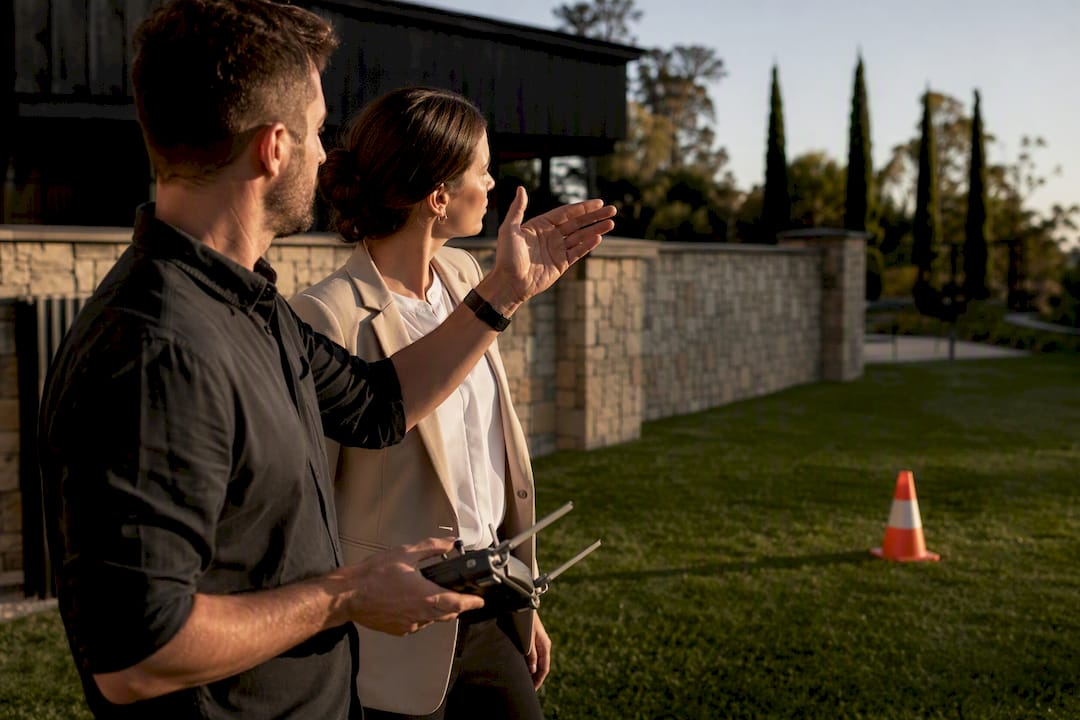
Writing a drone policy: guidance for venue owners and managers
A short, specific policy stops more disputes than a long, vague one. If your venue is going to allow drones at all, put these elements in writing before the next enquiry lands in your inbox.
- Approval authority. Name the person who can approve a flight, and the minimum insurance figure you require them to show.
- Documentation. Require proof of ARN and RePL/ReOC for commercial jobs, or a written statement confirming Excluded Category operation for lighter drones.
- Approved areas and times. Set landing and take off zones, buffer distances from guests, and blackout periods, such as during vows or speeches.
- Lead time and process. State a minimum application window, five business days is a reasonable baseline, and whether any administrative fee applies.
- Other protections. Note any wildlife, heritage, or noise restrictions specific to your grounds, plus your weather or no-go criteria.
- Revocation and incidents. Spell out what happens if the operator breaches a condition, and how a damage claim would be handled.
Pro Tip: Add a two-line drone clause directly to your booking form rather than a separate document. Couples read booking forms; they rarely chase down a standalone policy PDF. Venues that publish this detail on their listing tend to field fewer last-minute refusals, since expectations are set weeks before the wedding rather than negotiated at the gate.
Special cases: Botanic Gardens, parks, and heritage sites
Some of Adelaide’s most photogenic backdrops are the strictest on drones, and the reasoning is consistent: public safety, heritage protection, and other visitors’ amenity outrank a couple’s photo wish list.
- Botanic Gardens of Adelaide (Adelaide, Mount Lofty, Wittunga). Drones are prohibited for general visitors. Any exception needs Board approval, an ARN and RePL, and a commercial photography permit, with at least five business days for consideration and an electronic permit carried on the day.
- South Australian national parks and reserves. The Department for Environment and Water generally requires a commercial filming or photography permit for drone use, and flying in restricted zones without one can be an offence.
- Other heritage and public sites. Expect a formal, separate application process, often stricter than a standard private venue hire agreement, and often limited to specific authorised shoots rather than general wedding coverage.
| Site type | Drone allowed for general use? | Permit pathway |
|---|---|---|
| Botanic Gardens of Adelaide | No | Board approval, ARN, RePL, commercial photography permit |
| SA national parks and reserves | Not without a permit | Commercial filming/photography permit via DEW |
| Private venues (hotels, wineries, function centres) | Often, with conditions | Written venue approval, insurance, operator credentials |
What can couples do if drones aren’t allowed?
A refusal is not the end of the aerial-looking shot, it just means changing the method rather than the ambition.
- Elevated platforms. Balconies, mezzanines, or approved elevated structures give a high-angle perspective with a spotter and a proper risk assessment, no airspace required.
- Cranes, jibs, and gimbals. These deliver the sweeping, cinematic movement couples associate with drone footage, entirely from ground equipment.
- Ground composition techniques. Wide-angle lenses, panoramas, and layered foreground-to-background framing can capture a venue’s scale convincingly.
- More time, less altitude. A longer photography window at golden hour often outperforms a rushed aerial pass, particularly at venues where geography, trees, or neighbours limit drone use anyway.
Venues chosen for their natural vantage points make this easier. Adelaideweddingvenues’ list of venues suited to sunset photography is a good starting point if the drone answer turns out to be no.
A local photographer’s take on drone day-of problems
The mistakes that actually derail drone coverage aren’t legal ones, they’re logistical. Approvals arrive the morning of the wedding, not weeks before. Insurance certificates cover the operator generally but exclude aerial work, discovered only when the venue asks to see it in writing. Operators occasionally underestimate what counts as a “populous area” once two hundred guests are milling across a lawn.
The fix is unglamorous but effective: a short drone clause on the booking form itself, naming who can revoke permission on the day and under what conditions. In practice, coordinators and photographers consistently prefer a written list of conditions over a verbal handshake agreement made weeks earlier and half remembered by the day of the wedding. It costs nothing to add and saves everyone an argument at the worst possible moment.
— Steven
List your venue’s drone policy on Adelaideweddingvenues
Adelaideweddingvenues gives Adelaide venues a direct way to put drone rules in front of couples before the enquiry even lands, cutting the back-and-forth that usually happens over email. Because Adelaideweddingvenues is maintained with input from local wedding photographers, listings can carry the kind of practical detail generic directories miss, like function coordinator contacts, approved flight areas, and lead times for permit requests.
If you manage a venue, add or update your drone policy details on your listing so couples and planners can check conditions before they book an operator, not after. Couples and planners searching for a venue can browse profiles for policy detail and contact information through Adelaideweddingvenues’ guide on choosing your ideal wedding venue. Whether you’re listing a property or hunting for the right one, start with your venue search or contact Adelaideweddingvenues today to get your policy details added.
Sources
- Filming And Photography | Botanic Gardens
- Filming and photography | Department for Environment and Water
- CASA — Drones
- CASA Commercial Drone Licence for DJI Inspire 3 Wedding F… – Reboot Hub
FAQ
Do Adelaide wedding venues allow drones?
Many private venues allow drones with written permission, proof of insurance covering aerial work, and operator credentials, while public and heritage sites, including the Botanic Gardens, generally prohibit them for general use.
How far in advance should I request drone approval?
Start at least a few weeks before the wedding. Some venues and public sites, including the Botanic Gardens, recommend allowing at least five business days just for the permit review itself.
What insurance does a wedding drone operator need?
The operator’s public liability policy needs to explicitly name aerial work or drone cinematography for the booked date and location, since standard policies frequently exclude it by default.
Does my drone operator need a licence for a wedding?
Commercial wedding drone work generally requires an ARN and RePL, with a ReOC needed for larger aircraft; drones under 2 kg may qualify for the Excluded Category but still face restrictions near guests.
Can I fly a drone at the Botanic Gardens of Adelaide for my wedding photos?
No, drones are prohibited for general visitors at the Adelaide, Mount Lofty, and Wittunga gardens, and any exception requires Board approval plus a commercial photography permit.
Where can I find a venue’s drone policy before booking?
Check the venue’s own listing or published rules first, since venues that list policy detail on platforms such as Adelaideweddingvenues tend to set expectations before the enquiry stage, reducing last-minute refusals.
