
TL;DR:
- Venue size strongly influences guest comfort, event flow, and overall atmosphere in wedding planning. Choosing a space that is too large or small can lead to discomfort, inadequate energy, or costly adjustments. Proper assessment of capacity, layout, and physical features ensures a cohesive and memorable event experience.
Venue size is the single most consequential decision in wedding planning because it determines guest comfort, event flow, and the overall atmosphere of your day. Couples who treat capacity as an afterthought often discover too late that a beautiful space simply does not work for their guest list. The role of venue size in planning goes far beyond fitting bodies into a room. It shapes acoustics, movement, energy, and budget. Getting it right from the start saves you from costly compromises later.
How is venue capacity calculated and why does it matter for event flow?
Venue capacity is not a single fixed number. It changes depending on your event layout, and the difference between configurations is significant.
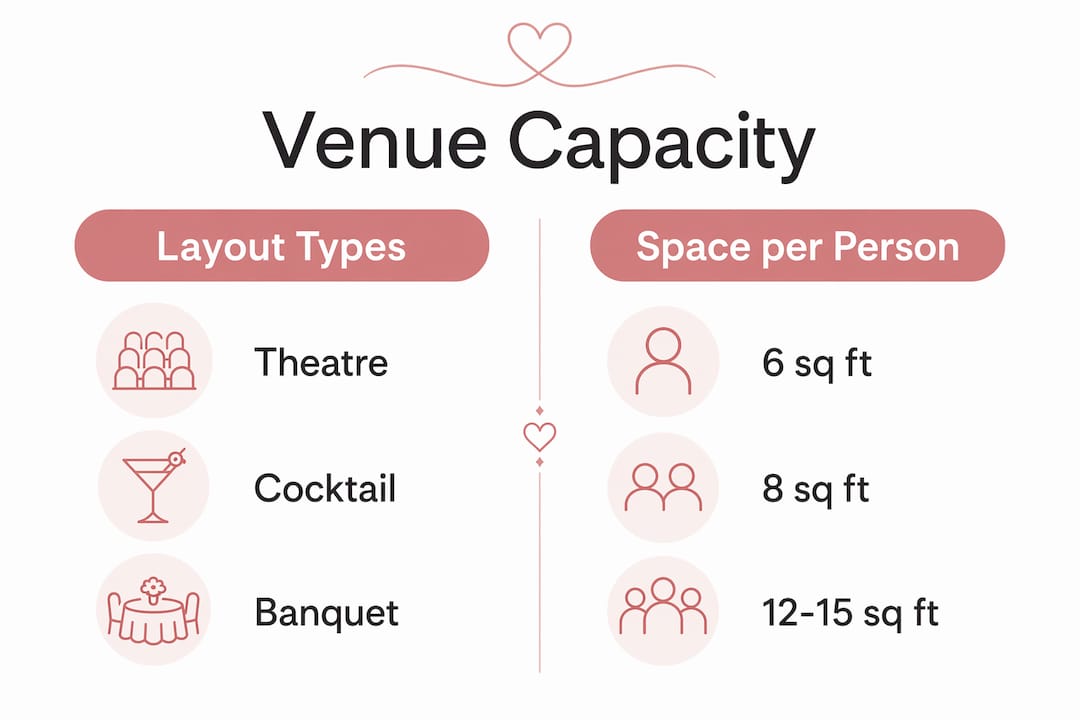
Standard space allowances vary considerably by setup type:
| Layout type | Space per person |
|---|---|
| Theatre (rows of chairs) | 6 sq ft per person |
| Cocktail (standing, mingling) | 8 sq ft per person |
| Banquet (round tables, seated) | 12–15 sq ft per person |
| Classroom (tables and chairs) | 18 sq ft per person |
These figures apply to usable floor space, not the venue’s total area. Capacity calculation requires deducting roughly 15% of total floor area for aisles, service corridors, and AV buffer zones before you apply any per-person figure. That deduction alone can reduce a stated capacity by dozens of guests.
The situation becomes more complex once you add event-specific elements. Non-seating features like stages, dance floors, and vendor areas reduce usable venue capacity by 20–40%. A venue listed at 200 guests for a banquet may realistically seat 130 once you account for a dance floor, a bridal table, a DJ booth, and a dessert station. Couples who skip this calculation often arrive at setup day to find the room feels dangerously tight.
Professional capacity assessments, which cost between $1,500 and $4,000, provide a detailed breakdown of usable space by layout type. For large or complex weddings, this investment pays for itself by preventing costly last-minute venue changes.
Pro Tip: Ask the venue coordinator to walk you through their capacity figure and confirm whether it includes or excludes a dance floor, stage, and catering service zone. The difference can be 30–40 guests.
What are the effects of venue size on guest experience and event atmosphere?
The physical dimensions of a venue shape how guests feel, not just how many fit inside. This is one of the most underestimated effects of venue scale in wedding planning.
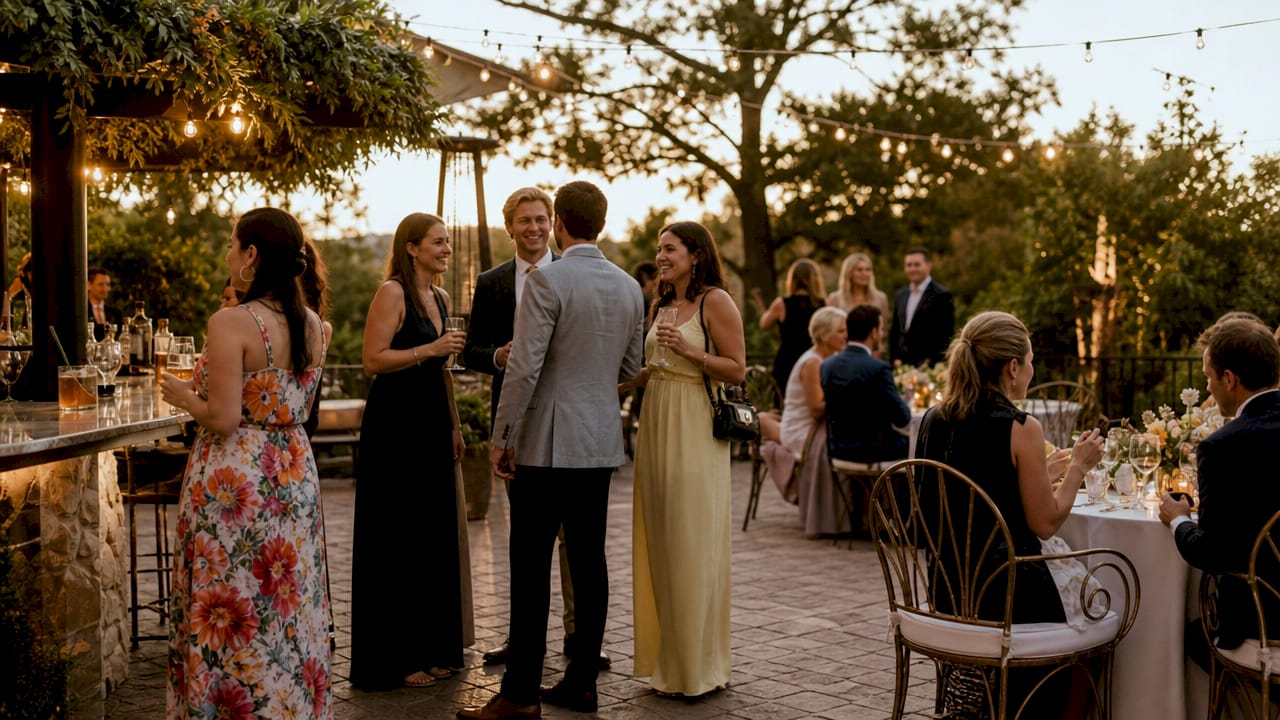
Ceiling height is a key variable. High ceilings above 15 feet suit large, energetic events where grandeur and volume work in your favour. Lower ceilings in the 8–10 foot range create intimacy and warmth, which suits smaller gatherings where conversation and closeness matter. Choosing a ceiling height that conflicts with your event’s intended mood creates a disconnect guests will feel even if they cannot name it.
Room shape and layout affect how guests move and connect. A long, narrow room pushes guests into linear clusters and limits natural mingling. A square or circular layout encourages movement across the whole space. Venue design primes audience engagement and immersion, meaning the physical space shapes how guests psychologically receive the event around them.
Research on live event experiences confirms this effect directly:
“Traditional venues garnered higher ratings of concert and musical immersion compared to modern, flexible spaces.” — Nature, 2025
The same principle applies to weddings. A venue with character, appropriate scale, and considered proportions creates a stronger sense of occasion than a generic hall that happens to fit the guest count.
Key atmospheric factors to assess during any venue visit:
- Ceiling height: Does it match the energy level you want?
- Room shape: Does it encourage movement and conversation?
- Natural light: Does it complement your ceremony time and décor?
- Acoustic quality: Will speeches be clear without a PA system at full volume?
- Sightlines: Can every guest see the ceremony or stage from their seat?
How do non-capacity factors like infrastructure and layout influence venue size considerations?
Raw square footage tells only part of the story. The physical features inside a venue can dramatically reduce its effective usability, and these constraints rarely appear in a brochure.
Pillars are the most common offender. A venue may have a generous floor area, but structural columns placed through the middle of the room create sightline blind spots that affect a significant portion of guests. Low ceilings under 10 feet compound this problem by limiting décor options and dampening acoustics. Both issues are invisible in capacity numbers but immediately apparent on a site visit.
- Map every fixed obstacle. Identify pillars, load-bearing walls, and permanent fixtures before finalising a floor plan.
- Confirm technical infrastructure. Check the location of power outlets, AV rigging points, and lighting rigs. These dictate where your stage, DJ, and screens can go.
- Account for service zones. Catering needs a clear path from the kitchen to tables. A service corridor of at least 1.5 metres wide is standard for efficient service without disrupting guests.
- Plan for the dance floor separately. Custom floor plans are essential for precise guest count accommodation once a dance floor is added, as it is typically not included in base capacity figures.
- Assess emergency exit placement. Australian fire codes require clear, unobstructed exit paths. A layout that blocks exits to fit more tables creates a compliance risk.
Budget also shifts with venue scale. Larger venues require more staff, more florals, more lighting, and more catering to fill the space adequately. A mid-sized venue used efficiently often delivers better value and a stronger atmosphere than a large venue that feels half-empty.
Pro Tip: Request a scaled floor plan from the venue before your first planning meeting. Sketch your layout on paper first, including the dance floor, catering zone, and bridal table, then check what guest capacity remains.
What practical steps can couples and planners take to select the right venue size?
Selecting the right venue size starts with a realistic guest count, not an aspirational one. Most couples overestimate attendance. A practical approach is to build your list in tiers: confirmed, likely, and possible. Plan your venue size around the confirmed and likely groups, then add a buffer of 10–15% for unexpected additions.
Once you have a working guest number, request a detailed floor plan from each venue on your shortlist. Ask the venue to mark the location of all fixed infrastructure, service areas, and emergency exits. Then apply the layout-specific space allowances to calculate your true usable capacity.
Practical steps for assessing venue size on a shortlist:
- Visit at the same time of day as your event. Lighting, noise levels, and foot traffic change significantly between morning and evening.
- Walk the space at roughly 80% occupancy. Evaluating at 80% capacity helps you visualise guest movement and identify bottlenecks before they become problems on the day.
- Test the flow from ceremony to reception. Walk the path guests will take between spaces. Note any narrow corridors, awkward transitions, or areas where queuing is likely.
- Check the catering and bar setup. Confirm where these stations will sit and whether they interrupt guest flow or create congestion points.
- Ask about flexibility. A venue that can adjust its layout configuration gives you more options if your guest count changes closer to the date.
The wedding location decision process benefits enormously from in-person visits. Floor plans and photos do not reveal awkward flow, visual obstructions, or the way a room actually feels when you stand inside it.
Pro Tip: Bring your floor plan sketch to the site visit and physically walk the layout you have planned. This reveals problems that no amount of digital planning can predict.
How does balancing venue size with budget and event goals improve planning outcomes?
Venue size and budget are directly linked. Larger venues increase rental, staffing, and maintenance costs substantially, and those costs compound across every vendor who needs to fill the space. A florist quoting for a 300-person ballroom will price very differently from one quoting for a 120-person garden pavilion.
The impact of venue scale on budget extends beyond the rental fee:
| Cost category | Smaller venue | Larger venue |
|---|---|---|
| Venue hire | Lower base rate | Higher base rate |
| Floral and décor | Less volume needed | Significantly more to fill space |
| Lighting | Simpler rig | Extensive rig to cover area |
| Catering staff | Fewer staff required | More staff per service zone |
| Audio-visual | Basic PA system | Full PA and screen setup |
An oversized venue creates a specific problem: it drains atmosphere. A room that seats 300 but holds 150 guests feels sparse and disconnected. Guests notice the empty tables and the energy dissipates. Balancing venue size with event goals avoids wasted budget and preserves the sense of occasion you are trying to create.
The most cost-effective approach for most couples is a mid-sized venue used at 80–90% capacity. This creates a full, energetic room without the cost of filling a space that is too large. Venue flexibility also matters here. A venue that can partition spaces or reconfigure layouts gives you room to adjust if your guest count shifts in the months before the wedding.
Pro Tip: Compare the total cost of a venue at 90% capacity against a larger venue at 60% capacity. The smaller, fuller venue almost always wins on both atmosphere and budget.
Key takeaways
Venue size is the foundation of every other planning decision, from catering and décor to budget and guest experience.
| Point | Details |
|---|---|
| Capacity varies by layout | Banquet seating needs 12–15 sq ft per person; cocktail needs only 8 sq ft. |
| Deduct for infrastructure | Stages, dance floors, and service zones reduce usable space by 20–40%. |
| Ceiling height shapes atmosphere | High ceilings suit large events; low ceilings create intimacy for smaller gatherings. |
| Visit before you commit | Walking the space at 80% occupancy reveals flow issues no floor plan will show. |
| Match size to budget | A venue used at 80–90% capacity delivers better atmosphere and value than an oversized space. |
Why venue size is the one decision I always revisit
I have seen couples fall in love with a venue on photos and then arrive at setup day to find the room simply does not work. The most common mistake is not choosing a venue that is too small. It is choosing one that is too large.
An underfilled room is one of the hardest problems to fix on the day. You can add flowers, adjust lighting, and rearrange tables, but you cannot manufacture the energy of a full room. I have watched couples spend thousands on extra décor trying to compensate for a venue that was 40% too big for their guest list. The result is always the same: a beautiful room that still feels empty.
The data on capacity is genuinely useful, but it only takes you so far. Trusting your instinct during a site visit matters just as much. If a room feels wrong when you stand in it, it will feel wrong on your wedding day. No floor plan or capacity figure overrides that gut response.
Guest comfort is non-negotiable. A venue that fits your guest count comfortably, with clear sightlines, good acoustics, and logical flow, will always outperform a grander space that leaves people feeling lost or disconnected. Size is not about status. It is about creating the right conditions for the experience you want your guests to have.
— Steven
Finding the right sized venue in Adelaide
Choosing a venue that fits your guest list, budget, and vision is much easier when you have detailed, reliable information at your fingertips.
Adelaideweddingvenues is a specialist directory built for engaged couples and event planners across South Australia. Every listing includes venue capacity details, layout options, and contact information so you can compare options without the guesswork. Whether you are planning an intimate gathering of 40 or a celebration for 250, the platform gives you the tools to filter by size, style, and location. Start your search with the ideal wedding venue guide or browse the full venue directory for 2026 to find spaces that match your exact requirements.
FAQ
What is the role of venue size in planning a wedding?
Venue size determines guest comfort, event flow, and atmosphere. Choosing the wrong size affects every other planning decision, from catering and décor to budget and logistics.
How do I calculate the right venue capacity for my guest list?
Apply layout-specific space allowances (12–15 sq ft per person for banquet seating) to the venue’s usable floor area, then deduct 20–40% for non-seating elements like dance floors and service zones.
Why does ceiling height matter when choosing a venue?
Ceiling height directly influences atmosphere and acoustics. High ceilings above 15 feet suit large, energetic events, while ceilings of 8–10 feet create the intimacy that suits smaller weddings.
What should I check during a venue site visit?
Walk the space at roughly 80% occupancy to assess guest flow, identify bottlenecks, and check sightlines. In-person visits reveal constraints that floor plans and photos do not show.
Can a venue be too large for a wedding?
Yes. An oversized venue drains atmosphere and increases costs across décor, lighting, and staffing. A venue used at 80–90% capacity delivers better energy and value than one that is significantly underfilled.
