
TL;DR:
- Community factors now play a crucial role in venue selection by shaping attendee experience and operational stability. Planners and couples prioritize values alignment, local partnerships, and accessibility to ensure authenticity and inclusivity at events. Understanding community dynamics helps reduce risks and fosters long-term venue success through local engagement and protections.
The role of community in venue selection is defined as the degree to which local social, cultural, and organisational factors shape the suitability and success of an event venue. This definition matters more now than ever. Alignment with organisational values ranks among the top three venue selection criteria for 78% of event planners as of Q1 2026, up from 43% in 2023. That shift signals a fundamental change in how couples and planners weigh community factors alongside traditional criteria like capacity and catering. Venues that reflect the values, culture, and needs of their surrounding community consistently deliver stronger attendee experiences and fewer operational headaches.
How does community involvement affect wedding and event venue choice?
Community involvement shapes venue choice in ways that go well beyond aesthetics or location. The local social and cultural context of a venue sets the tone for every guest who walks through the door. A venue embedded in its neighbourhood carries a different energy to one that sits apart from it, and guests feel that difference.
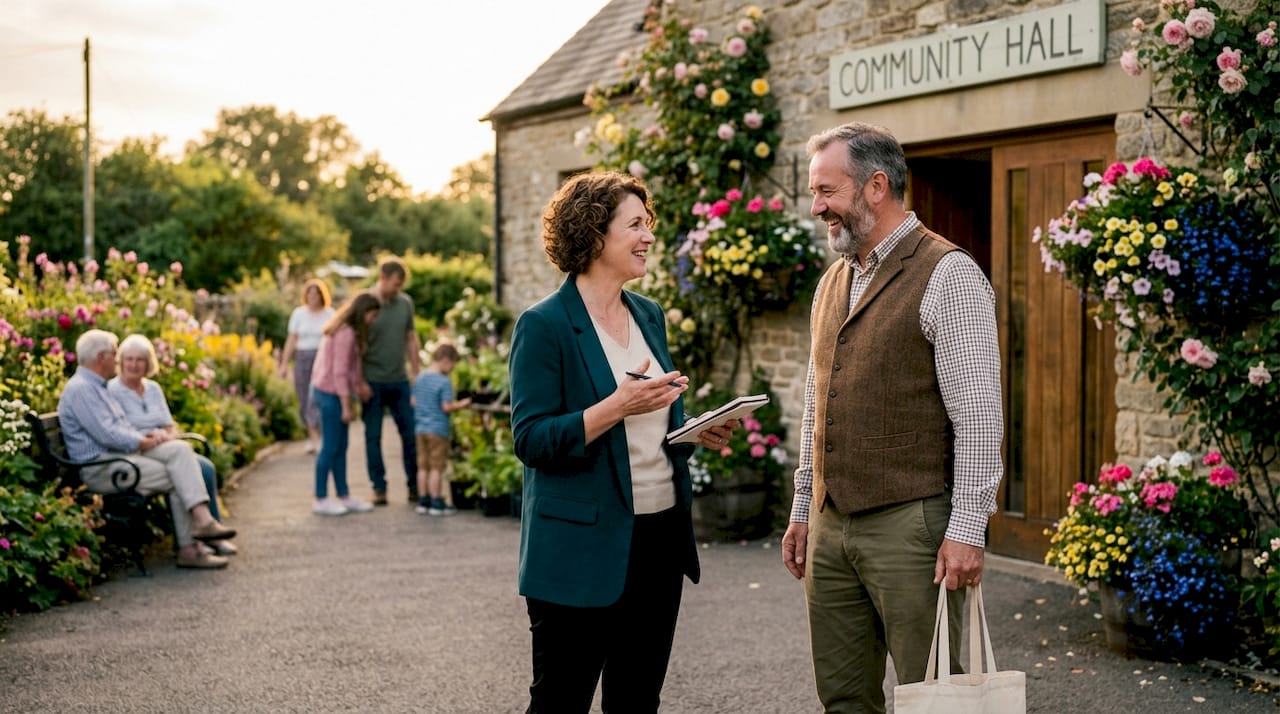
Local goodwill is one of the most underrated factors in venue selection. Venues with strong community goodwill gain public support during controversies, while alienated venues face regulatory and social risks. For couples planning a wedding, this means choosing a venue that neighbours respect and support, rather than one that generates friction.
Community alignment also connects directly to personal and organisational values. A couple committed to sustainability will feel more at ease in a venue that actively partners with local suppliers and reduces waste. An event planner working with a corporate client will find it easier to justify a venue that visibly contributes to its community. The impact of community on venue reputation is real and measurable.
Neighbourhood intelligence is the practice of researching local culture, businesses, and community dynamics before finalising a venue. Experienced planners use neighbourhood intelligence to enhance attendee experience well beyond what venue amenities alone can offer. Knowing which local florist, caterer, or transport provider aligns with the event’s values adds layers of authenticity that guests notice.
Key ways community involvement shapes venue choice:
- Cultural fit: The venue’s history and local identity reinforce the event’s theme and meaning.
- Reputation and goodwill: A venue respected by its community faces fewer last-minute disruptions.
- Values alignment: Couples and planners increasingly choose venues that reflect their social and ethical commitments.
- Local partnerships: Connections to nearby businesses improve catering, transport, and décor options.
- Attendee comfort: Guests feel safer and more welcome in venues that are known and trusted locally.
Pro Tip: Before booking, ask the venue manager which local businesses they regularly partner with. A venue with strong local ties will answer quickly and specifically.
What community-related factors should planners and couples prioritise?
Practical community-focused criteria now sit alongside budget and capacity in most serious venue shortlists. 74% of event planners emphasise accessibility and sustainability as key venue criteria in early 2026. That figure reflects a genuine shift in priorities, not just a trend. Couples and planners who ignore these factors risk choosing a venue that excludes guests or conflicts with their stated values.
The following factors deserve priority attention during the selection process:
-
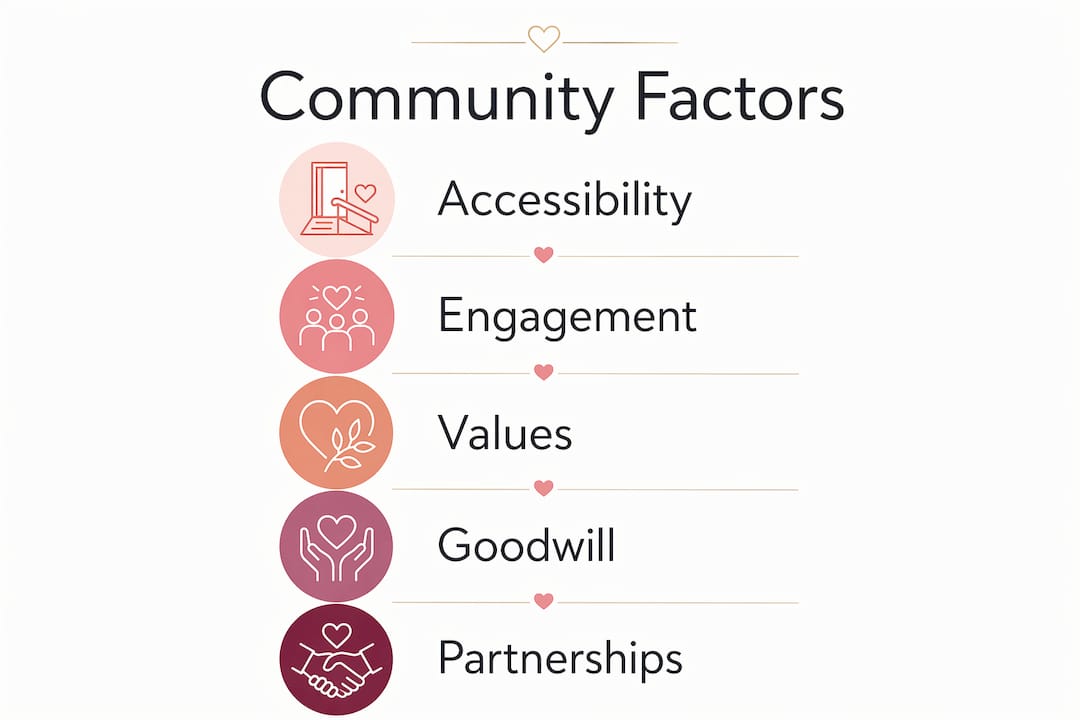
Accessibility: Does the venue meet the needs of guests with mobility, sensory, or dietary requirements? Venue accessibility is a community expectation, not an optional extra. A venue that cannot accommodate all guests signals poor community awareness.
-
Sustainability practices: Does the venue use local suppliers, manage waste responsibly, and reduce its environmental footprint? Sustainability in venues is now a standard community expectation across South Australia.
-
Safety and inclusivity: Does the venue have clear policies for diverse attendees, including LGBTQIA+ guests, guests from different cultural backgrounds, and guests with disabilities? Ignoring diverse community members in venue selection can fragment attendee focus and harm event branding.
-
Community engagement history: Has the venue hosted community events, fundraisers, or local programmes? A track record of community engagement signals that the venue understands its role beyond commercial hire.
-
Local business partnerships: Does the venue work with nearby caterers, florists, or accommodation providers? These partnerships benefit the local economy and often improve the quality and authenticity of the event.
The table below summarises how these factors connect to event outcomes:
| Community factor | Impact on event outcome |
|---|---|
| Accessibility | Increases guest attendance and reduces exclusion |
| Sustainability | Strengthens brand alignment and reduces waste costs |
| Safety and inclusivity | Improves guest comfort and reduces liability |
| Community engagement history | Indicates venue reliability and local trust |
| Local business partnerships | Enhances authenticity and supports local economy |
63% of planners now cite attendee engagement as their primary KPI for venue choice, prioritising venues that build community interaction over those that simply minimise cost. That means the community-related factors above are not soft considerations. They directly affect the metrics planners are measured against.
How can understanding community dynamics prevent risks?
Neglecting community input creates real operational risks for venues and the events held within them. Noise complaints, licence challenges, and public backlash are not random. They follow predictable patterns when venues fail to manage their relationship with the surrounding community.
Venue operators who engage proactively with local associations avoid regulatory issues like noise complaints and preserve their operational licences. This is community management as risk mitigation, not just goodwill. For couples and planners, choosing a venue with this track record reduces the chance of disruption on the day.
Venues that treat community relationships as a core operational priority, rather than an afterthought, consistently outperform those that do not. Local goodwill functions as a critical safety net when regulatory or redevelopment pressures arise. Long-term venue survival increasingly depends on governance that includes community ownership and collective decision-making.
The Agent of Change legal principle is a specific protection worth understanding. The Agent of Change principle protects venues from noise complaint-related closures when new developments occur nearby, shifting soundproofing costs to developers rather than the venue. Planners should verify whether a venue has this protection in place, particularly in urban areas undergoing development.
Community ownership and co-op governance models are also growing in prominence. These structures empower locals to define how a venue is used and what values it upholds. For couples who want their wedding to reflect genuine community connection, a venue with co-op or community trust governance offers a level of authenticity that commercial venues rarely match.
The contrast between community-engaged and community-neglected venues is stark:
| Venue type | Community relationship | Risk profile |
|---|---|---|
| Community-engaged venue | Active local partnerships, open dialogue | Low: supported during disputes |
| Community-neglected venue | Minimal local ties, reactive management | High: vulnerable to complaints and closures |
How to integrate community considerations into the venue selection process
Integrating community considerations into venue selection requires deliberate research, not guesswork. The process starts before the first site visit and continues through to the final booking decision.
Practical steps for couples and planners:
- Research local culture and demographics: Understand the neighbourhood’s history, cultural mix, and community priorities before shortlisting venues. Local council websites, community Facebook groups, and neighbourhood associations are reliable starting points.
- Engage with community representatives: Contact local business associations or residents’ groups to ask about the venue’s reputation. A few direct conversations reveal more than any online review.
- Assess the venue’s community programme: Ask venue managers for examples of community events they have hosted. Venues with a genuine track record will provide specific examples readily.
- Work with local vendors: Prioritise venues that actively recommend or partner with local caterers, florists, and transport providers. This supports the local economy and often produces better event outcomes.
- Use platforms with community intelligence built in: Event planners incorporating community influence into their selection process use directory platforms that include venue reputation data, local partnership information, and accessibility details alongside standard filters.
- Verify legal protections: Confirm whether the venue holds relevant protections, such as Agent of Change provisions, that safeguard its long-term operation.
Pro Tip: Ask the venue for a list of their last five community or charity events. If they cannot provide one, treat that as a signal about their community priorities.
The most effective approach combines desk research with direct community engagement. No amount of online research replaces a conversation with someone who lives or works near the venue.
Key takeaways
Community alignment is the single most important emerging factor in venue selection, directly affecting attendee experience, operational stability, and long-term venue viability.
| Point | Details |
|---|---|
| Values alignment is rising fast | 78% of planners now rank values alignment in their top three criteria, up from 43% in 2023. |
| Accessibility and sustainability are non-negotiable | 74% of planners prioritise these factors, making them standard community expectations in 2026. |
| Community goodwill reduces operational risk | Venues with strong local ties face fewer regulatory challenges and disruptions. |
| Neighbourhood intelligence improves outcomes | Researching local culture and partnerships enhances attendee experience beyond venue amenities. |
| Agent of Change protections matter | Planners should verify this legal safeguard during site selection to protect long-term viability. |
Why I think community is the most underestimated factor in venue selection
After years of working with couples and planners across South Australia, I have seen the same pattern repeat. A couple falls in love with a venue’s aesthetics, books it quickly, and then discovers on the day that the neighbours are hostile, the local transport options are poor, or the venue’s sustainability claims were largely cosmetic. These are not surprises. They are the predictable result of skipping community due diligence.
The venues that consistently deliver exceptional weddings are not always the most photogenic. They are the ones where the staff know the local florist by name, where the neighbours wave rather than complain, and where the venue’s values match the couple’s own. That alignment creates a coherence that guests feel, even if they cannot articulate why.
The hardest thing to convince couples of is that community factors deserve the same rigour as budget and capacity. A venue that scores well on every traditional criterion but sits in a community it has alienated is a liability. The reverse is also true. A modest venue with deep community roots can deliver a wedding that feels genuinely meaningful in ways that a grand but isolated space never will.
My advice is straightforward. Add community due diligence to your venue checklist. Ask hard questions. Talk to locals. Choose venues that have earned their place in their neighbourhood, not just their postcode.
— Steven
Finding community-conscious venues in Adelaide
Adelaideweddingvenues maintains a directory of venues across Adelaide and South Australia, with listings that reflect the diversity of the region’s communities. The platform is built by wedding industry professionals who understand that the right venue is about more than square metres and catering packages.
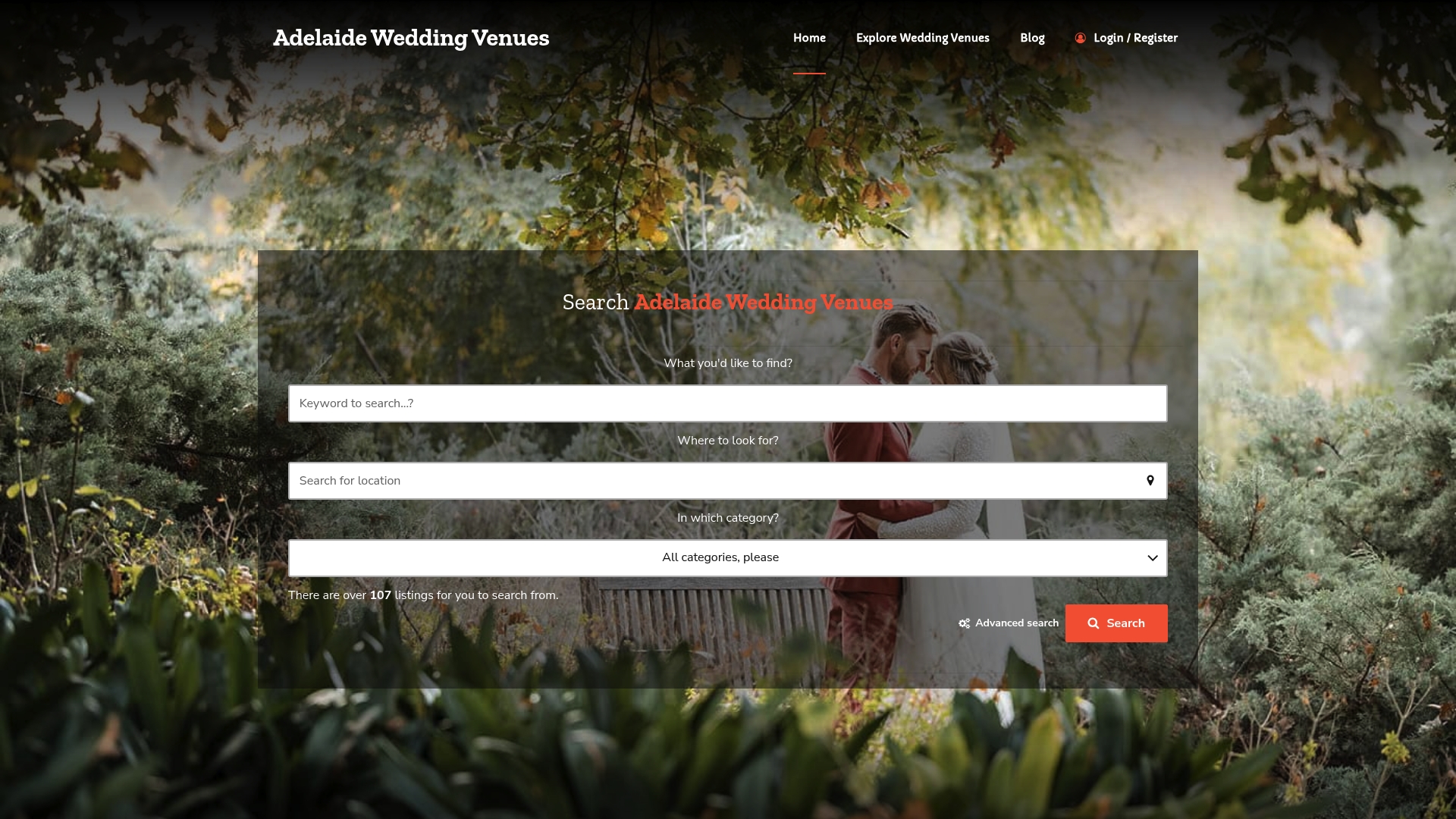
Couples and planners can use Adelaideweddingvenues to filter venues by type, location, and size, with access to detailed listings that highlight local partnerships and community engagement. The ideal wedding venue guide on the platform walks couples through the full selection process, including community-related factors that most generic checklists overlook. Whether you are drawn to a heritage property with deep local roots or a contemporary space with strong sustainability credentials, the directory gives you the information to make a confident, community-aware choice.
FAQ
What does “community” mean in venue selection?
Community in venue selection refers to the local social, cultural, and organisational context surrounding a venue, including neighbourhood relationships, local business partnerships, and the values the venue reflects in its operations.
Why does community alignment matter for weddings?
78% of event planners rank values alignment among their top three venue criteria in 2026. For weddings, community alignment ensures the venue reflects the couple’s values and creates a welcoming environment for all guests.
How do I assess a venue’s community engagement?
Ask the venue for examples of community events they have hosted, check their local business partnerships, and speak directly with nearby residents or business owners to gauge the venue’s local reputation.
What is the Agent of Change principle and why does it matter?
The Agent of Change principle is a legal protection that shifts soundproofing costs to new developers rather than existing venues when nearby development creates noise conflicts. Planners should verify this protection during site selection to reduce long-term operational risk.
How does accessibility connect to community in venue selection?
Accessibility is a community expectation, with 74% of planners prioritising it as a key criterion in 2026. A venue that cannot accommodate guests with diverse needs signals poor community awareness and risks excluding attendees.
