
TL;DR:
- Wedding style inspiration lists help couples create a cohesive wedding aesthetic by selecting themes and decor. In Australia, traditional, romantic, minimalist, and rustic styles dominate, with venue choices reflecting these preferences. Seasonal considerations influence fabric, florals, and mood, making venue and attire choices more harmonious and cost-effective.
Wedding style inspiration lists are curated collections of themes, aesthetics, and decor ideas that help engaged couples build a cohesive visual identity for their wedding day. Think of them as a bridal style guide made practical. In Australia, classic and traditional styles lead at 18%, followed closely by romantic at 17%, modern minimalist at 16%, and rustic at 16%. Those numbers tell you something useful: couples are not chasing one dominant trend. They are choosing deliberately. A well-built inspiration list gives you a filter for every decision, from florals to fabric to venue.
What are the most popular wedding style inspiration lists in Australia?
The four styles that dominate Australian weddings in 2026 each carry a distinct visual language. Knowing where you sit within them is the fastest way to start narrowing your choices.
- Classic and traditional (18%): White and ivory palettes, structured florals like roses and peonies, formal table settings, and timeless silhouettes. This style photographs beautifully in heritage ballrooms and garden estates. Couples who choose it tend to prioritise elegance over novelty.
- Romantic (17%): Soft candlelight, draped fabric, blush and dusty rose tones, and lush garden florals. Romantic styling works especially well at intimate Adelaide venues where scale supports a sense of closeness.
- Modern minimalist (16%): Clean lines, neutral palettes, architectural florals, and deliberate negative space. This style demands a venue with strong bones. A concrete warehouse or a glass pavilion carries it far better than a heavily decorated ballroom.
- Rustic (16%): Timber, greenery, exposed brick, and warm amber lighting. Rustic styling suits barn venues, wineries, and outdoor settings where natural textures do most of the work.
Each of these styles reflects a broader shift in Australian wedding culture. Couples are choosing venues that match their aesthetic from the start, rather than decorating around a neutral space. The venue is now part of the style, not just a backdrop.
How seasonal wedding styling shapes your inspiration
Seasonal styling aligned with the Australian climate produces better guest comfort and stronger visual harmony. A midsummer wedding in South Australia calls for entirely different choices than a june ceremony in the Adelaide Hills.
- Summer (december to february): Lightweight fabrics like chiffon and linen, tropical or native florals, bright whites and coral tones, and open-air or shaded venues. Breathable fabrics for coastal ceremonies outperform heavy satins in both comfort and appearance.
- Autumn (march to may): Terracotta, burnt orange, and deep burgundy palettes. Dried botanicals, pampas grass, and warm candlelight suit the season’s natural tones. Outdoor ceremonies in the Adelaide Hills feel genuinely seasonal rather than forced.
- Winter (june to august): Rich jewel tones like navy, emerald, and plum. Velvet table runners, pillar candles, and warm indoor lighting create depth. Winter weddings also benefit from off-peak date savings of 10–25%, which frees up budget for styling upgrades.
- Spring (september to november): Pastel florals, garden-party tablescapes, and soft greens. Wisteria, ranunculus, and sweet peas are at their peak. Outdoor venues with established gardens carry spring styling with almost no additional decoration.
Seasonal alignment also affects attire. A gown silhouette and fabric chosen to suit the venue and climate will look and feel better on the day. That detail matters more than most couples expect.
Pro Tip: Build your seasonal palette before you book your florist. Florists price and source blooms by season, so arriving with a clear colour direction saves both time and money.
How to use a wedding vision board to organise your style
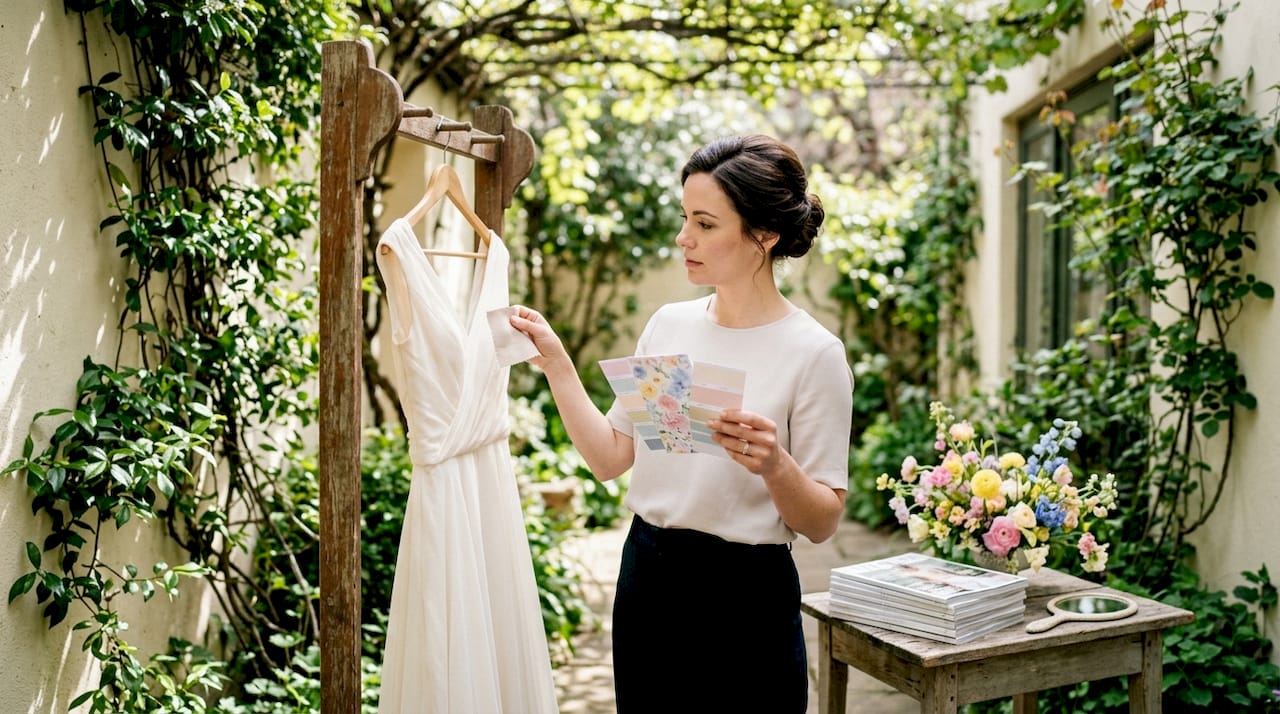
A wedding vision board is the working document that sits between your inspiration list and your vendor briefs. Used well, it stops you from collecting beautiful images with no clear direction.
- Start with a master digital board. Gather everything that appeals to you without editing. Pinterest, Instagram saves, and magazine clippings all belong here. The goal is volume, not curation.
- Identify the feeling, not just the look. Effective vision boards focus on mood, whether that is romantic, editorial, intimate, or joyful. Once you name the feeling, irrelevant images become obvious and easy to remove.
- Create a condensed working version. A two-tiered vision board approach works best: keep the master board for reference and produce a tighter PDF of 10–15 images for vendor meetings. Vendors respond better to a focused brief than a sprawling collection.
- Add physical samples. Fabric swatches and paint chips reveal preferences that digital images often hide. A colour that looks perfect on screen can read completely differently in person.
- Use it as a decision filter. When a vendor proposes something new, hold it against your board. If it does not match the feeling you identified, decline it regardless of how appealing it looks in isolation.
The most common vision board mistake is collecting too many conflicting styles. Cohesive weddings repeat textures, colours, and tones to create continuity. Variation is fine. Contradiction is not.
Pro Tip: Set your budget and guest list before you build your vision board. Styling pursued after budget and guest list decisions avoids the incremental cost creep that derails most wedding budgets.
Top creative wedding style themes to personalise your day
The styles below go beyond the four dominant trends. They give couples a more specific starting point, and most can be layered with a seasonal palette or a venue type to create something genuinely personal.
| Style | Key aesthetic elements | Best venue type |
|---|---|---|
| Celestial | Deep navy, gold accents, star motifs, draped fabric | Indoor ballroom or marquee |
| Rustic charm | Timber, greenery, hessian, warm amber lighting | Barn, winery, or outdoor estate |
| Modern minimalist | Neutral tones, clean lines, architectural florals | Warehouse, gallery, or glass pavilion |
| Garden party | Pastel florals, rattan furniture, soft greens | Outdoor garden or heritage estate |
| Romantic elegance | Candlelight, blush tones, lush blooms, draped silk | Heritage ballroom or boutique hotel |
| Coastal | Bleached linen, driftwood, native florals, sea glass tones | Beachside or clifftop venue |
| Boho wedding inspiration | Macramé, pampas grass, earthy tones, layered textures | Outdoor field, vineyard, or bush setting |
Each of these styles works best when the venue reinforces the aesthetic rather than fighting it. A celestial theme in a timber barn requires significant investment to override the space. The same theme in a dark-walled ballroom needs almost nothing. Choosing a venue that already speaks your style language is the single most cost-effective styling decision you can make.
Couples who want to blend styles should pick one as the lead and treat the second as an accent. A modern minimalist wedding with boho inspiration elements, for example, works well when the minimalist palette stays dominant and the boho touches appear in the florals and table styling only.
- Celestial: Use deep blue linen, gold cutlery, and star-shaped place cards. Avoid overdoing the motifs. One or two strong celestial elements carry the theme better than ten small ones.
- Garden party: Rattan chairs, mismatched vintage crockery, and low floral centrepieces create the right informality. This style suits outdoor Adelaide venues with established gardens.
- Coastal: Native Australian florals like banksia, protea, and leucadendron suit this style perfectly. They are also more affordable than imported blooms and photograph beautifully in natural light.
- Boho: Pampas grass, dried botanicals, and layered rugs do most of the work. This style is forgiving of imperfection, which makes it popular with couples who want a relaxed, personal atmosphere.
For event catering that matches a specific style theme, festive menu planning for 2026 offers practical guidance on aligning food presentation with wedding aesthetics.
Key takeaways
The most effective wedding style inspiration lists combine a clear mood focus, a seasonal palette, and a venue that already carries the aesthetic you want.
| Point | Details |
|---|---|
| Start with popular styles | Classic, romantic, minimalist, and rustic lead Australian weddings in 2026. |
| Align style with season | Seasonal palettes and fabrics improve both comfort and visual cohesion. |
| Build a two-tier vision board | Keep a master board and a condensed vendor PDF to guide every decision. |
| Choose a lead style | Pick one dominant theme and use a second as an accent only. |
| Let the venue do the work | A venue that already matches your aesthetic reduces styling costs significantly. |
Why I think most couples overcomplicate their style inspiration
Couples often arrive at their first vendor meeting with 400 saved images and no clear direction. That is not inspiration. That is noise.
The couples whose weddings look most cohesive are the ones who edited ruthlessly. They picked a feeling, not a catalogue of looks. They chose a venue that already did 60% of the styling work. They resisted the temptation to add one more detail that “felt right” in isolation but pulled against the whole.
The other thing I have noticed is that couples who set their budget before building their vision board end up with better weddings. Not because they spent less, but because they made deliberate choices instead of reactive ones. Style inspiration should follow your constraints, not precede them.
The Adelaide wedding trends for 2026 show that couples are moving toward more personal, less trend-driven aesthetics. That is a good thing. The best wedding style is the one that looks like you, not like a magazine spread from six months ago. Find more wedding planning ideas on the Blog.
— Steven
Finding the right venue to match your wedding style
Once your style direction is clear, the venue becomes the most important decision you will make.
Adelaideweddingvenues lists hundreds of venues across Adelaide and South Australia, organised by type, location, and capacity. Whether your style calls for a heritage ballroom, a coastal clifftop, or a rustic winery estate, the directory makes it straightforward to find spaces that already carry your aesthetic. The guide to choosing your ideal wedding venue walks couples through matching venue character to personal style, budget, and guest list. For couples who want a venue that does the styling heavy lifting, tips for aligning venue with vision offer a practical checklist to use before you book.
FAQ
What are wedding style inspiration lists?
Wedding style inspiration lists are curated collections of themes, aesthetics, and decor ideas that help couples build a cohesive visual direction for their wedding. They function as a practical bridal style guide, covering everything from colour palettes to venue type.
What is the most popular wedding style in Australia in 2026?
Classic and traditional is the most popular wedding style in Australia in 2026, at 18%, followed by romantic at 17%, modern minimalist at 16%, and rustic at 16%.
How do I choose a wedding style that suits me?
Start by identifying the feeling you want your wedding to have, whether intimate, joyful, elegant, or relaxed. Then select a lead style from your inspiration list and choose a venue that already reflects that aesthetic.
When should I start building my wedding style inspiration list?
Build your inspiration list after you have set your budget and guest list. Styling decisions made before those foundations are in place risk incremental cost increases that push the overall budget beyond what was planned.
How do seasonal themes affect wedding decor inspiration?
Seasonal styling aligns your colour palette, florals, and fabrics with the natural environment, which improves both guest comfort and visual harmony. In South Australia, summer weddings favour lightweight fabrics and native florals, while winter ceremonies suit rich jewel tones and warm indoor lighting.
