
TL;DR:
- Building genuine community ties helps venues gain loyalty, reduce complaints, and attract financial support. Engaging locals through co-designed programs and consistent weekly events creates long-term patronage and resilience. Strong community relationships also improve regulatory outcomes by fostering trust and support from neighbors and authorities.
Community is the foundation of every successful venue, providing the trust, loyalty, and social connections that keep doors open and calendars full. Venue owners and event organisers who invest in genuine local relationships consistently outperform those who treat guests as transactions. The importance of community for venues goes well beyond goodwill. It shapes regulatory outcomes, drives repeat attendance, and creates a network of allies who advocate for your space when it matters most. This guide covers the practical strategies and evidence-backed approaches that help venues build lasting community ties in 2026.
Why community matters for venues: the core case
Community engagement is defined as the ongoing, intentional process of building mutual relationships between a venue and the people who live, work, and gather around it. This is the recognised industry term, and it sits at the heart of every resilient venue operation.
Venues that treat community as a core function, rather than an afterthought, gain measurable advantages. Governments increasingly view venues as social and economic infrastructure. That means community-focused venues are better placed to attract grants, regional development investment, and state-level support. The implication is direct: your community relationships are a financial asset, not just a feel-good exercise.
Strong community ties also influence how neighbours, councils, and regulators perceive your venue. A venue with genuine local support faces fewer obstacles when applying for permits, extending trading hours, or managing noise complaints. The social capital you build through consistent engagement translates into practical, operational protection.
How does community engagement drive venue resilience?
Venues with strong local relationships face fewer regulatory complaints and attract consistent patronage even during economic downturns. Consistent community programming like weekly trivia nights or poker leagues builds habitual attendance and lowers price sensitivity among regulars. Habitual patrons are far less likely to switch venues based on price alone. That loyalty acts as a financial buffer when trading conditions tighten.

Regular attendees also become brand ambassadors. Word-of-mouth referrals generated by engaged community members cost far less than paid advertising and carry far more credibility. A local who tells their friends about your venue every week is worth more than a one-off social media campaign.
The types of weekly programming that drive this effect include:
- Trivia nights: Team-based formats create social obligations that bring groups back weekly.
- Poker leagues: Structured competition with rankings and recognition builds long-term commitment.
- Sports tipping competitions: Seasonal engagement tied to football or cricket keeps patrons returning throughout the year.
- DJ bingo: Accessible, cross-generational entertainment that attracts new demographics without alienating regulars.
Each of these formats creates what community engagement practitioners call “sticky commitments.” Patrons do not just attend once. They return because their team, their ranking, or their social group depends on it.
Pro Tip: Run at least two different weekly formats targeting different demographics. A poker league draws one crowd; a trivia night draws another. Overlapping these groups builds a broader, more resilient community base.
How to build strong community ties at your venue
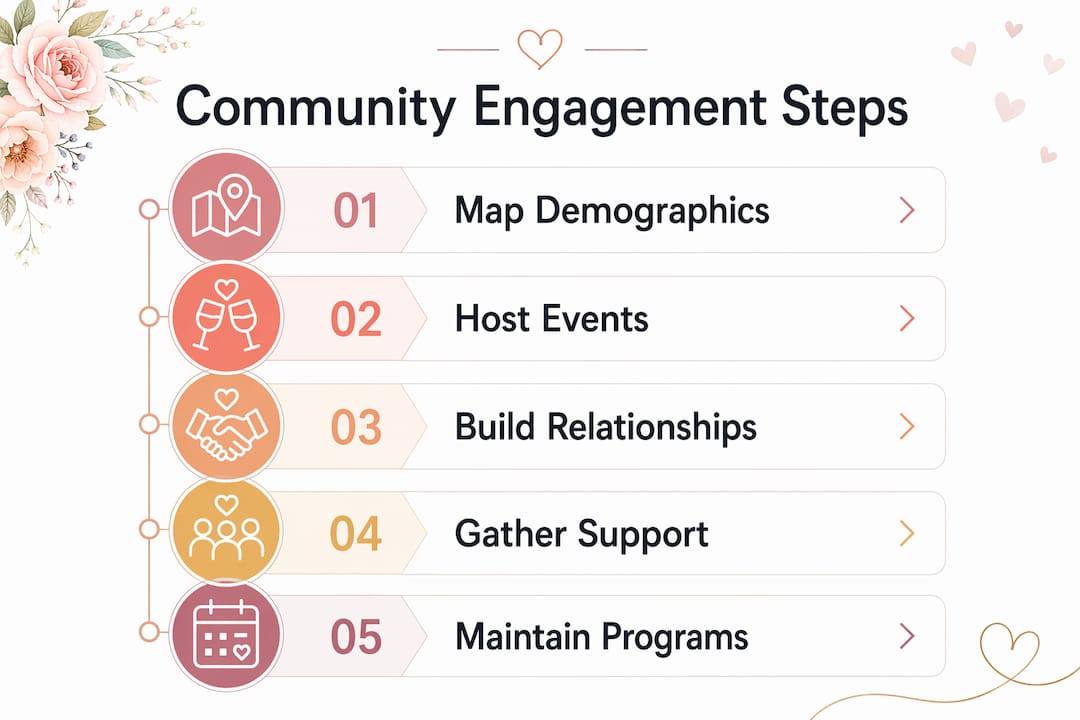
Building genuine community ties requires co-design, not just programming. Co-designing programmes with local groups enhances inclusion and long-term loyalty in ways that top-down event planning cannot replicate. In 2025, over 400 events used a community framework to build capability among First Nations, LGBTIQA+, and seniors groups across Australia. That scale demonstrates how co-design has moved from a niche approach to an industry standard.
Practical steps for building these ties include:
- Identify your local demographic groups. Map the community around your venue. Who lives nearby? Which groups are underserved by existing entertainment options?
- Invite local leaders into the planning process. Approach First Nations elders, LGBTIQA+ community organisations, and seniors groups directly. Ask what they need, not what you plan to offer.
- Establish a neighbour hotline or direct contact channel. Open communication channels catch issues early, earn trust, and prevent complaints from escalating to police or council.
- Host charity and local cause events. Giving your space to community fundraisers demonstrates genuine care and builds goodwill that outlasts the event itself.
- Hire staff for kindness and support their development. Staff hired for kindness and supported to build a caring culture create safe, welcoming venues that become community hubs. This approach also supports patron mental health and builds lasting trust.
- Quantify your community contributions. Track free space provided to local groups, local supplier spend, and charity dollars raised. Quantifying community contributions enables venues to demonstrate social impact to stakeholders and funders, reinforcing their status as community assets.
The role of community in venue selection is increasingly central to how couples and event organisers choose where to book. Venues with visible community credentials attract clients who value more than just a room.
Pro Tip: Create a simple one-page “community impact report” each year. List the groups you hosted, the causes you supported, and the local suppliers you used. Share it with your council, your neighbours, and your social media audience.
Does community goodwill affect regulatory and licensing outcomes?
Community goodwill directly influences permitting, licensing, and crisis management outcomes for venues. Venues cultivating local relationships experience significantly fewer regulatory complaints and obstacles because trusted neighbour communication resolves issues before they escalate. This is not anecdotal. It is the consistent finding across Australian hospitality and events research.
The practical mechanisms through which community goodwill supports regulatory success include:
- Letters of support: Neighbours and community groups who trust your venue will write letters or appear at council hearings on your behalf when you apply for permits or licence extensions.
- Crisis buffering: Community goodwill creates a cushion during controversies. An established network of allies can publicly defend your venue when protests or cancellations arise.
- Proactive complaint resolution: Direct dialogue with neighbours prevents minor grievances from reaching police or council. A neighbour hotline resolves noise complaints before they become formal objections.
- Relationship with local authorities: Venues known as community assets receive more collaborative treatment from council officers during compliance visits.
To mobilise community allies during a council hearing, start well before the hearing date. Reach out to local groups you have supported, ask for written statements, and brief them on the specific outcome you need. A venue with ten letters of community support carries far more weight than one with none.
What programming keeps communities engaged long-term?
Technology-enabled weekly events create habitual visits and stronger community bonds than one-off events ever can. Weekly engagement products like poker leagues, trivia nights, and sports tipping drive deeper participation by creating team structures and recognition systems. The social architecture of these formats matters as much as the entertainment itself.
The table below compares common weekly programming formats by demographic fit and community impact:
| Format | Primary demographic | Community impact |
|---|---|---|
| Trivia night | Mixed adults, 25–55 | High team bonding, broad appeal |
| Poker league | Adults, 30–60 | Strong loyalty through competition |
| Sports tipping | Sports fans, 18–65 | Seasonal engagement, high retention |
| DJ bingo | Mixed, 18–45 | Cross-generational, new audience draw |
| Charity quiz | Families and groups | Goodwill building, cause alignment |
Technology enhances these formats without replacing the social interaction that makes them work. Digital scoring systems, leaderboards, and app-based tipping competitions add convenience and recognition. They do not replace the human connection that brings people back. Venues that operate as community platforms hosting multiple demographic groups through varied programming achieve broader loyalty and resilience than single-format venues.
Building a diverse weekly calendar also keeps your venue top-of-mind across different social groups. A patron who attends trivia on Wednesday tells their poker-playing friend about the Thursday league. Cross-pollination between programmes grows your community organically.
Key takeaways
Community engagement is the single most reliable driver of venue resilience, regulatory goodwill, and long-term patronage in the Australian events and hospitality sector.
| Point | Details |
|---|---|
| Community is a financial asset | Venues with strong local ties attract grants, reduce complaints, and build habitual patronage. |
| Co-design beats top-down programming | Involving local groups in planning builds deeper loyalty than hosting events for them. |
| Weekly formats create sticky commitment | Trivia, poker, and tipping competitions bring patrons back through team structures and recognition. |
| Goodwill supports licensing outcomes | Community allies provide letters and testimony that directly influence permit and licence decisions. |
| Staff culture drives authentic connection | Hiring for kindness and supporting staff wellbeing creates the safe, welcoming spaces communities trust. |
Community as a long-term investment, not a marketing tactic
The venues I have seen thrive over the long term share one quality: they treat community engagement as genuinely relational, not as a channel for promotion. The distinction matters more than most venue owners realise.
A venue that hosts a charity quiz to generate social media content is doing something fundamentally different from one that hosts it because the local food bank asked for help. Patrons notice the difference. Neighbours notice the difference. Council officers notice the difference. Intentional engagement transforms a venue into a hub of belonging, and that transformation is felt before it is measured.
The most durable community relationships I have observed start with small acts. A staff member who remembers a regular’s name. A venue that gives a local school group free use of the space on a quiet Tuesday. These moments accumulate into a reputation that no advertising budget can buy. Building trust through small acts of kindness creates safe, welcoming spaces that invite meaningful interaction over years, not weeks.
My honest view is that venues which skip this work are not just missing a marketing opportunity. They are leaving themselves exposed. When a noise complaint lands, when a licence renewal comes up, when a protest group targets your event, the question is not what your social media following looks like. The question is whether your neighbours will stand up for you. Build that answer now, not in a crisis.
— Steven
How Adelaideweddingvenues supports community-focused venue owners
Adelaideweddingvenues connects venue owners and event organisers with the resources, listings, and guidance needed to make community-centred decisions about their spaces.
Whether you are selecting a venue that reflects strong local values or looking to understand how venue reputation shapes bookings, the platform offers practical tools to help. The directory covers venues across Adelaide and South Australia, with free listings that give community-focused spaces visibility without barriers. For venue owners ready to position their space as a genuine community asset, the ideal wedding venue guide offers clear, experience-backed advice on matching venue character with event values. Adelaideweddingvenues makes it straightforward to find or list spaces where community and celebration go hand in hand.
FAQ
Why does community matter for event venues?
Community provides venues with loyal patrons, regulatory goodwill, and crisis support that one-off marketing cannot replicate. Venues with strong local relationships face fewer complaints and attract consistent attendance even during economic downturns.
How does community engagement improve venue licensing outcomes?
Community allies provide letters of support and public testimony at council hearings, directly influencing permit and licence decisions. Proactive communication channels also prevent minor complaints from escalating to formal regulatory action.
What weekly events build the strongest community bonds?
Poker leagues, trivia nights, and sports tipping competitions create the strongest bonds because they use team structures and recognition systems that bring patrons back week after week. These formats generate habitual attendance rather than one-off visits.
How can venue owners start building community relationships?
Start by mapping the demographic groups near your venue, then invite local leaders into your programming decisions through co-design. Establish a direct neighbour communication channel and host at least one local cause event per quarter.
Does community engagement affect a venue’s financial performance?
Regular community members become brand ambassadors who generate cost-effective word-of-mouth referrals. Venues positioned as community assets also attract grants and regional development investment from governments that view them as social infrastructure.
