
TL;DR:
- Choosing the right catering style influences the atmosphere and flow of your wedding reception.
- Planning menus with dietary needs and seasonal ingredients ensures inclusivity and cost-efficiency.
A wedding menu options list is a curated selection of catering styles and dishes designed to satisfy diverse guest preferences and dietary needs across a reception. Getting this right early shapes everything from your budget to your guests’ enjoyment. Wedding catering costs in Australia range from $80 to $180 per person, depending on service style. That spread is wide enough to make catering one of your biggest planning decisions. The style you choose, whether plated, shared, buffet, or cocktail, sets the tone for your entire reception. Adelaideweddingvenues has put together this guide to help you build a menu that works for your guests, your venue, and your budget.
1. What is a wedding menu options list?
A wedding menu options list is the formal document that outlines every food and drink offering at your reception, from canapés through to dessert. It covers the catering style, individual dishes, dietary alternatives, and service sequence. Caterers and venue coordinators use it to plan staffing, kitchen logistics, and timing. Couples use it to communicate their vision and confirm costs. Getting it documented early prevents last-minute changes that inflate your bill.
2. Plated alternate-drop dinners
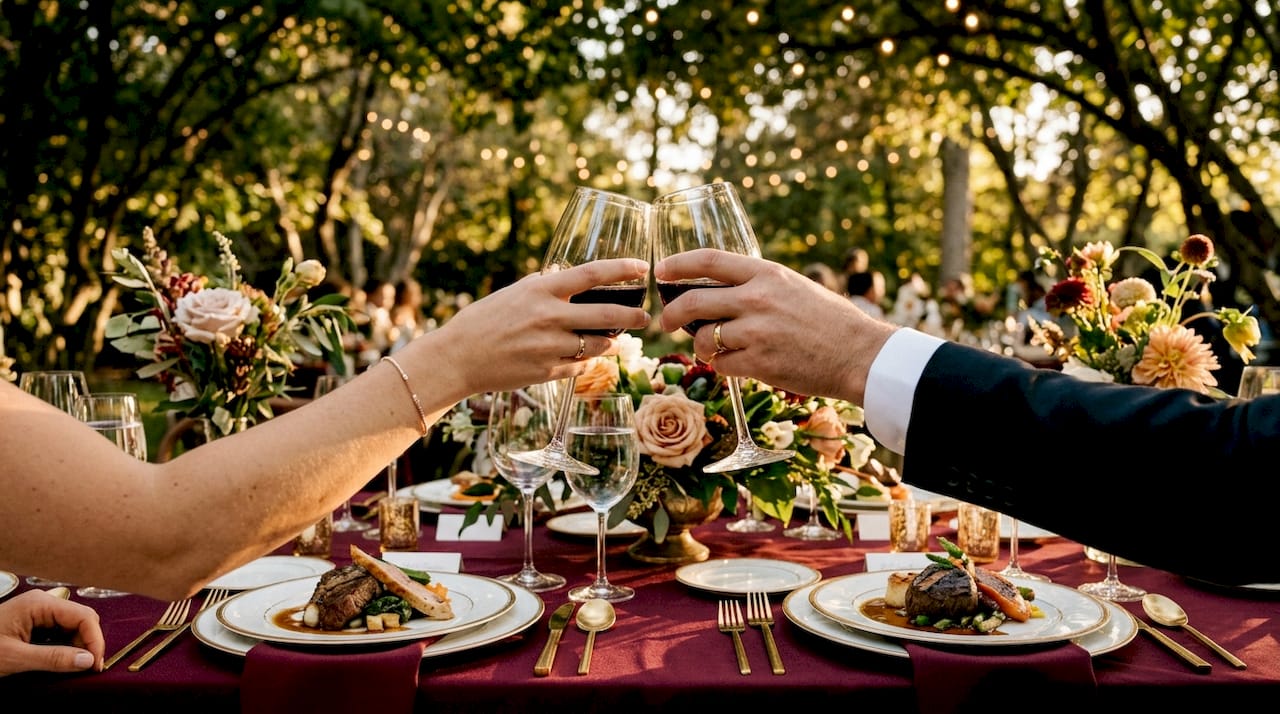
Plated alternate-drop dinners are the most popular catering style in Australia, used in about one in three weddings. Guests receive one of two pre-selected mains, alternating around the table. This style suits formal receptions where couples want a structured, elegant atmosphere. It requires a higher staff ratio, roughly one staff member per 15 guests, which pushes costs toward the $120–$180 per person range. The upside is precise portion control and a polished presentation that photographs beautifully.
Pro Tip: Ask your caterer to make both alternate-drop options equally appealing. Guests notice when one choice feels like the “lesser” option, and it affects their experience.
3. Shared feasting-style menus
Shared feasting is the fastest-growing catering style at Australian weddings. Shared platters act as icebreakers and increase guest engagement around the table, making the meal feel warm and social rather than formal. Large dishes of roasted meats, seasonal salads, and sides arrive at the centre of each table for guests to serve themselves. This style suits couples who want their reception to feel like a generous home dinner rather than a restaurant service. It also gives guests with dietary needs more control over what they put on their plate.
4. Buffet-style catering
Buffet catering is chosen in about one in six Australian weddings, and it remains the most cost-effective full-meal option. Buffet catering averages $8,500 for 100 guests, compared to roughly $14,000 for a plated service. That difference is significant for couples managing a tight budget. Buffets also require fewer staff, with one team member per 25 guests versus one per 15 for plated service. The trade-off is a less formal atmosphere and the need for careful queue management to avoid long waits.
Pro Tip: Book your wedding on a Friday or Sunday. Friday and Sunday bookings can reduce catering costs by 15–20%, which adds up to thousands of dollars on a full buffet.
5. Cocktail-style and grazing receptions
Cocktail receptions replace a sit-down meal with a continuous flow of canapés, grazing boards, and small plates. This style creates the most movement and social energy of any format. Cocktail events need heavier grazing early to prevent guests from drinking on empty stomachs, so the first hour of service is critical. Grazing tables loaded with cured meats, cheeses, dips, and seasonal fruit work well as a centrepiece. This format suits afternoon or early-evening receptions and venues without a full commercial kitchen.
6. How to accommodate dietary requirements
Collecting dietary information is the foundation of good menu planning for weddings. Use free-text fields on your RSVP form rather than checkboxes, because checkboxes miss the detail caterers need. Once responses arrive, sort them into four categories: allergies, religious requirements, medical needs, and lifestyle choices such as veganism or vegetarianism. Send the finalised list to your caterer three to four weeks before the wedding. That window gives the kitchen enough time to source ingredients and adjust preparation methods.
The gold standard for dietary guests is a base menu with simple adjustments rather than entirely separate dishes. Using naturally gluten-free sides, for example, means most guests eat the same food without anyone feeling singled out. Label dishes clearly at buffets and grazing tables. Cross-contamination is a genuine risk for guests with severe allergies, so ask your caterer about their kitchen protocols in writing.
- Allergies: nuts, shellfish, dairy, gluten, eggs
- Religious: halal, kosher, Hindu vegetarian
- Medical: low-FODMAP, diabetic-friendly, low-sodium
- Lifestyle: vegan, vegetarian, pescatarian
7. Seasonal Australian produce choices
Seasonal produce is the single best way to keep food quality high while managing costs. Australian summer weddings suit stone fruits, tomatoes, zucchini, and fresh seafood. Winter receptions benefit from root vegetables, citrus, and slow-cooked proteins. Caterers who source locally and seasonally pass savings on to couples and deliver fresher dishes. For guidance on inclusive menu planning that balances seasonal produce with dietary needs, specialist hospitality resources offer practical frameworks used by professional event caterers.
8. Protein options for every guest
A well-rounded reception menu suggestions list covers at least three protein categories to satisfy all guests. Meat options typically include beef, lamb, chicken, and pork. Seafood choices such as barramundi, prawns, and salmon suit coastal venues and summer receptions. Vegetarian mains like mushroom Wellington, lentil ragù, or stuffed capsicum hold their own as centrepiece dishes rather than afterthoughts. Vegan proteins including tofu, tempeh, and legume-based dishes round out the list. Offering two or three proteins across your service style gives every guest a genuine choice.
9. Grazing tables and interactive food stations
Grazing tables and food stations add a visual and interactive element to any reception. A well-styled grazing table with antipasto, artisan cheeses, seasonal fruit, and house-made dips doubles as a décor feature and a practical food source during the cocktail hour. Interactive stations, such as a taco bar, a pasta station, or a carving station, give guests agency over their meal and create natural conversation points. These formats work across budgets. A simple cheese and charcuterie board costs far less per head than a plated entrée but delivers strong guest satisfaction.
10. Budget-friendly substitutions and luxury upgrades
Smart menu planning for weddings means knowing where to spend and where to save. Budget-friendly substitutions include chicken thigh instead of breast (more flavour, lower cost), seasonal vegetables instead of imported produce, and house-made sauces instead of premium branded condiments. Luxury upgrades that genuinely impress guests include a whole roasted lamb on a spit, a fresh oyster bar, or a custom dessert station with a live waffle or crêpe maker. For South Australian couples managing costs, budget wedding tips from Adelaideweddingvenues cover catering cost strategies specific to local venues and suppliers.
11. Example menu combinations by catering style
Concrete examples make menu planning far easier than working from a blank page.
Plated three-course reception:
- Entrée: seared scallops with cauliflower purée and crispy capers
- Main (alternate drop): slow-roasted lamb rump with roasted kipfler potatoes and broccolini / pan-seared barramundi with lemon butter, asparagus, and wild rice
- Dessert: vanilla panna cotta with berry compote
Shared feasting reception:
- Shared platters: whole roasted chicken, slow-braised beef brisket, roasted seasonal vegetables, green salad, and sourdough
- Dessert: shared pavlova with cream and fresh fruit
Cocktail reception:
- Canapés: smoked salmon blinis, mini beef sliders, caprese skewers, arancini
- Grazing table: cheeses, cured meats, dips, crackers, seasonal fruit
- Sweet bites: macarons, chocolate truffles, mini tarts
12. How menu choice shapes reception flow
The catering style you choose directly controls the energy and timing of your reception. Plated dinners suit formal, anchored events where guests stay seated through speeches, while shared or cocktail styles encourage movement and mingling. Mismatching the catering format to your event energy creates awkward flow. A cocktail-style service at a formal sit-down venue, for instance, leaves guests unsure whether to stand or sit.
Caterers advise prioritising logistics and timing over visual presentation. Great food fails when service is out of sync with speeches and formalities. Your caterer should receive a copy of your runsheet and flag any conflicts before the day. For couples who want to understand how event coordination and catering interact, Adelaideweddingvenues has a dedicated guide to the full wedding event setup process.
“The menu must support the event flow, not the other way around. Couples who build their runsheet around their catering style, rather than forcing the food into an existing schedule, consistently have smoother receptions.” — Professional wedding catering logistics advice
For couples working with a wedding photographer or videographer, the catering style also affects how your reception is captured. Shared feasting creates natural, candid moments. Plated service produces clean, formal imagery. Knowing this helps you align your food service with your creative vision.
13. Working with your venue’s kitchen facilities
Your venue’s kitchen capacity determines which catering styles are actually possible. A heritage homestead with a domestic kitchen cannot support a plated service for 150 guests without an external catering tent. A beachside venue without refrigeration limits your seafood options. Always ask your venue coordinator for a full kitchen specification before finalising your bridal dinner options. For expert guidance on matching your venue to your catering style, specialist hospitality resources outline what to expect from different venue types and how to work productively with catering partners.
Key takeaways
The most effective wedding menu options list balances catering style, dietary inclusivity, seasonal produce, and venue kitchen capacity to deliver a reception guests remember.
| Point | Details |
|---|---|
| Catering style sets the tone | Choose plated, shared, buffet, or cocktail based on your reception’s energy and formality. |
| Costs vary significantly | Buffet averages $8,500 for 100 guests; plated service averages $14,000 for the same number. |
| Dietary needs need structure | Collect free-text RSVP responses and send finalised dietary lists to caterers three to four weeks out. |
| Seasonal produce saves money | Local, in-season ingredients reduce costs and improve dish quality without sacrificing presentation. |
| Menu must match the runsheet | Build your event timeline around your catering style to avoid service delays during speeches and formalities. |
Why shared feasting changed how I think about wedding menus
Shared feasting menus have genuinely shifted my perspective on what makes a wedding reception work. For years, the plated alternate-drop was the default recommendation for any formal wedding. It looks polished, it photographs well, and caterers know how to execute it. But I have watched too many receptions where guests sat quietly through a three-course meal, barely speaking to the people beside them, because the format did not invite interaction.
Shared feasting changes that dynamic immediately. When a large platter of slow-roasted lamb arrives at the centre of a table, something shifts. People lean in, they pass dishes, they comment on the food. The meal becomes a shared experience rather than a solo one. That social energy carries through the rest of the night.
The dietary inclusivity argument also matters more than couples often realise. Guests with dietary restrictions remember how they were treated at your wedding. A thoughtfully adjusted shared platter, where the gluten-free guest gets the same roasted vegetables and salad as everyone else, feels respectful. A separate plate of plain rice and steamed vegetables does not. The gold standard, as professional caterers describe it, is designing menus for dietary inclusivity from the start, not as an afterthought.
My honest advice: choose your catering style before you finalise your venue. The kitchen facilities, the room layout, and the service logistics all flow from that decision. Couples who do it the other way around often find themselves compromising on the food experience to fit a venue they fell in love with for other reasons.
— Steven
Planning your menu alongside the right Adelaide venue
Your catering style and your venue need to work together from day one. Explore All Adelaide Wedding Venues when choosing a setting for your preferred catering style. A rustic barn venue suits shared feasting and grazing tables. A heritage ballroom supports plated service with ease. A beachside location opens up fresh seafood menus and cocktail-style receptions. Getting the venue right first makes every menu decision simpler.
Adelaideweddingvenues lists venues across Adelaide and South Australia, with detailed information on kitchen facilities, catering policies, and capacity. Whether you are drawn to a rustic barn or beachside setting, the directory helps you match your venue to your catering vision before you commit. Use the search filters to find venues that support your preferred service style and guest count, then approach caterers with a venue specification already in hand.
FAQ
What is the most popular wedding catering style in Australia?
Plated alternate-drop dinners are the most popular style, used in about one in three Australian weddings. Shared feasting menus are the fastest-growing alternative.
How much does wedding catering cost per person in Australia?
Wedding catering costs range from $80 to $180 per person. Buffet service averages $70–$110 per guest, while plated service runs $120–$180 per guest.
When should I send dietary requirements to my caterer?
Send your finalised dietary requirements list to your caterer three to four weeks before the wedding. This gives the kitchen enough time to source ingredients and adjust preparation.
How do I handle guests with severe food allergies?
Ask your caterer about cross-contamination protocols in writing, and use free-text RSVP fields to capture detailed allergy information. Design a base menu with simple adjustments rather than entirely separate dishes.
Does my catering style affect my wedding photography?
Shared feasting creates natural, candid moments that suit documentary-style photography. Plated service produces cleaner, more formal imagery. Aligning your food service with your photography style produces more consistent results across the reception.
Recommended
- Wedding Planning Made Easy: The Only Checklist You’ll Ever Need – Adelaide Wedding Venues
- Vegan Eats for the Big Day: Creative Wedding Menu Ideas – Adelaide Wedding Venues
- Avoid Wedding Day Disasters with This Comprehensive Venue Checklist – Adelaide Wedding Venues
- Say ‘I Do’ to the Perfect Venue: A Modern Bride and Groom’s Checklist – Adelaide Wedding Venues
