
TL;DR:
- Choosing ceremony and reception venues involves understanding the distinct costs, layouts, and legal requirements of each. Combining venues simplifies logistics and reduces expenses, while split locations need careful planning for travel time and coordination. Always review full inclusions and build in sufficient buffer time to ensure a smooth wedding day.
Choosing between ceremony and reception venues is the single most consequential decision in wedding planning. The ceremony venue is where the legal or spiritual service takes place, typically lasting 20 to 60 minutes depending on whether you choose a civil, celebrant-led, or religious format. The reception venue is where the celebration follows, averaging 4 to 6 hours and often capped by venue curfews around 11PM. This ceremony vs reception venues list covers every major venue type, the real costs involved, and the logistical trade-offs that couples in Adelaide and across South Australia need to understand before signing any contract.
1. What are the main types of ceremony and reception venues?
Knowing your options is the foundation of any solid venue selection guide. Australian couples have access to a wide range of venue categories, each with distinct features, capacity ranges, and inclusions.
Ceremony venue options:
- Outdoor locations (gardens, beaches, national parks): Suit intimate to large gatherings. Capacity is flexible but weather contingency plans are non-negotiable.
- Religious venues (churches, chapels, temples, mosques): Typically seat 50 to 500 guests. Booking timelines are often longer, and denomination requirements may apply.
- Civil ceremony spaces (council gardens, heritage courtyards): Frequently used for shorter civil ceremonies of 20 to 30 minutes. Many require a council permit.
- Private properties: Farms, vineyards, and family estates offer a personal touch but require additional insurance and logistics planning.
Reception venue styles:
- Reception centres and banquet halls: The most common choice for large guest lists. Typically include tables, chairs, crockery, PA systems, and staffing as standard.
- All-in-one venues: Properties that offer both ceremony and reception spaces on a single site. These are growing in popularity across Adelaide and regional South Australia.
- Wineries and cellar doors: Popular in the Barossa Valley and McLaren Vale. Capacity varies widely, and catering is often tied to the venue’s own kitchen.
- Barns and rural properties: Suit rustic or country-style weddings. Unique Adelaide venues in this category often book out 12 to 18 months in advance.
- Heritage properties: Converted homesteads, historic buildings, and listed properties add character but may have restrictions on décor, noise, and structural changes.
- Restaurants and private dining rooms: Work well for micro-weddings of 20 to 50 guests. Catering is built in, which simplifies vendor coordination.
Pro Tip: When comparing venue types, ask each venue whether the ceremony space and reception space are included in the same hire fee, or whether they are charged separately. This single question can reveal thousands of dollars in hidden costs.
2. Combined venues versus split locations: what changes on the day?
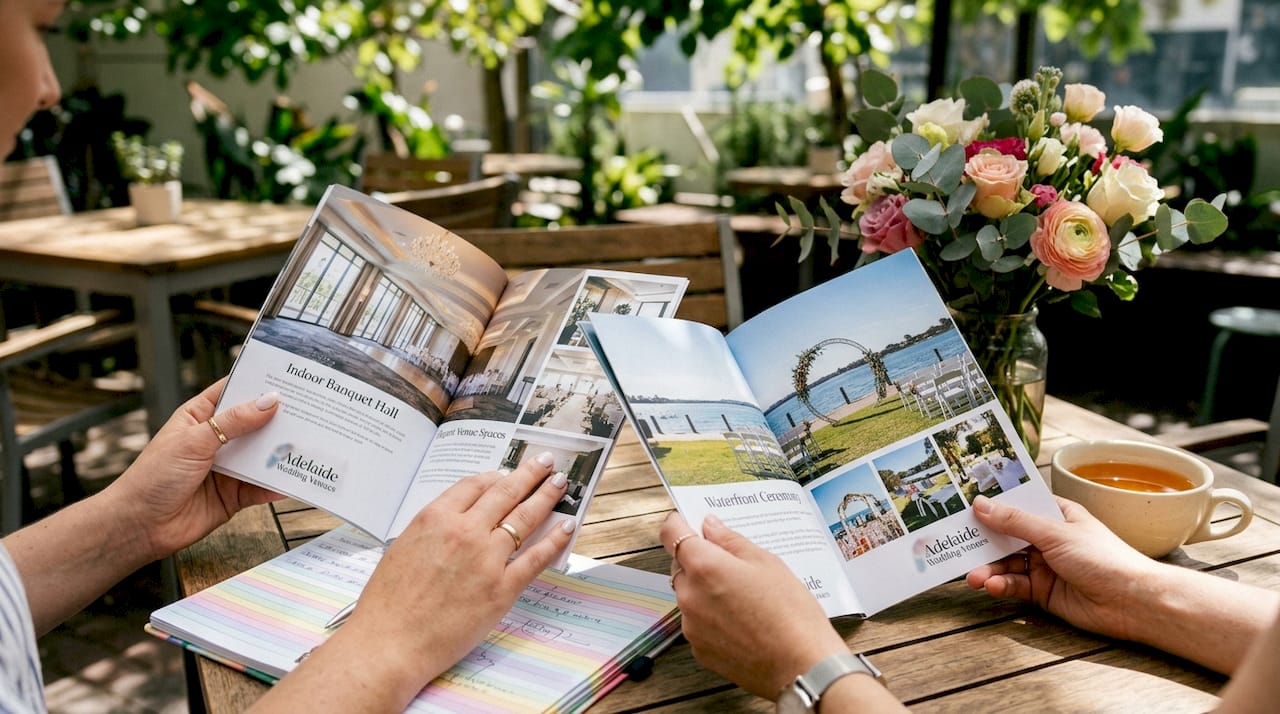
The choice between a single-location wedding and a split ceremony and reception setup affects every part of your day, from guest experience to your vendor bill.
All-in-one venues maintain emotional momentum by keeping guests together and avoiding the mood disruption that comes with travel between sites. The emotional flow of the day is strongest when both ceremony and reception share a setting. Guests stay engaged, cocktail hour flows naturally into the reception, and the couple spends less time managing logistics.
Split locations, by contrast, require a 60 to 90 minute buffer for guest travel and vendor reset. That buffer is consistently underestimated by couples planning their first wedding. It means your photographer, florist, and caterer are all moving between sites, often at the same time your guests are trying to find parking at an unfamiliar location.
Key trade-offs to weigh:
- Continuity vs character: A single venue keeps the day flowing. A split setup lets you choose a sacred or meaningful ceremony site that your reception venue could never replicate.
- Coordination complexity: Split venues mean two venue coordinators, two sets of contracts, and often double vendor charges including separate insurance and licensing paperwork.
- Guest navigation: Elderly guests, families with young children, and interstate visitors find split locations significantly harder to manage.
- Room flip timing: If your all-in-one venue uses the same space for ceremony and reception, staff need 45 to 60 minutes to reset the room. Without a dedicated cocktail area, guests wait in awkward spaces during that reset.
Pro Tip: If you choose a split location, assign dedicated guest guides, ideally a groomsman or bridesmaid at each venue, to manage arrivals and direct guests. This simple step prevents the most common logistical bottleneck at two-site weddings.
3. What do ceremony and reception venues typically cost in Australia?
Budget is where the ceremony vs reception differences become most concrete. All-inclusive reception venues in Australia typically cost between $15,000 and $31,500, covering catering, staffing, tables, chairs, crockery, and PA systems. That figure represents urban venues; rural and regional properties often come in lower, while heritage and prestige venues can exceed it.
Ceremony spaces are frequently charged separately, even when they sit on the same property as the reception venue. Couples who assume the ceremony is included in their reception package regularly discover an additional hire fee at contract review.
| Venue type | Typical cost range | Common inclusions |
|---|---|---|
| All-inclusive reception centre | $15,000–$31,500 | Catering, staffing, furniture, AV |
| Ceremony space (separate hire) | $500–$3,000 | Chairs, basic PA, coordinator |
| Winery or cellar door | $8,000–$25,000 | Catering tied to venue kitchen |
| Heritage property | $10,000–$40,000+ | Venue hire only; vendors extra |
| Outdoor public space | $200–$1,500 | Permit only; all else extra |
Extra charges that couples frequently overlook include styling and floral installation fees, generator hire for remote outdoor sites, council permits for public spaces, and corkage fees at venues with exclusive catering arrangements.
Pro Tip: Ask every venue for a full inclusions list in writing before comparing quotes. Two venues with the same headline price can differ by $8,000 or more once you account for what each actually provides.
4. What legal and logistical requirements apply to wedding venues?
Legal compliance is not optional, and the requirements differ depending on your venue type and location. Couples must lodge a Notice of Intended Marriage at least one month before the ceremony. Events held in public spaces, including beaches, parks, and council gardens, require a council permit and mandatory public liability insurance.
Key legal and logistical points:
- Notice of Intended Marriage (NOIM): Must be lodged with your celebrant or minister at least one month prior. Religious ceremonies have their own denominational requirements on top of this.
- Council permits: Required for any ceremony in a public space. Processing times vary by council; allow four to eight weeks minimum.
- Public liability insurance: Most venues carry their own, but split-location setups and private properties often require couples to arrange separate cover.
- Noise curfews: Receptions are commonly capped at 11PM to midnight by venue licence conditions. Breaching these can result in fines and early shutdowns.
- Liquor licensing: Venues serving alcohol must hold the appropriate licence. If you bring your own alcohol to a private property, you may need a temporary licence under South Australian law.
- Venue coordinator access: Confirm how many hours of coordinator support are included and whether the coordinator stays for the full event or hands over to a duty manager after a set time.
Understanding the role of venue coordinators before you book is one of the most underrated parts of venue selection. The relationship with venue coordinators directly affects how smoothly unexpected issues are handled on the day.
5. How to choose the right venue for your wedding size and style
Matching your venue to your guest list and aesthetic is the practical core of any venue selection guide. A venue that seats 200 but hosts 80 guests feels cold and undersized in reverse. Capacity alignment is the first filter to apply.
Practical selection criteria:
- Guest list size: Confirm the venue’s minimum and maximum seated capacity. Many venues charge a minimum spend regardless of guest numbers.
- Style alignment: Traditional couples suit heritage properties and formal reception centres. Rustic or country-style weddings suit barns and rural estates. Modern couples often prefer urban loft spaces or contemporary winery venues.
- Accessibility: Check for wheelchair access, parking availability, and proximity to accommodation for interstate guests. Accessibility failures affect guest experience more than almost any other factor.
- Weather contingency: Outdoor ceremony venues must have a credible wet weather backup. A marquee, undercover terrace, or indoor alternative should be confirmed in writing before you book.
- Budget balance: Prioritise the elements your guests will notice most. Food, drinks, and comfort consistently rank higher in post-wedding guest feedback than décor or venue prestige.
Couples planning central Adelaide weddings in 2026 have strong options across all style categories, from heritage properties in the city’s east to contemporary waterfront venues along the Gulf St Vincent coastline.
6. How to read a venue’s inclusions list without missing anything
Venue contracts contain inclusions lists that look thorough but routinely omit critical items. Reading them correctly saves couples from expensive surprises.
The most commonly missing items are external catering permissions, audio-visual equipment beyond a basic PA, dedicated bridal suites, and setup and bump-out time. Many venues quote a hire period of six hours but charge extra for the two hours of setup and one hour of pack-down that precede and follow your event.
Ask specifically whether the venue’s quote includes GST, whether a security bond is required, and what the cancellation and postponement policy covers. Heritage venues in particular often have strict conditions around décor installation, open flames, and structural attachments that can limit your styling options significantly.
For couples considering all-inclusive venue packages in Adelaide, the key advantage is a single point of contact for catering, staffing, and equipment. That simplicity has real value when you are coordinating ten or more vendors simultaneously.
Key takeaways
Choosing ceremony and reception venues wisely means matching your guest list, budget, and logistical priorities to the right venue type before comparing individual properties.
| Point | Details |
|---|---|
| Ceremony and reception are distinct | Each space has different legal, logistical, and cost requirements that must be assessed separately. |
| Combined venues reduce complexity | Single-location weddings avoid the 60 to 90 minute buffer and double vendor costs of split setups. |
| Inclusions vary widely | Always request a full written inclusions list; headline prices rarely reflect total cost. |
| Legal compliance is mandatory | NOIM lodgement, council permits, and public liability insurance are non-negotiable requirements. |
| Coordinator rapport matters | The venue coordinator’s relationship with your couple directly shapes how the day runs. |
What I’ve learned from watching couples choose venues
Having spent years observing how Adelaide couples approach venue selection, the pattern I see most often is this: couples fall in love with a venue’s aesthetics and sign a contract before they have read the inclusions list or walked the site at the time of day their wedding will actually run. The light, the noise from a nearby road, the distance between the ceremony garden and the reception room — none of these show up in a venue’s Instagram feed.
The vibe versus convenience trade-off is real, and I think most couples underestimate how much the convenience side matters on the actual day. A venue that feels slightly less special but runs without friction will produce a better guest experience than a stunning split-location setup that leaves guests confused and vendors stressed.
My strongest practical advice is to meet the venue coordinator in person before committing. Venue coordinators who genuinely connect with clients are the ones who manage unforeseen problems calmly and keep the day on track. That rapport is worth more than an extra hour of hire time or a slightly better canapé menu.
One more thing: if you are choosing a split location, build the 60 to 90 minute transition buffer into your run sheet from day one. Do not treat it as time you can recover later. You cannot.
— Steven
Adelaideweddingvenues: find your ceremony and reception venues
Adelaideweddingvenues is a directory built specifically for Adelaide and South Australia couples who want to compare ceremony and reception venues without spending weeks on Google. The platform lists venues across every style category, from heritage properties and winery cellar doors to contemporary reception centres and outdoor garden spaces.
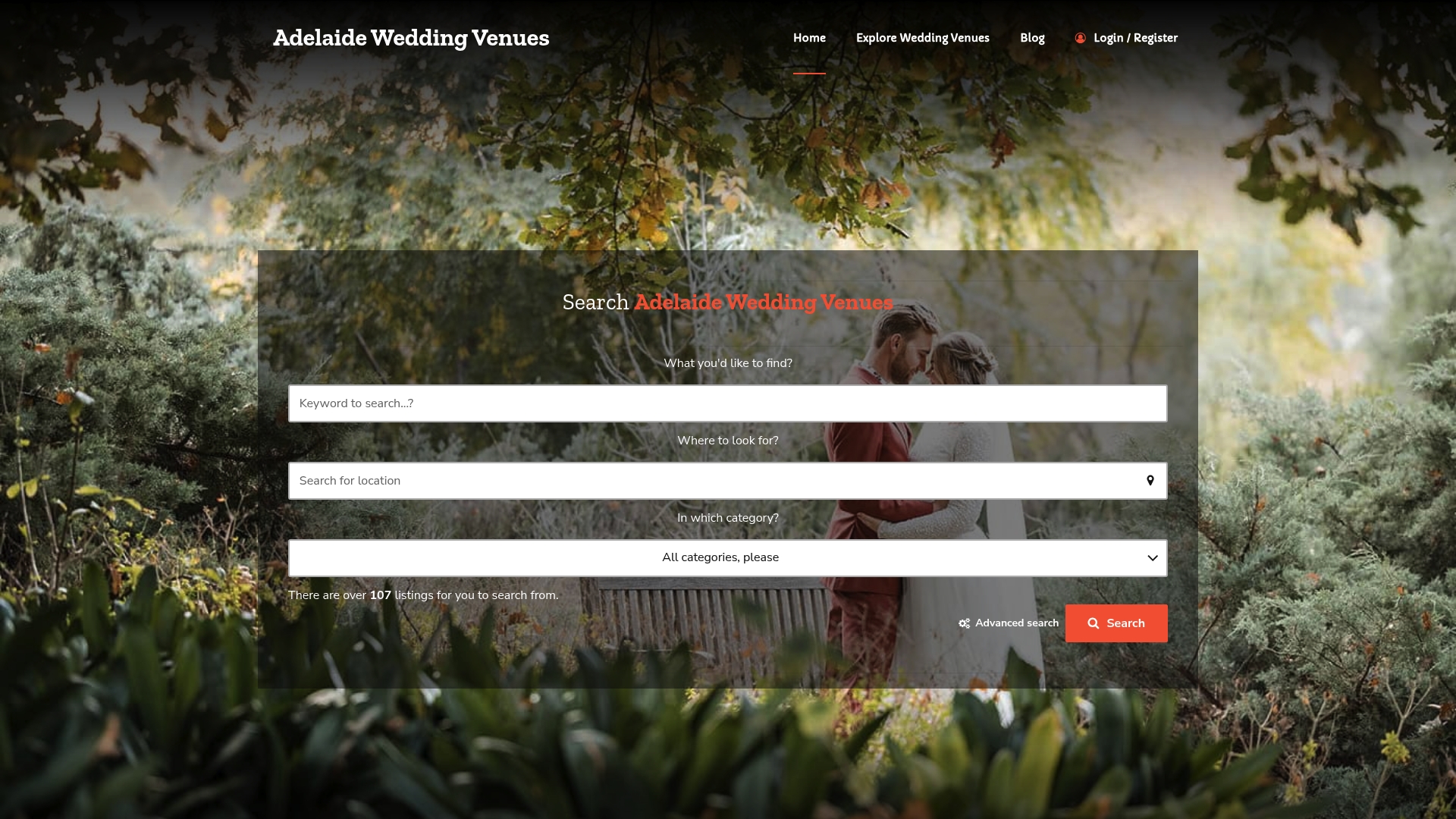
Every listing includes capacity details, inclusions information, and direct contact options so couples can move from shortlist to site visit without delay. The directory is maintained by wedding industry professionals with genuine local knowledge, which means the venue descriptions reflect what actually matters on the day. Couples planning their 2026 wedding can use the ideal venue selection guide to narrow their options by style, size, and budget, or browse the full Adelaide venue directory to compare options side by side.
FAQ
What is the difference between a ceremony venue and a reception venue?
A ceremony venue is where the legal or spiritual wedding service takes place, typically lasting 20 to 60 minutes. A reception venue is where the celebration follows, usually running 4 to 6 hours.
Is it cheaper to have the ceremony and reception at the same venue?
Combined venues generally reduce costs by eliminating duplicate hire fees, separate vendor setup charges, and additional insurance requirements that apply when using two separate locations.
What legal requirements apply to wedding ceremonies in Australia?
Couples must lodge a Notice of Intended Marriage at least one month before the ceremony. Public space ceremonies also require a council permit and public liability insurance.
How much buffer time should couples allow between a ceremony and reception at different venues?
Split locations require 60 to 90 minutes of buffer time to account for guest travel and vendor reset. This figure is consistently underestimated in initial planning.
What should couples check before signing a venue contract?
Couples should confirm the full inclusions list in writing, clarify whether GST is included in the quoted price, check the cancellation policy, and verify that the venue coordinator will be present for the full event.
Recommended
- Say ‘I Do’ to the Perfect Venue: A Modern Bride and Groom’s Checklist – Adelaide Wedding Venues
- Venue listing process: an explainer for Adelaide couples
- Avoid Wedding Day Disasters with This Comprehensive Venue Checklist – Adelaide Wedding Venues
- Your complete guide to Adelaide wedding venue requirements
