
TL;DR:
- Venue exposure includes how often, how long, and where a venue appears to its target audience. It directly impacts bookings, brand recognition, and revenue growth. To maximize visibility, venue owners should use multi-channel strategies, maintain consistent branding, and focus on the entire event lifecycle.
Venue exposure is defined as how often, how long, and in what context a venue appears in front of its target audience. It directly shapes booking inquiries, brand recognition, and long-term revenue. Average consumers see a median of 70 digital ads per week, yet research shows that between 5 and 12 meaningful contacts are needed before a person takes action. That gap between passive viewing and active booking is exactly where venue exposure strategy lives. For event planners and venue owners, understanding this metric is the first step toward filling your calendar with confidence.
What is venue exposure made up of?
Venue exposure is built from three measurable components: frequency, duration, and contextual relevance. Each one affects how well a venue registers in the minds of potential clients.

Frequency refers to how many times a venue appears in front of a planner or couple. Meaningful exposure requires 5–12 contacts before a booking decision is made. A single listing or one social media post rarely moves the needle.
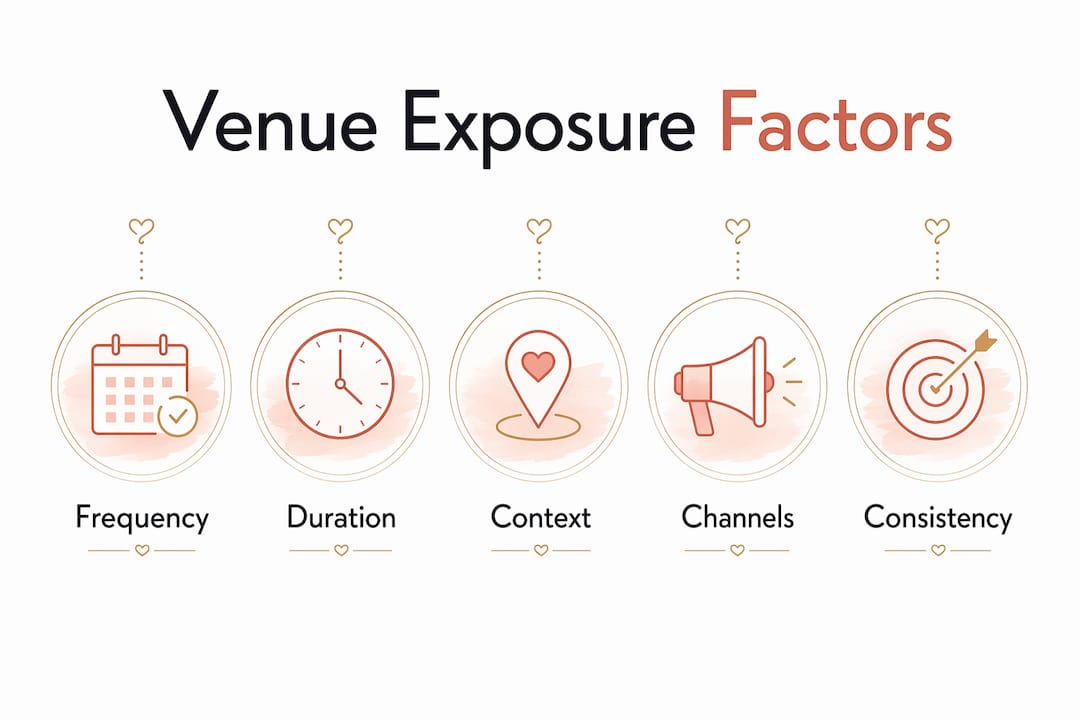
Duration describes how long each exposure lasts and how long the overall campaign runs. Naming rights agreements for major venues, for example, typically span 10–30 years, locking in sustained brand visibility through signage and media coverage across decades. Smaller venues benefit from the same principle at a more modest scale, maintaining consistent presence across a season or campaign period.
Contextual relevance is about appearing in the right place at the right time. A venue listed on a wedding directory when a couple is actively searching carries far more weight than a generic social media ad served to a broad audience. Exposure is not just quantity but meaningful, well-timed visibility that aligns with audience receptivity.
The mix of traditional and digital channels also matters. Physical presence, such as signage near transport hubs or a prominent street address, works alongside digital placements to build a complete picture of visibility.
- Frequency: How often the venue appears to the target audience
- Duration: How long each impression lasts and how sustained the campaign is
- Contextual relevance: Whether the venue appears where planners are actively looking
- Physical presence: Location, signage, and proximity to high-traffic areas
- Digital presence: Directory listings, social media, paid ads, and search results
Pro Tip: Track your venue’s appearance across at least three channels simultaneously. Single-channel exposure rarely achieves the contact frequency needed to drive bookings.
How can venue owners and planners increase venue exposure?
Increasing venue visibility requires a deliberate, multi-channel approach. No single tactic delivers enough frequency or reach on its own.
-
Claim and upgrade your directory listings. Basic free listings provide a starting point, but premium-tier placements significantly increase lead volume at the exact moment planners are making decisions. Priority placement in online directories shifts a venue from page three to the top of search results, where it gets seen first. Platforms like Adelaideweddingvenues offer featured listing options that put venues in front of engaged couples actively searching in South Australia.
-
Use high-quality visual content. Photos and videos of your venue’s best features, including natural light, capacity, and unique architectural details, do more work than written descriptions alone. Couples and planners make fast judgements based on imagery. A well-photographed venue signals professionalism before a single conversation takes place.
-
Leverage your physical location. High-traffic foyers and proximity to transport hubs significantly enhance venue exposure beyond digital channels. If your venue sits near a major road, train station, or tourist precinct, use that in your marketing. Physical signage, banners, and branded exteriors all contribute to passive exposure that digital ads cannot replicate.
-
Partner with local tourism bodies and cooperative marketing groups. Convention and visitor bureaus (CVBs) and regional tourism organisations actively promote venues to interstate and international event planners. A listing or partnership with these bodies extends your reach to audiences you would not otherwise access.
-
Run targeted digital advertising. Digital platforms offer precise control of ad visibility, frequency, and audience targeting to reduce wasted spend. Use viewable impression standards to confirm your ads are actually being seen, not just served. Geo-targeted campaigns work particularly well for venues in specific suburbs or regions.
-
Optimise your venue description for search. A well-written, keyword-rich venue description improves organic search rankings and increases the chance of appearing when planners search for specific features. Read the venue description optimisation guide for practical steps to improve your listing’s performance.
Pro Tip: Rotate your visual content every quarter. Fresh imagery signals to both search algorithms and returning visitors that your venue is active and well-maintained.
What are the common misconceptions about venue exposure?
Many venue owners treat exposure as a one-time task rather than an ongoing strategy. This misunderstanding leads to wasted budget and missed bookings.
-
Exposure is not only digital. Physical location features, as important as digital presence for sponsor activation and venue discovery, are frequently overlooked. A venue in a visible, accessible location has built-in passive exposure that no ad budget can fully replace.
-
More is not always better. Successful venue exposure balances frequency to remain top-of-mind without causing audience fatigue or negative perception. Overexposure, such as retargeting the same audience with identical ads too frequently, creates irritation rather than interest.
-
A basic directory listing is not enough. Free listings provide minimal visibility. Pay-to-play and premium listings boost visibility at critical planner decision moments, which is when a venue needs to appear most. Relying solely on a free listing is the equivalent of placing a business card in a drawer.
-
Branding inconsistency undermines exposure. A venue that uses different names, logos, or descriptions across platforms confuses planners and weakens recognition. Consistent branding across every touchpoint, from your directory listing to your Instagram profile, compounds the effect of each individual exposure.
-
Exposure does not end at booking. Venue owners who stop marketing after a booking is confirmed miss the opportunity to build loyalty, generate referrals, and attract repeat clients. Exposure strategy must continue through the event and beyond.
Understanding the role of event planners in venue choice also helps venue owners see where their visibility gaps are most costly.
How does venue exposure affect the full event lifecycle?
Venue exposure is a lifecycle strategy, not a single campaign. Modern venue exposure covers digital touchpoints, booking, on-site hospitality, and post-event retention to build brand equity over time. Each stage of the client relationship offers a distinct exposure opportunity.
Advanced venue exposure management includes analytics measuring attendee journey touchpoints from the first digital ad through to post-event follow-up. This data tells venue owners which channels drive the most enquiries, which listings convert best, and where clients drop off in the booking process.
| Lifecycle stage | Exposure opportunity | Outcome |
|---|---|---|
| Discovery | Directory listings, social media, search ads | First contact and brand awareness |
| Consideration | Premium listings, virtual tours, photo galleries | Shortlisting and enquiry |
| Booking | Responsive communication, clear venue descriptions | Confirmed reservation |
| On-site experience | Signage, branded spaces, guest experience quality | Positive impression and word-of-mouth |
| Post-event | Follow-up emails, review requests, loyalty offers | Repeat bookings and referrals |
Good exposure at the discovery stage means nothing if the on-site experience fails to match expectations. Customer service quality enhances venue reputation and directly feeds back into future exposure through reviews and referrals. A venue that delivers a memorable experience earns organic visibility that no paid campaign can manufacture.
Sponsorship opportunities also grow with sustained exposure. Venues with strong, consistent visibility attract corporate partners and sponsors who want their brand associated with a well-regarded space. This creates an additional revenue stream that rewards long-term exposure investment.
Key takeaways
Venue exposure is the combination of frequency, duration, and contextual relevance that determines how visible a venue is to its target audience, and it directly drives bookings across every stage of the event lifecycle.
| Point | Details |
|---|---|
| Frequency matters most | Planners need 5–12 meaningful contacts with a venue before making a booking decision. |
| Premium listings convert | Basic free listings rarely appear at critical decision moments; paid placements do. |
| Physical location counts | High-traffic position and clear signage deliver passive exposure that digital ads cannot replace. |
| Balance prevents fatigue | Overexposure causes negative perception; rotate channels and creative to stay fresh. |
| Exposure is a lifecycle | Effective venue visibility runs from first discovery through post-event follow-up, not just pre-booking. |
Why venue owners underestimate their biggest exposure asset
I have worked with venue owners across South Australia who spend thousands on digital advertising while completely ignoring the most powerful exposure tool they already own: their physical space. A venue with a prominent street presence, well-maintained signage, and a welcoming entrance generates passive exposure every single day at zero ongoing cost. That kind of visibility compounds quietly over years, building recognition in the local community long before a couple starts actively searching.
The other pattern I see constantly is treating exposure as a launch activity. A venue lists on a directory, runs a few ads, gets some enquiries, and then goes quiet. Six months later, the bookings dry up and the owner wonders why. Exposure requires maintenance. Algorithms change, planners move on, and couples who were not ready to book six months ago are now actively searching. Staying visible through that entire window is what separates venues that fill their calendar from those that rely on word of mouth alone.
The venues I have seen grow most consistently are the ones that treat boosting venue exposure as a permanent line item in their marketing budget, not a one-off project. They update their listings regularly, refresh their photography annually, and stay active on the platforms where their clients are looking. That discipline, more than any single campaign, is what builds a venue’s reputation over time.
— Steven
How Adelaideweddingvenues helps venues get found
Adelaideweddingvenues is South Australia’s dedicated wedding venue directory, built to connect engaged couples and event planners with the right spaces across Adelaide and the wider region.
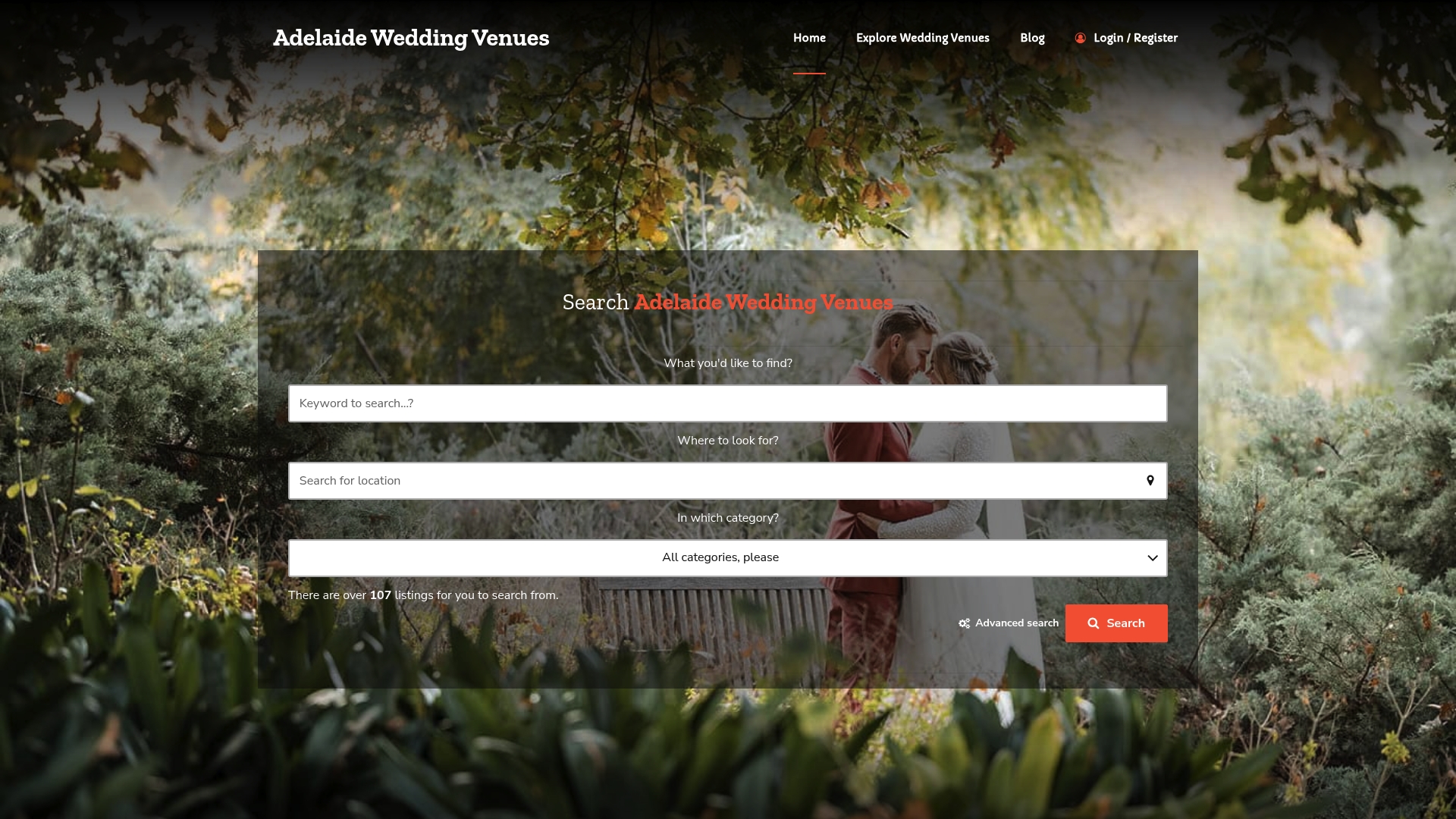
Venues listed on Adelaideweddingvenues gain targeted visibility at the exact moment couples are searching, with options ranging from free standard listings to featured placements that appear at the top of search results. The platform is maintained by wedding industry professionals with deep local knowledge, so your venue is presented to a genuinely relevant audience. Whether you are looking to attract your first enquiry or fill a quieter season, choosing your ideal venue starts with being visible in the right place. List your venue or explore the directory at Adelaideweddingvenues today.
FAQ
What is venue exposure in simple terms?
Venue exposure is how often and how clearly a venue appears in front of its target audience across digital and physical channels. It directly influences how many enquiries and bookings a venue receives.
How many times does a planner need to see a venue before booking?
Research shows that between 5 and 12 meaningful contacts are needed before a booking decision occurs. This is why single-channel or one-off promotions rarely convert.
Does physical location affect venue exposure?
Physical location features, including proximity to transport hubs and high-traffic areas, significantly enhance venue exposure beyond what digital advertising alone can achieve.
What is the risk of too much venue exposure?
Overexposure causes audience fatigue and can create a negative perception of the venue. Marketing experts recommend balancing frequency across channels and rotating creative content regularly.
How does Adelaideweddingvenues improve venue exposure?
Adelaideweddingvenues offers free standard listings and premium featured placements that position venues at the top of search results when couples are actively planning. The platform targets a South Australian audience, making every impression contextually relevant.
