
TL;DR:
- Off-peak wedding season in Australia runs from November to April, offering lower costs and better vendor availability. Couples save up to 40% on wedding expenses, especially by choosing weekday dates or avoiding holiday weekends. Planning requires only 6 to 9 months, and vendors provide more personalized service during quieter months.
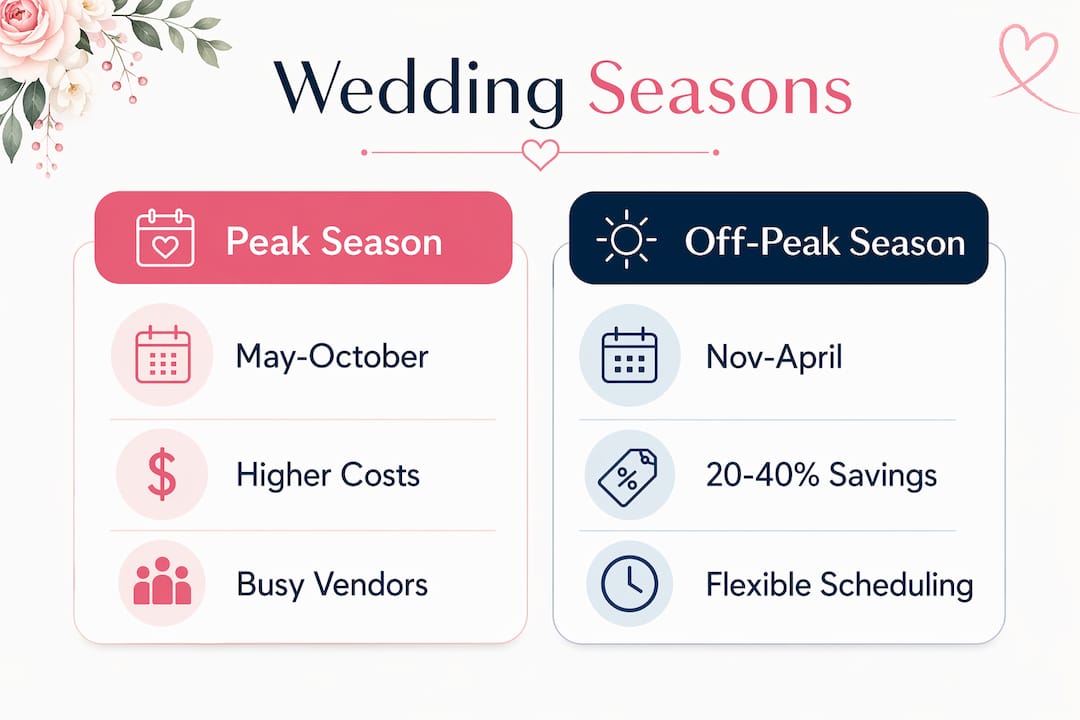
Off-peak wedding season is defined as the period from november through april, when roughly 24% of weddings take place compared to the peak months of may through october, which account for over 80% of all weddings. That gap creates a real opening for couples who want more for less. Choosing an off-peak date means lower venue fees, better vendor availability, and a planning process that feels far less rushed. For couples weighing their options, understanding what is off-peak wedding season is the first step toward a smarter, more budget-friendly celebration.
What months are considered off-peak for weddings in Australia?
Off-peak wedding season in Australia runs from november through april, though the exact experience varies by region. In South Australia, mild autumn and winter conditions make months like june and july genuinely pleasant for outdoor ceremonies, unlike colder southern states where winter can be more limiting. Regional climate directly shapes both the experience and the discount level couples can expect.
Weekday weddings add another layer to this picture. A Tuesday or Wednesday wedding in any month, including peak season, typically qualifies as off-peak for pricing purposes. Vendors and venues treat weekday bookings as lower demand, which translates to better rates regardless of the time of year.
Holiday weekends are the key exception. A long weekend in july may fall within the off-peak calendar, but holiday weekend pricing often spikes due to travel demand and vendor premiums. Couples should check public holiday dates carefully before assuming an off-peak month automatically means off-peak pricing.
| Category | Peak season | Off-peak season |
|---|---|---|
| Months | May to October | November to April |
| Weekend demand | Very high | Moderate to low |
| Weekday demand | High | Low |
| Holiday weekends | Premium pricing | Still premium pricing |
| Share of weddings | 80%+ | ~24% |
The table above shows that the off-peak advantage is strongest on non-holiday weekdays and standard weekends from november through april. Couples who target those windows unlock the greatest savings and flexibility.
What are the financial advantages of an off-peak wedding?
Couples who choose off-peak dates save 20–40% on overall wedding costs, with venue rental fees sometimes dropping by as much as 50%. That is not a marginal difference. On a $30,000 wedding budget, a 30% saving puts $9,000 back in your pocket before you have negotiated a single extra.

Weekday weddings push savings even further. Weekday discounts from vendors can reach 30–60%, making a Thursday evening reception a genuinely attractive option for couples with flexible guest lists. The savings compound across catering, photography, floristry, and entertainment, not just the venue fee.
Guests benefit too. Cheaper hotel and travel rates during off-peak months reduce the financial burden on attendees, which matters when you are asking people to travel interstate or from regional areas. Lower guest costs also tend to improve attendance rates.
Beyond headline discounts, vendors in quieter months are more willing to throw in extras. Complimentary upgrades such as additional hours, decor additions, or waived setup fees are common off-peak incentives. These additions add real value without appearing on the invoice.
Key financial benefits of an off-peak wedding date:
- Venue hire fees drop by 20–50% compared to peak Saturday rates
- Weekday bookings attract vendor discounts of 30–60%
- Catering packages often include additional courses or beverage upgrades at no extra cost
- Accommodation blocks for guests cost less, reducing pressure on attendees
- Honeymoon travel is cheaper due to lower demand in the same period
- Negotiating power increases significantly, giving couples leverage for better venue deals
Pro Tip: Ask your venue directly what extras they can include rather than asking for a price reduction. Off-peak vendors often prefer to add value rather than discount their published rate, so you may walk away with more than a lower number on the contract.
How does planning an off-peak wedding differ from peak season?
The planning timeline shortens considerably for off-peak weddings. Lead times drop to 6–9 months off-peak, compared to 12–18 months for peak season Saturdays in competitive markets. That shorter window suits couples who get engaged and want to move quickly without feeling behind.
Vendor availability is the other major difference. During peak season, photographers, celebrants, and caterers are often booked solid months in advance. Off-peak, those same professionals have open calendars and the time to give each client genuine attention. Vendors are less overbooked off-peak, which means better response times, more creative flexibility, and a planning experience that feels personal rather than transactional.
The practical steps for planning an off-peak wedding follow a clear sequence:
- Set your date range first. Identify two or three preferred months within the november to april window, avoiding public holidays unless you are prepared for peak pricing.
- Contact your top venue choices early. Even with shorter lead times, popular venues fill up. Use the venue booking timeline as a reference to stay organised.
- Lock in your photographer and celebrant next. These are the vendors most likely to book out even off-peak, especially for Saturday dates.
- Negotiate extras at every stage. Off-peak vendors expect negotiation. Ask about complimentary additions before signing any contract.
- Communicate early with guests. Give guests at least three months’ notice for a weekday wedding so they can arrange leave and travel.
Pro Tip: Off-peak planning also allows more flexible scheduling for setup and breakdown on the day itself. Venues are not rushing to clear the space for the next booking, which means your event runs at a calmer pace from start to finish.
What are the potential drawbacks of choosing an off-peak date?
Off-peak weddings are not without trade-offs. Weather variability is the most cited concern, particularly for outdoor ceremonies. South Australian winters are generally mild, but june and july can bring rain and cool temperatures that require a solid wet weather plan. Regional climate differences mean a june wedding in Adelaide feels very different from one in Melbourne or Hobart.
Weekday weddings create attendance challenges for some guests. Colleagues, interstate family members, and guests with young children may find it harder to take time off work. This is a real consideration, not a minor inconvenience, and couples should factor it into their guest list expectations.
Other considerations worth weighing:
- Holiday weekends carry premium pricing. A long weekend in august or september may sit within the off-peak calendar but still attract peak-level costs due to travel and accommodation demand spikes.
- Seasonal decor requires more thought. Winter and early spring aesthetics differ from the lush greenery of peak season. Couples need to plan floristry and styling around what is actually available.
- Some venues reduce staffing off-peak. A smaller on-site team can affect service quality if the venue has not maintained its standards year-round.
- Natural light is shorter in winter months. Photographers work with fewer daylight hours, which affects outdoor portrait timing and may require artificial lighting for evening receptions.
The good news is that most of these challenges have practical solutions. A marquee or indoor backup space addresses weather risk. Sending save-the-dates three to four months ahead gives weekday guests time to plan. Choosing a venue with consistent year-round staffing removes the service quality concern entirely.
How can couples make the most of an off-peak wedding?
The couples who get the best results from off-peak weddings are the ones who treat the timing as an advantage to build on, not just a cost-cutting measure. Choosing a non-weekend date within the off-peak window amplifies every financial benefit. A friday evening or thursday reception in june or july sits at the intersection of low demand and genuine charm.
Seasonal themes work strongly in favour of off-peak couples. Winter weddings lend themselves to candlelit receptions, rich jewel-toned florals, and cosy indoor settings that feel genuinely different from the standard summer garden party. Early spring dates in october and november capture blooming gardens and soft light without the full peak-season price tag.
Practical strategies for maximising off-peak timing:
- Choose a non-Saturday date within the off-peak window for the deepest discounts
- Ask vendors for package upgrades rather than price cuts to extract more value
- Consider regional venues in South Australia for additional savings and unique settings
- Build a seasonal theme around what is genuinely available, from winter botanicals to autumn foliage
- Send save-the-dates early and include travel and accommodation suggestions to support guest attendance
- Review flexible venue options that offer indoor and outdoor configurations to manage weather risk
Off-peak weddings also open the door to more creative catering choices. With vendors less stretched, event catering planning becomes a genuine collaboration rather than a tick-box exercise. Couples can work with caterers on bespoke menus that reflect the season rather than defaulting to a standard package.
Key takeaways
Off-peak wedding season, running from november through april, delivers the strongest combination of cost savings, vendor availability, and planning flexibility for couples willing to step outside the traditional peak-season calendar.
| Point | Details |
|---|---|
| Off-peak definition | November through april accounts for roughly 24% of weddings, creating lower demand and better pricing. |
| Cost savings | Couples save 20–40% overall, with venue fees dropping up to 50% and weekday discounts reaching 30–60%. |
| Planning lead time | Off-peak weddings need only 6–9 months of planning, compared to 12–18 months for peak Saturdays. |
| Vendor experience | Less-booked vendors provide more personalised attention, creative flexibility, and complimentary extras. |
| Key exception | Holiday weekends within off-peak months still carry premium pricing due to travel and vendor demand. |
Steven’s take on off-peak weddings
I have worked alongside wedding photographers and venue managers in South Australia for years, and the pattern I keep seeing is this: the couples who choose off-peak dates almost always report a better planning experience, not just a cheaper one. There is something genuinely different about working with vendors who have time for you.
The financial savings are real and well documented, but the part that surprises couples most is the quality of attention they receive. A photographer who is not shooting three weddings a weekend has time to scout your venue in advance, answer your questions properly, and show up on the day without being exhausted. That translates directly into better photos, better service, and a better day.
My honest observation is that peak-season weddings carry a hidden cost that never appears on the invoice: the rushed, overbooked vendor experience. Off-peak removes that entirely. Couples who book a june or july Saturday in Adelaide often find that their venue team, caterer, and photographer treat them like the only wedding on the calendar. Because they are.
The one area where I see couples trip up is holiday weekends. A long weekend in july feels like a natural choice, but the pricing and availability often mirror peak season. Stick to standard weekends or weekdays within the off-peak window, and the advantages compound quickly. Adelaideweddingvenues is a practical starting point for finding venues that are genuinely available and transparent about their off-peak pricing.
— Steven
Adelaide venues worth exploring for your off-peak wedding
Off-peak timing opens up a wider range of venues across Adelaide and South Australia, from heritage buildings in the city centre to vineyard estates in the Barossa Valley and beachside settings along the Fleurieu Peninsula.
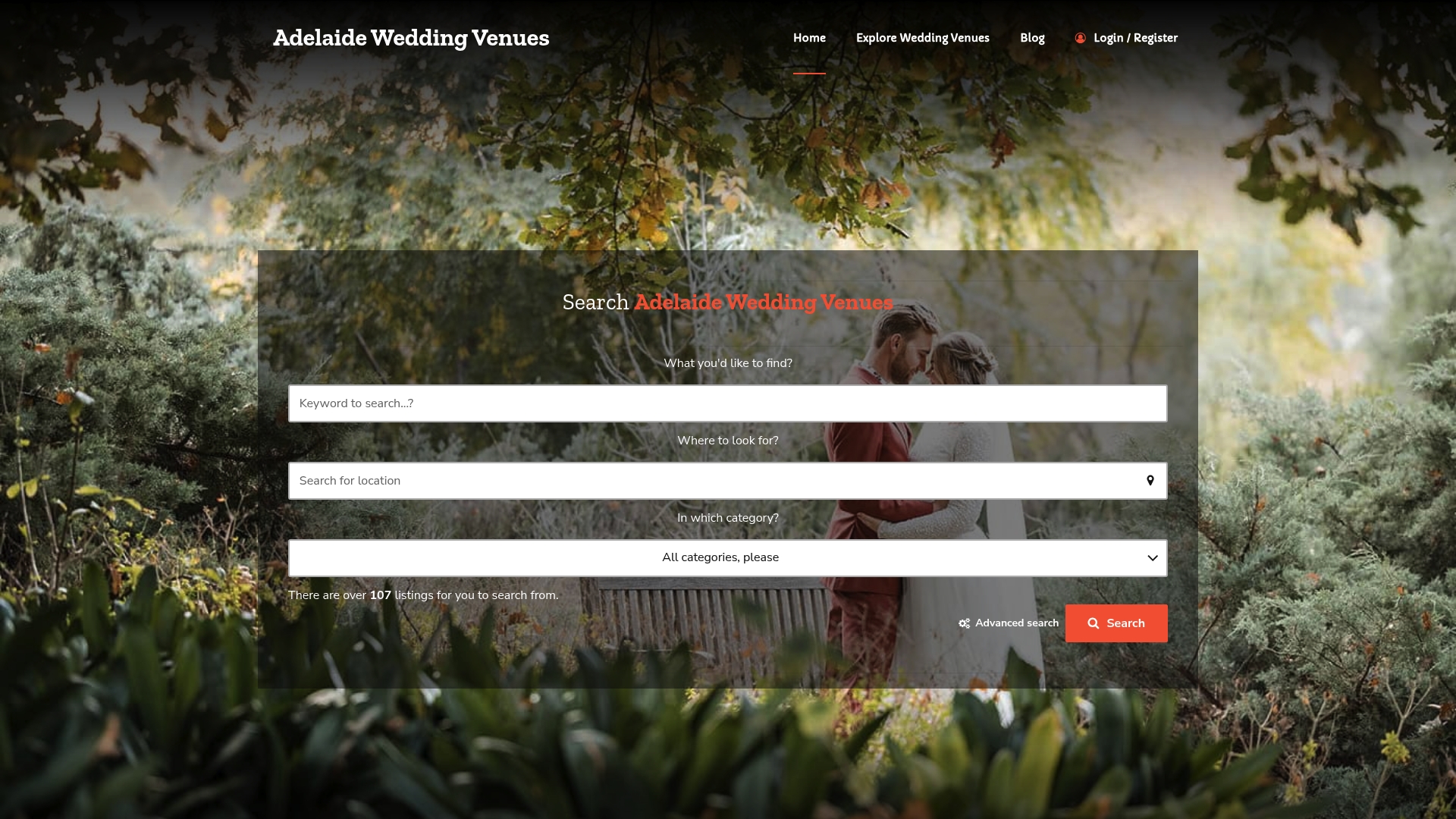
Adelaideweddingvenues lists venues across every style and budget, with filters that let couples search by location, capacity, and setting type. Off-peak couples benefit most from this kind of directory because availability is higher and venues are more willing to negotiate. Whether you are drawn to a rustic barn or a beachside setting, the directory gives you a clear picture of what is available and what fits your budget. Browsing during the planning phase costs nothing and often surfaces venues couples would never have found on their own. You can also browse the wedding planning blog for wedding planning ideas.
FAQ
What is off-peak wedding season in Australia?
Off-peak wedding season in Australia runs from november through april, when roughly 24% of weddings take place. This period offers lower venue fees, better vendor availability, and shorter planning lead times compared to the peak months of may through october.
How much can couples save by booking an off-peak wedding?
Couples typically save 20–40% on overall wedding costs by choosing off-peak dates, with venue rental fees sometimes falling by as much as 50%. Weekday weddings within the off-peak period can attract vendor discounts of 30–60%.
Are weekday weddings considered off-peak?
Yes. Weekday weddings are treated as off-peak for pricing purposes in any month of the year, as vendor and venue demand is consistently lower on weekdays than on Saturdays and Sundays.
Do holiday weekends count as off-peak?
No. Holiday weekends within off-peak months still carry premium pricing due to spikes in travel demand and vendor availability. Couples should check public holiday dates and treat those weekends as exceptions to standard off-peak pricing.
How far in advance should couples book an off-peak wedding?
Off-peak weddings typically require a planning lead time of 6–9 months, compared to 12–18 months for peak season Saturdays. Couples who want popular venues or photographers should still book as early as possible, even within that shorter window.
