
TL;DR:
- The best garden ceremony venues combine natural beauty with practical infrastructure and weather resilience. They require careful site visits to assess ground conditions, accessibility, and permit restrictions to ensure a smooth celebration. Proper planning includes arrangements for backup spaces, weather contingency, and guest comfort to create a memorable outdoor wedding experience.
Garden ceremony venues are outdoor locations where couples exchange vows amidst natural greenery, floral backdrops, and open-air atmosphere. The best garden ceremony venue ideas go well beyond pretty scenery. They balance visual appeal with practical infrastructure, guest comfort, and weather resilience. Whether you are drawn to rustic garden settings with weathered timber arches, manicured heritage estate lawns, or intimate ceremony spots tucked into botanical gardens, the right choice depends on both aesthetics and logistics. Adelaideweddingvenues helps couples across South Australia find outdoor wedding venues that deliver on both counts.
1. What makes a garden ceremony venue truly outdoor-ready?
The most successful outdoor wedding venues share one quality: they prioritise function alongside beauty. A well-planned outdoor space considers how guests move, where vendors set up, and what happens when conditions change.
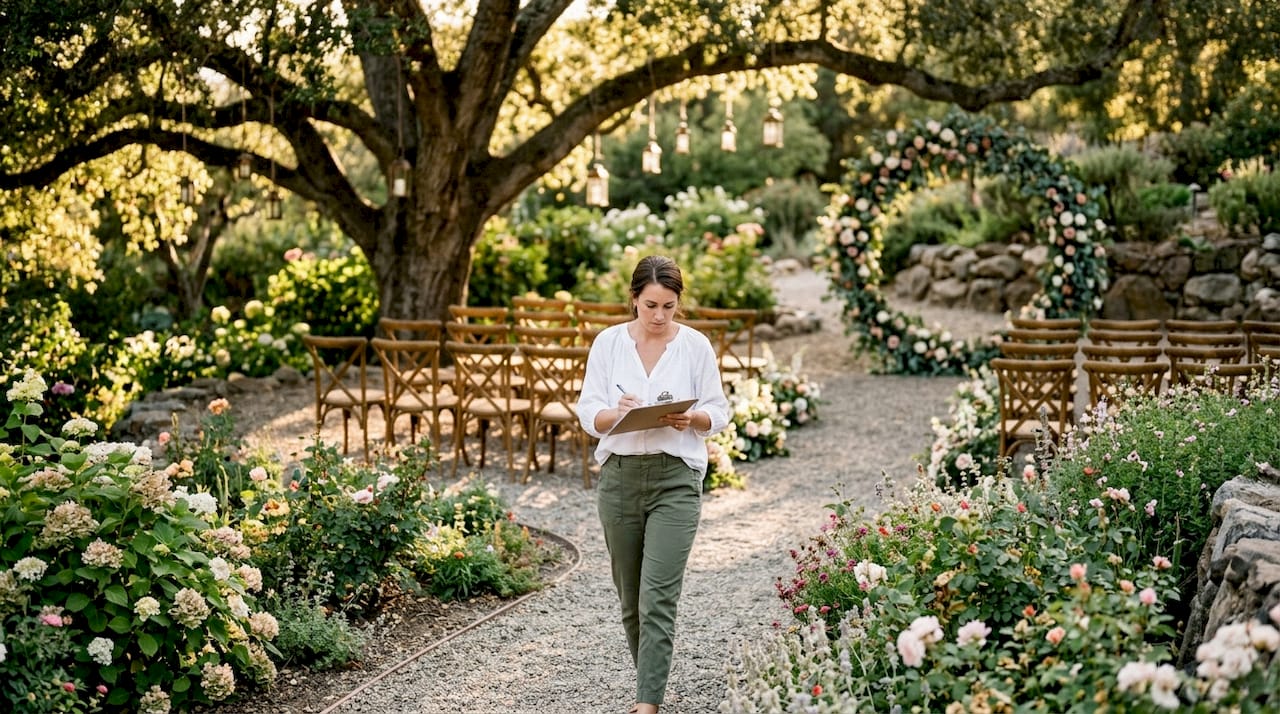
Usability of the space matters more than most couples expect. Paths should be firm and accessible, especially for guests with mobility needs. Grassy terrain can become uneven or muddy after rain, so ground condition checks are non-negotiable.
Infrastructure you cannot see often determines how smooth the day runs. Power access for sound systems, proximity to restrooms, and reliable mobile coverage all sit behind the scenes but affect every moment of the ceremony.
Guest comfort is a practical priority, not an afterthought. Shaded seating, insect management, and clear sightlines to the ceremony space keep guests relaxed and attentive. Accessibility for all guests, including those using wheelchairs or walking aids, should be confirmed during your site visit.
- Firm, level paths for guest movement and vendor trolleys
- Power access for microphones, speakers, and lighting rigs
- Restroom facilities within a short, comfortable walk
- Shaded seating areas for warm-weather ceremonies
- Insect management options such as citronella or professional treatment
- Clear sightlines from all guest seating to the ceremony focal point
Pro Tip: Visit the venue after rainfall to assess drainage and ground firmness. Soft or waterlogged ground affects both guest comfort and vendor logistics, and you will not see this risk on a dry inspection day.
2. Rustic garden settings with natural charm
Rustic garden settings are among the most popular outdoor wedding venues in Australia. They typically feature natural timber arches, wildflower arrangements, and unmanicured greenery that creates an organic, relaxed atmosphere. The appeal lies in their authenticity. Nothing about the setting feels forced or over-styled.
Wooden ceremony arches draped with native Australian blooms such as banksia, protea, and eucalyptus work beautifully in these spaces. Mismatched timber seating, hessian runners, and lantern lighting complete the look without heavy investment. The colour palette of the surrounding garden does most of the decorative work.
Rustic settings suit couples who want a celebration in nature that feels personal rather than polished. They also tend to offer more flexibility for personalised decor, since the venue itself is not prescriptive in style.
3. Heritage estate gardens with manicured lawns
Heritage estate gardens offer a different kind of beauty. Manicured lawns, clipped hedgerows, and historic architecture create a formal backdrop that photographs exceptionally well. These heritage wedding venues often include grand stone buildings, ornamental fountains, and established rose gardens that provide natural ceremony focal points.
The infrastructure at heritage estates is generally superior to public parks. Many offer exclusive use, dedicated vendor access, and on-site coordination. This makes them a strong choice for couples who want beautiful garden locations without the logistical uncertainty of public spaces.
Seasonal timing matters at heritage estates. Rose gardens peak in spring and early summer, while autumn brings warm foliage tones that suit a different aesthetic entirely. Booking early, often 12 to 18 months ahead, is standard for popular estate venues.
4. Botanical gardens for lush, seasonal beauty
Botanical gardens deliver some of the most visually striking backdrops available for outdoor weddings. Established plantings, curated walkways, and seasonal blooms create a setting that changes character throughout the year. Many botanical gardens in South Australia permit ceremony bookings, though conditions apply.
Public botanical gardens typically operate under council or government management. This means permit restrictions apply, including limits on guest numbers, equipment, and duration. Couples should confirm whether exclusive use is available or whether the public will share the space during the ceremony.
The advantage of botanical gardens is the built-in scenery. Couples spend far less on floral decor because the garden itself provides the colour and texture. This makes botanical gardens a cost-effective choice for couples who want beautiful garden locations without a large styling budget.
5. Vineyard gardens combining nature and wine country ambiance
Vineyard gardens offer a unique combination of manicured rows, open sky, and relaxed elegance. The structured geometry of vine rows creates a natural aisle, and the surrounding countryside adds depth to ceremony photography. Many South Australian vineyards in regions such as the Barossa Valley, McLaren Vale, and the Adelaide Hills offer dedicated ceremony spaces within their grounds.
Vineyards generally provide better infrastructure than public parks. On-site catering, cellar door facilities, and dedicated event coordinators reduce the planning burden significantly. The transition from ceremony to reception is also simpler when both events occur on the same property.
Seasonal timing is critical at vineyard venues. Harvest season, typically february to april, brings activity and colour but also increased venue demand. Couples planning a vineyard ceremony should book well in advance and confirm that harvest operations will not affect the ceremony space.
6. Intimate ceremony spots for micro weddings
Intimate ceremony spots are small, defined garden spaces designed for guest lists of 20 or fewer. These unique venue ideas suit couples who want a deeply personal celebration in nature without the scale of a traditional wedding. A private garden courtyard, a shaded alcove within a larger estate, or a curated corner of a botanical garden can all serve this purpose.
The advantage of intimate spaces is focus. With fewer guests, the ceremony atmosphere becomes more concentrated and emotionally resonant. Decor requirements are minimal, and the venue itself carries more weight in creating the mood.
Micro wedding venues in garden settings often cost less than full-scale outdoor venues, but they require the same level of practical planning. Weather contingency, accessibility, and vendor access remain equally important regardless of guest count.
7. Backyard wedding inspiration for private garden ceremonies
A private backyard ceremony is one of the most personal outdoor wedding venue choices available. Backyard wedding inspiration draws on the couple’s own space or that of a trusted family member, creating a setting with genuine sentimental value. The garden can be styled to reflect the couple’s personality without venue restrictions.
The practical demands of a backyard ceremony are significant. Power supply for sound and lighting, toilet facilities for guests, parking arrangements, and council noise regulations all require advance planning. Some local councils require notification or permits for gatherings above a certain size, so checking requirements early avoids last-minute complications.
Backyard ceremonies work best when the garden has been prepared well in advance. Lawn mowing, garden bed tidying, and path clearing should happen in the days before the event. Mowing a clear aisle path the day before the ceremony reduces insect activity and makes guest movement easier on grassy terrain.
8. Floral ceremony themes that work in any garden setting
Floral ceremony themes give a garden wedding its visual identity. The most effective themes draw from the existing garden palette rather than fighting against it. A garden already rich in native Australian species suits a wildflower theme with banksia, grevillea, and wattle. A formal estate garden suits structured arrangements of roses, peonies, and hydrangeas.
Arch styling is the centrepiece of most floral ceremony themes. Timber, metal, and bamboo arches all suit different garden aesthetics. Florals draped asymmetrically create a more natural, organic look, while symmetrical arrangements suit formal garden settings.
Seasonal availability drives cost and quality. Flowers in season at the time of the wedding are fresher, more abundant, and less expensive than out-of-season imports. Couples should discuss seasonal options with their florist at least six months before the ceremony.
9. Navigating permits and practical considerations
Public garden venues come with firm rules that couples must understand before booking. Most Australian municipal councils restrict park bookings for weddings to a maximum of 3 hours and do not permit exclusive use of the area. This means other park visitors may be present during the ceremony.
Equipment and guest numbers face similar limits. Some councils cap guest seating at 25 and require all furniture and sound equipment to be removed immediately after the ceremony. These restrictions directly affect styling ambitions and vendor logistics.
- Apply for council permits at least 3 months before the ceremony date
- Confirm the maximum guest number and equipment list permitted under the permit
- Check vendor access windows, which are often only 1–2 hours at public gardens
- Arrange accessible parking within a short distance of the ceremony space
- Check local event calendars to avoid date conflicts with major regional festivals that affect accommodation and pricing
- Confirm noise restrictions and ceremony end times with the relevant authority
Pro Tip: Ask the council or venue coordinator for a written copy of all permit conditions before signing anything. Verbal assurances about setup times or equipment allowances are not enforceable.
10. Weather contingency and guest comfort planning
Weather planning is the most overlooked element of outdoor ceremony preparation. A well-chosen backup space protects the ceremony atmosphere when conditions change. Industry guidance confirms that backup venues should match the original venue’s capacity and aesthetic, not just provide shelter.
“Treating the backup space with equal importance as the outdoor location ensures weather changes don’t disrupt the ceremony’s atmosphere. Couples who choose a backup space as an afterthought often find it undermines the mood they worked hard to create.”
Key weather and comfort considerations for garden ceremonies include:
- Shade structures such as sail shades or market umbrellas for warm-weather ceremonies
- Portable heaters or fire pits for cooler months, particularly evening ceremonies
- String lighting or lanterns for late afternoon and evening ceremonies
- Insect management through professional treatment or citronella products
- Non-slip matting on paths and aisles after rain
Weather call deadlines vary widely between venues. Some require a decision 48 hours before the event, while others allow flexibility until 4 hours prior. Knowing the exact deadline and who makes the call removes a significant source of last-minute stress.
Venue flexibility is a quality worth prioritising when comparing outdoor options. A venue that accommodates weather changes gracefully is worth more than one that looks stunning on a clear day but offers no contingency.
Key takeaways
The most successful garden ceremony venues combine natural beauty with practical infrastructure, clear permit compliance, and a tested weather contingency plan.
| Point | Details |
|---|---|
| Outdoor readiness over aesthetics | Prioritise firm paths, power access, and restroom proximity before choosing a venue for its looks. |
| Permit rules are firm | Public gardens cap ceremonies at 3 hours, often limit guests to 25, and require immediate equipment removal. |
| Match your backup space | The weather contingency venue should match the original in capacity and atmosphere, not just provide shelter. |
| Know your weather call deadline | Venues vary from 48 hours to 4 hours before the event. Confirm this in writing during the booking process. |
| Seasonal timing affects everything | Vineyard harvest, regional festivals, and peak bloom periods all affect availability, pricing, and atmosphere. |
What I have learned from garden ceremony venues
A perspective from Steven
After years of working with couples across South Australia, the single biggest mistake I see is choosing a garden venue based on photographs alone. A garden that looks stunning in a styled shoot may have no shade, no power access, and a council permit that limits setup to 45 minutes. Those details do not show up in photos.
The site visit is where the real decision happens. I always recommend visiting at the same time of day as the planned ceremony. Morning light and afternoon light behave very differently in garden spaces, and so does the wind. A venue that feels calm at 10:00 AM may be uncomfortably exposed by 3:00 PM.
Vendor coordination is the other area where couples consistently underestimate the work involved. At public gardens especially, the short vendor access windows mean every supplier needs a precise brief and a confirmed arrival time. One late delivery can compress the entire setup.
The couples who have the best experiences are the ones who stay flexible on the day. Weather changes, insects appear, a guest arrives late. The garden itself, with all its natural imperfection, is part of what makes the ceremony memorable. Lean into it rather than fighting it.
— Steven
Finding your ideal garden venue through Adelaideweddingvenues
Adelaideweddingvenues lists a wide range of outdoor wedding venues across Adelaide and South Australia, from private estate gardens to botanical settings and vineyard ceremony spaces. The directory is searchable by location, style, and capacity, making it straightforward to shortlist venues that match your vision and guest count.
Couples can use the platform to compare venue types, read detailed listings, and access planning resources built specifically for South Australian weddings. The ideal wedding venue guide on the site covers garden options alongside barn, beach, and heritage styles, giving couples a complete picture before they commit to inspections. For couples ready to shortlist, the best Adelaide venues page is a strong starting point.
FAQ
What are the main types of garden ceremony venues?
Garden ceremony venues include rustic private gardens, heritage estate lawns, botanical gardens, vineyard settings, and intimate backyard spaces. Each type suits a different style, budget, and guest count.
How long can you book a public garden for a wedding ceremony?
Most Australian municipal councils restrict public garden bookings to a maximum of 3 hours and do not permit exclusive use of the space. Equipment must typically be removed immediately after the ceremony.
Do you need a permit for a garden wedding ceremony?
A permit is required for most public garden ceremonies in Australia. Requirements vary by council but commonly include guest number limits, equipment restrictions, and a formal application submitted months in advance.
What is the best way to plan for bad weather at a garden ceremony?
Choose a backup venue during the site visit stage and treat it with the same care as the primary space. Confirm the weather call deadline with your venue, as some require a decision 48 hours before the event.
How do you keep guests comfortable at an outdoor garden ceremony?
Provide shaded seating, manage insects with citronella or professional treatment, and confirm restroom access nearby. Guest comfort planning should include parking, accessible paths, and clear sightlines from every seat to the ceremony space.
