
TL;DR:
- Diversifying revenue streams beyond just venue hire helps venues earn more and reduce seasonal dependence. Corporate bookings, add-ons, daytime events, and directory listings significantly boost annual income and client engagement. Treating every event type as a business line ensures consistent profit growth year-round.
Wedding venue revenue streams are the diversified income channels a venue uses to earn beyond a single hire fee. The average Australian wedding costs $38,252, with venue hire accounting for roughly $13,200 or 46% of that total. That figure represents the floor, not the ceiling. Venue owners and event planners who build multiple income channels reduce their dependence on weekend bookings, smooth out seasonal dips, and consistently earn more per client. The nine strategies below cover the full range of venue profit sources, from corporate hire to premium add-ons, with practical guidance for each.
1. What are the core wedding venue revenue streams?
Venue income falls into two broad categories: primary hire fees and ancillary revenue. Primary hire covers the space itself, typically charged as a flat rate or per-head fee. Ancillary revenue covers everything else: food and beverage, styling, equipment hire, and non-wedding events.
Most venues underinvest in ancillary revenue. Couples treat the venue as an insurance policy for their day and tend to spend 23% more than their original budget when premium experiences are on offer. That willingness to spend is a direct opportunity for venue owners who present upgrades clearly and confidently.
Diversifying wedding venue income also protects against slow seasons. A venue that earns from corporate lunches on Tuesdays, workshops on Saturdays, and weddings on Sundays is far more stable than one that relies on weekend ceremonies alone.
2. Corporate and weekday event hire
Corporate bookings add 15–25% to annual venue revenue by using existing wedding infrastructure during weekdays. Monday through Thursday are optimal days, as the space would otherwise sit idle.
Corporate clients value reliability, AV capability, and catering. Most wedding venues already have all three. A boardroom-style setup in a garden pavilion or a product launch in a heritage ballroom are both achievable with minimal reconfiguration. The key is marketing the space to corporate event buyers separately from wedding audiences.
Pro Tip: Create a dedicated corporate hire page on your website with weekday pricing, capacity details, and AV specifications. Corporate bookers search differently from couples, and a tailored page converts far better than a generic enquiry form.
3. Profitable add-ons and service upgrades
Add-ons increase spend per booking without requiring new clients. This is the most capital-efficient way to grow venue income. A couple already committed to your space is far easier to upsell than a cold lead.
The most profitable add-ons for wedding venues include:
- Food stations and grazing tables: Cheese and charcuterie boards, dessert bars, and late-night snack stations are high-margin and visually appealing.
- Beverage upgrades: Premium wine packages, cocktail hours, and spirits menus lift per-head spend noticeably.
- Styling and décor packages: Florals, linen upgrades, and lighting enhancements create a premium feel and justify higher rates.
- AV and entertainment hire: Microphone systems, projectors, LED dance floors, and photo booths are in-demand and easy to bundle.
- Coordination and day-of management: Offering a venue coordinator as an add-on reduces client stress and adds a meaningful fee.
Venues should price add-ons to reflect cost, labour, supplier fees, and client-perceived value, not just margin. A clear extras menu with photos and pricing helps clients choose faster and with more confidence.
Pro Tip: Present add-ons at three stages: during the initial enquiry, at the contract signing, and again at the final planning meeting. Repeated, well-timed exposure increases uptake significantly.
4. Daytime and off-peak event scheduling
Daytime back-to-back bookings maximise fixed-cost usage and increase revenue per square metre. A venue that hosts a bridal shower at 10:00 AM and a rehearsal dinner at 6:00 PM earns twice from the same space in a single day.
Off-peak scheduling works across several event types:
- Brunch and high-tea events: Hen’s parties, baby showers, and birthday brunches fill daytime slots on weekends.
- Workshops and masterclasses: Cooking classes, floral arrangement workshops, and photography sessions use the space during quiet weekday mornings.
- Community and charity events: Fundraising dinners and community gatherings build goodwill and fill calendar gaps.
- Elopement and micro-wedding packages: Smaller ceremonies at reduced rates fill midweek slots that would otherwise go unused.
- Styled shoots for photographers: Charging photographers a session fee for styled shoots generates income and produces marketing content simultaneously.
Venue flexibility is the operational foundation for all of these. A space that can shift from ceremony to workshop to corporate lunch without major reconfiguration earns more across every category.
5. Food and beverage as a standalone profit centre
Food and beverage is one of the highest-margin revenue channels available to venues. Many venue owners treat catering as a logistical necessity rather than a profit driver. That is a costly mistake.
Venues that manage their own catering, or that negotiate preferred supplier agreements with caterers, capture a share of every food and beverage dollar spent on-site. Festive meal offerings and seasonal menus give clients a reason to spend more and give venues a reason to charge more. Presenting food and beverage as a curated experience rather than a commodity shifts the conversation from cost to value.
Minimum spend requirements are a practical tool here. Setting a food and beverage minimum for peak-day bookings protects revenue and filters out low-spend clients who may not be the right fit for your venue.
6. Styling and décor hire packages
Styling packages are a natural extension of the venue experience. Couples who have already committed to a space are receptive to décor upgrades that make the venue look exactly as they imagined.
Venues can build a hire inventory over time: candle holders, table centrepieces, arbours, neon signs, and linen sets. Each item earns a hire fee per event. The upfront investment is recoverable within a handful of bookings, and the ongoing return is high because the assets are reused. Positioning the venue as a premium event space with in-house styling removes a friction point for couples who would otherwise need to source décor separately.
7. Photography and content creation hire
Venues with strong visual appeal can charge photographers and content creators for access. Styled shoots, brand photography sessions, and social media content days are all bookable by the hour or half-day.
This revenue stream has a secondary benefit. Photographers who shoot at your venue produce images that appear in their portfolios, on social media, and in editorial features. That exposure drives organic enquiries from couples who see the venue in a real-world context. The venue earns a session fee and gains marketing content at the same time.
8. Marketing strategies that support multiple income channels
Collecting and showcasing positive reviews is the single most cost-effective marketing action a venue can take. One or more positive reviews can increase lead performance by 200%. Reviews act as a silent salesperson, converting browsers into enquiries without any additional spend.
Effective wedding venue marketing tips for diversified income include:
- Segmented digital advertising: Run separate campaigns for wedding audiences and corporate or event audiences. Segmented campaigns drive higher return on advertising spend while keeping brand messaging relevant to each audience.
- Transparent pricing pages: Publish clear pricing for each event type. Couples and corporate bookers both respond better to venues that show their rates upfront.
- Social proof by event type: Share photos and testimonials from corporate events, workshops, and weddings separately. This signals to each audience that the venue understands their needs.
- Long-cycle remarketing: Wedding bookings have a lead time of 12–18 months. Staying visible through email sequences and social retargeting keeps your venue top of mind throughout that cycle.
Boosting venue exposure in South Australia requires a consistent presence across directories, social platforms, and search. Venues that appear in multiple channels capture enquiries at every stage of the planning process.
9. Venue listing and directory presence
A venue that is hard to find online loses bookings to venues that are easy to find. Listing on a dedicated wedding venue directory puts your space in front of couples who are actively searching, not just browsing.
Adelaideweddingvenues provides free listings for venues across Adelaide and South Australia, with featured listing options for venues that want greater visibility. The platform is maintained by wedding industry professionals with deep knowledge of local venues, which means listings appear in a credible, well-organised context. For venue owners focused on wedding venue business growth, a strong directory presence is one of the lowest-cost, highest-return marketing investments available.
Key takeaways
Venues that build multiple income channels earn more per booking and stay profitable year-round, regardless of seasonal fluctuations.
| Point | Details |
|---|---|
| Diversify beyond hire fees | Add-ons, corporate hire, and daytime events each contribute meaningfully to annual revenue. |
| Add-ons require clear presentation | Menus with photos and pricing increase client uptake and speed up decision-making. |
| Corporate bookings fill weekday gaps | Weekday corporate events can add 15–25% to annual venue revenue using existing infrastructure. |
| Reviews drive lead performance | One or more positive reviews can increase lead performance by 200%, making reputation management a priority. |
| Segmented marketing protects brand integrity | Separate campaigns for wedding and non-wedding audiences maximise return without diluting brand messaging. |
Why most venues leave money on the table
The venues I see struggling most are not struggling because of poor locations or bad service. They are struggling because they treat the hire fee as the product. The hire fee is the entry point. Everything else is where the real margin lives.
Couples spend 23% over their original budget when they feel the venue is worth it. That is not irrational behaviour. It reflects how much emotional weight a wedding carries. Venue owners who understand that will price their add-ons with confidence, not apology. The ones who hesitate to present upgrades are leaving money on the table every single booking.
The corporate and daytime opportunity is equally underused. I have spoken with venue owners who run beautiful spaces that sit empty from Monday to Friday. That is a fixed-cost asset generating zero return for five days a week. A single corporate booking per week at a modest rate adds up to a meaningful annual figure. The infrastructure is already there. The only missing piece is a targeted marketing effort aimed at a different audience.
The venues that grow consistently are the ones that treat every event type as a legitimate business line, not a side project. That means dedicated pricing, dedicated marketing, and a team that knows how to sell each offering. It is not complicated. It just requires intention.
— Steven
Adelaideweddingvenues: grow your venue’s visibility and bookings
Venue owners looking to attract more couples and corporate clients need a strong online presence as their foundation. Adelaideweddingvenues connects Adelaide and South Australian venues with engaged couples actively searching for the right space.
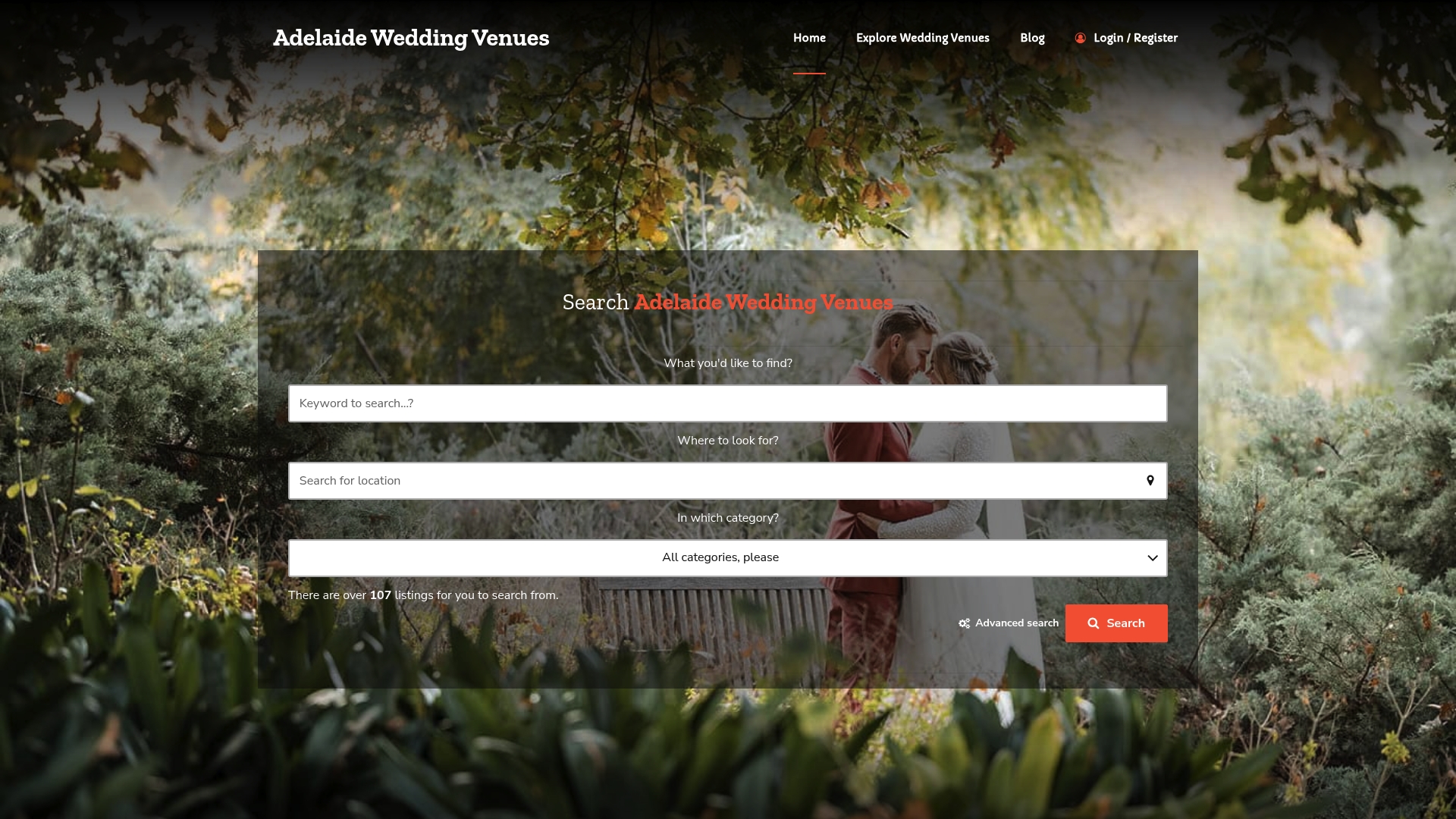
Whether you are refining your wedding packages or expanding into new event types, a well-optimised listing puts your venue in front of the right audience at the right moment. The platform offers free listings and featured options for venues ready to increase their reach. Start by exploring the ideal venue selection guide to understand what couples prioritise, then position your venue accordingly. For venue owners ready to grow, Adelaideweddingvenues is the practical first step.
FAQ
What are the most profitable wedding venue revenue streams?
Add-ons such as beverage upgrades, food stations, and styling packages are among the highest-margin income sources because they increase spend per booking without acquiring new clients. Corporate and weekday hire adds 15–25% to annual revenue using existing infrastructure.
How can venues earn income during the off-season?
Daytime events, workshops, styled shoots, and community functions fill calendar gaps during quieter months. Marketing these offerings to non-wedding audiences through segmented digital campaigns keeps revenue flowing year-round.
Do positive reviews really affect venue bookings?
One or more positive reviews can increase lead performance by 200%, making reputation management one of the most cost-effective marketing strategies a venue can adopt.
How should venues price their add-ons?
Pricing should reflect cost, labour, supplier fees, demand, and client-perceived value. Presenting add-ons with photos and clear pricing helps clients decide faster and increases overall uptake.
Is it worth listing a venue on a directory like Adelaideweddingvenues?
A directory listing puts your venue in front of couples who are actively searching, at no cost for a standard listing. Featured listings offer greater visibility for venues focused on growing their booking volume.
