
TL;DR:
- Outdoor venues provide greater space, sensory richness, and layout flexibility, creating more engaging and memorable events. They enhance guest movement, reduce social pressure, and offer natural photographic and sensory benefits, making them popular choices worldwide. Proper weather planning is essential to fully enjoy outdoor celebrations and avoid unpredictable disruptions.
Outdoor venues are open-air event spaces that give couples and planners creative freedom, greater capacity, and a natural atmosphere that indoor spaces simply cannot replicate. Understanding why outdoor venues appeal so strongly comes down to three things: space, sensory experience, and flexibility. Research confirms that open-air settings encourage guest movement, reduce social pressure, and create stronger emotional memories. For couples planning a wedding in Adelaide or South Australia, these advantages are not abstract. They are practical, measurable, and worth understanding before you book.
Why do outdoor venues appeal more than indoor spaces?
Outdoor venues give guests more room to move, and that movement matters more than most couples realise. Movement increases dopamine activity, which promotes stronger memory encoding in open-air environments. This means guests at an outdoor wedding are more likely to remember the day vividly and positively. That is a compelling reason to choose open air over a ballroom.
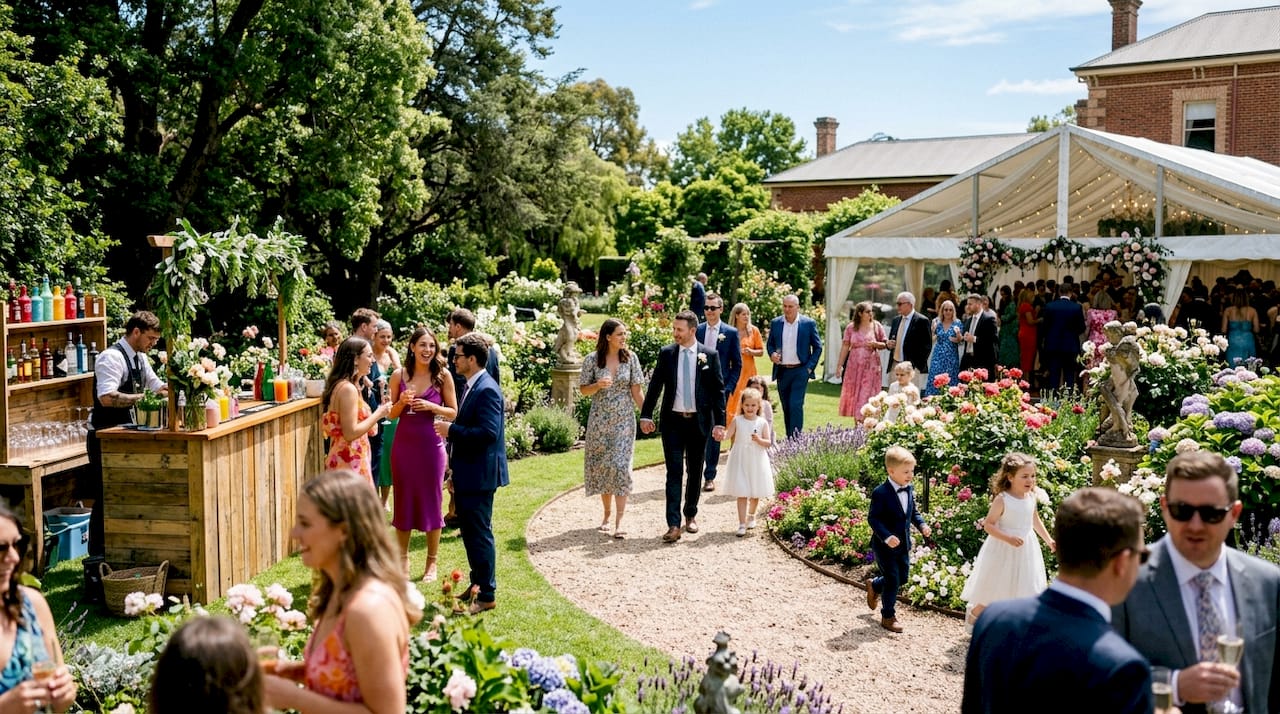
The spatial advantage also changes how guests interact. Outdoor spaces reduce crowding, creating a relaxed atmosphere where socialising happens naturally rather than feeling forced. Guests circulate between zones, strike up conversations, and find their own comfort level. Indoor venues often funnel guests into fixed seating arrangements that limit this organic flow.
Open-air settings also lower participation barriers for guests. People feel more autonomy outdoors. They can step away, rejoin the group, or engage at their own pace without social pressure. This is especially valuable at weddings where guests may not know each other well.
The layout flexibility of outdoor venues supports multiple activity zones in a single event:
- A ceremony lawn with natural framing from trees or gardens
- A cocktail area with lawn games and a mobile bar
- A dining zone with long tables under festoon lighting
- A dance floor positioned near a live band stage
- A lounge area with fire pits or ambient seating for quieter guests
Pro Tip: Plan deliberate movement moments into your event schedule, such as the transition from ceremony to cocktail hour. These natural pauses encourage guests to circulate and engage with different parts of the venue.
What sensory experiences do open-air events offer?
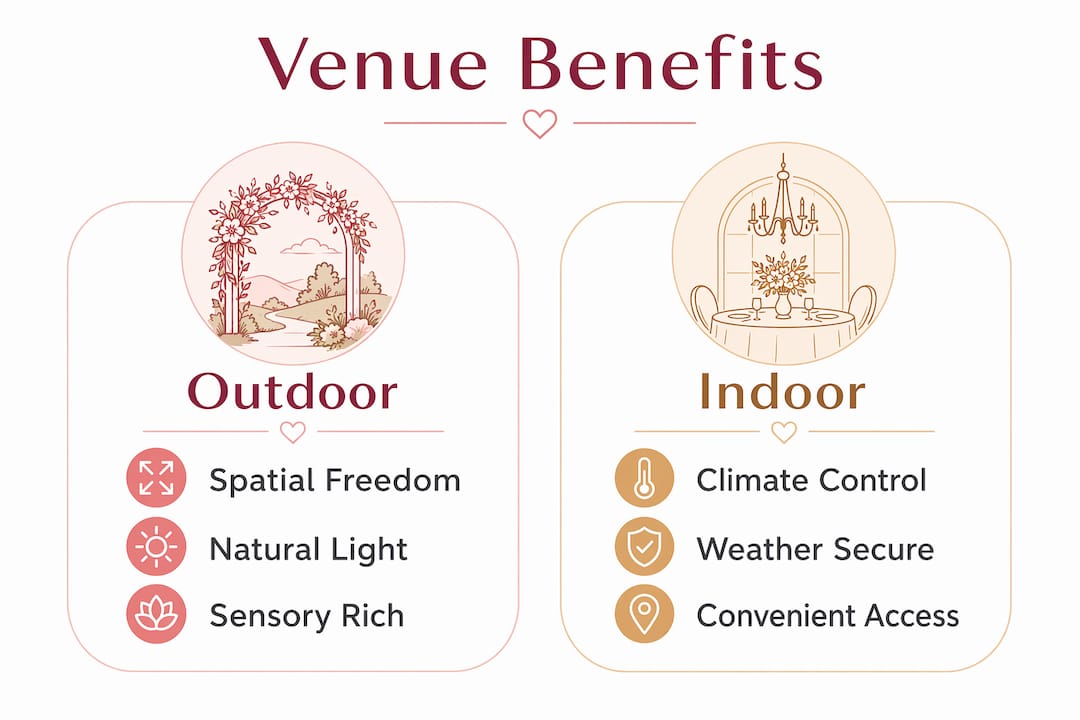
The atmosphere at an outdoor wedding is built in from the start. Natural light, ambient sounds like birdsong or a gentle breeze, and the scent of seasonal blooms all contribute to an emotional richness that no interior decorator can fully manufacture. These sensory layers enrich emotional context and strengthen memory formation in ways that matter long after the day is over.
Photography is one of the most immediate and visible benefits. Golden hour, the 45 minutes before sunset, produces the soft, warm light that wedding photographers prize above all else. Outdoor venues give you access to this light naturally. Indoor venues require expensive artificial lighting rigs to approximate it, and the result rarely matches the real thing.
Plant landscapes add another layer of benefit that goes beyond aesthetics. Blooming plant landscapes significantly enhance physiological and psychological recovery, regardless of weather conditions. This means guests feel calmer, more restored, and more present at outdoor events surrounded by greenery and seasonal flowers. The effect is real and measurable, not just a styling preference.
Key sensory advantages of outdoor venues include:
- Natural light that flatters guests and creates photogenic conditions throughout the day
- Ambient soundscapes from nature that reduce the sterile silence of indoor spaces
- Seasonal plant landscapes that provide psychological restoration and visual beauty
- Temperature variation that keeps guests alert and engaged rather than sluggish in a climate-controlled room
- Spatial scale that makes grand floral installations, arbours, and lighting rigs look proportionate rather than overwhelming
The restorative effects of plant landscapes do vary by personality type. Research from Scientific Reports notes that personality traits like neuroticism and extraversion moderate how strongly individuals recover in natural settings. This means thoughtful venue design should offer both open social spaces and quieter garden corners to accommodate all guests.
What are the practical advantages of outdoor venue planning?
Outdoor venues offer planning flexibility that indoor spaces cannot match. Couples can create multiple distinct zones for different experiences within a single venue footprint. A rustic barn property with surrounding gardens, for example, can host a ceremony, cocktail hour, and reception dinner all in separate outdoor areas without guests feeling like they are attending three different events.
Large-scale décor is another practical win. Floral arches, hanging installations, and festoon lighting all look proportionate outdoors in a way they rarely do inside a standard function room. Outdoor venues provide larger capacity and fewer restrictions, which gives couples genuine creative latitude.
Weather planning is the one area where outdoor events require more preparation than indoor events. The good news is that clear protocols make this manageable. Recommended steps for outdoor weather safety include:
- Appoint a dedicated weather safety lead before the event date
- Set clear operational thresholds, such as wind speed or temperature limits, that trigger contingency plans
- Arrange a backup shelter option, whether a marquee, adjacent indoor space, or covered terrace
- Communicate the contingency plan to all vendors and key guests in advance
- Follow the lightning safety rule of suspending activities for 30 minutes after the last observed lightning strike
Pro Tip: Book your venue with a written weather contingency clause in the contract. Confirm that the venue has a designated indoor backup space or that a marquee can be erected on site.
| Planning factor | Outdoor venue | Indoor venue |
|---|---|---|
| Layout flexibility | High, multiple zones possible | Limited by fixed walls and rooms |
| Décor scale | Unrestricted for large installations | Ceiling height and wall space limit options |
| Weather risk | Requires contingency planning | No weather risk |
| Guest capacity | Often larger than equivalent indoor space | Fixed by building occupancy limits |
| Natural light | Available throughout the day | Dependent on windows or artificial lighting |
Outdoor vs indoor venues: what should couples consider?
The choice between outdoor and indoor venues comes down to priorities. Neither option is universally better. Each suits different couples, guest lists, and wedding styles.
| Consideration | Outdoor venue | Indoor venue |
|---|---|---|
| Atmosphere | Natural, sensory-rich, and memorable | Controlled, predictable, and climate-managed |
| Photography | Golden hour and natural light advantages | Reliant on artificial lighting setups |
| Guest experience | Relaxed circulation and social freedom | Structured seating and defined spaces |
| Capacity | Typically larger and more flexible | Fixed by building regulations |
| Weather | Requires contingency planning | No weather dependency |
| Décor freedom | Large-scale and creative installations possible | Limited by venue restrictions and ceiling height |
| Planning complexity | Higher, requires more vendor coordination | Lower, venue often provides in-house services |
Outdoor venues suit couples who prioritise atmosphere, photography, and guest experience. Indoor venues suit couples who want predictability and a lower planning burden. Many Adelaide venues offer hybrid options, with covered outdoor terraces or garden spaces adjacent to indoor reception rooms, which gives couples the best of both settings. Exploring venue flexibility options before committing helps couples avoid locking into a format that does not match their vision.
The scale of outdoor event popularity is not a passing trend. Seoul’s 2026 Spring Festival drew over 7 million visitors to outdoor venues, with attendance increasing 8.5-fold compared to the prior year. That figure reflects a global shift in how people want to gather. Weddings are part of the same movement.
Key takeaways
Outdoor venues appeal because they combine spatial freedom, sensory richness, and guest engagement in ways that indoor venues structurally cannot match.
| Point | Details |
|---|---|
| Movement drives memory | Guest movement outdoors increases dopamine activity, creating stronger and more positive event memories. |
| Sensory layers add value | Natural light, plant landscapes, and ambient sound create emotional richness that enhances the guest experience. |
| Zoning creates multiple experiences | Outdoor layouts support distinct ceremony, cocktail, dining, and lounge zones within a single venue. |
| Weather needs a clear plan | Appoint a weather safety lead, set operational thresholds, and confirm a backup shelter before the event date. |
| Photography benefits are real | Golden hour lighting at outdoor venues produces wedding photos that artificial indoor lighting cannot replicate. |
What I have learned about outdoor venues after years in the industry
The couples who get the most from outdoor venues are the ones who stop treating the setting as a backdrop and start treating it as an active part of the event design. I have seen weddings where the garden was simply where the ceremony happened, and I have seen weddings where the garden was the whole experience. The difference in guest engagement between those two approaches is significant.
One thing that surprises couples is how much the outdoor setting changes guest behaviour. People who would sit quietly at a table in an indoor reception will wander, explore, and connect with strangers at an outdoor event. The appeal of open-air events is partly about removing the invisible rules that indoor spaces impose. When there is no assigned seat and no defined edge to the room, guests relax in a way that is genuinely different.
The sensory science backs this up. Plant landscapes restore people psychologically, and that effect shows up in how guests feel at the end of the night. They leave outdoor weddings feeling energised rather than drained. That is not a coincidence.
The one area where I see couples underinvest is weather planning. A solid contingency plan does not cost much and removes the anxiety that hangs over every outdoor event. Couples who plan for weather enjoy the day far more than those who simply hope for the best. Checking weather planning guidance early in the planning process makes a real difference to how confident you feel on the day.
— Steven
Finding your ideal outdoor venue in Adelaide
Choosing an outdoor wedding venue is one of the most rewarding decisions a couple can make. The right setting does the heavy lifting for atmosphere, photography, and guest experience before a single decoration goes up.
Adelaideweddingvenues makes it straightforward to find outdoor venues across Adelaide and South Australia that match your style, guest list size, and budget. The directory is built by wedding industry professionals with genuine local knowledge, so the listings reflect real venues with accurate details. Whether you are drawn to a garden estate, a coastal setting, or a vineyard property, you can choose your ideal venue using location filters and category searches that cut the research time significantly. Browse the full directory at Adelaideweddingvenues and find the outdoor space that fits your vision.
FAQ
Why do outdoor venues appeal to couples more than indoor venues?
Outdoor venues offer greater spatial freedom, natural sensory richness, and flexible layouts that indoor venues cannot match. Research shows they also reduce social pressure and encourage the natural guest movement that creates stronger event memories.
What are the main benefits of outdoor venues for weddings?
The main benefits include natural golden hour photography conditions, flexible zoning for multiple event experiences, plant landscapes that restore guests psychologically, and larger capacity without fixed room constraints.
How should couples plan for weather at an outdoor wedding?
Couples should appoint a dedicated weather safety lead, set clear operational thresholds for hazards, and confirm a backup shelter option with the venue. The recommended lightning safety rule is to suspend activities for 30 minutes after the last observed strike.
Are outdoor weddings more photogenic than indoor weddings?
Outdoor weddings have a clear photography advantage. Golden hour, the 45 minutes before sunset, produces natural warm light that indoor artificial lighting cannot replicate, resulting in more compelling wedding images.
What makes outdoor venues popular for large events in 2026?
Outdoor venues align with a broader global shift toward open-air gatherings. Seoul’s 2026 Spring Festival drew over 7 million visitors to outdoor venues, demonstrating the scale of demand for engaging, scenic, open-air event experiences.
