
TL;DR:
- Touring venues in person helps reveal logistical details, atmosphere, and emotional fit that online images cannot provide.
- Limiting your shortlist to three to five options and using a structured checklist ensures effective comparison and decision confidence.
Touring a venue before booking is the single most reliable way to confirm it matches your event’s needs, vision, and budget. Photos, virtual walkthroughs, and marketing brochures present every space at its best, but they cannot replicate the experience of standing inside a room, reading the light, testing the acoustics, or watching how staff interact with visitors. Professional planners, including those guided by Meeting Professionals International guidelines, treat site inspections as a critical risk-mitigation step, not an optional extra. This guide explains why tour venues before booking is a principle worth taking seriously, and what you stand to gain or lose depending on whether you do.
Why tour venues before booking: what you can only learn in person
A venue tour reveals dimensions of suitability that no floor plan or website listing can communicate. The industry term for this process is a “site inspection,” and experienced event coordinators treat it as a non-negotiable step in the selection process.
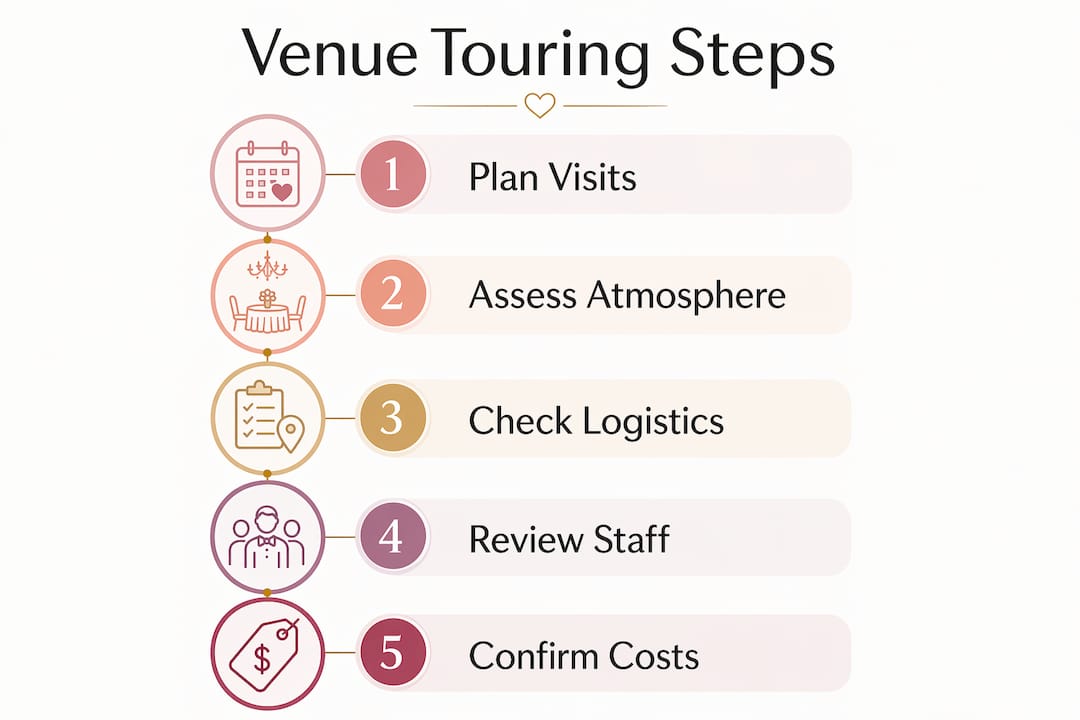
Logistics and flow are the first things to assess on arrival. Walk the path your guests will take from the car park to the ceremony space, then to the reception area. Notice whether the route is clear, accessible, and comfortable. Venue accessibility standards classify proximity of amenities, guest flow, and accessibility features as non-negotiable factors, and failing these reduces attendee satisfaction and reflects on the event’s professional quality.
- Parking and transport: Count available spaces and check proximity to public transport stops.
- Restroom access: Confirm the number of facilities relative to your expected guest count.
- Accessibility features: Look for ramps, wide pathways, and hearing loop installations.
- Aisle widths and circulation: Identify any bottlenecks that could disrupt ceremony or dinner service flow.
Atmosphere and acoustic quality are equally telling. A room that photographs beautifully can feel cold, cavernous, or acoustically harsh in person. Natural lighting shifts throughout the day, so a morning tour may reveal very different conditions to an afternoon or evening event. Pay attention to how sound carries, whether there is unwanted echo, and whether the overall mood of the space matches your vision.
Staff behaviour is one of the most underrated indicators of venue quality. A venue’s operational culture and staff responsiveness are success predictors that only become visible during an in-person visit. Notice whether the coordinator is prepared, attentive, and willing to answer detailed questions.
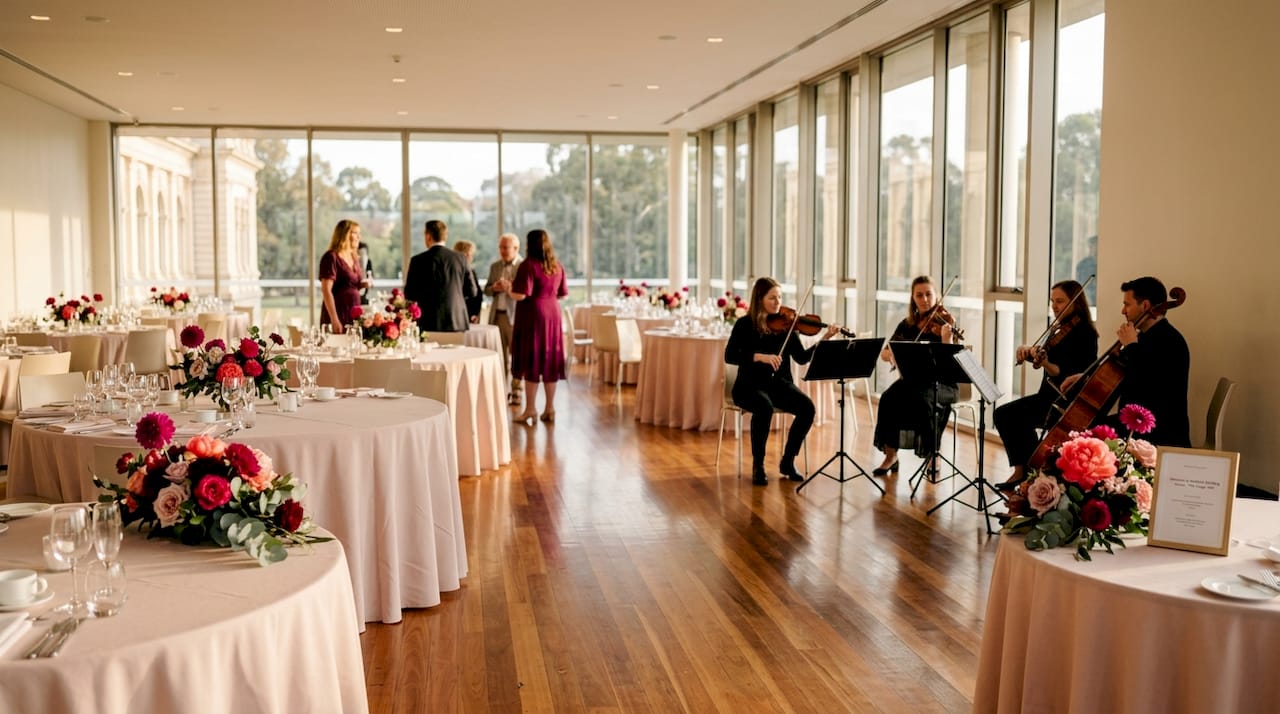
Technical infrastructure deserves a dedicated check. Testing wireless connectivity on-site is vital because many venues have dead zones that affect live streaming and guest engagement. Confirm power supply capacity, AV compatibility, and whether the venue has a backup generator for outdoor or semi-outdoor spaces.
Pro Tip: Bring a phone or tablet and test the Wi-Fi signal in the ceremony space, the reception room, and any outdoor areas. Dead zones discovered on the day of your event are far more stressful than those discovered during a tour.
How does touring multiple venues improve your decision?
Visiting venues without a clear framework leads to decision fatigue and poor comparisons. The most effective approach is to set your budget, guest count, and event style firmly before scheduling any tours, then limit your shortlist to three to five options. This focus sharpens your evaluation and saves considerable time.
Here is a practical sequence for structured multi-venue touring:
- Define your non-negotiables. Write down your maximum budget, minimum and maximum guest capacity, preferred location, and any style requirements (garden ceremony, heritage building, beachside setting) before contacting a single venue.
- Research and shortlist. Use a directory like Adelaideweddingvenues to filter venues by location, capacity, and category. Aim for three to five venues that genuinely meet your criteria on paper.
- Schedule tours on separate days. Back-to-back tours on the same day blur impressions. Allow at least a day between visits so each space registers clearly.
- Use a scoring rubric. Rate each venue on the same criteria: atmosphere, logistics, staff quality, value, and flexibility. Objective scoring frameworks help planners make impartial, confidence-backed decisions rather than relying on memory or emotion alone.
- Compare side by side. After completing all tours, review your scores together and identify which venue performed consistently across every category.
The table below illustrates how a structured comparison works across key criteria:
| Criteria | What to assess during the tour |
|---|---|
| Atmosphere and lighting | Natural light quality, mood, and evening ambience |
| Guest flow and logistics | Parking, accessibility, restroom proximity, circulation |
| Staff responsiveness | Preparedness, communication, and willingness to answer questions |
| Technical infrastructure | Wi-Fi coverage, AV compatibility, power supply |
| Cost transparency | Base hire, staffing, AV, service charges, and hidden fees |
What logistical pitfalls can a venue tour help you avoid?
Booking a venue without a site inspection is one of the most common sources of post-booking regret among couples and event planners. The pitfalls that surface are rarely visible in photos or brochures.
- Room sizing errors: Under- or oversizing a room is a frequent mistake. An undersized space causes overcrowding and discomfort, while an oversized room drains the atmosphere and makes even a full guest list feel sparse. Walking the space with your guest count in mind is the only reliable way to judge fit.
- Hidden costs: Total cost of ownership is far better evaluated during a tour, when you can ask directly about staffing levies, AV hire, power connection fees, and service charges. These add-ons can raise the final invoice well above the base rental figure. Negotiating and verifying all costs during the tour phase avoids contract surprises later.
- Noise and privacy issues: Ask whether the venue hosts multiple events simultaneously. A wedding reception sharing a building with a corporate function or a live music event in an adjacent room creates noise conflicts that no contract clause fully resolves.
- Licensing and compliance: Confirm the venue holds the correct liquor licence for your event type, and verify that its stated capacity aligns with fire safety and local council requirements. These details are rarely volunteered upfront but are straightforward to confirm in person.
- Weather contingency spaces: For outdoor or semi-outdoor weddings, physically inspect the backup space. A marquee described as “fully weatherproof” may be a temporary structure with limited heating, poor lighting, and no acoustic treatment.
Venue flexibility is often assessed most accurately in person, particularly when it comes to layout options and contingency arrangements.
How do venue tours shape the emotional experience of your event?
The emotional dimension of a venue is real, and it matters. In-person visits reveal psychological and spatial cues that help couples align their choice with their emotional vision in ways that online research simply cannot replicate.
Pay attention to how you feel when you walk through the front entrance. Do you feel calm and excited, or slightly overwhelmed and uncertain? That initial reaction carries information. A venue that produces anxiety during a relaxed daytime tour is unlikely to feel comfortable on a high-pressure wedding day.
Lighting deserves particular attention in this context. Natural light affects mood, photography quality, and the energy of a room throughout the day. Venues with north-facing windows in the Southern Hemisphere receive consistent, flattering light across the afternoon, which matters enormously for ceremony photography and the general warmth of the space.
“The atmosphere of a venue becomes apparent the moment you walk in. Acoustic quality, spatial proportions, and the behaviour of the staff all send signals about how your event will feel. Trust those signals.” Venue checklist emotional insight
Consider the full guest experience journey during your tour. Walk from the arrival point through to the ceremony space, then to the cocktail area, then to the reception room. Notice whether the transitions feel natural and whether guests will know intuitively where to go. Poor wayfinding creates confusion and disrupts the event’s rhythm.
Evaluating contingency plans physically is also part of the emotional assessment. Knowing that a credible, attractive backup space exists for wet weather removes a significant source of pre-event anxiety for both couples and their guests.
Pro Tip: Visit the venue at the same time of day as your planned event. A space that feels warm and intimate at 6pm may feel stark and uninviting at 11am. Lighting conditions change the entire character of a room.
Key takeaways
Touring venues before booking is the most effective way to evaluate logistical fit, emotional suitability, and true cost, factors that online research alone cannot confirm.
| Point | Details |
|---|---|
| Site inspection is non-negotiable | Professional planners treat venue tours as a risk-mitigation step, not an optional extra. |
| Limit tours to three to five venues | Setting clear criteria before touring prevents decision fatigue and improves comparison quality. |
| Hidden costs surface during tours | Ask about staffing, AV, and service charges in person to avoid contract surprises. |
| Emotional fit is a real signal | How you feel walking through a space predicts how your guests will experience the event. |
| Test infrastructure on-site | Check Wi-Fi coverage, power supply, and weather contingency spaces during every visit. |
The case for trusting what you see, not what you read
I have worked with couples and event planners across South Australia for long enough to say this with confidence: the tours that get skipped are almost always the ones that produce regrets. Not dramatic regrets, usually. More often it is the quiet realisation on the morning of the event that the room is slightly too large, or that the car park is further from the entrance than the website suggested, or that the backup space for rain is a converted storage room with fluorescent lighting.
What surprises me most is how often couples arrive at a tour expecting to confirm a decision they have already made, and then leave having changed their minds entirely. A venue that looked perfect in photos can feel wrong the moment you stand inside it. The proportions are off, or the ceiling is lower than expected, or the staff seem distracted and unprepared. Equally, a venue that seemed unremarkable online can feel exactly right in person.
My advice is to approach every tour with an evaluative mindset, not a confirmatory one. Bring your venue tour checklist, use a scoring rubric, and take photos and notes. But also give yourself permission to trust your gut. The two are not in conflict. A checklist tells you whether a venue meets your requirements. Your gut tells you whether it matches your vision. You need both to make a decision you will feel good about on the day.
The Adelaide wedding planning process has its own rhythms and considerations, and local knowledge matters. Venues in the Adelaide Hills behave differently in summer heat than they do in autumn. Beachside locations on the Fleurieu Peninsula have wind and light conditions that only become clear when you visit. These are not things you can read about. You have to go.
— Steven
Find your ideal Adelaide venue with Adelaideweddingvenues
Adelaideweddingvenues is the dedicated online directory for wedding venues across Adelaide and South Australia, built specifically to help couples and event planners move from research to confident decision-making.
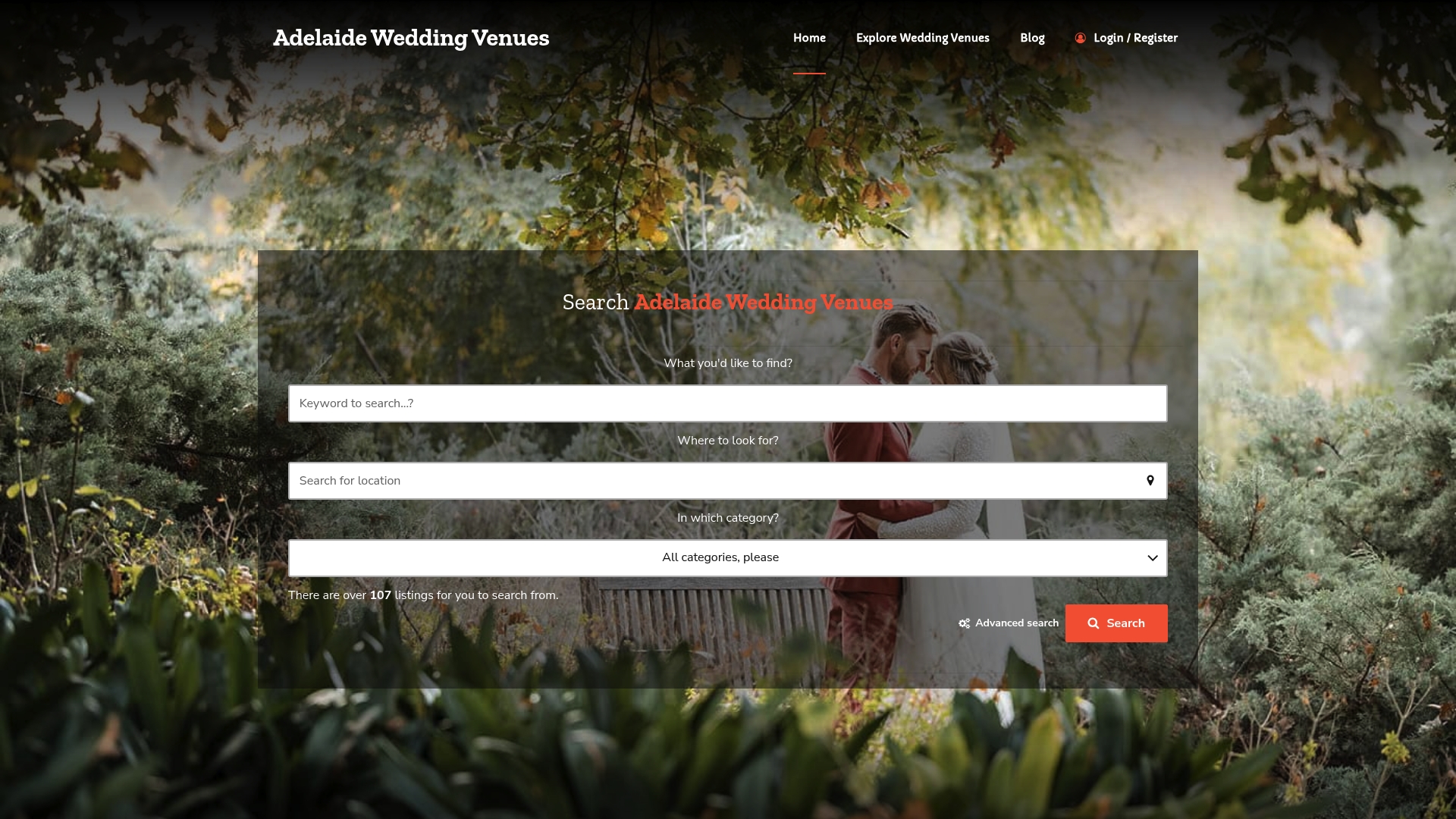
The platform lets you filter venues by location, style, capacity, and budget, so your shortlist is already focused before you schedule a single tour. Whether you are drawn to heritage buildings in the city, garden estates in the Adelaide Hills, or coastal settings on the Fleurieu Peninsula, the directory gives you the starting point you need. Explore the full venue selection guide to match your style and budget with the right options, then coordinate your tours with confidence.
FAQ
Why is touring a venue before booking so important?
Touring a venue before booking allows you to assess logistics, atmosphere, staff quality, and infrastructure that photos and websites cannot convey. Professional planners treat site inspections as a safeguard against costly post-booking surprises.
How many venues should you tour before deciding?
Tour three to five shortlisted venues rather than visiting every option that interests you. Limiting your tours to a focused shortlist improves decision quality and prevents the confusion that comes from comparing too many spaces at once.
What should you look for during a venue tour?
Use a venue tour checklist that covers guest flow, parking, accessibility, lighting, acoustics, Wi-Fi coverage, power supply, staff responsiveness, and total cost including any add-on fees. Physically inspecting the weather contingency space is also a priority for outdoor or semi-outdoor events.
Can hidden costs really be uncovered during a venue tour?
Yes. Total cost of ownership becomes much clearer when you ask venue coordinators directly about staffing levies, AV hire, service charges, and power connection fees during the walkthrough. These costs rarely appear in the initial quote.
How does a venue tour affect the emotional side of wedding planning?
Emotional fit becomes apparent during an in-person visit through cues like atmosphere, acoustic quality, and spatial proportions. How you feel walking through the space is a reliable indicator of how your guests will experience the event on the day.
