
Autumn and spring give Adelaide couples the best odds of a comfortable wedding day, with April and October the two most reliable months on the calendar. Autumn offers warm days, cooling nights and lower rainfall risk, while spring brings mild mornings, floral backdrops and more variable conditions. Summer stays hot and dry with occasional heatwave days, and winter delivers cooler temperatures with concentrated rainfall, but plenty of couples still choose it for the atmosphere and the savings.
Whichever season you pick, three things protect your day. Confirm your venue’s climate control and wet-weather backup before you sign anything. Run a shade and hydration audit for guest comfort, no matter the month. And build a forecast-check schedule into your final week, with a clear deadline for who makes the call.
- Lock in venue climate control and a genuine wet-weather backup space
- Map shade and plan hydration stations for guests, even in cooler months
- Set a forecast-check timeline and name who decides on the day
Key Takeaways
Adelaide’s most reliable wedding weather falls in autumn and spring, but every season can work with the right venue backup and a firm forecast-decision timeline.
| Point | Details |
|---|---|
| Best months | October and April offer the most consistent temperatures and lowest rainfall risk. |
| Book early for peak seasons | Autumn and spring dates often book out 12+ months ahead at popular venues. |
| Match the venue to the season | Confirm cooling capacity for summer and heating plus indoor backup for winter. |
| Set a decision timeline | Name who decides on wet-weather plans at T-48, T-24 and T-6 hours. |
| Use Adelaide Wedding Venues filters | Search by indoor capacity and climate control to shortlist weather-ready venues from the start. |
Summer weddings in Adelaide: heat, daylight and how to manage both
December through February in Adelaide runs hot and dry, with low humidity but genuine heatwave risk. Most days sit in the high 20s to low 30s, though a run of days in the mid to late 30s, occasionally pushing toward 40°C, is common enough that you should plan for it rather than hope around it. Adelaide’s Mediterranean climate means summer nights cool down reasonably well, which is exactly why evening ceremonies work so well this time of year.
The upside is long daylight and relaxed evening receptions, plus easy access to coastal and Adelaide Hills venues that catch a breeze the plains don’t get. The downside is heat stress on guests in formalwear, sunburn risk during outdoor ceremonies, and photographers fighting harsh midday shadows.
- Schedule ceremonies for late afternoon or early evening to dodge peak heat
- Set up hydration stations with capacity for your full guest count, not just a jug on a table
- Ask venues directly about mechanical cooling capacity, not just “air conditioning available”
- Serve chilled reds where possible. Warm reds can taste overly alcoholic once the mercury passes 35°C, according to advice from McLaren Vale winemakers
Pro Tip: Walk your ceremony and photo locations at around 4:00pm the week before the wedding. Note exactly where shade falls at that hour, then schedule portraits after 6:30pm to catch the golden hour light without the harsh glare.
Why autumn is the safest bet for an Adelaide wedding
March, April and May consistently deliver Adelaide’s most dependable wedding weather: warm days, cooling evenings and a lower chance of rain than you’d get in spring. March and April tend to hold onto summer’s stability without the extreme heat, while May starts easing toward cooler nights and a higher chance of rain as winter approaches.
Autumn’s appeal goes beyond comfort. The light turns golden and low in the late afternoon, which photographers love, and if your venue sits near the Adelaide Hills or a vineyard, you get the added bonus of turning vine leaves in the background. This combination of comfortable temperatures and a strong visual payoff is exactly why autumn, alongside spring, tends to book out fastest, with popular venues often filled more than 12 months ahead, according to Wedding SA’s seasonal planning guidance.
- Book April dates as early as possible. It’s the single most in-demand month for South Australian weddings
- Plan ceremony timing around late afternoon light rather than midday heat
- Pack a light jacket recommendation into your guest information for May weddings
- Confirm heating options if your reception runs past sunset, especially in May
What winter weddings in Adelaide are actually like
June to August is Adelaide’s coolest and wettest stretch, with July typically the coldest month of the year. Rainfall concentrates heavily in these three months, and if your venue sits in the Adelaide Hills, expect it colder still, with genuine frost risk on clear mornings.
None of that rules winter out. Off-season pricing and wider indoor venue availability make it an appealing option for budget-conscious couples, and moody, low-light photography has its own visual character that summer simply can’t produce. The trade-off is that you need indoor capacity that actually works, not just a marquee with the sides down.
- Confirm your venue’s indoor capacity matches your full guest list, not a reduced fair-weather number
- Check heating output specifically, not just that heating “exists”
- Arrange guest transport for cold, dark evenings, particularly from Hills venues
- Have a wet-weather logistics plan for guest arrival, not just for the ceremony itself
Pro Tip: A rainy or indoor wedding photographs beautifully when you style it as the plan, not the backup. Think warm lighting, layered textiles and candles rather than a bare marquee thrown up at the last minute. Wedding SA’s own guidance frames a wet-weather plan as a design feature, not a failure.
Is spring a good time for an Adelaide wedding?
Spring is Adelaide’s most visually rewarding season and its least predictable. September and October swing between cool mornings and warm afternoons, and wind is the main hazard, particularly around the Adelaide Hills where gusts can complicate marquee setups and outdoor décor. October edges out September for reliability and is one of the two most consistently well-behaved months on the calendar.
November is the standout month for atmosphere. Jacaranda trees bloom in purple across the city, days run long, and temperatures usually feel closer to early summer than spring, making it hugely popular for outdoor photography.
- Secure hair and florals against wind with pins, spray and sturdier arrangements than you’d use indoors
- Build timeline flexibility into your day. Spring weather can shift within hours
- Give guests smart layering advice. Morning cool and afternoon warmth need different outfits
- Aim for late October or November if jacaranda backdrops matter to your photos
Adelaide’s microclimates: what BoM station data actually tells you
Adelaide’s weather isn’t one climate, it’s several. The Adelaide Hills run roughly 3 to 5°C cooler than the plains and receive noticeably more rainfall, which matters enormously if you’re choosing between a city venue and a hills winery. Coastal venues get a moderating sea breeze that inland suburbs miss entirely, particularly in summer.
Three Bureau of Meteorology stations give you the numbers to plan against. Adelaide (West Terrace / Ngayirdapira) represents the city centre. Adelaide Airport reflects conditions in the northern and airport-adjacent precincts. Mount Lofty stands in for the Hills. Use the station nearest your actual venue, not the one that happens to show up first in a search.
| Month | West Terrace mean max | West Terrace mean rainfall |
|---|---|---|
| January | Typical high temperature in summer months | Typical rainfall in summer months |
| April | Typical high temperature in mid-autumn | Typical rainfall in mid-autumn |
| July | Typical high temperature in mid-winter | Typical rainfall in mid-winter |
| October | Typical high temperature in spring | Typical rainfall in spring |
Figures drawn from BoM’s Adelaide (West Terrace / Ngayirdapira) climate averages. The seasonal contrast between summer and winter is significant, with rainfall much higher and temperatures much lower in winter months compared to summer.
Your wedding-day weather checklist and contingency plan
Getting the weather right isn’t about luck. It’s about asking the right questions early and building a decision timeline everyone agrees to. Start with the venue itself.
- Confirm mechanical cooling and heating capacity for your actual guest count, not a smaller “typical” number
- Ask about indoor backup space, including whether it’s genuinely usable or a converted storage area
- Check marquee flooring options if your ceremony or reception is outdoors
- Verify power capacity for fans, heaters or lighting rigs
- Ask about drainage and how the site handles heavy rain underfoot
- Confirm what shade exists naturally, and where, at different times of day
Vendors need their own line of questioning. Ask your photographer how they plan around golden hour in your chosen month, since that window shifts by more than an hour between December and July. Ask your caterer what their food-safety plan looks like on a 35°C day, particularly for anything dairy or seafood-based. Ask your florist how they protect arrangements from wind or heat between delivery and ceremony, since a wilted bouquet is one of the more common casualties of a hot Adelaide afternoon.
Guest comfort deserves its own checklist. Provide shaded seating options wherever possible. Set up hydration stations that can handle your full guest list, not a token jug of water. Offer sunscreen at outdoor ceremonies. Guide guests on footwear if the ground is uneven, gravel, or likely to be wet.
A contingency run-sheet works best when it names a decision-maker and a deadline for each stage:
- T-14 days: Confirm marquee or indoor backup availability with the venue in writing
- T-48 hours: Check the Bureau of Meteorology forecast and brief your coordinator or celebrant
- T-24 hours: Confirm final call authority. Who decides, and by what time?
- T-6 hours: Lock the final ceremony location and notify vendors and the bridal party
Keep a simple vendor contact list on hand for the day, covering your venue coordinator, photographer, caterer and celebrant, so nobody’s scrambling for a number if plans shift.
Pro Tip: Get the wet-weather decision timeline in writing with your venue during the booking stage, not the week of the wedding. Name exactly who has authority to call it, and by when, so nobody is guessing at 6:00am on the day. For a broader look at how outdoor spaces handle these shifts, outdoor venues built for changeable weather are worth reviewing at the planning stage, alongside partner guidance on what to check when organising any outdoor event.
When should you start checking the forecast?
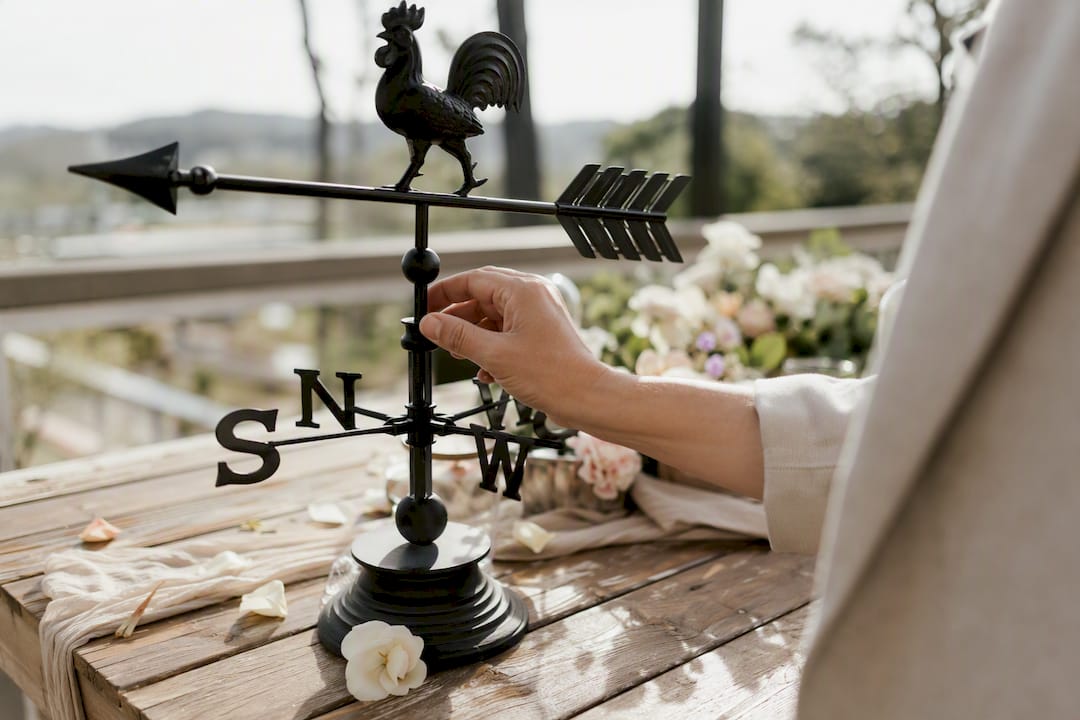
Start broad and narrow as the date approaches. Months out, watch seasonal patterns and book contingencies accordingly. At 14 days, take your first real look at trends, though treat anything beyond a week as indicative rather than reliable.
The working week is where decisions firm up. From T-7 to T-3 days, check daily for rainfall probability and wind speed, both of which matter enormously for outdoor setups. At 48 and 24 hours, confirm your final call with the venue. At 6 hours, make the call and communicate it.
- Use the Bureau of Meteorology for official warnings, heatwave alerts and severe weather notices
- Check station-specific data nearest your venue for realistic local expectations
- Use a reputable radar app for minute-by-minute rain timing on the morning itself
- Treat wind speed above roughly 25 to 30km/h as a red flag for marquees, arbours and loose décor
How far ahead should you book around Adelaide’s seasons?
Autumn and spring dates, especially April, October and November, often book out more than 12 months in advance at popular venues, a pattern Wedding SA’s planning resources confirm year after year. Summer and winter dates sometimes open up with shorter lead times, but factor in the cost of heat or wet-weather contingencies before assuming they’re cheaper overall.
Weekday weddings and shoulder-month dates, think early September or late May, give you more negotiating room and often better vendor availability. Confirm wet-weather fees and marquee lock-in dates as early as possible, and hold off finalising your guest list until your weather contingency plan and venue capacity are settled. Our venue booking timeline walks through this in more detail.
- Book 12+ months ahead for peak autumn and spring dates
- Consider shoulder months (early September, late May) for more flexibility
- Confirm wet-weather fees before signing your venue contract
- Finalise your guest list only after your weather contingency is locked in
Reading BoM climate data without getting it wrong
BoM station averages are long-term figures, not predictions. Elevation and location shift them significantly. Always use the station nearest your venue rather than city-wide figures. Recent-year summaries matter too. The Bureau’s own 2025 annual report recorded mean maximums at Adelaide West Terrace of 23.2°C, 1.4°C above the long-term average, a reminder that averages shift year to year. Daylight saving also changes when golden hour falls, so recheck timing once the clocks move.
What local photographers and venue managers actually tell couples
Golden hour timing shifts by more than an hour across the year in Adelaide, and photographers who work here constantly plan around it rather than a fixed clock time. Venue managers, meanwhile, hear the same questions on repeat: what’s your cooling capacity, what’s your marquee’s wind rating, and what happens if it rains at 2:00pm on the day.
The couples who worry least on their wedding day aren’t the ones who got lucky with weather. They’re the ones who asked their venue the hard questions three months earlier and had a real answer, not a vague reassurance.
Allergy season and flora: what guests might not tell you
Spring brings South Australia’s peak pollen season, running roughly from September through November, driven largely by grasses and some flowering trees. If you’re marrying in spring and planning an outdoor ceremony surrounded by lawns or native gardens, it’s worth mentioning in your invitation suite that guests prone to hay fever should come prepared.
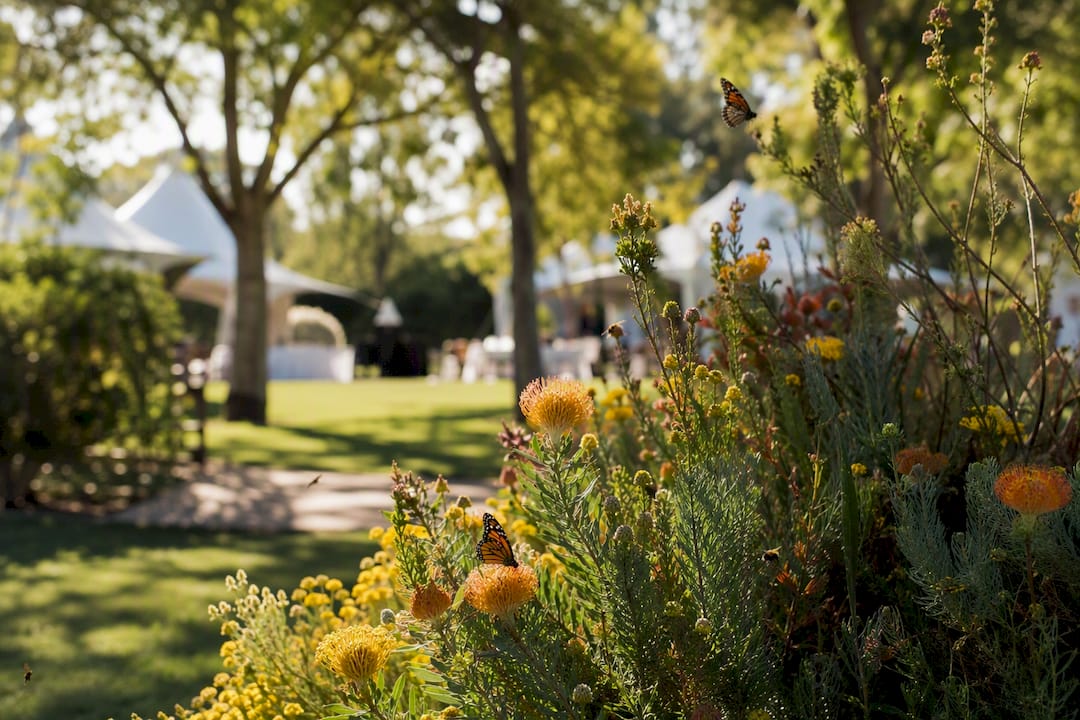
Jacaranda season in November is visually spectacular but isn’t a major allergy trigger itself. Grass pollen is the bigger culprit, and it peaks on windy, dry spring days, exactly the conditions that also make marquee setup trickier. If your venue sits near vineyards or bushland, be aware that some native flowering plants can also affect sensitive guests, and check with your venue whether garden beds are mowed or maintained ahead of large events to reduce grass pollen exposure.
Practical steps help more than most couples expect. Note on your invitations if the ceremony is outdoors and in a garden setting. Have tissues and antihistamines available in your bridal suite or guest welcome area. If a close family member has severe hay fever or asthma, consider whether an indoor or covered space might suit them better, and offer it as an option rather than assuming everyone wants full garden immersion. It’s a small courtesy that costs nothing and prevents a guest spending the ceremony sneezing through their vows.
How daylight saving time affects your ceremony schedule
South Australia observes daylight saving from early October to early April, which shifts sunset by a full hour compared with winter months. This matters more than couples expect when planning ceremony timing and photography windows.
A 5:00pm ceremony in July, when there’s no daylight saving, sits close to sunset. The same 5:00pm slot in December, under daylight saving, still has hours of daylight left, which pushes golden hour and portrait time much later into the evening. If you’re booking a venue or photographer more than six months out, confirm your ceremony time against the season you’ll actually be marrying in, not a generic time slot.
The clock change itself lands on your radar too if your wedding falls in the first week of April or the first week of October. Double check invitations, run sheets and vendor call times reflect the correct time, and flag the change explicitly to interstate or international guests who might not think to adjust. It’s a small detail that occasionally trips up even well-organised weddings.
How Adelaide Wedding Venues helps you plan around the weather
As a directory built by people who work in Adelaide weddings, we designed our venue filters specifically so you can screen for weather resilience before you fall in love with a space that can’t actually handle your date. Search by indoor capacity, marquee experience, or climate control, and you’ll spend less time discovering a venue’s weather limitations after you’ve already signed the contract.
Find a weather-ready venue for your Adelaide wedding
Choosing a venue by photos alone is how couples end up scrambling for a marquee three weeks before the ceremony. Adelaide Wedding Venues lets you filter by indoor capacity, climate control and wet-weather infrastructure from the start, so you’re comparing venues that can actually handle your season, not just ones that look good in good weather.
If you’re weighing up rustic barns against beachside spaces for a summer date, or comparing heated function rooms for a winter wedding, our guide on choosing your ideal wedding venue breaks down exactly what to check for each style. For a broader look at amenities and capacity questions worth raising with any shortlisted venue, our guide to choosing the perfect wedding venue covers the practical detail most couples miss on a first walkthrough.
Start your search on the Adelaide Wedding Venues directory and filter by the features that actually protect your date, not just the ones that photograph well.
Sources
For deeper detail beyond this guide, these sources cover the climate data and planning frameworks referenced throughout.
- Bureau of Meteorology — Adelaide (West Terrace / Ngayirdapira) climate averages
- WineDiva — Adelaide Hills regional climate notes
FAQ
How much does an average wedding cost in Adelaide?
Costs vary widely by venue type and guest count, but season plays a real role. Off-peak winter and summer dates often come with lower venue rates than the high-demand autumn and spring window.
What is Adelaide’s coldest month?
July is Adelaide’s coldest month, with the lowest mean temperatures of the year and the highest concentration of rainfall, according to Bureau of Meteorology station data.
What month is considered lucky or ideal for marriage in Adelaide?
There’s no official “lucky” month, but April and October consistently rank as the most weather-reliable choices, combining warm days, low rainfall risk and comfortable evenings.
What’s the most popular month to get married in South Australia?
April and October are the most sought-after months for South Australian weddings, largely because they combine dependable weather with strong photography light, which is why Wedding SA notes these dates book out earliest.
Can Adelaide Wedding Venues help me find a venue with wet-weather backup?
Yes. The directory lets you filter venues by indoor capacity, marquee experience and climate control, so you can shortlist options built to handle Adelaide’s seasonal variability before you commit to a date.
