
Historic venues deliver cultural, economic, social and event advantages that most modern locations simply cannot match. Whether you are planning a wedding, a corporate function or a community gathering, the case for choosing a heritage site is compelling across five clear axes: cultural identity, economic value, environmental sustainability, community benefit and event experience. Here is a quick checklist of the core benefits:
- Built-in atmosphere and architectural character that reduces styling costs
- Strong cultural identity and storytelling potential for guests
- Measurable economic value through tourism, jobs and on-site revenue
- Sustainability gains from adaptive reuse and embodied carbon savings
- Photogenic backdrops that translate directly into shareable content
- Community connection through shared history and place attachment
- Educational programming opportunities for schools and the public
- Premium pricing power for venue owners and operators
- Support from government heritage grants and funding programmes
- Long-term conservation funding through event hire revenue
An ANU choice-modelling study for Old Parliament House estimated AU$224.0 million in total economic value from exhibitions, events, shops and cafés alone, signalling just how much the public values well-managed heritage sites. The Australian Government’s State of the Environment report confirms that historic heritage generates economic benefits through tourism and reuse, provided management is sustainable.
Key takeaways
Historic venues deliver measurable cultural, economic, environmental and event advantages that make them a strong choice for couples, planners and heritage advocates, provided technical and regulatory constraints are addressed early.
| Point | Details |
|---|---|
| Economic value is quantifiable | ANU research estimated AU$224.0 million in total welfare value for Old Parliament House’s events and facilities. |
| Adaptive reuse saves embodied carbon | Retaining original materials avoids demolition waste and the emissions of new construction. |
| Built-in décor reduces styling costs | Architectural features and mature gardens lower decoration budgets and improve photography. |
| Technical constraints need early attention | Power capacity, heritage consent conditions and accessibility must be confirmed before booking. |
| Active use funds conservation | Event hire revenue is a primary mechanism for maintaining heritage fabric over the long term. |
What counts as a historic venue in Australia?
The term “historic venue” covers a broad range of sites, and understanding the scope matters before you commit to one. In Australia, a site generally qualifies when it meets at least one of these criteria:
- Heritage-listed status under a Commonwealth, state or local government register (such as the Australian Heritage Database or a council heritage overlay)
- Age and cultural significance, typically 50 or more years old with demonstrable historical associations
- Adaptive reuse, where an industrial, civic or agricultural building has been repurposed for events while retaining its original fabric
Common Australian venue types in this category include colonial-era homesteads and pastoral stations, converted wool stores and warehouses, civic halls and town halls, historic churches and chapels, and museum buildings. You can browse structured records for heritage-listed sites across Australia through Data, which planners and researchers can use to identify and verify listings by region.
For South Australian couples and planners, heritage wedding venue examples from across the state illustrate the range of site types available, from grand stone buildings to intimate garden estates.
Pro Tip: Before visiting a site, check whether it appears on your local council’s heritage overlay as well as the state register. A building can carry conditions at both levels, and the more restrictive set of conditions will govern what you can do on the day.
Cultural and identity benefits: story, continuity and authenticity
Historic venues carry a narrative that no amount of interior design can manufacture. The power of place is real: guests at a heritage site feel they are participating in something larger than a single event, because the building itself connects them to the people and decisions that shaped it over generations. That emotional resonance is one of the strongest reasons couples and event organisers choose heritage sites over purpose-built alternatives.
From a cultural standpoint, historic venues:
- Preserve intangible heritage by keeping stories alive through active use
- Provide authentic settings for ceremonies, exhibitions and cultural programmes
- Strengthen community identity by anchoring shared memory in a physical place
- Attract visitors who might not otherwise engage with local history
Practitioners consistently describe historic venues as making events feel like “chapters in an ongoing story,” giving guests an emotional connection that modern venues struggle to create.
Pro Tip: Use the venue’s history directly in your event collateral. A short paragraph in the programme about the building’s origins, or a brief guided walk before the ceremony, gives guests a richer experience and generates genuine conversation. It costs nothing and adds lasting value.
Economic benefits: tourism, jobs, revenue and valuation evidence
The economic case for heritage venues is well-documented. The ANU’s choice-modelling research for Old Parliament House estimated AU$224.0 million in total welfare value for the site’s status quo, with exhibitions, weekly events, the on-site shop and café each contributing positively. That figure captures both use value (people who visit) and non-use value (Australians who simply want the site to exist and thrive).
A substantial total estimated economic value for Old Parliament House’s existing services and facilities, including exhibitions, weekly events, shops and cafés — ANU choice-modelling study.
For venue owners and local economies, the practical revenue paths are:
- Event hire: weddings, conferences and private functions fund ongoing conservation works
- Tourism spend: heritage visitors typically spend more per day than general tourists
- On-site retail and hospitality: cafés, gift shops and guided tours create year-round income
- Long-term tenancy: commercial tenants in adapted heritage buildings generate stable revenue
- Multiplier effects: local suppliers, florists, caterers and accommodation providers all benefit
Event bookings are a primary revenue stream for many heritage sites, and listing exposure through directories helps venues reach organisers and couples who are actively searching. The Australian Government notes that heritage tourism and reuse generate real economic returns, but only when management is well-planned and sustainable.
Pro Tip: If you manage a heritage venue, track event revenue separately from general operating income. This data strengthens grant applications and demonstrates to heritage bodies that active use is funding conservation, not undermining it.
Environmental and sustainability benefits: adaptive reuse and embodied carbon
Choosing a heritage building over a new-build venue is often the more sustainable decision. Every existing structure contains what builders call “embodied carbon” — the energy already spent extracting, manufacturing and transporting its materials. Demolishing that building and constructing a replacement wastes all of it. Adaptive reuse retains the embodied carbon already invested and avoids the emissions associated with new construction.
Sustainability wins from using historic venues include:
- Retention of original materials (stone, timber, brick) that would otherwise go to landfill
- Mature landscapes and established gardens that require less irrigation and planting than new sites
- Lower demand for new manufactured materials and finishes
- Reduced construction waste compared with a new-build event space
- Opportunities to install discreet renewable energy systems without compromising heritage fabric
The Australian Government’s environment monitoring confirms that historic heritage reuse can deliver environmental benefits, provided the approach is well-managed.
Pro Tip: When upgrading a heritage venue for events, prioritise reversible interventions: temporary power distribution boards, wireless AV systems and portable climate control leave no permanent mark on the fabric and satisfy most heritage consent conditions.
Why event planners choose historic venues: atmosphere, marketing and photo opportunities
The event-specific advantages of heritage sites are substantial, and they compound each other. Historic venues provide built-in atmosphere, photogenic backdrops and mature landscapes that reduce the need for heavy styling. Architectural features such as exposed stone walls, timber ceiling beams, leadlight windows and heritage staircases do the decorative work that a modern blank-canvas venue cannot.
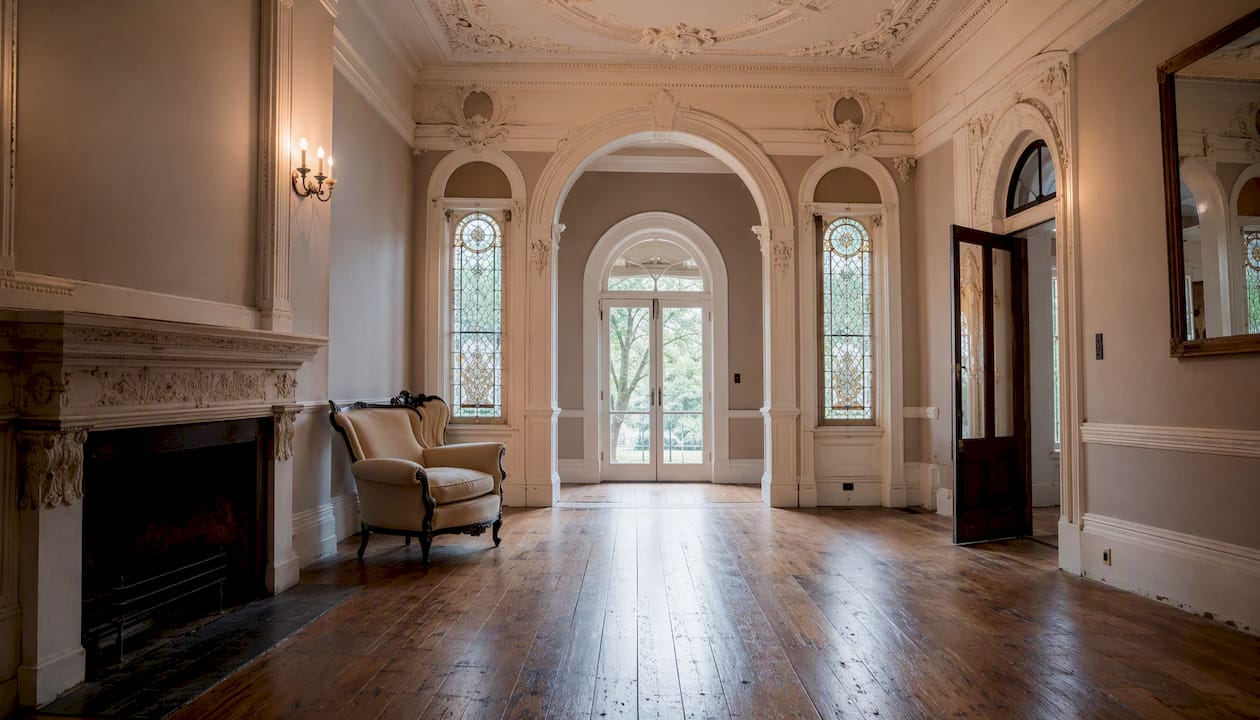
From a marketing perspective, heritage venues generate shareable content almost automatically. A single well-composed photograph in a heritage setting outperforms generic ballroom imagery on social media, which translates into organic reach for both the couple and the venue. Industry guides consistently note that architectural features and mature gardens act as built-in décor, reducing styling budgets and giving photographers more to work with.
Industry reporting also shows rising demand for historic event venues alongside higher technical expectations, including hybrid streaming, robust power and data infrastructure, and high-production AV. Venues that invest in discreet, conservation-sensitive upgrades gain a clear competitive advantage.
Practical checklist for event planners booking a historic venue:
- Confirm power capacity and the location of distribution boards before finalising AV requirements
- Check heritage consent conditions for any temporary structures, lighting rigs or marquees
- Assess accessibility for guests with mobility needs and plan workarounds early
- Identify the best natural-light windows for photography and schedule key moments around them
- Arrange contingency weather cover that does not require permanent fixings to the building fabric
For couples wanting unique entertainment ideas that complement a heritage setting, pairing the venue’s character with thoughtfully chosen entertainment deepens the guest experience without competing with the architecture.
Pro Tip: Heritage venues often command a premium price point precisely because of their scarcity and character. If you are a venue owner, lean into that scarcity in your marketing: publish the building’s story, share archival photographs and highlight the features that cannot be replicated anywhere else.
Community and educational benefits: volunteering, learning and social cohesion
Historic venues serve communities well beyond the events they host. As learning spaces, they give school groups direct contact with physical history, making abstract curriculum content tangible. As volunteering hubs, they attract people who want to contribute to preservation, building social networks in the process.
Key community benefits include:
- School visits and education programmes tied to local and national history
- Public talks, exhibitions and open days that engage residents of all ages
- Volunteer conservation projects that build skills and community pride
- Shared identity: a well-maintained heritage site gives a neighbourhood a focal point
- Place attachment: research consistently links access to meaningful historic places with improved public wellbeing
Simple community engagement actions any venue can take include hosting annual open days, partnering with local historical societies, offering reduced-rate hire to community groups and running volunteer working-bee days. These activities cost relatively little but generate goodwill, local press coverage and a loyal base of community advocates. For more on building that local connection, the community engagement guide from Adelaideweddingvenues covers practical approaches for venue operators.
Key challenges and considerations when using or preserving historic venues
The benefits are real, but so are the constraints. Understanding them early prevents costly surprises.
Common challenges:
- Conservation restrictions: heritage conditions may prohibit drilling, painting, or fixing anything to original fabric
- Load limits: older floors and structures may not support modern staging, heavy catering equipment or large crowds
- Accessibility: many heritage buildings predate disability access standards and require creative workarounds
- Insurance: specialist heritage venue insurance is more complex and often more expensive than standard event cover
- Power capacity: original electrical infrastructure rarely meets modern AV and catering demands
- Operational costs: maintenance of heritage fabric is ongoing and often unpredictable
Red-line issues to resolve before signing a contract include: confirming the heritage consent conditions in writing, checking the building’s electrical capacity with a licensed electrician, and verifying that your preferred caterer and AV supplier have worked in heritage environments before.
Pro Tip: Commission a brief technical site survey before you book. A two-hour assessment by a heritage-experienced event technician and a structural engineer will identify power, load and access constraints early, saving far more than the survey costs.
For a detailed look at venue accessibility planning, Adelaideweddingvenues has a dedicated guide covering practical solutions for historic buildings.
How to maximise the benefits of a historic venue
Getting the most from a heritage site takes preparation. These steps apply whether you are a venue owner developing your offering or a planner booking for a client.
Before booking or upgrading:
- Conduct a technical audit covering power capacity, structural load limits and accessibility
- Obtain and read the heritage consent conditions from the relevant authority
- Map your audience: heritage venues attract guests who value authenticity, so align your marketing accordingly
- Set a pricing strategy that reflects the venue’s scarcity and character, not just its capacity
For marketing the heritage value:
- Publish the building’s history on your website and in event collateral
- Commission a professional photography session that captures architectural details, not just the event setup
- Use archival images and documents as social media content between bookings
- Partner with local historians or heritage bodies to add credibility to your storytelling
For technical delivery:
- Use wireless or battery-powered AV systems wherever heritage conditions allow
- Plan power distribution from a temporary board rather than modifying existing circuits
- Brief all suppliers on heritage conditions before the event, not on the day
For planners working through the venue selection process, understanding how to evaluate a heritage site against a client’s brief is a core skill.
Pro Tip: From a photographer’s perspective, the single most effective way to justify premium pricing for a heritage venue is a strong hero image: one photograph that captures the building’s character at its best, used consistently across all marketing channels. Couples book what they can picture themselves in.
Are historic venues worth it? A short verdict
Yes, with clear caveats. Historic venues deliver cultural depth, economic returns, environmental value and event experiences that modern purpose-built spaces rarely replicate. The trade-offs, mainly higher maintenance costs, heritage approval requirements and technical constraints, are manageable with early planning and the right specialist advice.
A practical next step for each audience:
- Event planners: commission a technical site survey and read the heritage consent conditions before signing any contract
- Venue owners: track event revenue separately, apply for available heritage grants and invest in discreet infrastructure upgrades
- Heritage advocates: use economic valuation evidence, such as the ANU Old Parliament House study, to make the case for active use as a conservation strategy
For couples and planners ready to explore South Australian heritage options, Adelaideweddingvenues offers a searchable directory of venues across Adelaide and the region. The venue selection guide is a practical starting point for matching a heritage site to your brief, budget and guest list.
Ready to find your heritage venue? Browse the Adelaideweddingvenues directory and use the location filters, category search and budget tools to shortlist heritage sites across South Australia. Start your search at Adelaideweddingvenues and use the wedding planning checklist to keep every detail on track.
An editorial perspective on heritage venues in Adelaide
Working with heritage venues across Adelaide and South Australia, the pattern is consistent: the sites that perform best for couples and event organisers are the ones where the venue team understands both the building’s story and its technical constraints. The venues that struggle are those that market the romance without preparing for the reality.
What actually works is straightforward. A venue that publishes its history, invests in discreet power infrastructure and briefs every supplier on heritage conditions will almost always outperform one that relies solely on its aesthetic appeal. The character of the building does the heavy lifting on atmosphere, but the operational preparation is what turns a beautiful space into a venue people recommend.
From a directory perspective, heritage listings consistently attract strong enquiry volumes on Adelaideweddingvenues, particularly from couples who have already visited a site and want to confirm it against alternatives. The photographic quality of a listing matters enormously: a heritage venue with one strong architectural hero image generates significantly more enquiries than the same venue with only interior setup shots. If you manage a heritage property and want to reach more couples and event organisers, optimising your venue profile is the most direct step you can take.
Sources
Australia-focused sources for deeper research across the cultural, economic, environmental and event benefit axes:
- Economic valuation of cultural heritage sites: A choice modeling approach – The Australian National University
- Preparing historic event venues for 2026 demand – Event-Technology Portal
- The benefits of choosing a historic venue for your wedding – Onya Magazine
- Historic heritage – State of the Environment (Australia)
- Data
The ANU study alone demonstrates that the public places substantial aggregate welfare value on a single well-managed heritage site, which is a compelling point for anyone making the case for preservation through active use.
FAQ
What are the main benefits of historic venues?
Historic venues offer cultural authenticity, photogenic architectural features, built-in atmosphere, economic returns through tourism and event hire, and sustainability gains from adaptive reuse. They also support community identity and educational programming in ways that purpose-built venues rarely can.
Why do historic places matter for events and communities?
Historic places anchor shared memory and identity, giving communities a tangible connection to their past. For events, that connection translates into emotional resonance for guests and storytelling opportunities that modern venues cannot manufacture.
What is the importance of historic buildings for the economy?
Heritage buildings generate economic value through tourism, on-site hospitality, event hire and multiplier effects for local suppliers. ANU research estimated AU$224.0 million in total welfare value for Old Parliament House’s existing services, illustrating the scale of public benefit a single well-managed site can produce.
What challenges should planners expect with historic venues?
The main challenges are heritage consent restrictions on modifications, older power infrastructure that may not support modern AV, accessibility limitations, specialist insurance requirements and higher ongoing maintenance costs. A technical site survey before booking resolves most of these issues early.
Are historic venues more sustainable than modern venues?
Adaptive reuse of a heritage building retains its embodied carbon and avoids demolition waste, making it generally more sustainable than constructing a new event space. The Australian Government notes that heritage reuse delivers environmental benefits when managed sustainably.
