
TL;DR:
- Wedding industry networking involves building trust-based relationships among wedding professionals to generate referrals and collaborations. A strong network relies on genuine communication, consistent engagement, and mutual trust, leading to more qualified bookings. Patience and regular effort over time are key to developing meaningful referral partnerships.
Wedding industry networking is the ongoing practice of building trust-based, mutually beneficial relationships with other wedding professionals to generate referrals, collaboration, and long-term business growth. Unlike a simple contact list, a genuine professional network connects planners, photographers, florists, caterers, and venues in ways that produce real bookings. The wedding industry runs on word of mouth, and networking builds the trust that makes those referrals flow. Organisations like WIPA (Wedding International Professionals Association) and platforms like Instagram have made it easier than ever for wedding professionals to find and maintain those connections.
What is wedding industry networking and why does it matter?
Wedding industry networking is defined as the intentional, ongoing process of building relationships with fellow wedding professionals that yield referrals, partnerships, and collaboration over time. The standard industry term for this practice is “professional relationship development,” though most wedding professionals simply call it networking. The critical distinction is that networking differs from prospecting. Prospecting chases an immediate sale. Networking builds the trust that creates opportunities across months and years.

The professionals involved span every corner of the industry. Wedding planners, photographers, celebrants, florists, caterers, venue managers, stylists, and musicians all sit within the same referral ecosystem. When a planner recommends a photographer to a client, that recommendation carries far more weight than any paid advertisement. That is the core mechanic of wedding industry networking: trusted professionals vouching for one another.
Referrals and collaboration are the two primary outputs of a well-maintained network. A florist who trusts a venue coordinator will recommend that venue without hesitation. A photographer who has worked alongside a particular planner knows their style and will actively seek out future collaborations. These relationships do not happen by accident. They are built through consistent presence, genuine communication, and mutual respect.
Why is networking crucial for wedding professionals’ business growth?
Networking is the most cost-effective marketing channel available to wedding professionals. Paid advertising on Google or Meta requires ongoing spend with no guarantee of return. A referral from a trusted colleague arrives pre-qualified, pre-sold, and ready to book. Referrals from trusted professionals drive bookings at a conversion rate that paid channels rarely match.
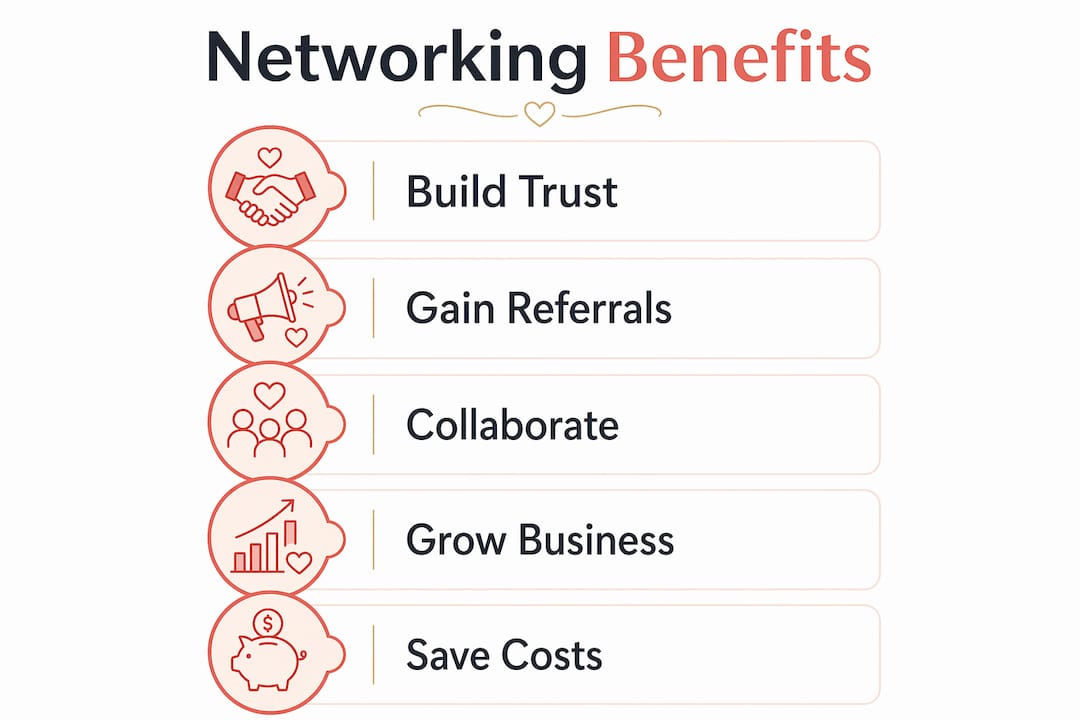
The business case for networking extends well beyond individual referrals. MIT Sloan frames networking as trust-building that leads to collaboration and venture promotion, including access to mentorship, trend insights, and long-term business opportunities. For a wedding photographer or planner, this might mean learning about a new venue before it opens publicly, or being invited to participate in a styled shoot that generates editorial coverage.
Key business benefits of active wedding industry networking include:
- Qualified referrals. Colleagues who know your work send clients who are already aligned with your style and budget range.
- Reputation building. Consistent presence at industry events and genuine engagement builds recognition among peers.
- Mentorship access. Experienced professionals share knowledge that accelerates growth for newer vendors.
- Trend awareness. Close relationships with suppliers and venues reveal shifts in client preferences early.
- Collaboration opportunities. Styled shoots, workshops, and joint marketing efforts expand your portfolio and reach.
Wedding pros who prioritise referral networks achieve bookings faster than those relying solely on marketing spend. That gap widens over time as a strong network compounds. Each satisfied referral partner becomes more likely to recommend you again, and each successful collaboration adds to your credibility.
What distinguishes a quality vendor network from a contact list?
A contact list is a collection of names and phone numbers. A vendor network is a group of professionals who actively recommend you, know how you work under pressure, and trust your judgement on behalf of their clients. The difference is significant. A strong vendor network is small but built on mutual trust and real working history, and it outperforms a large, loose contact list every time.
| Feature | Contact list | Vendor network |
|---|---|---|
| Size | Large, often hundreds | Small, typically 10–30 trusted professionals |
| Basis | Acquaintance or one-off meeting | Shared working history and mutual trust |
| Referral quality | Rare or unreliable | Consistent and pre-qualified |
| Communication | Infrequent or transactional | Regular, genuine, and two-way |
| Value under pressure | Low. Contacts may not recall you | High. Partners vouch for you confidently |
The success measure in networking is the number of trusted collaborators who can vouch for your judgement when a client asks for a recommendation at short notice. That number matters far more than total contacts met or events attended.
Common pitfalls of shallow networking include collecting business cards without follow-up, attending events only when business is slow, and treating every interaction as a sales opportunity. These behaviours signal to other professionals that the relationship is transactional. Genuine networks are built on reciprocity: you send referrals, and referrals come back.
Pro Tip: Before attending your next networking event, identify two or three professionals you already know and plan to introduce them to someone new. Giving value first is the fastest way to deepen a professional relationship.
How to build and nurture meaningful wedding industry connections
Building a genuine vendor network requires a structured approach, not sporadic attendance at events. The process follows a clear sequence: meet, follow up quickly, stay engaged, and collaborate.
-
Attend events consistently. Industry meetups, bridal expos, WIPA chapter events, and venue open days are the primary venues for initial introductions. Consistent event attendance builds recognition and trust over time. Showing up once is forgettable. Showing up repeatedly makes you a familiar, trusted face.
-
Follow up within 24–48 hours. Memory fades fast after a busy event. Follow-up after networking must start within 24–48 hours to be effective. Reference a specific detail from your conversation to show genuine attention. A message that says “Great to meet you at the Barossa Valley expo, loved hearing about your approach to outdoor ceremonies” lands far better than a generic “Nice to meet you.”
-
Use a multi-touch follow-up cadence. Memory fades quickly, and 3–4 personalised contacts across one to two weeks maximise the chance of converting a new contact into a genuine collaborator. Vary your channels: email, Instagram DM, and a handwritten note if the relationship warrants it.
-
Engage consistently on social media. Comment meaningfully on colleagues’ posts. Share their work when it genuinely impresses you. Tag collaborators in your own content. These small, regular actions keep you present in a professional’s awareness without requiring a formal meeting.
-
Collaborate on real projects. Styled shoots, educational workshops, and joint venue tours create shared experiences that deepen relationships faster than any coffee catch-up. Collaboration produces content, builds trust, and demonstrates your working style to potential referral partners.
-
Integrate networking into your annual rhythm. Networking works best as an ongoing operational rhythm through the wedding calendar, not a once-a-year effort. Schedule quarterly check-ins with key contacts, attend at least one industry event per month during peak season, and maintain digital engagement year-round.
Pro Tip: Keep a simple spreadsheet tracking your top 20 network contacts, the last time you connected, and any referrals exchanged. Reviewing it monthly takes ten minutes and prevents relationships from going cold.
What are the best practices and common mistakes in wedding networking?
Effective wedding networking follows a clear set of principles. The professionals who build the strongest networks share consistent behaviours that set them apart from those who collect contacts without results.
Give value before expecting referrals. Send a colleague a relevant article. Recommend their services to a client who is not the right fit for you. Introduce two professionals who would benefit from knowing each other. Networking builds trust-based relationships that create opportunities, not immediate sales. The professionals who give generously receive generously in return.
Be authentic in every communication. Generic emails and copy-paste messages are immediately recognisable and immediately forgettable. Reference shared experiences, acknowledge specific work you admire, and write as a person rather than a brand. Authenticity is the foundation of every lasting professional relationship.
Best practices that separate strong networkers from weak ones:
- Track referrals sent and received, and thank partners explicitly when a referral converts to a booking.
- Follow up after every wedding where you worked alongside a new vendor. A short message noting what went well cements the relationship.
- Avoid overwhelming contacts with frequent, low-value messages. Two or three meaningful touches per quarter outperform weekly generic check-ins.
- Attend industry events with a clear intention: meet two new professionals and deepen one existing relationship per event.
- Refer only vendors whose work you genuinely trust. Your reputation is attached to every recommendation you make.
Structured networking builds relationships faster through repeated, intentional meetings within consistent groups. Groups like BNI chapters or local wedding industry associations provide that structure. The regularity of meeting the same professionals repeatedly accelerates trust in ways that one-off events cannot replicate. For Adelaide-based professionals, building venue promotion strategies into your networking plan adds another layer of visibility within the local market.
Key takeaways
Wedding industry networking succeeds when professionals prioritise depth of trust over volume of contacts, follow up within 48 hours, and treat referral relationships as two-way partnerships built over time.
| Point | Details |
|---|---|
| Define your network correctly | A vendor network is built on trust and working history, not the number of contacts collected. |
| Follow up fast and personally | Contact new connections within 24–48 hours with a specific, personalised message to stay memorable. |
| Give referrals to receive them | Actively recommend trusted colleagues before expecting referrals in return. |
| Attend events consistently | Repeated presence at industry events builds recognition that sporadic attendance never achieves. |
| Track and nurture key relationships | Review your top contacts monthly and maintain regular, meaningful communication year-round. |
The long game nobody talks about
Most articles on wedding networking focus on tactics: attend this event, send that email, post on Instagram. Those tactics matter. But the professionals I have seen build genuinely strong networks share one quality that rarely gets discussed: patience combined with consistency.
The wedding industry is small. In a city like Adelaide, the same photographers, planners, florists, and venue managers cross paths repeatedly across a season. That repetition is the actual engine of trust. The first time you meet someone, you are a stranger. The fifth time, you are a familiar colleague. The tenth time, you are someone they recommend without hesitation.
What I have found is that the professionals who treat every interaction as a transaction never build real networks. They attend events, collect cards, send one follow-up email, and wonder why referrals do not materialise. The professionals who thrive treat networking as part of their weekly work, not a separate activity reserved for slow periods. They check in with colleagues after a shared wedding. They send a message when they see a peer win an award. They refer business even when it costs them nothing and gains them nothing immediately.
The uncomfortable truth is that a network of 15 people who genuinely trust you is worth more than 500 LinkedIn connections who barely remember your name. Build for depth. The referrals follow.
— Steven
How Adelaideweddingvenues supports your professional network
Adelaideweddingvenues connects wedding professionals across South Australia with the venues, resources, and industry knowledge that strengthen every referral relationship.
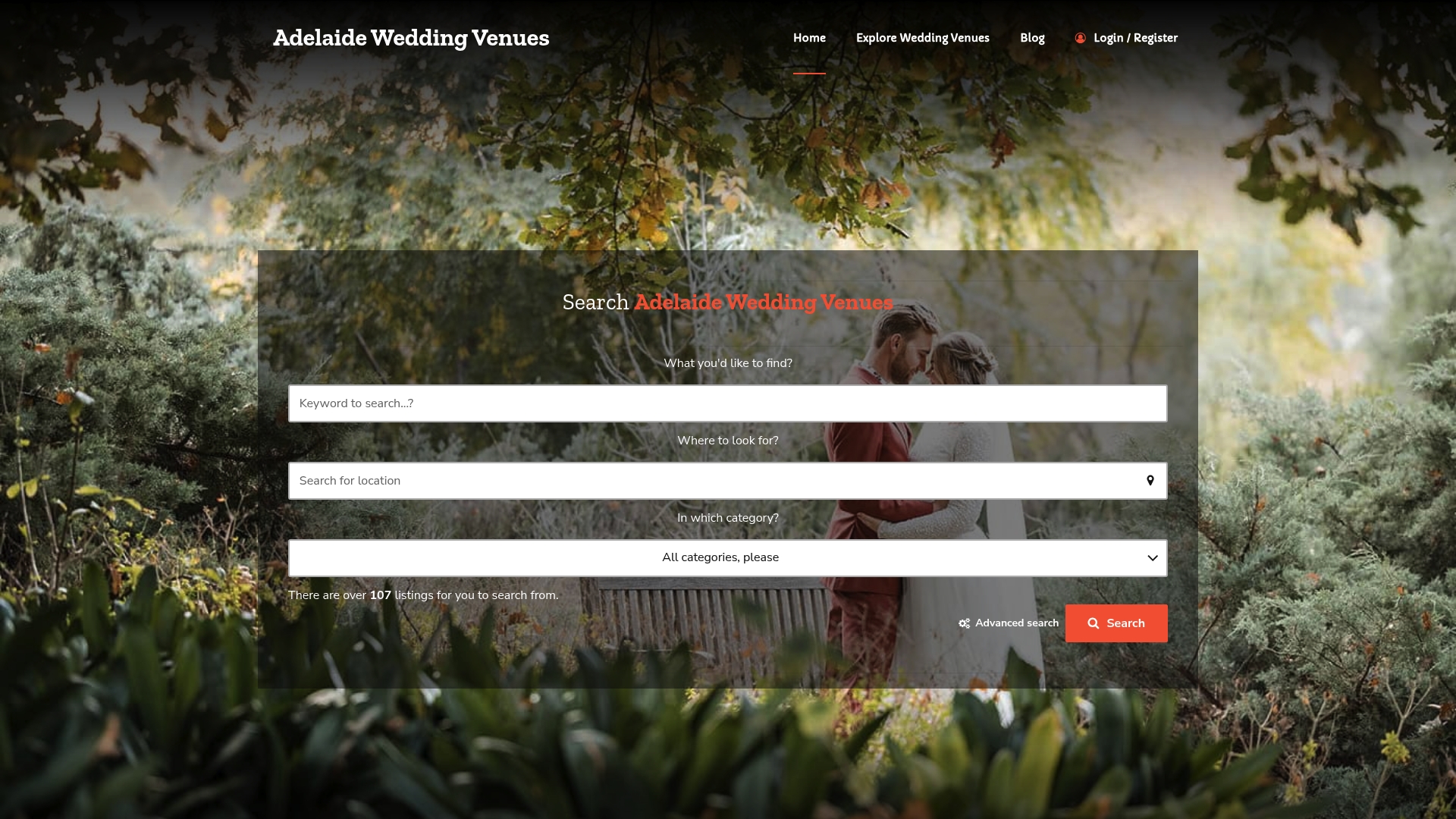
The platform’s directory gives venue managers and vendors a searchable presence that complements face-to-face networking efforts. When a planner recommends your venue to a couple, that couple will search for you online. A strong listing on Adelaideweddingvenues ensures they find accurate, compelling information. The site also publishes guides on choosing the ideal wedding venue that wedding professionals can share with clients, adding genuine value to every referral conversation. For vendors looking to grow their venue exposure in South Australia, the platform offers both free listings and featured placement options.
FAQ
What is wedding industry networking in simple terms?
Wedding industry networking is the ongoing practice of building trusted relationships with other wedding professionals, such as planners, photographers, and venue managers, to generate referrals and collaboration opportunities over time.
How often should wedding professionals attend networking events?
Attending at least one industry event per month during peak season is a practical baseline. Consistent attendance builds recognition faster than sporadic participation.
What is the best way to follow up after a wedding networking event?
Send a personalised message within 24–48 hours that references a specific detail from your conversation. Follow up with 3–4 contacts across one to two weeks to maintain momentum and convert the connection into a genuine relationship.
How do I know if my vendor network is strong enough?
The measure of a strong network is the number of trusted collaborators who will vouch for your judgement under pressure, not the total number of contacts you have collected.
Is social media useful for wedding industry networking?
Yes. Consistent, genuine engagement on platforms like Instagram, including commenting on colleagues’ work and tagging collaborators, keeps relationships active between in-person events and reinforces your professional presence.
