
TL;DR:
- Venue accessibility is often overlooked despite its importance, affecting guest experience and revenue. Meeting legal minimums does not guarantee genuine inclusion, as practical details like sightlines and sensory spaces are critical. Prioritizing accessible design benefits all guests, expanding reach, increasing satisfaction, and boosting event success.
Choosing a venue is one of the most consequential decisions in any event, whether it’s a wedding, community gathering, or corporate function. Yet accessibility is still one of the most overlooked parts of the process. The reason to understand why consider venue accessibility goes well beyond ticking a legal box. Over half of disabled music fans actively avoid events because of poor accessibility, and that figure represents real guests, real families, and real revenue walking away. This guide covers what genuine accessibility looks like, why it matters, and how to make confident choices when selecting your next venue.
Key takeaways
| Point | Details |
|---|---|
| Compliance is not enough | Meeting legal minimums does not mean your venue is genuinely accessible or welcoming for all guests. |
| Accessibility grows your audience | Inclusive venues attract disabled guests, elderly attendees, and families, significantly expanding event reach. |
| Sensory needs matter too | Quiet spaces and sensory accommodations can increase attendance likelihood among families with autistic members by 67%. |
| Early planning reduces cost | Addressing accessibility at the venue selection stage avoids expensive last-minute modifications or complaints. |
| Transparency builds trust | Venues that publish detailed accessibility information online signal professionalism and attract more bookings. |
Why consider venue accessibility: beyond the basics
Most people picture a wheelchair ramp when they hear the word accessibility. That single image is exactly why so many events fall short. In Australia, the Disability Discrimination Act sets a legal baseline for what venues must provide, covering things like step-free entries, minimum doorway widths, and a set proportion of accessible seating. But meeting the legal minimum and delivering a genuinely inclusive experience are two very different things.
Most venues meet legal minimums but fall short on user experience details like clear sightlines, accessible restrooms in the right locations, and routes that are actually easy to travel. A venue might have a ramp at the entrance and still be inaccessible for a guest in a motorised wheelchair if the path from the car park crosses loose gravel, or if the accessible restroom is located on a different floor from the main function space.
Common gaps that planners often miss include:
- Restrooms that are technically compliant but poorly placed or too small for a carer to assist
- Sightlines from accessible seating sections blocked by support pillars or low-hanging decorations
- No quiet or low-stimulation space for guests with sensory sensitivities
- Lack of hearing loop systems or captioning for speeches and entertainment
- Wayfinding signage that is unclear, inconsistently placed, or uses fonts that are hard to read
Compliance is the baseline. True inclusion means thinking from the guest’s perspective at every stage, from arriving in the car park to finding their seat to using the facilities comfortably. Accessibility is an experience, not just infrastructure.
Pro Tip: Visit the venue as a guest would arrive. Walk the full route from the drop-off point to the main event space and note every potential friction point. You will almost always find something the venue manager has not noticed.
The real benefits of accessible event spaces
Once you see accessibility as an experience rather than a compliance requirement, the business case becomes very clear. The benefits of accessible event spaces extend to every person who walks through the door, not just those with a disability.
Here is why prioritising accessibility pays off:
- Larger audience reach. More than one in five Australians live with some form of disability. Add elderly guests, parents with prams, and people recovering from injuries, and you are potentially talking about the majority of your attendee list having some need that accessible design addresses.
- Higher satisfaction scores. Accessible ticketing and seating increases overall satisfaction scores by 31% and reduces service disruptions during events.
- Stronger word of mouth. Guests who feel genuinely welcomed talk about it. An event where a wheelchair user could navigate freely, sit with their group, and enjoy unobstructed views is one they will recommend.
- Better event flow. Accessibility planning improves event logistics broadly. Step-free access and clear signage benefit vendors moving equipment, elderly guests, and anyone carrying bulky items.
- Community and sponsorship goodwill. Organisations and brands increasingly align with inclusive events. Being known for accessibility attracts sponsors and community partnerships that value representation.
The potential upside is significant. Research suggests that improving accessibility services for events could boost ticket sales by about 70% by unlocking a previously excluded market. For a wedding couple, that means every guest you care about actually being there. For a community organisation, it means no one in your community being left behind.
Accessibility is a hospitality standard. Venues that accommodate diverse needs build stronger reputations and see more repeat bookings as a direct result.
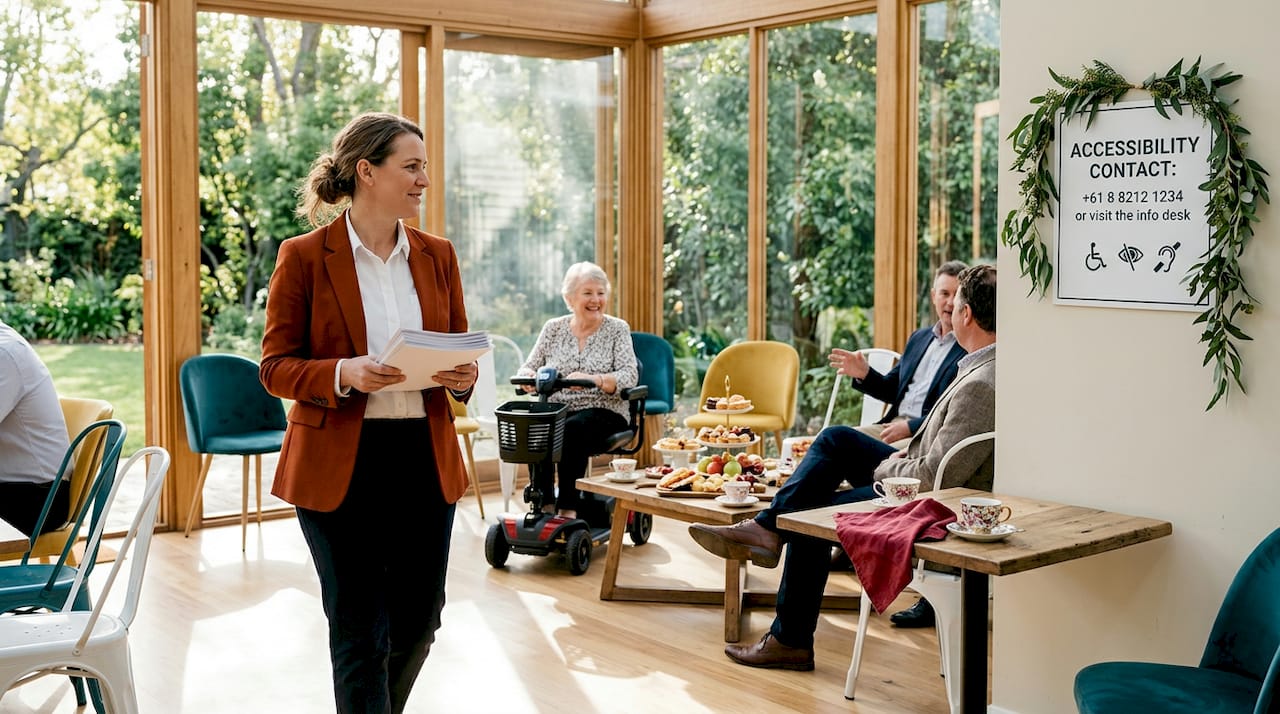
Core accessibility features to assess in any venue
When evaluating venues, you need a structured way to assess what is actually provided versus what is simply promised. The table below outlines the key features to look for and questions to ask.
| Accessibility feature | What to look for | Questions to ask |
|---|---|---|
| Step-free access | Ramps, lifts, and level entries from car park to function space | Is the entire guest route step-free, including outdoor areas? |
| Accessible parking | Designated spaces close to the entrance with kerb cuts | How many accessible spaces are available on the day? |
| Accessible restrooms | Spacious facilities with carer access, ideally a Changing Places room | Are accessible restrooms on the same level as the event space? |
| Seating and sightlines | Integrated accessible seating with unobstructed views | Can wheelchair users sit alongside their companions, not in a separate section? |
| Hearing and visual aids | Hearing loop systems, captioning options, clear PA systems | Is a hearing loop installed and working? Can captioning be arranged? |
| Sensory spaces | A quiet room or low-stimulation area away from the main event | Is there a designated quiet space guests can use freely? |
| Wayfinding | Clear, consistent signage in accessible fonts with sufficient contrast | Are all routes clearly signed from the car park? |
| Staff training | Designated accessibility contact person who knows the venue’s features | Who is our dedicated accessibility contact on the day? |
Sensory accommodations deserve particular attention. Sensory-friendly spaces increase attendance likelihood among families with autistic members by 67%. That is not a minor detail. For a wedding with children or guests who experience sensory overload, a quiet room can be the difference between a guest enjoying the day and a guest leaving early.
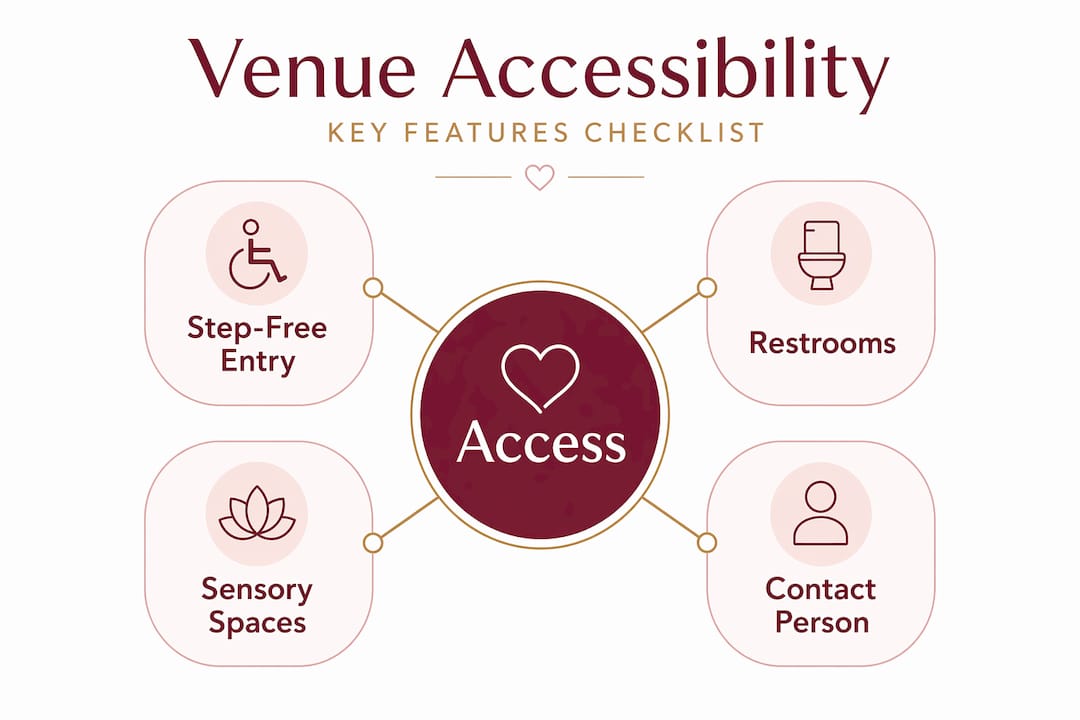
Assigning an accessibility contact person and pre-testing all features before the event is one of the most effective things you can do to prevent problems on the day. Ask the venue to walk you through each feature in person, and test it yourself.
Pro Tip: Ask the venue to send you their written accessibility information before the site visit. If they struggle to provide it, that tells you a great deal about how prioritised accessibility actually is at that venue.
Challenges planners and couples face, and how to address them
Understanding why accessibility matters is one thing. Navigating the practical obstacles is another. Over 75% of event planners feel only fairly confident about meeting accessibility requirements, and nearly 65% report that some venues charge extra for accessibility features. These are real barriers, but they are not insurmountable.
The most common challenges include:
- Conflicting information. Venues sometimes describe themselves as fully accessible based on having a ramp, without disclosing that the accessible restroom is two flights of stairs from the main room.
- Budget pressure. When accessibility features come at an added cost, planners and couples may deprioritise them under financial strain.
- Confidence gaps. Many planners feel unsure what questions to ask or how to verify claims, especially for less common needs like hearing assistance or sensory spaces.
- Digital accessibility. The event booking process itself is increasingly digital, and many venues have websites that are not screen-reader friendly, which creates barriers before a guest even arrives.
The most reliable way to verify a venue’s accessibility claims is to walk the exact guest route yourself. Look for loose gravel, narrow doorways, and slopes that are technically compliant but practically difficult. Bring someone who uses a wheelchair or walking aid if you can.
On the budget question, many accessibility accommodations cost very little when planned in advance. Rearranging seating for better sightlines costs nothing. Requesting a hearing loop be activated costs nothing. The expensive problems arise when venues need structural modifications at short notice.
Many venues bury accessibility information deep within their websites or do not publish it at all. When a venue proactively provides detailed accessibility FAQs covering parking, routes, seating, and assistive technology, it signals genuine commitment and saves you significant research time.
Pro Tip: When negotiating with a venue, include accessibility requirements in the written contract. Verbal assurances are not enough. Specify which features will be operational and who the accessibility contact will be on the day.
My honest take on venue accessibility
I have spent years working alongside wedding and event venues across South Australia, and the honest truth is that accessibility is still treated as an afterthought far too often. Most venues I have seen are well-intentioned. But good intentions do not help a grandmother in a motorised wheelchair who cannot get from the car park to the ceremony space because no one thought to check the surface condition of the path.
What I find most underestimated is guest diversity. When couples or planners picture their guest list, they often think of accessibility in terms of one or two people with obvious needs. In reality, a 120-person guest list almost certainly includes guests with invisible disabilities, people with anxiety disorders who would benefit from a quiet space, elderly relatives who need more time and a smoother route, and parents with toddlers in prams. Accessibility, done well, serves all of them.
The venues that get this right are the ones that treat it as a hospitality standard rather than a legal obligation. They brief their staff, they assign a contact person, they test their hearing loops before every event, and they publish detailed accessibility information online so guests can plan with confidence. Reviewing key factors in venue selection with accessibility on the list from the start is the single most effective shift you can make.
The venues that do this are not just more inclusive. They are more trusted, more recommended, and more booked.
— Steven
Finding accessible wedding venues in Adelaide
Knowing what to look for is the first step. Finding venues that actually deliver on accessibility is the next one, and that is where Adelaideweddingvenues makes the process considerably easier.
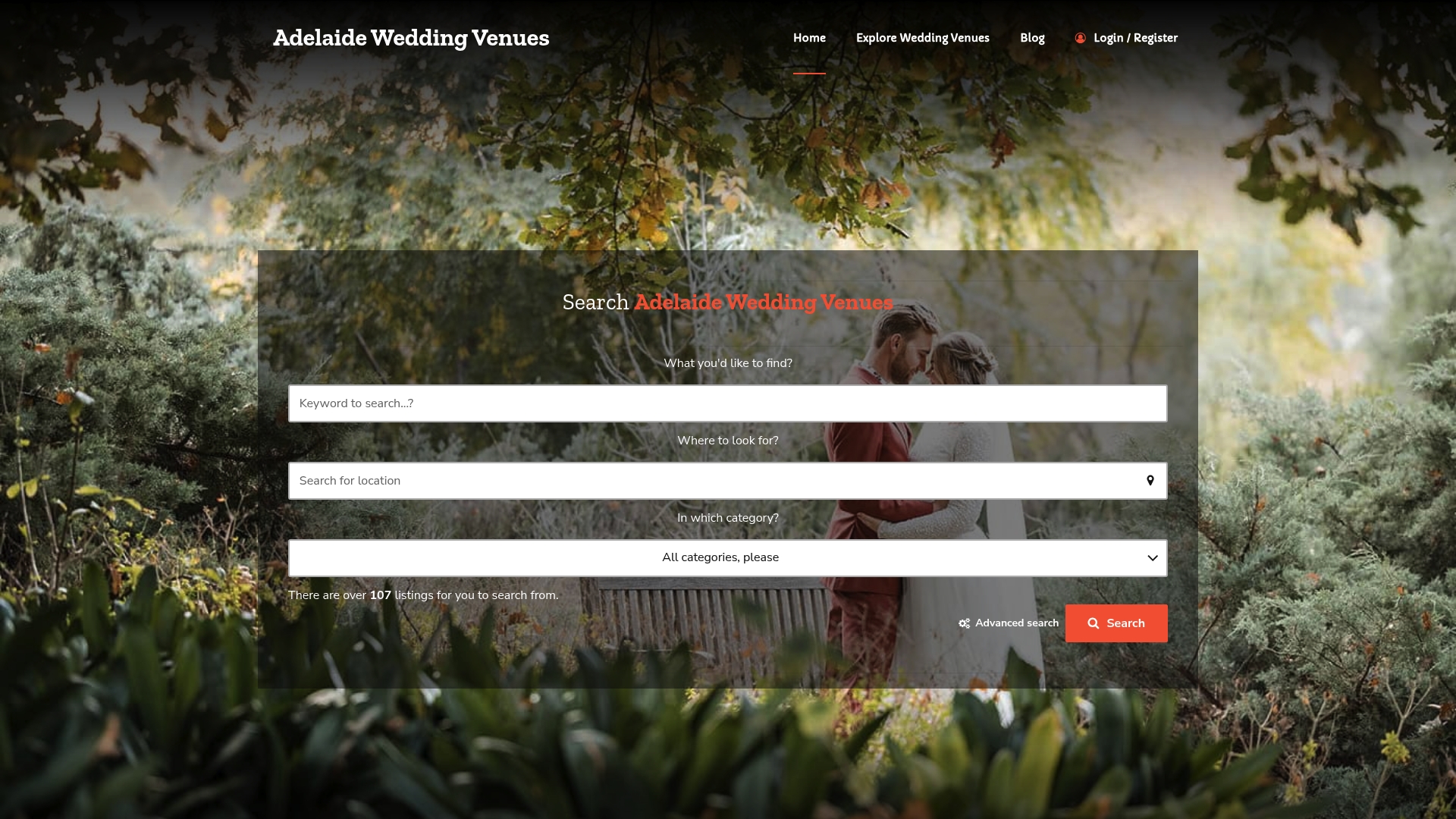
The Adelaideweddingvenues directory lists hundreds of wedding venues across Adelaide and South Australia, with detailed information that helps couples and planners assess suitability before they even pick up the phone. Instead of spending hours searching individual venue websites and hoping their accessibility information is current and accurate, you can use the platform’s search and filter tools to narrow down options by location, venue type, and size. From rustic barns to beachside settings, the directory provides a starting point that respects your time and helps you focus your shortlist on venues worth visiting in person. Explore the full Adelaide venue directory and start building an inclusive, memorable event from the ground up.
FAQ
What does venue accessibility really mean?
Venue accessibility means ensuring every guest can arrive, move through, and participate in an event comfortably. It goes beyond ramps to include accessible restrooms, clear sightlines, sensory spaces, assistive technology, and trained staff.
Why does accessibility matter for weddings specifically?
Wedding guest lists are diverse by nature, often spanning multiple generations and varying physical and sensory needs. Prioritising accessible design means every person you have invited can genuinely participate in your day rather than simply attend.
What are the most important questions about venue accessibility to ask?
Ask whether the entire guest route is step-free, where the accessible restrooms are located, whether a hearing loop is installed, and who the dedicated accessibility contact will be on the day. Always ask for written confirmation.
How do I verify a venue’s accessibility claims?
Walk the full guest route yourself from the drop-off point to the main event space and all facilities. If possible, bring someone with lived experience of using accessible features to identify barriers that may not be obvious from a visual inspection alone.
Do accessible venues cost more to hire?
Not necessarily. Nearly 65% of planners report some venues charge extra for accessibility features, but many accommodations such as adjusted seating arrangements and activated hearing loops carry no additional cost when requested in advance.
