
TL;DR:
- Visiting venues in person is essential for couples and planners to assess operational needs and verify details that photos cannot reveal. In-person inspections help identify space constraints, vendor access points, safety issues, and ensure the venue aligns with the event vision, reducing surprises. These visits also foster trust and enable real-time negotiation, leading to more tailored arrangements and confident decision-making.
Visiting venues in person is the most effective way for engaged couples and event planners to confirm that a space genuinely meets their practical and experiential needs. Browse Adelaide Wedding Venues to compare options before arranging your visits. No photo gallery, virtual tour, or online directory can replicate what you learn by standing in a room, walking the grounds, and speaking directly with venue staff. Professional wedding planner Elisabeth Kramer and industry bodies like Meeting Professionals International consistently identify the site inspection, the recognised industry term for a formal in-person venue review, as a non-negotiable step in event planning. This article explains the specific advantages of in-person visits, from operational insight and risk reduction to trust-building and scheduling clarity, so you can approach every venue tour with purpose and confidence.
Why visit venues in person: what photos simply cannot show
Desk research can only go so far; being physically present uncovers obstacles and operational quirks that are invisible in photos or videos. This is the core argument for the site inspection. Marketing images are curated to show a venue at its absolute best, with ideal lighting, empty rooms, and flattering angles. They rarely reveal ceiling height in relation to your floral installations, the acoustic quality of a ceremony space, or how narrow the corridor to the kitchen actually is.
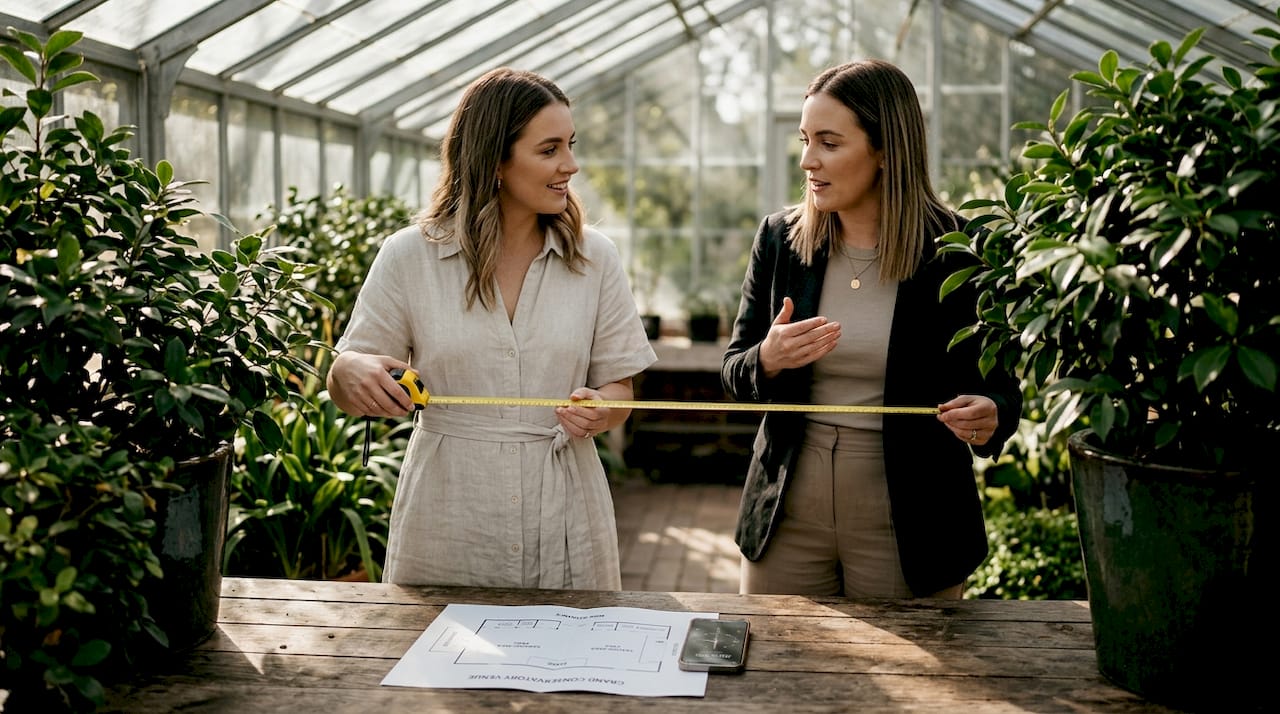
Walking a venue in person gives you a direct read on room size and guest flow. You can trace the path your guests will take from the ceremony space to the reception area, noting any bottlenecks, uneven surfaces, or poorly lit transitions. Ceremony-to-dinner “room flips,” where the same space is reset between events, cause 30 to 60 minute gaps that require guest accommodation. Photos almost never show this aspect, yet it directly shapes your cocktail hour planning and overall timeline.
Vendor access and load-in logistics are equally invisible online. You need to confirm where suppliers enter the building, where they store equipment before setup, and whether there are loading dock restrictions or lift limitations. Pre-event site inspections confirm safety compliance, hazard identification, crowd flow, evacuation planning, and utilities readiness, all of which reduce last-minute risks. A compliance issue discovered during a site inspection is manageable. The same issue discovered on the wedding day is a crisis.
- Assess ceiling height, natural light, and acoustic quality in person
- Trace the guest journey from arrival through to departure
- Confirm vendor entry points, storage areas, and loading restrictions
- Check emergency exits, accessible pathways, and safety signage
- Note any renovation works, noise sources, or neighbouring events that could affect your day
Pro Tip: Bring a measuring tape and a compass app on your phone. Knowing the orientation of windows helps you predict where natural light falls during your ceremony time, which is something no floor plan will tell you.
How in-person visits build trust with venue teams
87% of managers believe in-person meetings are key to strong relationships, and prioritising them yields 70% more engagement. That finding applies directly to the relationship between couples, planners, and venue coordinators. A phone call or email exchange gives you information. A face-to-face meeting gives you a read on the person delivering it.
When you visit a venue, you observe how staff respond to your questions, whether they are forthcoming about limitations, and how they handle uncertainty. These verbal and nonverbal cues are the clearest signal you will get about how a venue team will perform under the pressure of your actual event. A coordinator who is evasive about setup windows during a tour is unlikely to become more transparent after you sign a contract.
“A site visit is not just an inspection. It is the beginning of a working relationship. The questions you ask and the responses you receive tell you everything about how a venue will partner with you on the day.” — Elisabeth Kramer, professional wedding planner
In-person visits also create the conditions for genuine negotiation. When you are physically present, you can raise concerns about contract terms, discuss contingency plans for weather or vendor delays, and agree on responsibilities in real time. Venue staff are more likely to offer flexibility, such as extended setup windows or complimentary additions, when they have met you and feel invested in your event. That rapport is built in person, not through a booking portal.
What timing and scheduling benefits do site visits offer?
Structuring your visits around planning milestones is one of the most practical advantages of the site inspection process. Wedding planners recommend visiting venues before booking, again approximately 60 days prior to the event, and optionally for a rehearsal visit to finalise timing and layout. Each visit serves a distinct purpose and prevents a different category of problem.
A well-structured visit schedule looks like this:
- Initial tour before booking. Walk every space, ask operational questions, and assess whether the venue can physically accommodate your vision. This visit determines whether you proceed at all.
- Final walkthrough approximately 60 days out. Confirm the event timeline, including ceremony start time, venue entry and exit windows, and meal service timing. This is also when you align vendor access schedules and identify any changes to the venue since your first visit.
- Rehearsal visit (optional but recommended). Walk through the ceremony sequence with your wedding party, confirm microphone placement and music cues, and give the officiant a chance to practise in the actual space.
Setup time for weddings is at least 2 hours, often 3 to 4, with approximately 1 hour required for clean-up. Outside rentals must be removed by the venue rental end time or late fees apply. These constraints are rarely communicated clearly in a venue brochure, but they become obvious during an in-person conversation with the coordinator. Knowing these windows early allows you to build a realistic vendor schedule and avoid costly overtime charges.
Early scheduling of your site visits also secures the attention of senior venue staff. Coordinators are more available and more willing to customise arrangements when approached well in advance. Leaving your final walkthrough timing until the last month compresses your ability to act on what you discover.
How to structure a venue visit for maximum value
Site visits are an intelligence-gathering mission that go well beyond spreadsheets and floor plans. The couples and planners who extract the most value from venue tours arrive prepared, document everything, and involve the right people from the start.
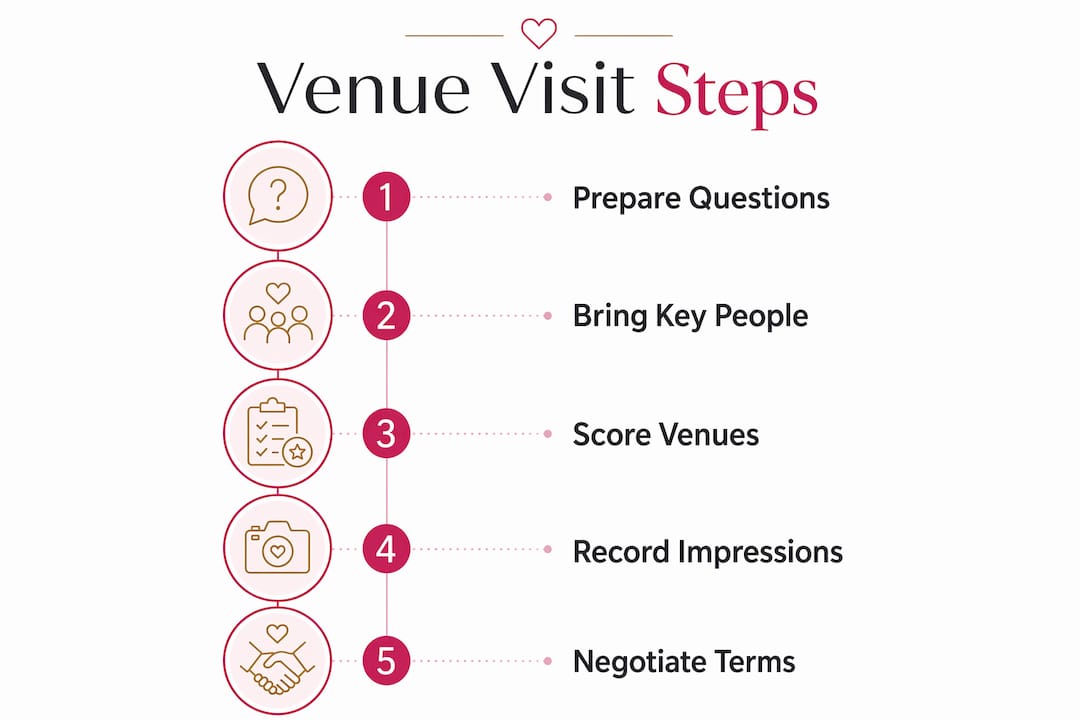
Bring all key decision-makers to the initial tour. If a parent is contributing financially, or a chief bridesmaid has strong opinions about the space, their presence at the first visit prevents the need for a repeat tour and reduces the risk of second-guessing after booking. Where possible, bring your photographer or florist. Their professional eye will catch details you might miss, from the direction of afternoon light to the logistics of floral installation around structural columns.
Use a structured scoring framework to compare venues objectively. Scoring each venue on the same criteria, such as capacity, natural light, catering flexibility, parking, and accessibility, prevents the memory blur that occurs when you tour three venues in a single weekend. The venue that felt most impressive in the moment is not always the best operational fit.
| Visit preparation step | Why it matters |
|---|---|
| Prepare a written question list | Prevents important operational questions being forgotten under the excitement of the tour |
| Bring key vendors or decision-makers | Captures expert perspectives and avoids repeat visits for the same information |
| Score each venue on consistent criteria | Enables objective comparison across multiple options without relying on memory |
| Photograph every space immediately | Retains accurate visual detail that fades quickly after multiple tours |
| Request a copy of the floor plan | Allows you to refine guest layout and vendor placement after the visit |
Pro Tip: Take a short video walkthrough of each space immediately after your tour, narrating your impressions out loud. Written notes capture facts; a video captures your gut reaction, which is often the most useful reference when you are deciding between two similar venues weeks later.
What risks do couples avoid by attending venues in person?
Overreliance on photos and virtual tours is the single most common source of unpleasant surprises on a wedding day. Meeting Professionals International identifies site inspections as “one of the most critical steps” to validate logistics and readiness, preventing costly surprises before contract signing. That endorsement reflects years of collective experience with what goes wrong when planners skip this step.
The most frequent problems avoided by attending venues in person include:
- Space misjudgement. A room that looks spacious in wide-angle photography can feel cramped with 80 guests, a dance floor, and a catering station. Only standing in the space with a floor plan in hand reveals the truth.
- Transition time surprises. Without understanding the room flip process, couples routinely underestimate how long guests will be waiting between ceremony and reception, leading to discomfort and a disjointed event experience.
- Vendor access delays. Florists, caterers, and AV technicians who arrive to find a single service lift or a loading dock shared with another event will fall behind schedule. These constraints are only visible on site.
- Compliance and safety gaps. Venues that appear polished online may have outdated emergency signage, inadequate accessible facilities, or noise restrictions that affect your entertainment choices.
- Unrealistic expectations. Couples who book without visiting often arrive on the day with a mental image built from photos that does not match reality. That gap between expectation and experience creates stress that no amount of planning can fully resolve.
The in-person venue advantages extend beyond information gathering. They build the realistic expectations that allow you to arrive on your wedding day feeling prepared rather than surprised.
Key takeaways
In-person venue visits are the most reliable way to confirm operational fit, build trust with venue staff, and prevent costly surprises before you sign a contract.
| Point | Details |
|---|---|
| Photos are not enough | Only a site inspection reveals room scale, vendor access, compliance issues, and transition logistics. |
| Trust is built in person | Meeting venue staff face to face gives you a read on their responsiveness and willingness to collaborate. |
| Visit timing matters | Schedule an initial tour, a final walkthrough at 60 days out, and a rehearsal visit for best results. |
| Prepare and document | Use scoring frameworks, bring key vendors, and photograph every space to enable objective comparison. |
| Risks are real and avoidable | Space misjudgement, transition gaps, and vendor access delays are consistently avoided by attending in person. |
The part of venue selection most couples underestimate
I have seen couples book venues based entirely on an Instagram gallery and a five-star review average. Sometimes it works out. More often, they arrive at their final walkthrough and discover the bridal suite is a converted storage room, the ceremony lawn is directly adjacent to a car park, or the kitchen is so far from the reception space that hot food is a genuine logistical challenge.
The site inspection is not a formality. It is the moment where your event vision meets physical reality, and the gap between those two things is where most wedding day stress originates. What I find most valuable about structured visits is not just the information they produce, but the confidence they create. Couples who have walked their venue multiple times arrive on the day with a sense of ownership over the space. They know where the light falls, where their guests will gather, and what the coordinator looks like when she is solving a problem.
My advice is to treat every visit as a working session, not a viewing. Arrive with questions written down, leave with photos taken, and follow up with a summary email to the venue confirming what was discussed. That paper trail protects you and signals to the venue team that you are organised and serious. Venues respond to that. The couples who do the work in advance are the ones who get the extra hour of setup time, the complimentary upgrade, and the coordinator who answers the phone at 7am on the wedding day.
— Steven
Plan your Adelaide venue tours with confidence
Adelaideweddingvenues is built to support exactly this process. Whether you are shortlisting venues for the first time or preparing for a final walkthrough, the directory gives you the tools to find and compare venues across Adelaide and South Australia before you set foot through the door.
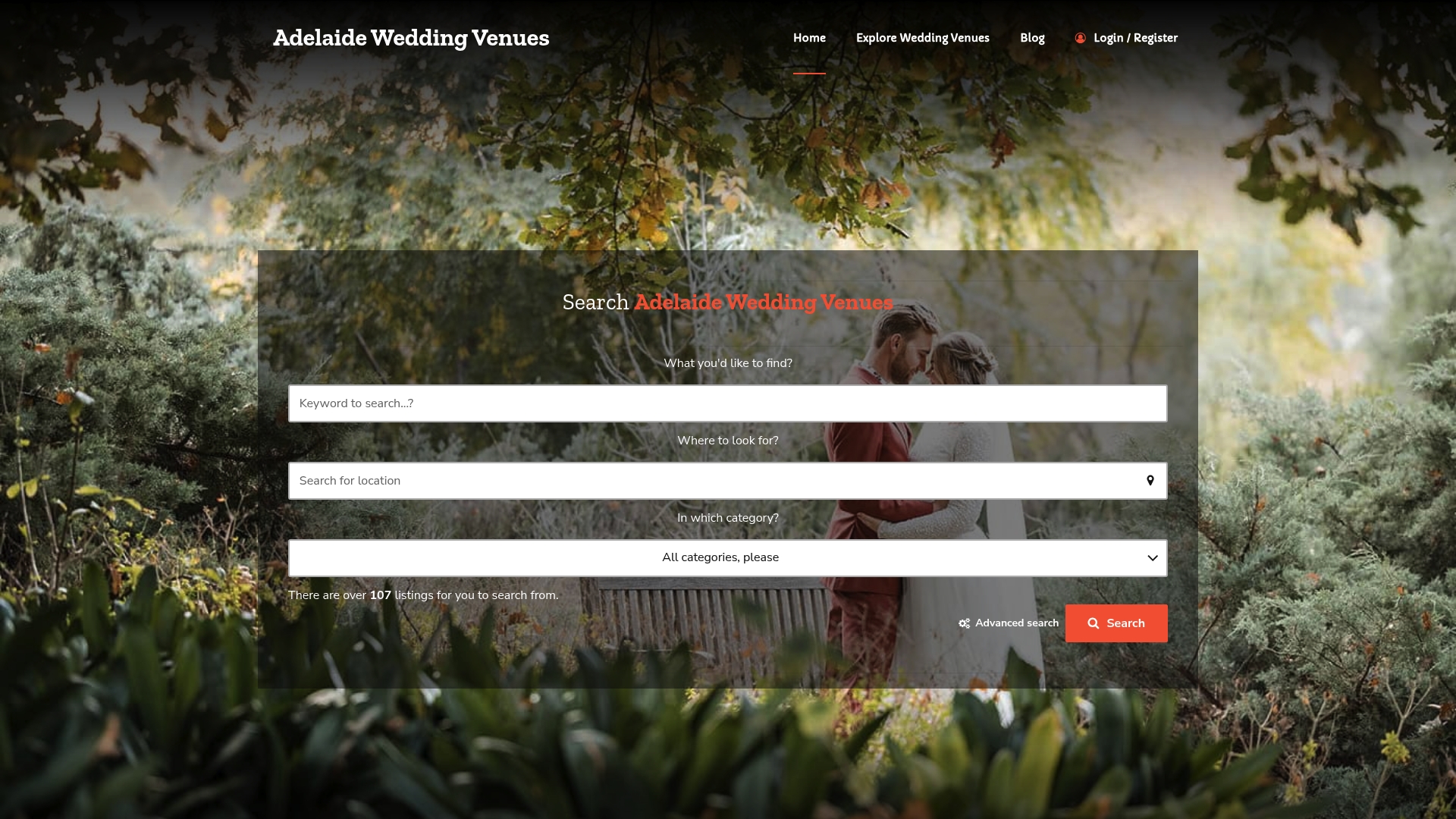
Browse the full venue listings on Adelaideweddingvenues to identify your shortlist, then use the ideal wedding venue guide to understand exactly what to look for when you visit in person. For couples planning something further afield, the destination wedding venues guide covers options where an in-person visit is especially worth the travel. The platform also offers practical resources on scheduling venue tours and the questions to ask during each visit, so you arrive prepared every time.
FAQ
Why is visiting a venue in person better than a virtual tour?
A virtual tour shows you aesthetics. An in-person visit reveals room scale, vendor access points, compliance details, and the responsiveness of venue staff, none of which translate accurately through a screen.
How many times should you visit a venue before your wedding?
Elisabeth Kramer recommends at least two visits: an initial tour before booking and a final walkthrough approximately 60 days before the event. A third rehearsal visit is optional but valuable for ceremony timing.
What should you bring to a venue site inspection?
Bring a written question list, a floor plan if available, your photographer or key vendors where possible, and a scoring sheet to compare venues objectively. Take photos and a short video walkthrough immediately after the visit.
Can you negotiate better terms during an in-person venue visit?
Yes. Face-to-face meetings create the rapport and real-time dialogue that make negotiation possible. Venue coordinators are more likely to offer flexibility on setup windows, inclusions, or pricing when they have met you in person.
What are the biggest risks of booking a venue without visiting?
The most common risks are misjudging room size, underestimating transition times between ceremony and reception, missing vendor access constraints, and overlooking compliance or safety issues that only become visible on site.
