
Choose Friday when budget headroom and vendor choice matter most; choose Saturday when guest convenience and a long, traditional celebration top your list. The trade-off comes down to two things: cost and availability versus guest turnout and expectation. Below you’ll find the actual savings, booking timelines, and a checklist to settle the decision for your date.
TL;DR:
- Choosing a Friday wedding can save couples between 10% and 30% on venue hire and vendor costs compared to Saturday, depending on the season.
- Friday dates allow better access to in-demand vendors and often enable upgrading services or extending guest lists with the savings.
- Saturday weddings typically yield higher attendance and longer receptions, with more flexible timing, but come at a premium price.
- Booking windows for Saturday are usually 18 to 24 months ahead, while Fridays and off-peak dates can often be secured with 6 to 9 months’ notice.
- Local laws, noise restrictions, and permit requirements may differ between weekdays and weekends, influencing the feasibility of certain venues and event times for both days.
Friday vs Saturday wedding: the quick comparison
The two days pull in opposite directions on almost every measure that matters to a budget-conscious couple. Saturday wins on convenience and tradition. Friday wins on price and choice.
- Cost: Fridays typically run 10 to 30% cheaper than Saturdays at the same venue, depending on season and inclusions.
- Guest attendance: Saturday almost always draws a higher headcount, since guests don’t need to take annual leave or arrange next-day recovery.
- Vendor availability: Fridays free up in-demand photographers, florists, and celebrants who are booked solid on Saturdays months in advance.
- Reception length: Saturday receptions tend to run later into the night; Friday events often wrap earlier so guests can function the next day.
- Atmosphere: Friday weddings skew more intimate and relaxed; Saturday weddings lean into the full traditional format with a bigger guest list.
Saturdays account for roughly 55 to 56% of Australian weddings, with Fridays sitting at around 21%. That gap explains the price difference: venues and vendors charge a premium for the day everyone wants, and discount the day fewer people ask for. Public holidays and long weekends complicate this pattern, too. A Friday before a long weekend can behave like peak Saturday pricing, so always check the calendar before assuming a weekday date is automatically cheaper.
Why choose a Friday wedding: benefits, trade-offs and who it suits
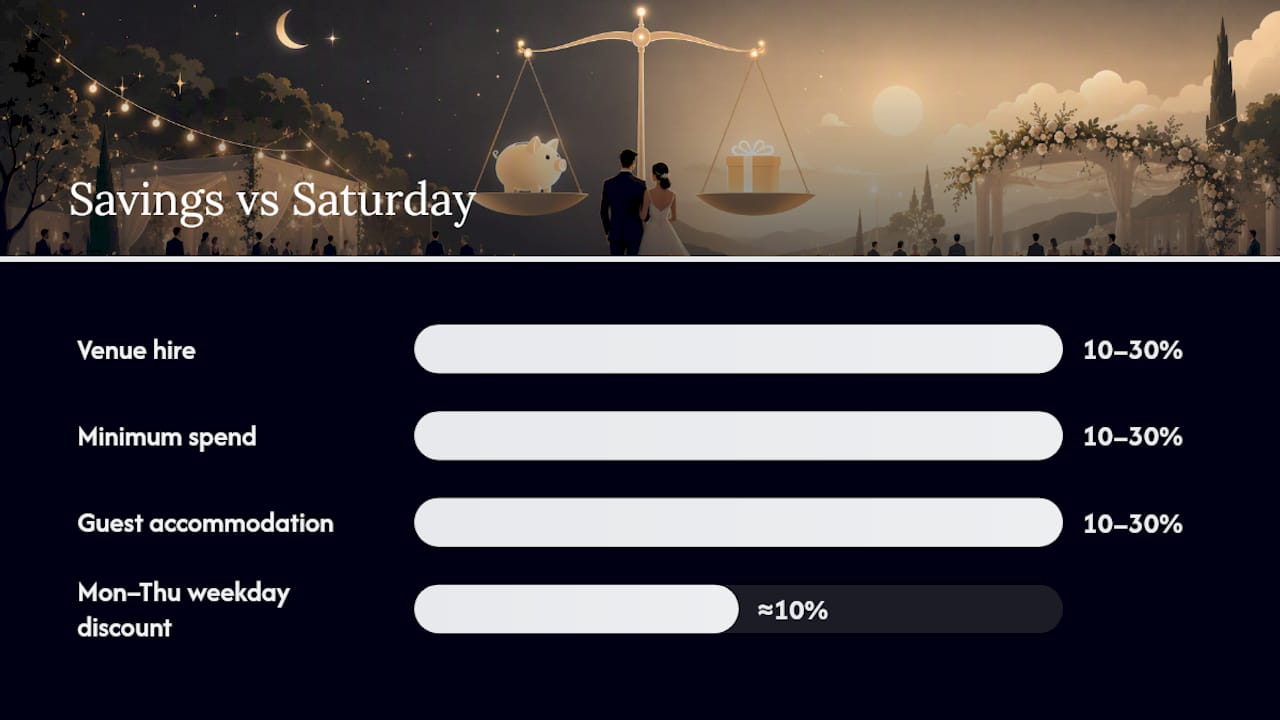
Friday’s biggest selling point is straightforward: money. Choosing a Friday, Sunday, or winter date can save couples 10 to 30% against the same Saturday package, and that saving usually shows up in venue hire, minimum spend requirements, and guest accommodation rates. Some venues also offer standalone weekday discounts around 10% off Monday to Thursday, on top of whatever Friday pricing already looks like.
The other advantage is leverage. In-demand photographers, stylists, and celebrants who are fully booked on Saturdays for the next year often have Friday availability, giving you first pick of vendors you’d otherwise miss out on. Industry planners note that the quality of the food, the service, and the light doesn’t change because of the day. The value from choosing Friday comes from the freedom to put those savings toward a better vendor or a longer guest list.
The trade-off is attendance. Some guests can’t get Friday off work, and older relatives or those travelling from interstate may find a weekday date harder to justify. The night often ends earlier too, since guests are conscious of Saturday morning commitments.
Pro Tip: If you’re set on a specific photographer or venue, ask what their Friday availability looks like before you lock in a Saturday you might not even need.
Friday suits couples who want a smaller, relaxed celebration, are comfortable with some guests declining, and would rather redirect the savings into vendor quality or a longer honeymoon fund. It also suits destination-style weddings, where a Friday ceremony can roll into a multi-day weekend celebration for guests who’ve already made the trip.
Why choose a Saturday wedding: benefits, trade-offs and who it suits
Saturday remains the default for a reason: it removes friction for almost everyone invited. No one needs to request leave, arrange overnight care, or explain to their boss why they’re not in on Monday. That convenience translates directly into higher attendance, particularly for guests travelling from out of town or juggling family commitments.
Saturday also buys you the full night. Ceremonies can start mid-afternoon, receptions can run past midnight, and nobody’s rushing home for an early alarm. For couples who picture a big dance floor and a long reception, that extra runway matters.
The cost is the trade-off. Saturday sits at the top of the pricing tier for almost every vendor category:
- Higher venue hire and larger minimum spend requirements, since Saturday demand lets venues set the price.
- Premium catering per head, often without the negotiating room a quieter weekday offers.
- Photographers, bands, and florists charging their top rate, because Saturday is when everyone wants them.
- Guest accommodation booked at standard weekend rates rather than any midweek discount.
Family expectation plays a role too. Many cultural and religious traditions treat Saturday as the assumed wedding day, and grandparents or extended family may simply expect it without questioning why. Saturday suits couples prioritising maximum attendance, a full-length traditional reception, and simplicity for guests over squeezing every dollar out of the budget.
Costs and budgeting: how much you can realistically save
The numbers are consistent across sources: a Friday, Sunday, or winter date can save 10 to 30% versus a Saturday at the same venue. Separately, weekday versus weekend timing has produced examples of $3,000 to $5,000 in venue hire savings, with some Sunday and midweek events attracting 20 to 30% off venue hire alone. These ranges shift depending on the venue’s own policy, so treat them as a planning benchmark rather than a guarantee.
The line items that move the most are per-head catering, minimum spend clauses, accommodation rates for guests, and how the bar is charged (consumption versus package). Ask every venue on your shortlist the same set of questions:
- What’s included in the base hire fee, and what’s charged separately?
- Is there a minimum spend, and does it change by day of the week?
- Do you charge corkage, and is BYO allowed on any day?
- Are there preferred supplier requirements that limit vendor choice?
- What’s the weekday or Friday rate compared to Saturday for the identical package?
Once you know the real gap for your venue, decide where the saving goes. Some couples upgrade their photographer package, add a second shooter, or extend cocktail hour catering. Others put it straight into the honeymoon fund or simply invite more guests. A venue budgeting checklist makes it easier to track where those dollars actually land once the contract’s signed.
Guest logistics and vendor booking timelines
Booking windows differ sharply between the two days. Popular Saturday dates often need 18 to 24 months’ lead time, especially through spring and autumn. Fridays and off-peak dates can often be secured with 6 to 9 months’ notice, giving you far more flexibility if your engagement is shorter than a couple of years.
Guest travel needs different handling depending on the day you choose:
- For a Friday wedding, ask interstate or international guests to arrive Thursday, and consider a casual welcome drinks night to soften the midweek disruption.
- Keep transport simple: a shuttle between the ceremony, reception, and nearby accommodation removes the friction of guests navigating an unfamiliar area after work.
- Block-book accommodation early. Weekday hotel rates are often lower, but availability can still tighten around conferences or local events.
- Check the local events calendar. A Friday that lands before a long weekend or during a major festival can behave like peak Saturday pricing and demand.
How to decide: a step-by-step checklist
Score each of these out of five, based on how much it matters to you as a couple, then tally the results.
- Guest availability — How many key guests would genuinely struggle with a weekday date?
- Budget headroom — Would a 10 to 30% saving change what you can afford elsewhere?
- Vendor must-haves — Is there a specific photographer, band, or venue you’d lose access to on Saturday?
- Venue minimums — Does the venue’s minimum spend shrink meaningfully on a Friday?
- Seasonality — Does your preferred month already sit in peak season, where even Friday pricing climbs?
Add the scores. A higher total on cost and vendor questions points to Friday; a higher total on guest availability points to Saturday.
Pro Tip: Ask your top two or three vendors for a quote on both a Friday and a Saturday for the same package. Seeing the actual dollar gap for your specific choices is faster than guessing from general estimates.
Local laws and venue policies that can affect your date
Noise curfews and permit conditions apply regardless of which day you choose, but weekday events sometimes attract different scrutiny than weekend ones. Many councils set stricter noise cut off times for outdoor events on weeknights, since neighbouring residents are more likely to have work the next morning. A Saturday reception might be permitted to run amplified music until 11pm or midnight, while a Friday event at the same address could face an earlier cut off, particularly for outdoor or marquee venues near residential zones.
Venue-specific policies matter just as much as council rules. Some heritage buildings and function centres carry their own restrictions on bump-in and bump-out times, which can be tighter on weekdays if the venue has other commercial bookings either side of your date. Always ask directly: what time must music stop, is there a noise limiter fitted, and does the restriction change between a Friday and Saturday booking.
Permits for marquees, temporary structures, or road closures follow the same principle. A Saturday wedding blocking a public laneway for photos might need a different approval process than a Friday booking, simply because council staff availability and processing times shift across the week. Build permit lead time into your planning regardless of day, since these approvals often take weeks, not days, to confirm.
Honeymoon planning: how your wedding day shapes the trip after
The day you marry has a direct flow-on effect on when you can actually leave for your honeymoon. A Saturday wedding usually means departing Sunday or Monday at the earliest, after a full weekend of pack-down, gift collection, and family breakfasts the morning after. That’s workable if you’ve built in extra annual leave, but it can feel rushed if you’re flying long-haul and want a buffer before an international flight.
A Friday wedding gives you a cleaner runway. You can fly out as early as Saturday or Sunday, effectively gaining a day or two compared to a Saturday timeline, without needing to take additional leave beyond what a honeymoon already requires. This matters most for couples booking premium flight connections or destinations with limited departure days, where a tight turnaround between the reception and the airport adds unwanted stress.

Consider your wedding night itself, too. Many couples booked into a Saturday reception venue simply stay locally that night and begin travel a day or two later, while a Friday wedding sometimes allows a same-weekend departure if the destination and flight schedule align. Either way, talk to your travel agent or airline about check in deadlines before you finalise ceremony start times. A late Saturday finish with an early Monday flight leaves almost no margin for delays, lost luggage, or a big night that runs later than planned.
Ceremony timing and reception length: what changes by day
Ceremony start times shift noticeably between the two days. Saturday ceremonies commonly start in the early-to-mid afternoon, between 1pm and 3pm, leaving room for a long cocktail hour and a reception that stretches past midnight. Friday ceremonies often start slightly earlier, sometimes late morning or early afternoon, so guests coming straight from work or interstate travel have more daylight to get organised.
Reception length follows the same pattern. Saturday receptions frequently run five to six hours from the first course to the final dance, with venues comfortable extending music and bar service later into the night. Friday receptions tend to wrap earlier, often finishing by 10pm or 11pm, partly due to noise restrictions discussed earlier and partly because guests are more conscious of a Saturday morning ahead of them.
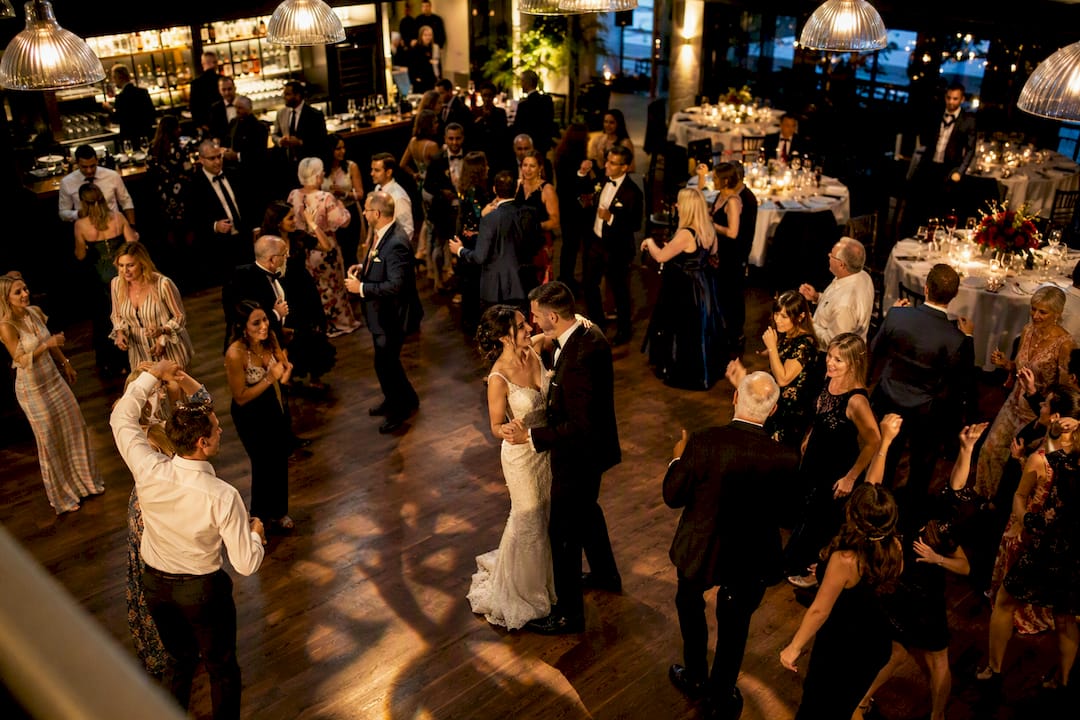
These timing differences aren’t fixed rules, and a good venue coordinator will work around your preferences either way. But if a long, late reception with an open-ended dance floor is non-negotiable for you, that expectation sits far more naturally on a Saturday. If you’d rather keep the day tighter, with a shorter but still complete celebration, Friday’s earlier finish times often suit that instinct without you having to fight the clock.
What Adelaide’s venue data actually tells us about date choice
Working across venue listings and photographer networks, the pattern is consistent: the biggest single lever on your wedding budget isn’t the menu or the flowers, it’s the day you book. Couples who ask venues for both a Friday and Saturday quote consistently uncover savings they didn’t know existed, purely because most venues won’t volunteer the cheaper option first.
— Steven
Compare Friday and Saturday pricing before you commit to a venue
Working out whether Friday or Saturday makes sense for your wedding gets a lot easier once you can see real numbers side by side, rather than relying on general percentage ranges. An online directory lets you filter venues by capacity, price, and date availability, so you can check the same venue’s Friday and Saturday rates without ringing a dozen coordinators yourself.
Run a quick search for venues that fit your guest count and budget, then contact your top two or three shortlisted options and ask for a quote on both days. If you’re still narrowing down what type of venue suits your vision, the guide on choosing your ideal wedding venue is a solid next step before you start requesting quotes.
Sources
These figures come from a small set of Australian wedding-industry sources rather than general estimates:
- When is Wedding Season in Australia? | South Pacific Bridal
- Average Wedding Cost in Australia 2026: Full Budget Breakdown
- How Much Does a Wedding Cost in Australia in 2026?
FAQ
Is Friday a lucky day to get married?
There’s no universal “lucky” wedding day; beliefs about luck vary widely by culture and astrology, and most modern couples choose Friday for cost and vendor availability rather than superstition.
What is the luckiest day to get married in 2026?
No single date carries a globally agreed “luckiest” status. Cultural and astrological traditions differ, so the more practical question is which day fits your budget, guest list, and vendor availability.
Is Saturday a good day for a wedding?
Yes. Saturday suits couples prioritising maximum guest attendance and a full, traditional reception, though it typically carries premium pricing compared with Friday or Sunday dates.
Is Saturday a good day to get married, or should we choose Friday to save money?
Saturday works best when guest convenience matters most; Friday works best when you want to save 10 to 30% and gain access to vendors booked out on weekends. Compare quotes for both days at your shortlisted venues on Adelaideweddingvenues to see the real difference for your date.
