
TL;DR:
- Understanding venue categories helps couples compare options based on style, facilities, and flexibility.
- Each category offers distinct atmospheres, amenities, capacity ranges, and cost implications.
- Matching your wedding vision and priorities to a category simplifies decision-making and enhances satisfaction.
Choosing a wedding venue should feel exciting, not overwhelming. Yet many couples find themselves scrolling through dozens of listings, comparing venues that look completely different, without a clear framework for making sense of what they’re seeing. The truth is, not all wedding venues offer the same experience, flexibility, or atmosphere, and assuming they do is one of the most common planning mistakes couples make. Understanding wedding venue categories gives you a powerful advantage: a structured way to compare locations, ask smarter questions, and ultimately land on a venue that genuinely suits your style, guest list, and budget.
Key Takeaways
| Point | Details |
|---|---|
| Know your categories | Understanding wedding venue categories helps you focus your search and make informed decisions. |
| Compare key features | Different venue types offer distinct atmospheres, amenities, and costs that influence your experience. |
| Match your vision | Choose the venue category that aligns with your wedding style, priorities, and guest needs for the best outcome. |
| Ask smart questions | Tour shortlisted venues, clarify inclusions, and check flexibility to avoid surprises later. |
What are venue categories and why do they matter?
Venue categories are a way of grouping wedding locations by their style, purpose, or defining features. Think of them as shorthand for what a venue is fundamentally designed to offer. A ballroom and a winery both host weddings, but they deliver completely different experiences. Knowing which category a venue belongs to helps you evaluate it fairly and compare it against other options in the same class.
Defining venue categories helps couples make direct comparisons for their wedding, rather than trying to weigh apples against oranges. When you understand that a rooftop bar falls under “contemporary” and a heritage homestead sits in the “unique or historic” category, you can immediately see whether a venue aligns with your vision or not.
Here’s why categories matter beyond simple labels:
- Atmosphere and mood: Each category carries a built-in aesthetic. Traditional venues tend toward classic formality, while outdoor and natural venues create a relaxed, organic feel.
- Logistics and facilities: Categories often predict what’s included. Hotels typically bundle catering and accommodation, while blank canvas spaces may require you to source everything separately.
- Availability and pricing: Unique or highly sought-after categories, like heritage estates or waterfront locations, often book out faster and carry premium pricing due to limited supply.
- Guest experience: The category shapes how your guests move through the day, from arrival to the final dance.
- Planning complexity: Some categories come with strict packages and little room to customise, while others offer open-ended flexibility.
Understanding key wedding venue factors such as catering arrangements, décor restrictions, and parking access becomes much easier once you know which category you’re working with.
“The category a venue falls into tells you far more than a photo ever can. It reveals the rules, the rhythm, and the real cost of your wedding day.”
Pro Tip: When you first enquire with a venue, ask them how they categorise themselves and what makes them distinct within that category. Some venues blend two or three categories, and knowing this upfront saves significant time during planning.
Now that you know why venue categories matter, let’s explore what types you’ll find across Adelaide.
Popular wedding venue categories in Adelaide
Adelaide is genuinely spoilt for choice when it comes to wedding venue variety. The city and its surrounding regions offer everything from grand heritage buildings to relaxed coastal settings, and understanding the main categories helps you zero in on what suits you best.
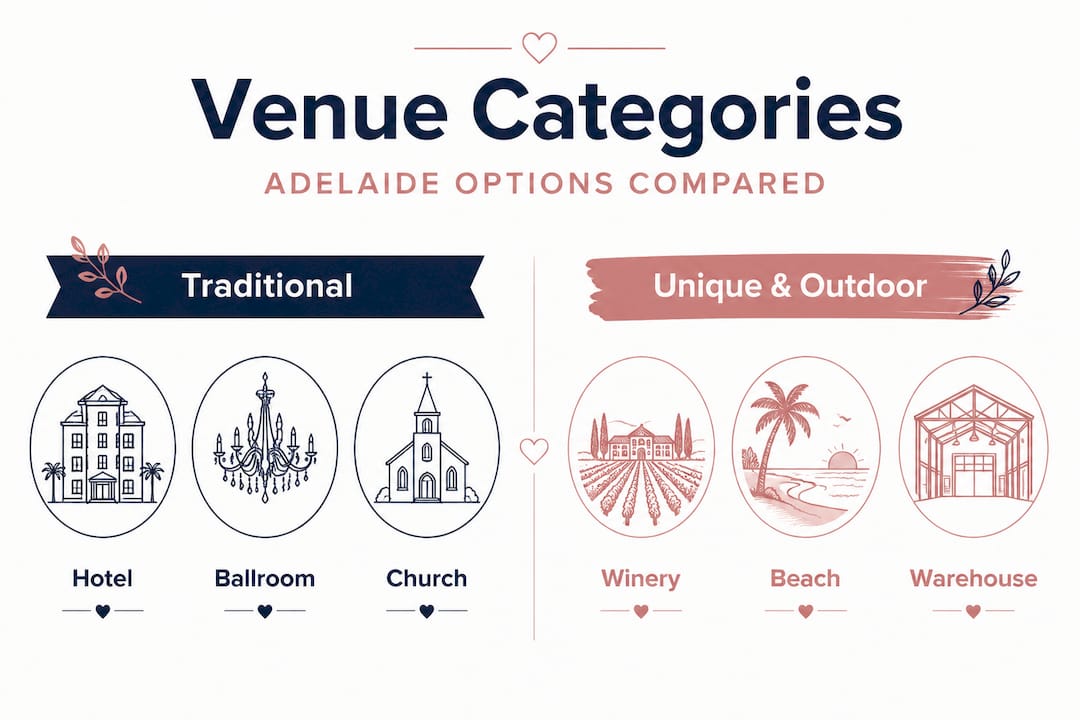
Traditional, contemporary, and unique venues form the main categories in Adelaide, though several subcategories deserve attention too.
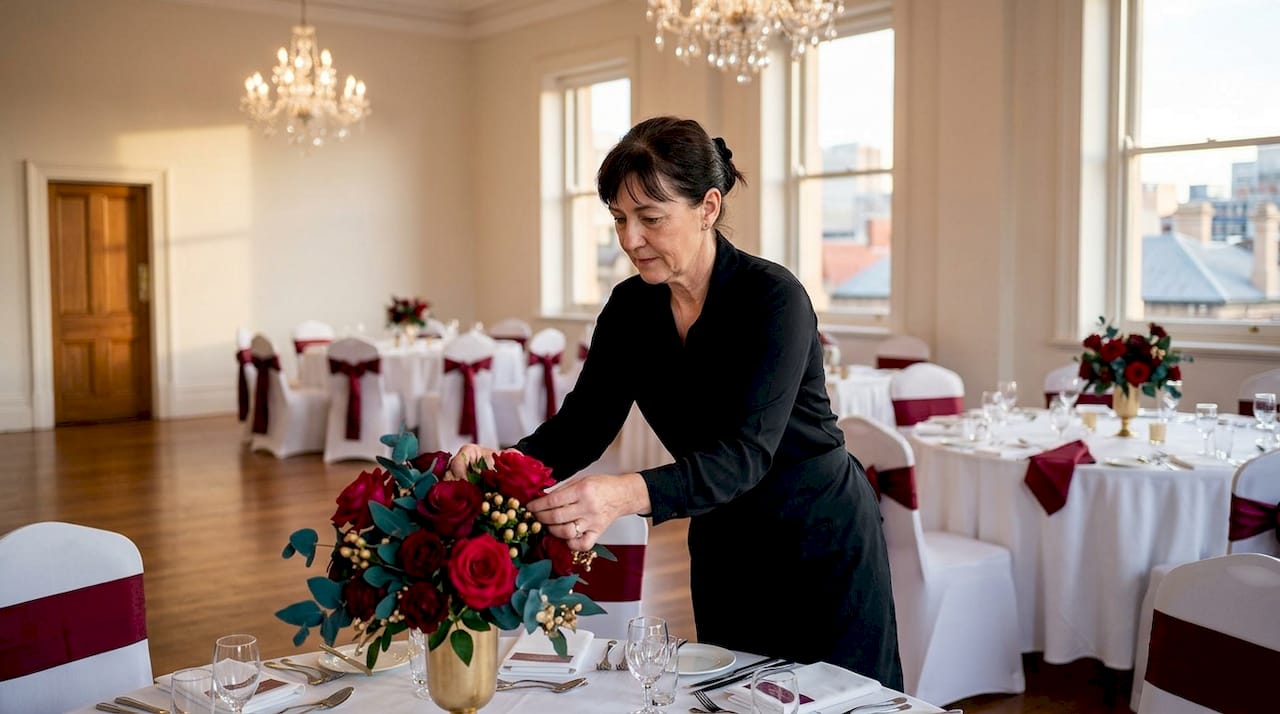
Traditional venues include hotels, ballrooms, function centres, and churches. These spaces are purpose-built for events and typically offer strong logistical support, including in-house catering, professional event coordinators, reliable audio and visual equipment, and ample parking. They suit couples who want a polished, well-organised event with fewer moving parts. The trade-off is that traditional venues can feel less personal and may have strict décor guidelines.
Contemporary venues cover art galleries, rooftop bars, converted warehouses, and urban lofts. These spaces appeal to couples seeking a modern or creative aesthetic. They often feature striking architectural details and are well-suited to smaller, design-forward weddings. However, they may lack built-in amenities, which means sourcing your own caterers, furniture, and audio-visual setup.
Unique venues are perhaps the most exciting category for Adelaide couples. This includes wineries in the Barossa Valley and McLaren Vale, historic homesteads, botanic gardens, and purpose-built country estates. Explore unique Adelaide venues for a sense of just how varied this category can be. These spaces create truly memorable settings, though they often come with specific restrictions around noise, timing, or outside vendors.
Outdoor and natural venues include beaches, national parks, private gardens, and lakeside settings. Adelaide’s Mediterranean climate makes outdoor weddings genuinely appealing for a significant portion of the year. The key consideration here is weather contingency planning.
Multi-purpose venues are flexible spaces designed to accommodate a wide range of event styles and sizes. They appeal to couples who want creative control and are particularly useful for large guest lists where dedicated ballrooms or open event halls become practical necessities.
| Venue category | Typical setting | Best suited for |
|---|---|---|
| Traditional | Ballrooms, hotels, churches | Formal, classic weddings |
| Contemporary | Galleries, rooftops, warehouses | Modern, artistic couples |
| Unique/historic | Wineries, estates, gardens | Distinctive, memorable events |
| Outdoor/natural | Beaches, parks, private land | Relaxed, nature-inspired weddings |
| Multi-purpose | Flexible function centres | Custom themes, large guest lists |
You’ve seen the main categories. Next, let’s compare their standout features to help you narrow your short list.
Comparing venue categories: Features, flexibility, and cost
Once you understand the categories available to you, the next step is comparing them on the factors that matter most to your planning process. A detailed venue comparison ensures your venue genuinely matches your dream celebration rather than simply looking good in photos.
Atmosphere varies significantly between categories. Traditional venues offer a sense of occasion and timeless elegance, which photographs well and appeals to guests of all ages. Contemporary venues create a chic, cool-toned ambience that suits couples with a clear modern aesthetic. Unique venues like heritage homesteads carry a sense of history and story. Outdoor venues bring natural beauty that no interior can replicate, though they require thoughtful planning around light, heat, and wind.
Facilities and inclusions are where category comparisons become really practical. Traditional venues almost always include in-house catering, which simplifies your planning significantly. They typically also offer dedicated bridal suites, parking, audio-visual equipment, and furniture. Contemporary venues, by contrast, often operate as blank canvas spaces where you arrange each element separately. This gives you more creative freedom but adds to your workload and potentially your costs.
Flexibility is a major differentiating factor. Some traditional hotels and function centres offer fixed packages that outline exactly what is and is not included. You get reliability and structure, but less room to bring in outside vendors or personalise the setup. Unique and multi-purpose venues often give you far more latitude to choose your own caterers, florists, and entertainment. Understanding this before you sign anything can prevent frustration later.
Capacity ranges enormously across categories. Boutique wineries and historic cottages may comfortably seat 30 to 80 guests, while large function centres and multi-purpose venues can accommodate well over 300. Some very large venues in Adelaide can cater for events with more than 500 guests. Checking the Adelaide venue costs and capacities for each category you’re considering is an essential early step.
Cost considerations deserve careful attention. All-inclusive venues often appear more expensive at face value but may actually represent better value when you factor in what’s included. Blank canvas venues appear cheaper initially but costs accumulate quickly once you price catering, furniture hire, lighting, and staffing separately. Always ask venues to provide an itemised breakdown, and specifically ask about hidden fees such as minimum spend requirements, public liability insurance, security staff charges, and setup or bump-out fees.
| Factor | Traditional | Contemporary | Unique/historic | Outdoor | Multi-purpose |
|---|---|---|---|---|---|
| Atmosphere | Classic, formal | Modern, stylish | Distinctive, memorable | Natural, relaxed | Varies |
| Catering | Usually in-house | Often BYO | Mixed | Often BYO | Mixed |
| Flexibility | Low to medium | High | Medium | High | High |
| Capacity range | 50 to 500+ | 20 to 200 | 30 to 300 | 30 to 200+ | 50 to 500+ |
| Pricing model | All-inclusive | Itemised | Mixed | Itemised | Mixed |
Pro Tip: Ask any venue for a full list of preferred or required vendors. Some venues, particularly unique and historic properties, restrict which caterers or entertainment providers you can use, which can significantly affect your total cost and creative choices.
Armed with these comparisons, you’ll want to choose a category that fits your guest list and vision while making your decision process smoother.
How to choose the right venue category for your wedding vision
Knowing what each category offers is one thing. Applying that knowledge to your specific situation is where real clarity comes from. Tailoring your venue choice to your wedding vision increases satisfaction and reduces the likelihood of costly regrets down the line.
Follow these practical steps to match the right category to your vision:
-
Define your priorities clearly. Before you look at a single venue, sit down as a couple and agree on what matters most. Is it atmosphere, location, capacity, cost, or flexibility? Rank these honestly. Your priorities will naturally eliminate certain categories before you visit a single space.
-
Shortlist categories, not individual venues. Start by identifying two or three categories that align with your priorities. If you both value nature and informality, outdoor and unique venue categories move to the top. If coordination and reliability matter more, traditional venues deserve your attention first.
-
Visit multiple examples within each category. No two wineries are identical. No two function centres offer the same experience. Visiting at least two venues within each shortlisted category gives you a realistic picture of what the category can actually deliver for your wedding.
-
Ask targeted questions during every visit. Good questions for venues include: What is your minimum and maximum capacity? What is included in your packages? What are your restrictions around décor, catering, and noise? What is your wet weather contingency for outdoor ceremonies? These questions expose the practical realities behind a venue’s polished presentation.
-
Consider weather and seasonal factors. Adelaide summers can be intensely hot and winters occasionally wet. Outdoor and garden venues that look stunning in spring may require significant contingency planning for December and January weddings. Ask venues specifically about how they manage seasonal weather challenges.
-
Think about your guests’ experience. Consider accessibility, parking, accommodation proximity, and ease of travel for guests coming from interstate or regional South Australia. A stunning but remote historic estate may create real logistical difficulties for elderly guests or families with young children.
-
Stay open to hybrid categories. Some of Adelaide’s most beloved wedding venues blend features from two or even three categories. A vineyard with a modern pavilion attached, or a heritage building with a contemporary fitout, can offer the best of multiple worlds.
Pro Tip: Trust your instinct when you walk into a venue, but use your category knowledge to verify whether that gut feeling can actually be supported by the venue’s practical offerings. Emotion gets you interested; information gets you to the right decision.
As you weigh these factors, having an expert perspective can help you pinpoint what actually matters most for your wedding journey.
The real reason understanding venue categories changes everything
Most couples approach the venue search the same way: they save images they love on Pinterest or Instagram, identify a visual style they’re drawn to, and then go looking for a venue that matches those photos. This is a completely natural starting point, but it only gets you so far.
The problem is that a beautiful photo tells you almost nothing about how a venue actually operates on your wedding day. It doesn’t tell you about the noise curfew, the minimum catering spend, the lack of on-site parking, or the fact that you can’t bring in your preferred florist. These are the things that shape your actual experience, not just the aesthetics.
When you understand venue categories, you start asking the right questions from the beginning. You speak the language that venue coordinators respond to clearly and in detail. You get more accurate quotes because you know what to ask for. You encounter fewer surprises because you understand what a particular category typically includes and excludes.
There’s also something deeper here. Choosing a venue is one of the most significant decisions in the wedding planning process. The venue sets the tone for the entire day and shapes how your guests feel from the moment they arrive. When you understand what a category genuinely offers, rather than just how it photographs, you’re far more likely to find a venue that creates an experience that feels true to who you are as a couple.
Consulting the venue decision process guide can help you move from research to confident decision with a clear framework in mind. Category knowledge doesn’t limit your options. It actually expands them by showing you what’s possible within the spaces that genuinely suit your needs.
Find your perfect Adelaide wedding venue with expert support
Understanding venue categories is the first step. Finding the right venue within those categories is where the real journey begins.
The Adelaide Wedding Venues directory brings together venues from across Adelaide and South Australia, all organised by category so you can search efficiently and compare meaningfully. Whether you’re drawn to a rustic winery in McLaren Vale, a contemporary urban loft in the CBD, or a grand traditional ballroom, the directory helps you find options that match your vision without the overwhelm. Read through our venue selection advice and work through our wedding venue guide to turn your understanding into confident action. Start your search today and take the guesswork out of finding your perfect Adelaide venue.
Frequently asked questions
What are the main types of wedding venues in Adelaide?
Traditional, contemporary, and unique venues form the main categories in Adelaide, alongside outdoor and natural settings and flexible multi-purpose spaces that suit a wide range of wedding styles and sizes.
How do I know which venue category is right for my wedding?
Match your priorities and vision to the category’s features by reviewing what each type typically includes, then visit examples and ask targeted questions about flexibility, restrictions, and inclusions. Tailoring your venue choice to your specific vision increases your overall satisfaction with the final decision.
What is a multi-purpose wedding venue?
A multi-purpose venue offers adaptable spaces that can accommodate a range of themes, guest sizes, and event formats, making it a strong choice for couples who want creative control over their wedding setup.
Is it better to choose an all-inclusive venue or a blank canvas?
All-inclusive venues offer simplicity and convenience with most services bundled into one package, while blank canvas venues give you greater creative control and the freedom to curate every element of your wedding experience to match your personal taste.
