
TL;DR:
- Choosing the right venue layout is crucial for Adelaide couples, influencing guest movement and event atmosphere. Utilizing scaled floor plans and working with venue staff ensures practical arrangements that enhance flow, sightlines, and comfort. Tailoring layouts to your guest list and venue quirks results in a personalized, functional wedding space.
Choosing the right venue is only half the battle for Adelaide couples planning their wedding. The other half is figuring out how to arrange it. Venue layout shapes everything from how easily guests move around the room to whether the dance floor feels lively or empty by 9 pm. Many couples find plenty of inspiring floor plans online, but translating those ideas into a real Adelaide space is where things get tricky. This guide moves from broad layout principles through to concrete local examples, giving you practical, actionable inspiration you can actually use.
Key Takeaways
| Point | Details |
|---|---|
| Prioritise layout zones | Focusing on core areas like seating, bar, and dance floor boosts flow and guest enjoyment. |
| Use local floor plans | Get your Adelaide venue’s exact floor plan for accurate, practical layout planning. |
| Mix and match styles | You can combine seating and lounge zones for a unique and flexible reception. |
| Customise for your group | Tailoring templates and inspiration ideas to your guest list and room makes setups stress-free. |
What makes a great wedding venue layout?
Before looking at specific styles or real examples, it helps to understand what separates a layout that works from one that causes headaches on the day. What makes a good wedding venue comes down to more than aesthetics. The floor plan plays a huge role in how the night flows for both guests and your vendors.
A great layout is built around four core zones:
- Guest seating: Tables arranged so that every guest has a clear line of sight to the ceremony or focal point, without feeling cramped or isolated.
- Dance floor: Positioned centrally or at one end of the room, large enough for the expected number of dancers but not so large it looks empty during dinner.
- Bar area: Accessible without cutting across the dining space, ideally near an entry or side wall to prevent bottlenecks.
- Staff pathways: Clear, unobstructed lanes for waitstaff to move between the kitchen, bar, and tables without disrupting the guest experience.
The way these zones interact determines your event’s energy. Poor placement, such as a bar positioned directly in the path between tables and the dance floor, creates congestion. A dance floor tucked in a corner can kill momentum early in the night.
Classic seating arrangements each have their strengths. The banquet or round-table style is the most familiar, with circular tables of eight to ten guests scattered across the room. The U-shape arrangement works well for smaller groups and keeps everyone facing inward toward speeches and entertainment. Cabaret style, where guests sit on one side of round tables facing a stage or focal point, suits events with strong entertainment elements. These formats are explored in detail in the wedding reception layout example provided by SmartDraw, which shows zone-by-zone floor plans that illustrate how seating, dance floors, bars, and head tables interact in a real room.
Pro Tip: Ask your venue coordinator for a blank, scaled floor plan before you begin planning. Most Adelaide venues have these readily available. A scaled plan lets you test different arrangements on paper before committing to anything.
Good venue planning tips will always emphasise starting with the room’s fixed features: columns, windows, kitchen access points, and emergency exits. These elements cannot be moved, so they must anchor your layout decisions from the very beginning.
Classic and trending wedding reception layouts
Now that you know what a good layout should achieve, it is worth looking at the specific arrangements Adelaide couples are choosing for their receptions. Each style has distinct advantages and suits different guest counts, venue shapes, and event vibes.
| Seating style | Max capacity | Vibe | Guest flow |
|---|---|---|---|
| Round banquet tables | High | Classic and elegant | Moderate, easy to navigate |
| Long family-style tables | Medium to high | Relaxed and intimate | Excellent along table runs |
| Cabaret (half-round) | Medium | Theatrical and modern | Good front-to-back movement |
| Cocktail and lounge | High (standing) | Social and contemporary | Excellent, very flexible |
| Mix-and-match zones | Varies | Personalised and layered | Depends on zone design |
Round banquet tables remain the most popular choice in Adelaide. They allow flexible conversation across the table and fit neatly into most rectangular or square rooms. The downside is that guests seated with their backs to the dance floor or speeches can feel disconnected from the action.
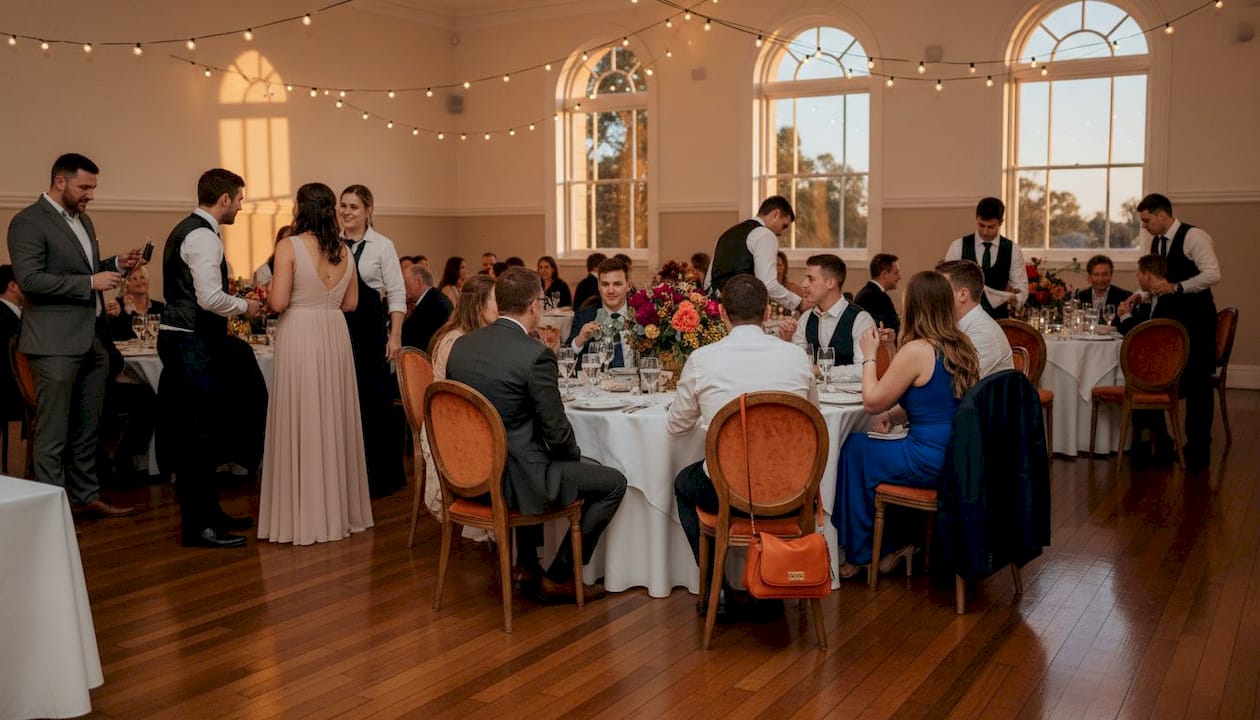
Long family-style tables have grown significantly in popularity, particularly for outdoor and rustic settings. They create a communal feel and work beautifully in long, narrow venues. However, they can make it harder for guests at opposite ends to interact, and they require careful table runner and floral arrangements to avoid looking sparse.
Cabaret style seats guests on one side or three sides of a round table, all facing a central stage or performance area. This suits weddings with live bands, comedy nights, or strong entertainment programmes. It does reduce seating capacity compared to fully round table arrangements.
Cocktail and lounge formats are particularly popular for Adelaide rooftop venues, garden parties, and heritage spaces. High bar tables and low lounge clusters create a relaxed, social atmosphere. This format encourages guests to move and mingle freely, though it can become uncomfortable for older guests without enough low seating available.
One of the most effective approaches is the mix-and-match layout. This involves using different seating styles in different areas of the venue to suit the various stages of the night. For example, formal dining tables for the meal, then a lounge cluster near the bar for the later part of the evening. Checking the venue requirements before committing to this approach is important, as not all venues have the furniture or space to support multiple zone styles.
Pro Tip: Consider designing your layout in two phases. Plan for the dinner configuration first, then decide how the room can shift or open up once the dance floor comes alive. Some Adelaide venues offer furniture changeover services mid-event, which makes this kind of dynamic layout much more achievable.
Real Adelaide venue layout examples: Bonython Hall and more
With layout types in mind, it is time to see how these ideas translate into real Adelaide venues. Using actual floor plans from local spaces makes the difference between a layout that looks great on a mood board and one that actually works on the night.
Bonython Hall at the University of Adelaide is one of the city’s most celebrated event spaces. Its grand proportions, ornate ceiling, and flexible floor space make it a standout choice for formal receptions. The Bonython Hall floor plan is available through the University of Adelaide’s infrastructure and facilities booking pages, giving couples access to accurate measurements and room configurations. This is exactly the kind of resource you should be looking for from any Adelaide venue you are seriously considering.
When reviewing Bonython Hall’s layout, couples typically work with several common configurations:
| Setup style | Typical capacity | Common use |
|---|---|---|
| Theatre style | Up to 1,000 | Ceremony only |
| Banquet round tables | 300 to 400 | Formal dinner reception |
| Long tables (banquet) | 350 to 450 | Family-style dinner |
| Cocktail standing | 600+ | Drinks and canapes |
Reading a venue floor plan for the first time can feel overwhelming. The key is to look for scale indicators, usually a metre bar in the legend, and use them to estimate table spacing. Most venues recommend a minimum of 1.5 metres between tables for comfortable guest movement and waitstaff access.
When reviewing any Adelaide venue floor plan, check these key elements:
- Emergency exits: Ensure pathways remain clear and exits are never blocked by furniture.
- Windows and natural light: Note their position for photography and guest comfort throughout the day.
- Columns and structural features: These affect sightlines and can require creative table arrangement to minimise their visual impact.
- Kitchen and service access: Confirm that service doors and paths do not require staff to cross the main guest area repeatedly.
- Power and AV points: Locate where the DJ booth, projector screens, or lighting rigs will be positioned relative to power sources.
- Entry and exit points: Consider how guests will arrive and move through the space from ceremony to reception.
“Venue-provided floor plans turn dream layouts into practical, workable event options.”
If you are looking to explore Adelaide wedding venues beyond Bonython Hall, many of the spaces listed across South Australia offer floor plans or room dimension information you can request directly. This makes the comparison process far more concrete when you are choosing Adelaide venues that genuinely suit your guest count and style.
How to customise layouts for your guest list and vision
After seeing real layouts, the next step is adapting them to fit your specific group, priorities, and venue. This process does not need to be complicated. A structured approach makes it manageable and even enjoyable.
-
Gather your venue’s floor plan and measurements. Request the official plan from your venue coordinator. For Adelaide venues like Bonython Hall, this is available through their official floor plan resources. Confirm the scale and any fixed features marked on the plan.
-
Define your non-negotiables first. Write down the three or four elements that matter most to you and your partner. Is a large dance floor essential? Do you need a lounge area for elderly guests? Is a sweetheart table more important than a bridal party table? Starting with priorities avoids compromise on the things that genuinely matter.
-
Calculate your table numbers and spacing. Use your guest count to estimate the number of tables required. Round tables of eight typically need a footprint of about 3.5 metres in diameter, including chair space. Allow a 1.5 metre walkway between all tables. Sketch this onto your scaled floor plan.
-
Work around room quirks, not against them. If your venue has an awkward column in the middle of the room, use it as a feature rather than a problem. Floral installations or lighting rigs on structural columns can become focal points. If the room is long and narrow, long family-style tables might be a natural fit.
-
Test several versions before your planning meeting. Print two or three copies of the blank floor plan and sketch different layouts by hand. This simple exercise reveals which arrangements feel most logical and which create awkward gaps or bottlenecks.
-
Review with your venue coordinator and caterer together. Caterers have strong opinions about how a room works from a service perspective. Combining their practical knowledge with your vision and the venue coordinator’s structural knowledge produces the best results.
Using a good venue selection guide alongside actual floor plan templates allows you to make confident, informed decisions rather than guessing how things will feel on the day.
Pro Tip: Print the floor plan at A3 size and use sticky notes or small paper cut-outs representing tables to physically move things around. It sounds old-fashioned, but this tactile approach helps you spot problems that a digital tool or rough sketch might miss.
Why practical layouts matter more than Pinterest inspiration
Here is a perspective that often gets lost in the excitement of wedding planning. Pinterest and Instagram are genuinely useful for collecting visual ideas, but the layouts you see there are almost always photographed in venues that are nothing like your Adelaide room.
Many couples spend weeks refining a layout idea based on a viral image, only to arrive at their venue walk-through and discover the room is the wrong shape, the ceiling is too low for the hanging installation, or there is a service corridor exactly where the sweetheart table was meant to go. This is not a failure of imagination. It is what happens when inspiration skips the practical step.
The real advantage comes when couples bring venue-provided materials into the conversation early. Adelaide venues genuinely want your event to succeed, and most have seen hundreds of weddings in their rooms. Their coordinators know which configurations work, which table counts create congestion, and which parts of the room photograph beautifully. That knowledge is worth more than any trending layout you find online.
Using Adelaide venue planning tips from people who know local spaces is the most underrated part of the planning process. It saves time, reduces stress, and often leads to a more personalised result than copying a template from a venue in New York or London.
The editorial stance here is clear. Matching the room to your vision, using the actual dimensions, quirks, and character of your Adelaide venue, will always produce a better outcome than trying to force an overseas aesthetic into a space it was never designed for. Work with your venue. Use its floor plan. Let the room guide you.
Find the perfect Adelaide venue and layout with expert help
Ready to put your dream layout into action? Adelaide Wedding Venues is the go-to directory for couples searching for their ideal South Australian setting.
From grand heritage halls to garden estates and contemporary spaces, the directory gives you access to a wide range of unique venue examples across the region. Each listing connects you directly with venues that can provide floor plans, room dimensions, and layout advice. Whether you are still narrowing down your shortlist or ready to book, the platform makes it straightforward to go from inspiration to a confirmed floor plan that actually works. Take the next step and start choosing your ideal venue with confidence, knowing the right space and the right layout are within reach.
Frequently asked questions
What are the must-have zones in a wedding reception layout?
Every good wedding layout should include guest seating, a dance floor, a bar, and clear access paths for staff and guests. A well-structured reception floor plan shows how these zones interact to create a smooth and enjoyable event.
How do I find the floor plan for my Adelaide wedding venue?
Most Adelaide venues provide downloadable floor plans on their websites or upon request, so always ask your venue coordinator for accurate room dimensions. Venues like Bonython Hall publish their floor plans online, which is a great standard to expect from any serious venue.
Can I adapt popular online layout templates for any Adelaide venue?
Yes, but measuring your chosen space and working from the venue’s own plan ensures a much better fit and avoids surprises on the day. Using venue-provided measurements turns online inspiration into a scale-accurate, practical layout.
Which layout style makes the most of a large guest list?
Banquet round tables and long family-style tables typically maximise seating capacity for larger groups, but you should always confirm your venue’s capacity and recommended configurations before finalising your plan.
Do Adelaide venues help with layout customisation?
Yes. Most Adelaide venues offer templates, room diagrams, and coordinator advice to ensure your floor plan suits your specific event. Resources like the Bonython Hall floor plan demonstrate the kind of detailed, venue-specific support couples should look for when planning.
Recommended
- Unique wedding venues in Adelaide: examples for every style
- 6 Types of Wedding Venues Every Adelaide Couple Should Know
- 7 Intimate Wedding Venue Ideas for Adelaide Couples
- Unique wedding venues in Adelaide: 3,000-guest options
- Wedding Stamps for your Wedding Stationary – Stamp Design 4U
- Individuelle Glasdesigns: Ideen für Hochzeiten & Events – Shotglass24
