
TL;DR:
- Choosing an Adelaide wedding venue requires understanding the venue listing process and verifying details directly to avoid surprises. Well-crafted, comprehensive listings reflect a venue’s professionalism and predict responsive communication and transparency. Couples should review capacity, pricing, catering policies, and local regulations carefully before making a final decision.
Choosing a wedding venue in Adelaide involves far more than browsing pretty photos online. The explainer on venue listing process covered here reveals what most couples and event planners never think to ask: how does a venue actually end up on a directory, what information is reviewed, and how does that affect what you see when you search? Understanding this process gives you a sharper eye when comparing options, helps you ask better questions, and protects you from the surprises that derail too many wedding budgets and timelines.
Key takeaways
| Point | Details |
|---|---|
| Listings involve a formal process | Venues submit details, photos, and compliance information before appearing on directories. |
| Pricing transparency matters most | Hidden fees can add 15–25% to advertised prices, so listed costs deserve scrutiny. |
| Listings are a starting point only | Always verify listing claims directly with the venue coordinator before committing. |
| Adelaide has specific local factors | Noise curfews, parking, and licensing requirements shape which venues suit your event. |
| Strong listings attract better enquiries | Venues with detailed, honest listings consistently attract couples who are the right fit. |
The venue listing process explained
The venue listing process is a sequence of steps a venue owner or manager follows to appear on a wedding directory or booking platform. It is not as simple as uploading a few photos and hitting publish. Most reputable platforms require venues to complete a formal registration that includes accurate facility information, verified contact details, capacity figures, amenities, and relevant licences.
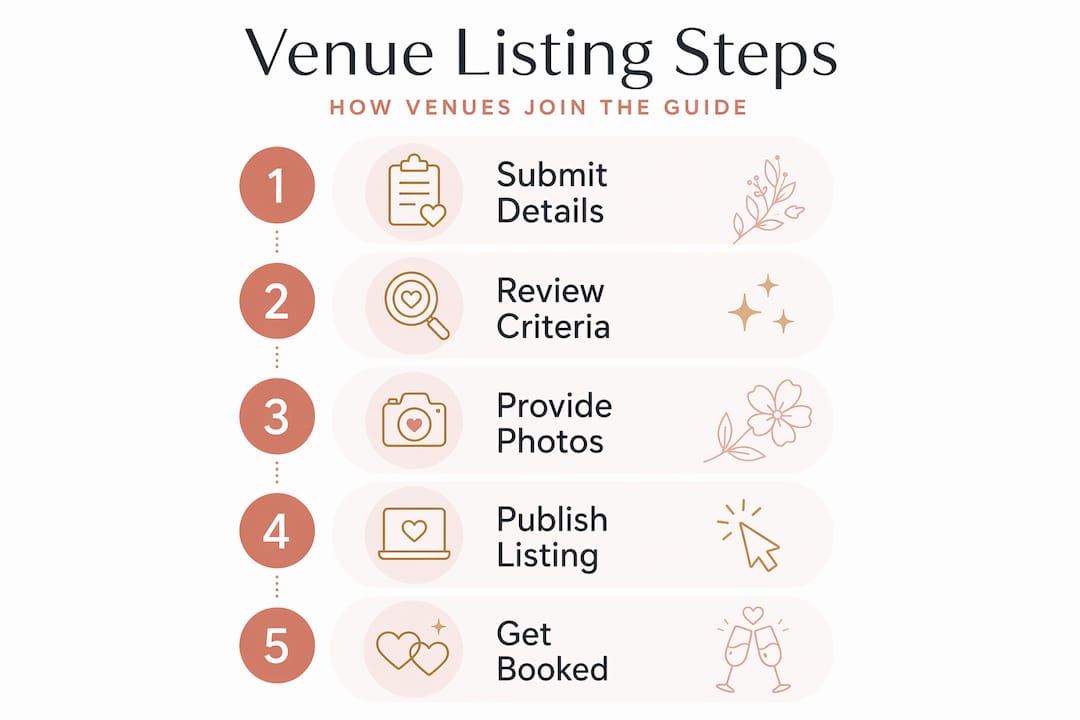
Here is what the general process looks like from registration to a live listing:
- Registration and account creation. The venue submits basic details: name, address, contact information, and venue type. This step confirms the venue is a real, operating business.
- Providing facility information. The venue describes its capacity (seated and standing), available spaces (ceremony area, reception room, outdoor areas), catering arrangements, and parking. Accuracy here is critical.
- Photo and media submission. High-quality images of the main spaces are uploaded. Some platforms accept virtual tours. This is where first impressions are formed.
- Confirming compliance details. Venues may be asked to confirm licensing status, noise management plans, and accessibility features. Some platforms verify this independently.
- Review and approval. The platform reviews the submission. On Adelaideweddingvenues, this process is handled by wedding industry professionals, including photographers with first-hand knowledge of local venues.
- Listing activation. Once approved, the listing goes live. Venues can then choose between a free standard listing or a paid featured placement for greater visibility.
Explaining venue listing criteria from the platform’s point of view is straightforward: accuracy, completeness, and relevance. Listings that include thorough details attract couples who are already a good match, which reduces wasted enquiries on both sides.
Pro Tip: When browsing listings as a couple, pay attention to how much detail the venue has provided. A sparse listing often signals that the venue is not actively managing its online presence, which can affect how responsive they are to enquiries.
Adelaide-specific wedding venue criteria
Understanding the criteria venues must address when listing for weddings in Adelaide helps couples read those listings with greater confidence. Several factors are particularly relevant to South Australia’s wedding market.
Capacity and layout specifics
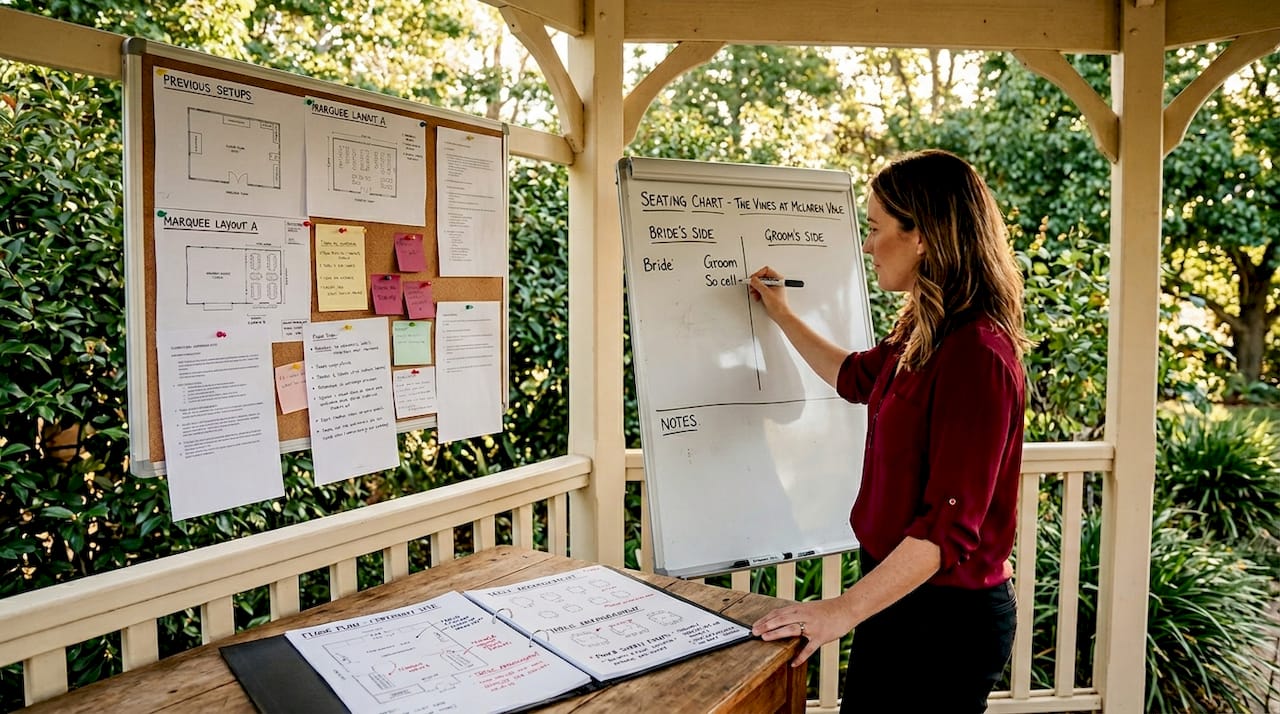
Venue capacity listings should specify actual seated numbers, not just standing capacity. A space that holds 200 people standing may comfortably seat only 120 for a dinner reception once you account for dance floors, DJ setups, and bridal tables. Misrepresented capacity is one of the most common sources of wedding-day frustration, so look for listings that break down the numbers by room configuration.
Catering arrangements
Some venues operate under exclusive catering arrangements, meaning you must use their preferred supplier. Others allow external caterers. The listing should state this clearly, as it directly affects your budget and flexibility.
Pricing and minimum spends
The food and beverage minimum is the top unexpected cost for couples. If your guest headcount multiplied by the per-person cost does not reach the venue’s minimum spend, you pay the difference regardless. Quality listings will state minimum spend requirements upfront. Those that do not are worth questioning directly.
Local licensing and noise restrictions
Adelaide venues operate under specific council regulations, including noise curfews that vary by suburb. A venue that sounds perfect may require your event to wrap up at 10pm. Listings that detail their noise management policies and liquor licence conditions give you a genuine picture of what your event will look like.
Here is a quick comparison of what a strong Adelaide wedding venue listing includes versus a weaker one:
| Listing element | Strong listing | Weak listing |
|---|---|---|
| Capacity detail | Seated and standing by room | “Up to 200 guests” |
| Pricing information | Packages, minimum spends, fees | “Contact us for pricing” |
| Catering policy | Exclusive or open, clearly stated | Not mentioned |
| Noise and licensing | Curfew times, licence type noted | No detail provided |
| Accessibility | Parking numbers, accessibility features | “Ample parking available” |
Logistical details like parking availability, noise restrictions, and accessibility features are frequently overlooked in initial venue searches but have a significant influence on guest experience and event suitability.
How couples and planners use listings to shortlist venues
Knowing how to read a venue listing is a skill in itself. Many couples focus on the photography and overlook the details that actually determine whether a venue is the right fit. Here is where experienced event planners and informed couples have an advantage.
Look beyond the photos to what the listing tells you about inclusions and exclusions. Does the hire fee include tables and chairs? Is there a separate ceremony fee on top of the reception hire? Contracts should explicitly specify terms like service charges, minimum spends, and vendor restrictions. If the listing hints at these without full detail, that is a signal to request the full terms before scheduling an inspection.
Use the listing as a checklist for your venue coordinator conversation. If the listing states a capacity of 150 seated, ask whether that configuration leaves room for a dance floor and a photobooth. If catering is listed as “flexible,” ask whether that means fully open or limited to an approved supplier list.
Filtering by budget is more reliable when listings are transparent. Adelaideweddingvenues allows couples to filter by venue type, size, and location, which reduces the time spent on venues that are clearly outside the brief. But budget filtering only works if you factor in the hidden costs. Service charges, ceremony fees, and vendor surcharges commonly add 15 to 25 per cent on top of advertised prices. When you shortlist wedding venues, calculate a true all-in cost per person rather than relying on the headline rate.
Pro Tip: Read any reviews attached to the listing carefully. Look for patterns rather than isolated comments. If multiple reviewers mention delays in communication or unexpected charges, treat that as reliable information, not an outlier.
One common pitfall is treating the listing as a contract. It is not. Reviewing venue contracts thoroughly before paying a deposit is the only way to confirm what is actually included. Verbal promises made during a venue tour should always be confirmed in writing before signing.
It is also worth knowing that venue coordinators manage on-the-day logistics but do not replace a hired wedding planner. A listing that promotes a “dedicated coordinator” is offering logistical support within the venue, not comprehensive event planning. Understanding this distinction helps you plan your full support team properly.
Tips for venues: creating listings that perform
For venue owners and managers, the listing is your first conversation with a potential client. The quality of that conversation determines whether a couple picks up the phone or keeps scrolling. These best practices for venue listings are drawn from what actually works in Adelaide’s competitive market.
- Write for local search terms. Listings with event-specific content and strong local SEO rank better in Google searches and attract more bookings. Include suburb names, venue type terms (garden ceremony, heritage building, beachside reception), and specific wedding-related language throughout your listing description.
- Use authentic photography. Styled shoot images are appealing, but photos taken during real weddings at your venue build trust. Show the space full of guests so couples can accurately visualise their event.
- State pricing clearly. Couples and planners who cannot find a price range on a listing often move on entirely. Publishing packages or approximate price bands reduces back-and-forth and attracts enquiries from couples who are already within your price range.
- Update your listing regularly. If your capacity changes, if you add a new outdoor ceremony space, or if your catering policy shifts, update the listing immediately. Outdated information creates frustration and wastes everyone’s time.
- Respond to enquiries promptly. Platforms like Adelaideweddingvenues track engagement. Venues that respond quickly to enquiries are perceived as more professional and reliable, which influences how couples feel before they even visit.
- Highlight what makes your venue distinctive. Whether it is a heritage cellar door setting in the Adelaide Hills, a rooftop with city views, or a garden ceremony space surrounded by native planting, lead with what sets you apart. Generic descriptions do not convert.
Pro Tip: Ask past clients to leave honest reviews on your listing. Genuine reviews with local SEO signals improve your ranking and give couples the social proof they need to take the next step.
My take on listings and what they reveal about venues
I have spent years working alongside Adelaide venues and the couples who book them, and the pattern I keep seeing is this: the quality of a venue’s listing almost always reflects the quality of their communication once you are a client.
Venues that provide thorough, honest, and regularly updated listings tend to be the same venues that respond to emails within a day, send clear contracts, and flag potential issues before they become problems. Venues with sparse or vague listings often leave couples guessing right up to the wedding day.
What concerns me most is how often couples treat the venue tour as the definitive sales experience. The tour is curated. The contract is the legal reality, and the listing sits somewhere in between. A detailed listing that matches the contract terms is a sign of a venue that operates with integrity. When the listing and the contract tell very different stories, that gap is worth investigating before you pay a cent.
My honest advice: when you find a listing that is thorough, transparent, and up to date, take that as a positive signal about the venue’s professionalism overall. And when a listing leaves you with more questions than answers, that is worth weighing before you invest time in an inspection.
— Steven
Find your ideal Adelaide wedding venue
Adelaideweddingvenues is built specifically to help engaged couples and event planners in Adelaide find the right venue without the guesswork. The directory is maintained by wedding industry professionals who understand what couples actually need to see in a listing: honest capacity figures, clear pricing, catering policies, and local compliance details. Every listing on the platform goes through a review process to protect the quality of information you are relying on.
Whether you are comparing rustic barns to beachside venues or weighing up intimate garden settings against grand reception halls, Adelaideweddingvenues gives you the filters, the details, and the guidance to make that comparison with confidence. For venues looking to attract more wedding bookings, free listings and featured placement options are available to get you in front of the right couples at the right time.
If you are ready to start comparing Adelaide venues, explore our guide to choosing your venue and use our directory filters to narrow down your search by location, size, and style.
FAQ
What is the venue listing process for wedding directories?
The venue listing process involves a venue submitting its details, including capacity, amenities, photos, pricing, and compliance information, to a directory platform for review and approval before the listing goes live.
What criteria do venues need to meet to be listed?
Listing criteria typically include accurate capacity figures, facility descriptions, catering arrangements, pricing details, contact information, and confirmation of relevant licences. Platforms maintained by industry professionals may also assess listing quality.
How far in advance should couples book a wedding venue?
Booking 12 to 18 months in advance is recommended for peak season dates to secure your preferred venue and align vendor bookings effectively.
Can couples trust all the information in a venue listing?
Listings are a helpful starting point, but couples should always verify key details directly with the venue coordinator and review the full contract before paying a deposit, as listings do not carry the same legal weight as a signed agreement.
What hidden fees should couples watch for in venue listings?
Watch for service charges, ceremony fees, food and beverage minimums, and external vendor surcharges. These additional costs can increase the advertised price by 15 to 25 per cent and are not always clearly stated in the initial listing.
