
TL;DR:
- Securing your wedding’s privacy involves written exclusivity confirmation, clear guest access controls, and enforced vendor privacy clauses. Implementing a no-social-media policy through signage and MC announcements, along with physical sightline management, helps prevent leaks and intrusions. Proper planning also includes verifying legal permits, insurance, and security arrangements well before the event.
Seven concrete actions protect your wedding day from uninvited guests, social media leaks, and unexpected intrusions. Start with these:
- Confirm exclusive use in writing before signing any venue contract.
- Gate your guest list with personalised invitations and RSVP controls.
- Declare a no-social-media policy via your MC, signage, and wedding website.
- Brief every vendor on privacy clauses and get signed confirmation.
- Hire visible security or check-in staff to manage access points.
- Control sightlines and signage to deter passers-by and direct guests.
- Prepare a contingency plan for unexpected breaches or uninvited arrivals.
Private-property events in Victoria, for example, must meet a restroom ratio of one toilet per 50 guests for event insurance compliance — a practical reminder that privacy planning connects directly to legal and logistical readiness, not just atmosphere.
1. How to choose a venue that genuinely supports privacy
The single most important decision is whether you book a venue with full exclusive use or settle for something less. Exclusive use varies significantly between venues: some offer full private hire where no other guests, resort patrons, or events share the property; others offer event-only exclusivity where your ceremony space is reserved but accommodation or common areas remain open to the public.
A shared-site model can work for some couples, but if privacy is your priority, only full exclusive hire removes the risk of strangers walking through during your ceremony or photos. Atmosphere and privacy are directly linked — noise bleed from another event or casual guests wandering through can undermine the intimacy you have planned for.
When evaluating venues, check these features specifically:
- Whether accommodation is included in the hire or remains open to other guests
- Perimeter control: fencing, hedging, or natural barriers that limit sightlines from roads or neighbouring properties
- Access routes: how many entry points exist and whether they can be staffed or gated
- Whether the venue provides security as standard or as an optional add-on
- Dedicated parking areas that can be restricted to your guests only
- Signage options to mark the property as a private event
Ask venues these questions in writing before you commit: What areas are included in our hire? Will any other guests or staff be on site during our event? Can we restrict public access to the grounds? Is on-site accommodation available exclusively to our party?
Pro Tip: Request a written exclusivity confirmation that specifies every area included in your hire, and ask for recent photos of the venue set up for a single event. A venue confident in its privacy offering will provide both without hesitation.
2. How to brief vendors and write enforceable privacy clauses
Require explicit privacy clauses and confirmed vendor insurance before you book anyone. This is the step most couples skip, and it is the one that causes the most regret.
The most important clauses to include are:
- No-photography or no-sharing clause for non-official guests and vendors: specifies that vendors may not post images from your event on social media or share them with third parties without written consent.
- Photographer licensing and deliverables clause: defines who owns the images, when they can be published, and whether watermarking is required before delivery.
- NDA option for high-profile events: a non-disclosure agreement covering all vendor staff who attend, not just the primary contact.
- Guest-list confidentiality clause: prohibits vendors from sharing your guest list or contact details with any third party. A 1997 NSW Privacy Committee case found that a reception centre had passed a couple’s contact details to bridal companies without consent — a reminder that this risk is real and documented.
Your vendor checklist before event day:
- Signed contract with privacy clauses included
- Current public liability insurance certificate (keep a copy on the day)
- Confirmed arrival and exit windows so vendors are not on site outside agreed times
- Briefing on where equipment can be stored and who has access to back-of-house areas
- Written acknowledgement of your no-social-media policy
Many venues do not provide security as standard; some are required to under their liquor licence, while others offer it as a paid extra. Confirm this in writing so there are no gaps on the day.
3. How to keep your guest list exclusive and control access on the day
Gate access first. You control who attends by controlling the guest list and every entry point to the venue.
A practical check-in flow to implement:
- RSVP gating: use a password-protected wedding website or a private online RSVP platform so only invited guests can confirm attendance.
- Personalised invitations: include a unique reference or QR code on each invitation so duplicates or forwarded invites are identifiable.
- Ticketed entry or wristbands: for larger guest lists or high-profile events, wristbands issued at check-in make it immediately visible who belongs.
- Staffed check-in desk: a single entry point with a guest list and at least one dedicated attendant prevents anyone slipping through.
- Photo ID check: for very high-profile events, request ID at the door for names not immediately recognised by staff.
For digital communications, use encrypted group chats (Signal or a private WhatsApp group with restricted membership) rather than open social media groups to share logistics with guests. Keep your wedding website on a private, password-protected setting and avoid posting the venue address publicly.
Transport and parking control also support privacy. Arranged shuttle buses from a central pick-up point mean guests do not need the venue address until the day, and valet parking with restricted zones prevents uninvited vehicles from accessing the property. Stagger arrival windows in your invitation so guests do not all arrive at once, reducing the window of exposure at the entry point.
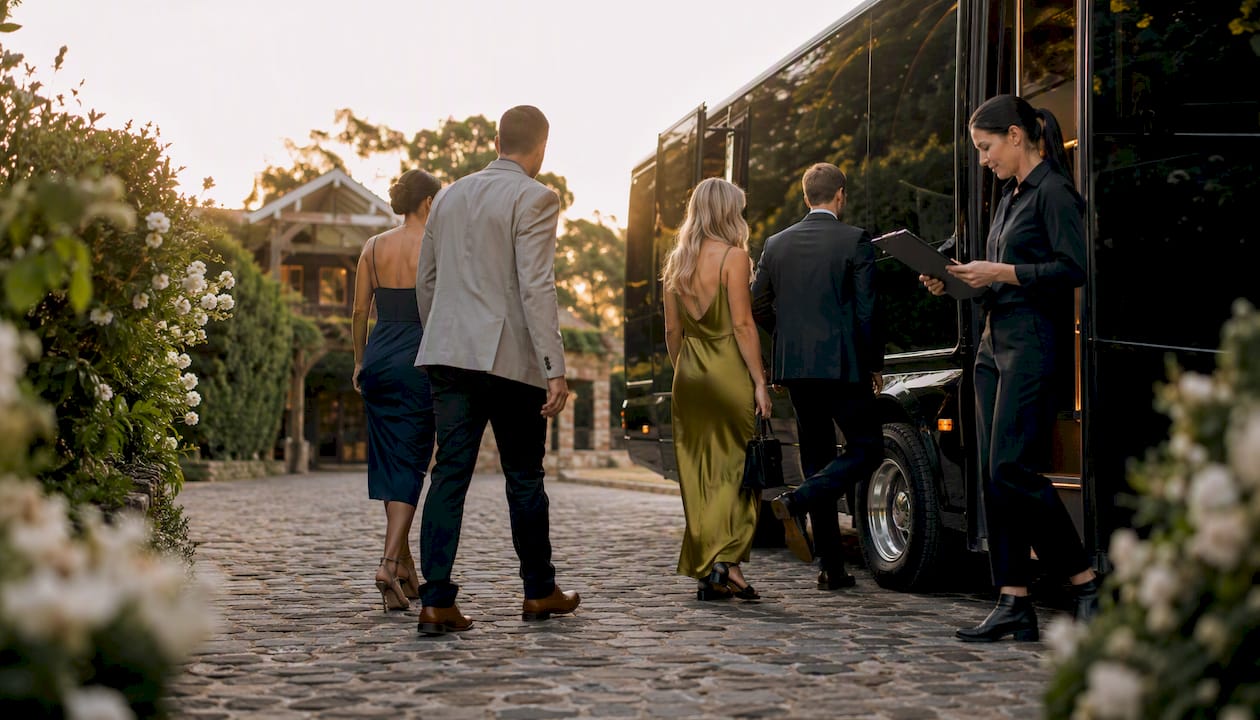
If an uninvited guest or refused admission occurs, handle it calmly and away from the ceremony or reception space. Brief your check-in staff in advance on the exact script: politely confirm the name is not on the list, offer to check with the couple’s coordinator, and if necessary, ask the person to wait outside while you verify.
4. How to set a no-social-media policy guests will actually follow
Declare a clear, short no-social-media policy and give guests an alternative way to share memories. Policies that only say “no” without offering a substitute tend to be ignored.
Experts recommend an unplugged ceremony or a clearly stated social-media embargo communicated across multiple channels. Use all three: your wedding website, a note on the ceremony programme, and an MC announcement.
Sample MC announcement: “On behalf of [Couple’s Names], we ask that you keep your phones away during the ceremony and hold off on posting any photos until after the couple has shared their official images. Your full attention is the best gift you can give them today.”
Sample entrance signage text: “Private event. Please keep phones away during the ceremony. Official photos will be shared with you after the event.”
Your photographer and videographer briefing checklist:
- Agree on an embargo period before any images are delivered or published
- Confirm watermarking policy for preview images
- Specify that raw files and previews are stored securely and not shared with third parties
- Clarify whether the photographer may use images in their portfolio and under what conditions
Post-event, control the official photo release by sharing images through a private online gallery (services like Pic-Time or Pixieset offer password-protected albums) or by distributing a USB to guests. Ask guests not to tag the venue or each other publicly without permission, and set your own social media accounts to private during the event period if you prefer.
5. Which security and staffing roles protect your privacy most
Visible, professional staff reduce incidents and enforce guest restrictions without creating a confrontational atmosphere. The roles that matter most for privacy are:
- Gate or check-in attendant: manages the entry point, holds the guest list, and turns away uninvited arrivals.
- Roving security officer: moves through the venue perimeter to deter passers-by, monitor sightlines, and respond to issues.
- Backstage marshal: controls access to back-of-house areas, vendor zones, and the bridal suite.
- VIP liaison: manages any high-profile guests or media-adjacent situations discreetly.
- Parking and valet attendants: control vehicle access and prevent unauthorised parking near the venue perimeter.
Questions to ask security or staffing vendors before booking:
- Are your staff licensed under the relevant state security industry legislation?
- Do you have experience managing private events of this guest count?
- What is your crowd control plan if an uninvited person refuses to leave?
- Do staff carry radios or walkie-talkies for communication across the site?
- What public liability cover do you carry?
Security costs scale with guest numbers, the number of access points, and late finish times. Expect costs to increase for events that run past midnight or require multiple officers across a large property. Get itemised quotes from at least two providers and confirm that their insurance certificates are current.
Security works best when coordinated with venue staff. Share your site map, guest list count, and vendor arrival schedule with the security team in advance so they understand the full picture of who should and should not be on site.
6. How to design your layout and control sightlines
Use site layout, temporary screening, and signage to obscure sightlines and guide guest movement. This is one of the most cost-effective privacy measures available, and it works whether you are at a private estate or a semi-rural venue.
Quick layout actions:
- Position the ceremony with a natural backdrop (tree line, hedgerow, stone wall) between guests and any public road or neighbouring property.
- Place the reception area away from public access points and visible from the venue interior rather than the perimeter.
- Use temporary fencing, bamboo screens, or rented hedge panels to create buffer zones around outdoor ceremony spaces.
- Install directional signage at every entry and junction to guide guests and deter anyone who does not belong.
For outdoor ceremonies, the specific risks are drone photography and long-lens cameras from public land. Check whether your venue sits within a drone restriction zone or whether you can request a temporary flight restriction for the event period. Temporary barriers and dense planting are the most practical physical deterrents for ground-level sightlines.
Pro Tip: Orient guest seating and photo-op spots so that the most photographed angles face inward toward the venue rather than outward toward roads or open land. You protect sightlines and get better natural light in photos at the same time.
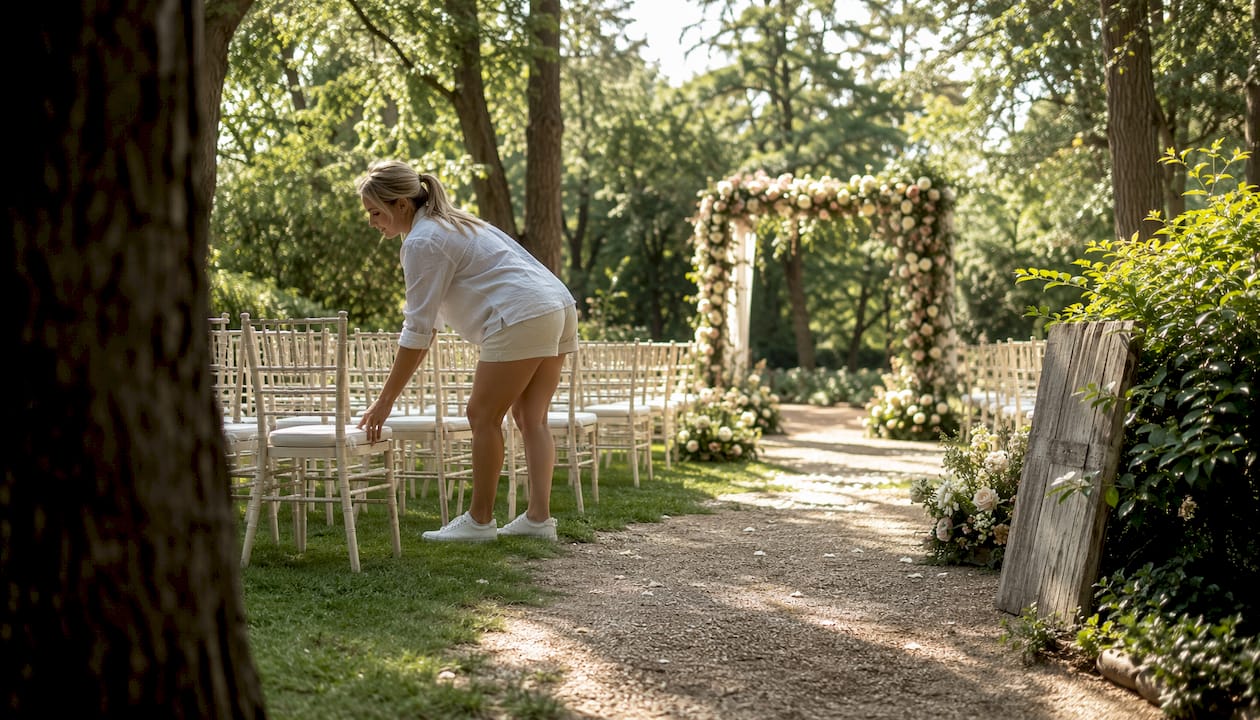
Signage placement matters as much as signage content. “Private event — no entry” signs are most effective when placed at the first decision point a passer-by would reach, not just at the venue entrance. Add parking instruction signs at the road turnoff so guests and vendors do not linger at the boundary.
7. Australian legal, permit and insurance checks you need to make
Check local council zoning, noise rules, event permits, and public liability insurance early. These checks determine whether a site can be genuinely private at all, and skipping them can result in an event being shut down or an insurance claim being rejected.
Private-property weddings must address zoning, noise ordinances, guest limits, and public liability insurance for vendors and the event. Private estates may also require couples to hire mobile kitchens, generators, and portable toilets if the site lacks commercial infrastructure, which adds significantly to the budget and planning timeline.
| Check | What to confirm | When to act |
|---|---|---|
| Council zoning | Is the property zoned for events? What is the maximum guest cap? | 6+ months before the event |
| Noise curfew | What is the permitted finish time? Are amplified music restrictions in place? | 6+ months before the event |
| Event permit | Does the council require a permit for events above a certain guest number? | 4–6 months before the event |
| Public liability insurance | Does the venue carry cover? Do all vendors carry their own certificates? | At booking and again 4 weeks before |
| Restroom ratio | Victoria guidance: one toilet per 50 guests for insurance compliance | At venue inspection stage |
| Road and parking permits | Are temporary road closures or parking zones required? | 3–4 months before the event |
For South Australian events, check with your local council’s planning department and the SA venue regulations that apply to your specific site type. Noise restrictions, liquor licensing conditions, and guest caps vary between metropolitan Adelaide councils and regional councils.
Council checklist items to ask:
- Is the property zoned to permit private events of this scale?
- What are the noise curfew times for this zone?
- Is a development approval or event permit required?
- Are there road or parking restrictions that apply to the access route?
- What are the waste disposal requirements for a catered event?
8. South Australia venue privacy verification checklist
Use this checklist to verify privacy claims with a venue before you sign anything. Written confirmation is the only confirmation that counts.
Venue contact checklist:
- Request a written exclusivity confirmation specifying every area included in your hire
- Ask whether on-site accommodation is available exclusively to your party or remains open to other guests
- Confirm whether housekeeping or venue staff will enter event spaces during your hire period
- Request a site map showing all public access points, neighbouring properties, and shared areas
- Ask whether the venue has a written social media policy for staff and vendors
- Confirm security arrangements: is it included, required under the liquor licence, or an optional extra?
Sample email template to send to a venue manager:
Pro Tip: Ask to see photos from a previous single-event booking, not just marketing images. A venue that regularly hosts exclusive events will have candid shots showing the property without other guests — that is the clearest proof of what you are actually buying.
Adelaideweddingvenues lists exclusive-use venues across Adelaide and South Australia, with venue pages that include exclusivity notes and direct contact details for venue managers. For couples wanting smaller, more intimate settings, the directory also covers micro wedding venues in Adelaide that naturally support privacy without requiring a full estate buyout.
Key takeaways
Securing genuine privacy at your wedding venue comes down to written exclusivity confirmation, signed vendor privacy clauses, and a clear access control plan implemented before the day.
| Point | Details |
|---|---|
| Confirm exclusive use in writing | Specify every area included in the hire; verbal assurances are not enough. |
| Sign vendor privacy clauses | Include no-photography, no-sharing, and guest-list confidentiality clauses in every supplier contract. |
| Gate access with a check-in plan | Use personalised invitations, a staffed entry point, and RSVP controls to keep uninvited guests out. |
| Check council permits and insurance early | Confirm zoning, noise curfews, event permits, and vendor public liability certificates at least four months before the event. |
| Use Adelaideweddingvenues to shortlist | The directory’s search filters and venue pages help couples identify exclusive-use and privacy-supporting venues across Adelaide and South Australia. |
Planning privacy for a South Australian wedding
The couples who feel most relaxed on their wedding day are almost always the ones who sorted the privacy details early. Not because they were anxious, but because they made deliberate choices: they asked the right questions of their venue, they briefed their vendors clearly, and they set guest expectations before the day arrived.
What tends to make the biggest difference in practice is not the grand gesture of booking a private estate, but the smaller, specific steps: getting exclusivity confirmed in writing, placing one clear sign at the venue entrance, and giving the MC a two-sentence announcement to read before the ceremony. Those three things alone prevent the majority of social media leaks and uninvited-guest situations.
South Australia has some genuinely private venue options, from the Adelaide Hills to the Fleurieu Peninsula, and many of them are listed with exclusivity details on Adelaideweddingvenues. If you are still shortlisting, the directory is a practical starting point for filtering by venue type and privacy features before you reach out to managers directly.
Adelaideweddingvenues helps you find private venues faster
Finding a venue that genuinely delivers privacy, not just promises it, is the hardest part of confidential wedding planning. Adelaideweddingvenues gives Adelaide and South Australian couples a searchable directory where venue pages include exclusivity notes, capacity details, and direct contact information for venue managers, so you can ask the right questions before you visit.
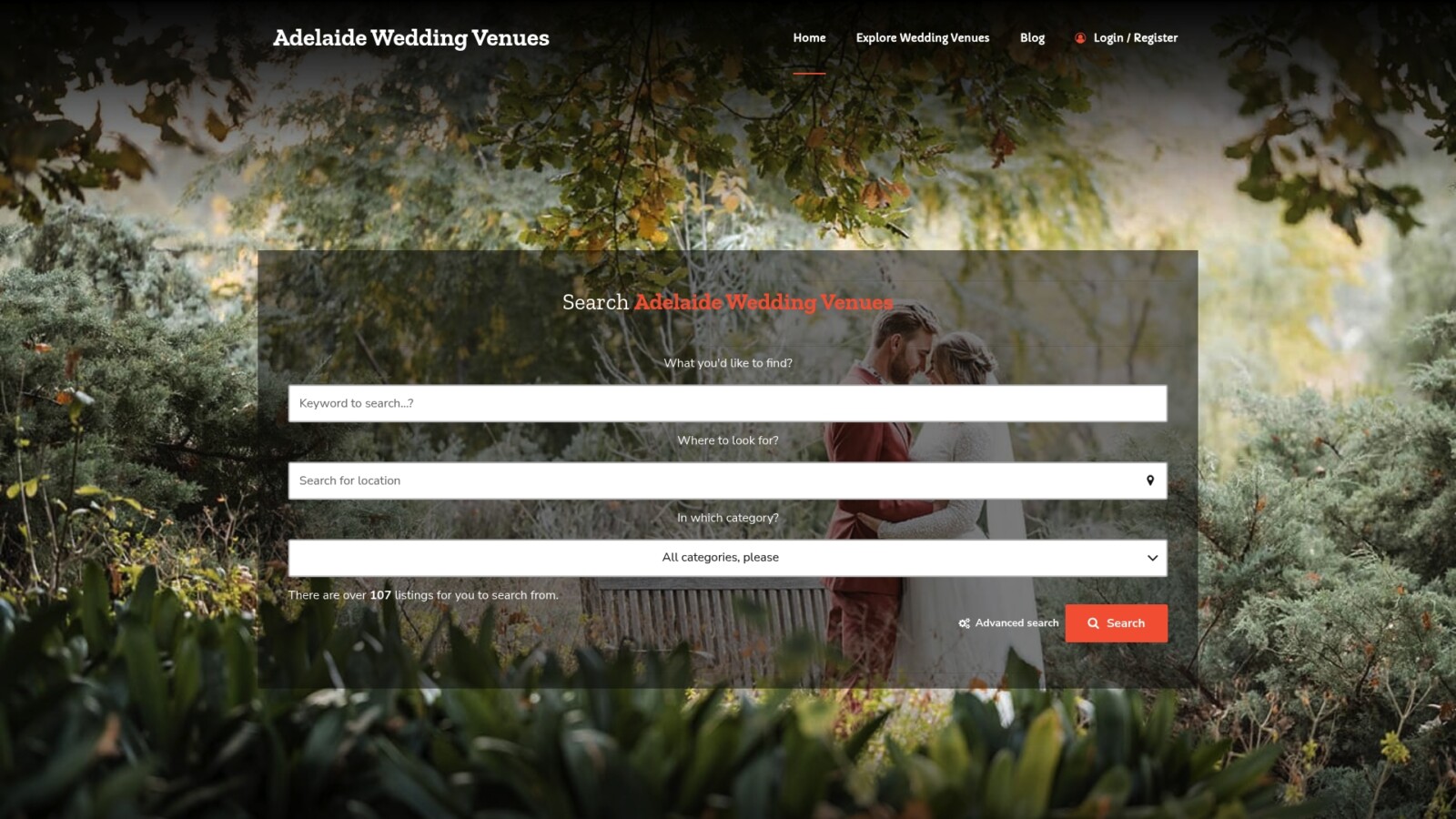
Use the directory’s location and category filters to shortlist exclusive-use or micro-venue options across metropolitan Adelaide, the Adelaide Hills, and regional South Australia. Each listing gives you enough detail to know whether a venue is worth a site visit, saving you the time of chasing venues that cannot meet your privacy requirements. When you are ready to compare your shortlist side by side, the venue selection guide walks you through the practical decision points. Start your search at Adelaideweddingvenues and filter for the venue type that fits your privacy priorities.
Useful sources and next steps
When you are ready to move beyond this checklist, these are the authorities and contacts worth reaching out to directly.
Australian authorities and contacts to check:
- Your local council’s planning department: confirm zoning, event permits, noise curfews, and guest caps for your specific address. In South Australia, councils such as the City of Adelaide, Adelaide Hills Council, and Alexandrina Council each have their own event permit processes.
- Consumer and Business Services South Australia (CBS): for liquor licensing conditions that affect your venue’s security and noise obligations.
- South Australia Police (SAPOL): for event safety guidance on large private gatherings, particularly for events with over 200 guests or late finish times.
- Your venue’s insurance officer: request a current certificate of currency for public liability cover and confirm the policy covers your event type and guest count.
- Your vendors’ insurers: collect current public liability certificates from every supplier before the event.
How to find local council rules:
Search your council’s website for “event permit” or “temporary event application.” Most South Australian councils publish their noise restriction schedules and event permit thresholds online. Request the relevant planning zone map for your venue address so you can confirm permitted use before booking.
Adelaideweddingvenues is a practical starting point for finding venue listings, contacting venue managers directly, and accessing local guides on South Australian venue regulations and compliance requirements.
FAQ
How do you keep a wedding genuinely private?
Confirm full exclusive use of the venue in writing, gate your guest list with personalised invitations and a staffed check-in point, brief all vendors with signed privacy clauses, and declare a no-social-media policy via your MC and entrance signage.
What does “exclusive use” actually mean at a wedding venue?
Exclusive use varies by venue: full exclusive hire means no other guests, events, or resort patrons are on site during your booking, while event-only exclusivity may still allow shared accommodation or common areas. Always confirm the scope in writing.
How do you stop guests posting on social media at a wedding?
Communicate a clear embargo across three channels: a note on your wedding website, a line on the ceremony programme, and a brief MC announcement before the ceremony begins. Offer a private gallery as an alternative so guests still have a way to access and share memories after the official release.
Can someone see if I look at their wedding website?
Most password-protected wedding website platforms do not notify the couple when a specific person views the site, though some platforms log visitor counts. To protect your own guest information, choose a platform with secure privacy settings and avoid posting the venue address or guest details publicly.
What permits does a private property wedding in South Australia need?
Requirements vary by council and event scale, but typically include a council event permit (for events above a certain guest threshold), confirmation of zoning for private events, compliance with noise curfew rules, and public liability insurance for the event and all vendors. Check with your local council’s planning department at least four to six months before the event.
Recommended
- Avoid Wedding Day Disasters with This Comprehensive Venue Checklist – Adelaide Wedding Venues
- Wedding Planning Made Easy: The Only Checklist You’ll Ever Need – Adelaide Wedding Venues
- Say ‘I Do’ to the Perfect Venue: A Modern Bride and Groom’s Checklist – Adelaide Wedding Venues
- Why venue selection matters: blueprint for SA weddings
