
Use this venue selection criteria list to score each shortlisted venue from 1 to 5 across ten core criteria, then rank your options before committing to a deposit. The criteria below are ordered by the impact they typically have on event success, so you can triage quickly when time is short.
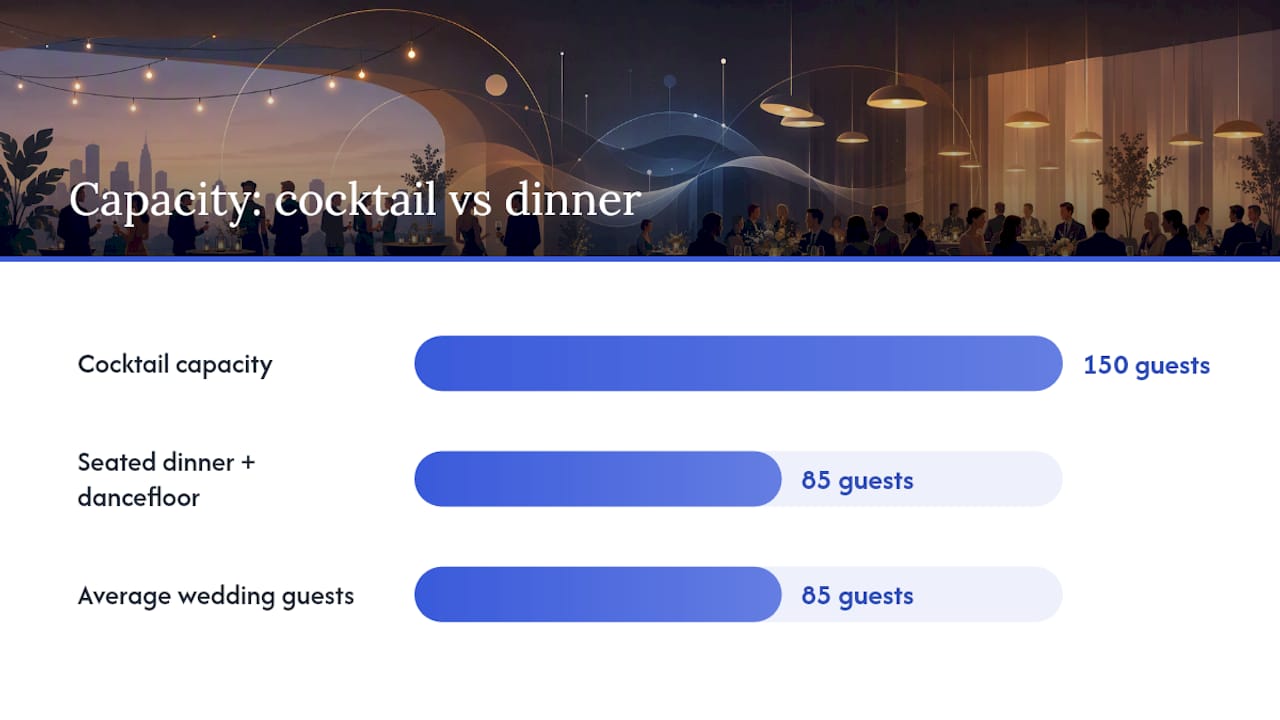
Australian couples typically host weddings with a moderate number of guests, averaging around 85 attendees per wedding. The “maximum capacity” figure a venue quotes is rarely the number you should plan around. Comfortable, usable capacity for a seated dinner with a dancefloor is noticeably lower than the advertised maximum. Keep that in mind as you work through every item below.
Before you tour a single venue, define your non-negotiables: your date flexibility, confirmed guest range, event style, and must-have features. That short list eliminates unsuitable venues before you spend time on inspections.
Quick ranked checklist (score each 1–5):
- Location and access — transport, parking, disability drop-off
- Capacity and layout — usable capacity for your format, not the advertised maximum
- Budget and hidden fees — line-item quote, not a headline rate
- Amenities and catering — in-house vs external, bar licence, dietary options
- Technical and AV — in-house technicians, power, rigging, Wi-Fi bandwidth
- Accessibility and guest comfort — step-free access, toilets, quiet rooms
- Safety and permits — liquor licence, occupancy certificate, fire plan
- Logistics and operations — loading access, storage, day-of staffing
- Site visit realism — walk every guest route, test acoustics, observe staff
- Contract terms and cancellation — deposit schedule, force majeure, inclusions
Check local council and state licencing requirements for your specific event type, as permit conditions vary across South Australia and other jurisdictions.
Does the location actually work for your guests?
Location shapes arrival experience before a single guest sets foot inside the room. A beautiful venue that is hard to reach, poorly lit at night, or surrounded by competing noise sources will undermine the event regardless of what happens inside.
Practical checks to run:
- Confirm proximity to public transport stops and whether rideshare pick-up zones are clearly marked.
- Count on-site parking spaces against your expected car-to-guest ratio, and ask the venue about overflow options for peak dates.
- Check disability access from the drop-off point all the way to the main room, not just at the entrance.
- Research nearby accommodation for interstate or regional guests, and ask whether the venue holds preferred rates with local hotels.
- Ask the venue for their typical event calendar on your proposed date — exclusivity and how venues manage concurrent events materially affect guest experience and privacy.
Neighbourhood context matters too. A riverside precinct may be stunning but noisy on a Saturday night. A suburban function centre may offer quiet and easy parking but limited nearby accommodation. Use Google Maps Street View to check the surrounding streets at night, and search for any major events or construction projects scheduled near your date.
Pro Tip: During your site visit, walk the full guest journey end-to-end: from the taxi drop-off point through registration, into the main room, and then to the toilets. Time each leg. Bottlenecks and poor signage show up immediately when you walk the route rather than just viewing the room.
How do you convert guest numbers into usable room space?
Advertised maximum capacity is almost always the fire-safety occupancy figure, not the comfortable capacity for your specific event format. A room that holds 150 for a cocktail function may seat only 85 for a banquet dinner with a dancefloor, matching the current average Australian wedding guest number.
| Event format | Approximate space per guest | 85-guest room footprint needed |
|---|---|---|
| Seated dinner + dancefloor | — | matches the average guest number |
For a typical Australian wedding guest number, a seated dinner with dancing typically requires a room significantly larger than the venue’s maximum capacity figure. Always ask the venue for a sample floorplan drawn to your guest number, not their maximum.
Additional layout checks:
- Confirm available table shapes (round, rectangular, or mixed) and whether the venue owns them or hires them in.
- Assess sight lines from every seat to the ceremony or presentation focal point.
- Ask about breakout or quiet spaces for smaller group activities, children, or guests who need a rest.
- Confirm final numbers, appropriate room setups and reliable AV are all covered in your venue agreement before you sign.
For help sizing your guest list before you start comparing rooms, note that Australian couples now average around 85 guests per wedding. The wedding guest list planning guide on Adelaideweddingvenues walks through the process step by step.
What does the venue actually cost once you add everything up?
Ask for a full line-item quote. That single action avoids most budget surprises, because venues commonly exclude furniture, AV and service items from the headline price.
Common pricing models and when each suits you:
- Per-head packages work well when your guest count is firm and the package genuinely includes what you need.
- Minimum spend models favour larger groups who will spend freely on food and beverage; they can be costly if your group drinks conservatively.
- Flat hire fees give budget certainty but often come with long lists of extras.
Hidden costs to confirm in writing:
- Furniture hire (tables, chairs, linens) if not included
- AV surcharges for technician time or equipment upgrades
- Security staff requirements for late finishes
- Cleaning fees and rubbish removal
- Overtime rates per 30-minute block beyond your hire window
- Corkage or cake-cutting fees
- Supplier load-in and load-out charges outside standard access windows
Pro Tip: Model your real guest range (your minimum and maximum likely attendance) against both per-head and minimum-spend pricing before making a decision. A venue that looks affordable at 90 guests may become expensive if numbers drop to 70.
For a deeper look at venue budget considerations specific to Australian couples, Adelaideweddingvenues has a dedicated guide covering local pricing patterns.
What catering and technical services does the venue actually provide?
Confirm who supplies catering and what the venue’s rules are on external vendors before you fall in love with a menu or a preferred caterer. Some venues lock you into their in-house kitchen; others welcome external suppliers but charge a corkage or kitchen-access fee.
Catering and beverage checklist:
- In-house catering or approved external caterers only?
- Dietary accommodation capability (vegan, halal, allergy-specific menus)
- Bar licence model: package, consumption, or cash bar
- Corkage rules and per-bottle rates if you supply your own wine
- Menu tasting availability and minimum notice period
Technical services checklist:
| Item | Check | Standard or optional? |
|---|---|---|
| In-house AV technician | Available on the day? | Often optional, extra cost |
| Microphone and speaker system | Capacity for your room size? | Usually standard |
| Projector / screen | Size and throw distance adequate? | Varies |
| Staging | Owned by venue or hired in? | Often hired in |
| Power access | Number and location of GPOs | Standard |
| Rigging points | Load rating confirmed? | Venue-specific |
| Dedicated Wi-Fi | Bandwidth for streaming or polling? | Rarely standard |
For live streaming or large digital presentations, confirm bandwidth or plan a dedicated connection rather than relying on the venue’s shared guest Wi-Fi. Ask for a tech spec sheet and the name of the day-of AV contact before you book.
Is the venue genuinely accessible for every guest?
Accessible design and guest comfort protect the dignity of every attendee and reduce friction on the day. Accessibility is not a box-ticking exercise — it is a practical measure of whether the venue can actually host your event well.
Walk-through checks:
- Step-free access from drop-off to the main room, including between levels via lifts or ramps
- Accessible toilets on the same floor as the event space
- Baby-change facilities and a quiet or breastfeeding room
- Clear signage throughout, and a PA system audible enough for guests with hearing needs
- Bathroom count relative to your guest number (a common rule of thumb is one toilet per 25 guests for events over two hours)
Family and comfort considerations:
- Proximity of nearby accommodation for guests who cannot drive home
- Child-friendly options or a separate quiet space for families with young children
- Seating options for elderly guests in standing-cocktail formats
Pro Tip: Ask the venue coordinator for a recent example of how they accommodated a guest with a mobility need or hearing impairment. A venue that can answer this question with a specific story is operationally ready; one that gives a vague answer may not be.
The Queensland Government’s Accessible Events Guide provides a practical framework for accessibility planning that applies across Australian events.
Which safety and compliance checks should you do before paying a deposit?
Confirm safety and permit status before you pay a deposit. A venue that cannot produce current documentation is a genuine risk to your event.
Compliance checklist:
- Current liquor licence covering your event type and finish time
- Occupancy certificate confirming the legal crowd limit for your format
- Fire evacuation plan, clearly posted and recently reviewed
- Public liability insurance, with limits that cover externally contracted suppliers
- Noise restrictions and curfew times specific to the venue’s local council area
- Generator or backup power access for outdoor or heritage venues
- First-aid provision and security staffing requirements for late-night events
Permit conditions vary across South Australian councils and between states. Always ask the venue to confirm which licences and certificates apply to your specific event type, date, and finish time — and request copies, not just verbal assurances. A venue that hesitates to share documentation is a warning sign worth taking seriously.
The National Training Register’s venue selection unit outlines the professional standard for assessing, choosing, and contracting venues, including compliance verification steps used by trained event professionals.
How do you assess the venue’s operational readiness on the day?
The venue’s operational readiness matters as much as the physical space. A stunning room managed by an understaffed or disorganised team will create avoidable problems on the day.
Operational checklist:
- Loading-dock size and confirmed access times for suppliers
- Dedicated supplier loading windows separate from guest arrival
- On-site storage space for equipment and supplies before and after the event
- Staffing levels on the day and a named day-of operations contact
- Whether your booking is managed by the sales team or handed to operations after signing
Observe staff behaviour when you ask unscripted questions during your site visit. How they respond to unexpected queries tells you more about operational culture than any brochure.
Ask to walk the delivery route during your inspection. Check lift capacities and measure any tight corridors or stair access for large items. A florist’s arch or a band’s equipment trailer will not fit through a standard doorway.
Pro Tip: Request the name and direct contact details of the operations manager who will be on duty for your date — not the sales coordinator who showed you around. That person is your actual partner on the day.
Treat your site visit as a live rehearsal
A site visit is a rehearsal. Walk every route your guests will use and observe the venue in normal operation where possible, because the gap between a polished sales tour and a real event is where problems hide.
Step-by-step site visit checklist:
- Walk the guest arrival route from drop-off to registration to the main room, and time each leg.
- Test acoustics by speaking at normal volume from the lectern or ceremony position and listening from the back of the room.
- Walk the loading and supplier route separately from the guest route, and check for conflicts.
- Confirm wet-weather contingency options and inspect them physically, not just on a floor plan.
- Count toilets and check their location relative to the main room.
- Ask to see the venue’s most recent event floorplan at a similar guest count.
- Check signage throughout: would a first-time visitor find their way without staff assistance?
- Ask an unscripted operational question — for example, “What happens if our caterer arrives 30 minutes late?” — and observe the response.
- Confirm how the venue separates simultaneous events if they run more than one booking per day.
- For outdoor or semi-outdoor venues, check wet-weather contingency planning and the structural integrity of any marquee or covered area.
Using the 85-guest average as a working example: during your visit, count the toilets and divide by 85. If the ratio falls below one per 25 guests, raise it with the venue coordinator before you proceed.
Planners should assess loading access, delegate flow and ambient noise at the time of day the event will run, not during a quiet weekday morning tour.
Pro Tip: Where possible, time your visit to coincide with another event at the venue. Seeing the team under load — managing multiple bookings, handling a supplier delay, directing guests — is the most reliable indicator of how your event will be managed.
A printable site-visit checklist is available on Adelaideweddingvenues to take with you on inspections.
What contract terms must you confirm before signing?
Never rely on verbal promises. Every commercial term you relied on in negotiations must appear in the contract wording before you pay a deposit.
Contract checklist:
- Exact hire hours and supplier access times (load-in and load-out)
- Deposit amount, payment schedule, and refund conditions
- Detailed inclusions list, specifying what is and is not covered
- Overtime rates per increment beyond your hire window
- Cancellation and rescheduling terms, including notice periods and penalty tiers
- Force majeure clause and whether dates can be transferred if the event cannot proceed
- Who bears responsibility for supplier damage to the venue or venue property
- Whether you need to hold separate event insurance, and what the venue’s public liability covers
Ask for a sample final invoice or pro-forma at your confirmed guest number before signing. This exercise often surfaces charges that were not mentioned during the sales tour.
Pro Tip: If weather or travel disruption is a credible risk for your date or guest profile, negotiate a clause that allows a reasonable extension window or date transfer at no penalty. Many venues will agree to this in writing if asked before the contract is signed.
How do you verify a venue’s track record before you commit?
Ask for recent references and images from events of a similar size and format to yours. A venue that has hosted 200-person gala dinners may have no experience managing an 80-person seated wedding with a live band, and that gap will show.
Verification checklist:
- Request contact details for two or three recent clients with events comparable to yours.
- Ask to see a recent event floorplan and photo set at a similar guest count.
- Check online reviews for consistent themes across multiple reviewers, not just isolated five-star ratings.
- Ask specifically how the venue handled a recent problem — a supplier no-show, a weather event, or a technical failure.
- Request a copy of the venue’s standard day-of running sheet to assess how structured their operations are.
Consistent delivery across multiple events of your type is a stronger indicator of quality than a single exceptional review. Look for patterns: if three different reviewers mention the same coordinator by name as the reason their event went well, that person’s availability on your date becomes a relevant question.
How do you score and compare shortlisted venues objectively?
Convert subjective impressions into a numeric score by weighting criteria to your event’s priorities. This approach removes the bias that comes from falling in love with a room before you have checked the contract.
Scoring matrix example:
| Criterion | Weight | Heritage hall score (1–5) | Riverside function centre score (1–5) |
|---|---|---|---|
| Location and access | 10% | 3 | 5 |
| Capacity for format | 25% | 4 | 4 |
| Budget and inclusions | 20% | 3 | 4 |
| Operations and staffing | 20% | 4 | 3 |
| Amenities and catering | — | 3 | 4 |
| Accessibility | 10% | 2 | 4 |
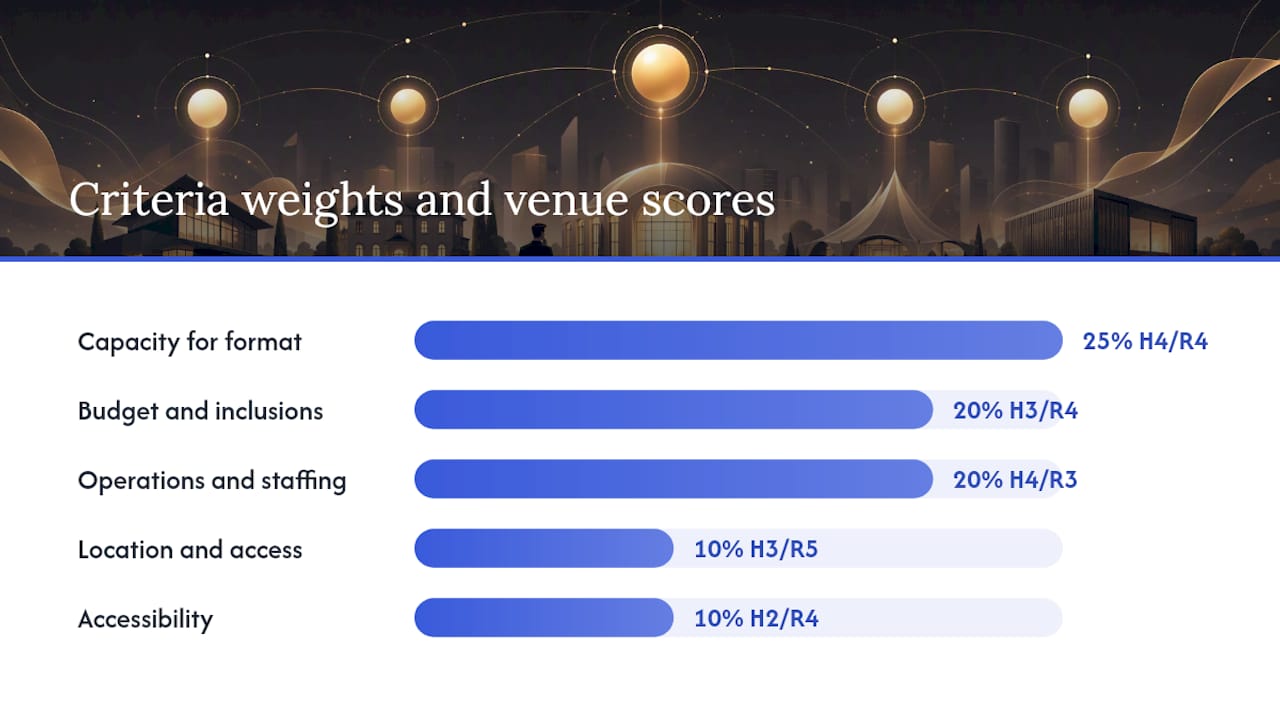
In this example, the riverside function centre scores higher despite the heritage hall’s aesthetic appeal, because accessibility and budget inclusions carry more weight for this event type.
Steps to apply the matrix:
- Assign weights before you visit any venue, based on your event’s actual priorities.
- Score each criterion during or immediately after the site visit, while observations are fresh.
- Normalise scores across venues so you are comparing the same criteria at the same weighting.
- If two venues score within 0.2 of each other, revisit both or request references before deciding.
For the average Australian wedding of around 85 guests, capacity and budget typically warrant the highest combined weighting, since room sizing and pricing are the two factors most likely to cause day-of problems.
Key takeaways
The most reliable way to choose a venue is to score it against weighted criteria during a site visit treated as a live rehearsal, then confirm every commercial term in writing before paying a deposit.
| Point | Details |
|---|---|
| Score venues with a matrix | Assign weights before visiting so aesthetic appeal does not override practical criteria. |
| Usable capacity is lower than advertised | For 85 guests with a dancefloor, plan for a room matching the average Australian couple’s guest number, not the venue’s maximum figure. |
| Request a line-item quote | Headline rates routinely exclude furniture, AV, and service charges that add up quickly. |
| Verify licences before depositing | Ask for copies of the liquor licence, occupancy certificate, and public liability insurance. |
| Use Adelaideweddingvenues to shortlist | Filter South Australian venues by capacity, price, and amenities to build a scored shortlist faster. |
What experienced planners actually prioritise
The checklist matters, but the relationship with the venue’s operations team often determines whether the day runs smoothly. Sales coordinators present the venue at its best; operations staff deliver it under pressure.
The most revealing moment in any site inspection is the unscripted question. Ask something the sales coordinator cannot have prepared for — “What happens if our florist needs an extra hour for setup?” or “Can you show me where the band will load in?” — and watch what happens. A confident, specific answer signals an operations team that has solved these problems before. Hesitation or a redirect to “we can check on that” signals the opposite.
There is also a tendency among couples to weight aesthetics too heavily in the early shortlisting phase. A venue that photographs beautifully but has one accessible toilet for 85 guests, or a loading dock that requires suppliers to carry equipment through the guest entrance, will create friction that no amount of floral styling can fix. The role of photography in venue choice is real, but it should inform shortlisting, not override operational criteria.
Adelaideweddingvenues maintains local expertise across Adelaide and South Australia, and the directory’s guides are written with input from photographers and industry professionals who know which venues consistently deliver on their promises.
Adelaideweddingvenues makes shortlisting faster and more focused
Couples who have worked through this checklist know exactly what they need from a venue. The next step is finding the venues that actually match those criteria without spending weeks on enquiry emails.
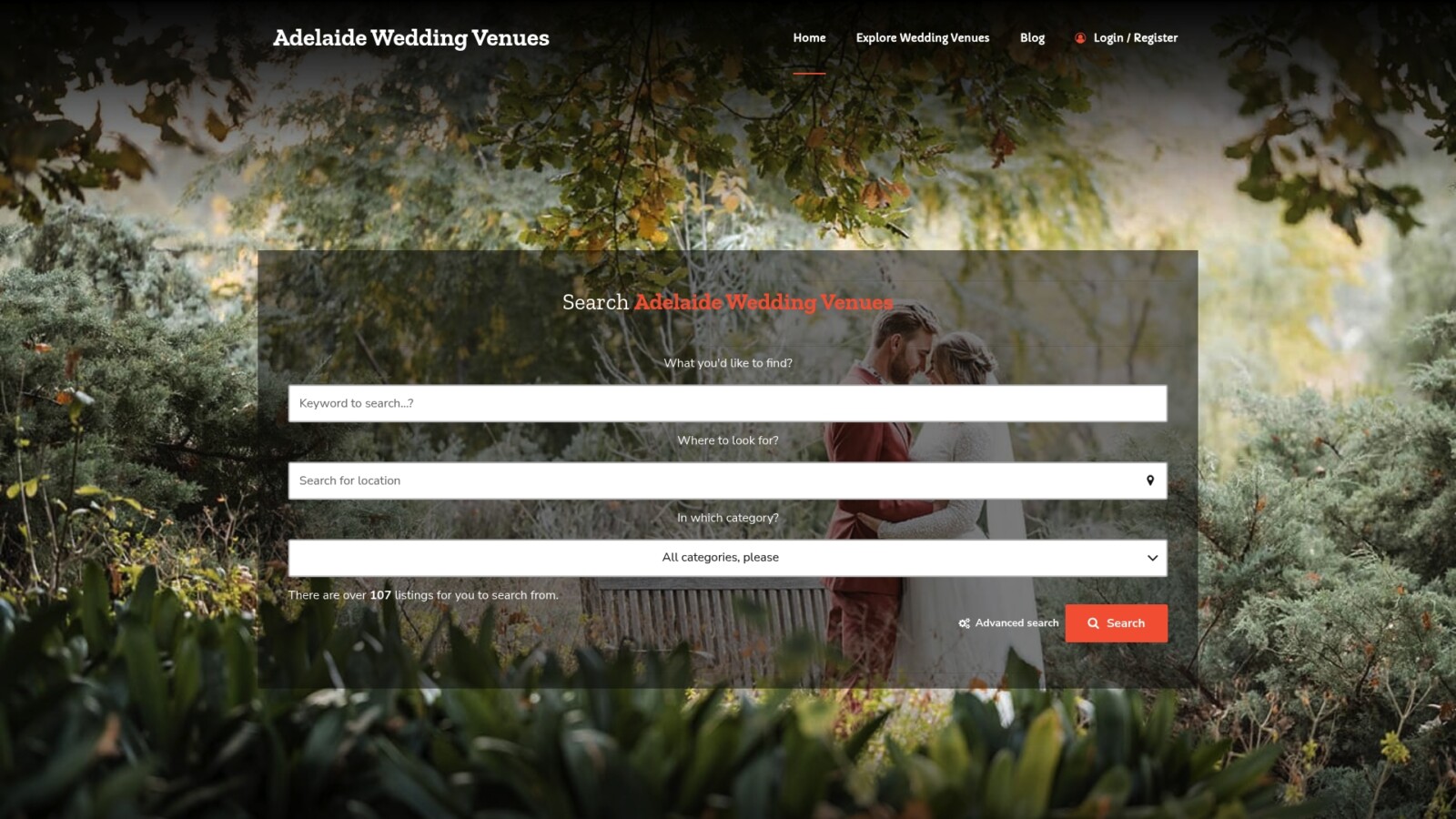
Adelaideweddingvenues is a searchable directory of Adelaide and South Australia wedding venues, with filters for capacity, price range, amenities, and venue type. Rather than browsing generic listing sites, you can filter directly to venues that meet your confirmed guest count and must-have features, then review photos and contact venues through the platform. The venue directory guide explains how to use the search tools to build a scored shortlist efficiently. For couples who want to see venue types side by side before committing to inspections, the ideal wedding venue guide covers everything from rustic barns to beachside spaces across South Australia. Start your search at Adelaideweddingvenues, apply your non-negotiables as filters, and contact your shortlisted venues directly through the directory.
Useful Australian sources and further reading
- Adelaideweddingvenues directory — searchable listings of Adelaide and South Australia wedding venues with filters for capacity, price, and amenities; the primary starting point for shortlisting.
- Venue site-visit checklist — a printable checklist from Adelaideweddingvenues covering every operational check to run during an inspection.
- Venue budget considerations guide — local budgeting insights for Australian couples, including pricing model comparisons.
- Queensland Government Accessible Events Guide — practical accessibility framework applicable across Australian events, including venue access and communication templates.
- National Training Register: Select event venues and sites (SITXEVT502) — the professional competency standard for venue selection used by trained Australian event planners.
FAQ
What factors need to be considered when selecting a venue?
The core factors are location and transport access, usable capacity for your event format, total cost including hidden fees, catering and licensing arrangements, technical and AV capability, accessibility, safety compliance, and operational staffing. Score each factor against your event’s priorities using a weighted matrix before committing.
What is the venue selection process?
Start by defining your non-negotiables (date, guest count, event style, must-have features), then shortlist venues that meet those criteria, conduct site visits treated as live rehearsals, compare venues using a scoring matrix, and confirm all commercial terms in writing before paying a deposit.
What are the factors influencing the choice of venue?
Guest experience, budget certainty, operational reliability, and compliance are the four factors that most consistently influence venue choice. Accessibility, catering flexibility, and the quality of the operations team also carry significant weight, particularly for events with diverse guest profiles.
How do I use a scoring matrix to compare venues?
Assign a percentage weight to each criterion before visiting any venue (for example, capacity 25%, budget 20%, operations 20%), then score each venue from 1 to 5 on every criterion during or immediately after your site visit. Multiply each score by its weight and sum the results to produce a comparable total for each venue.
How does Adelaideweddingvenues help with venue selection?
Adelaideweddingvenues provides a searchable directory of Adelaide and South Australia venues with filters for capacity, price, and amenities, allowing couples to build a scored shortlist without weeks of individual enquiries. The site also publishes practical guides, including a venue site-visit checklist and budget planning resources.
