
Wedding day photography is the art of capturing every meaningful moment of your special day with intention, flow, and style that genuinely represents you both. Getting it right takes more than a talented photographer. It takes preparation, clear communication, and a realistic plan that works with your venue, your timeline, and the natural light South Australia offers throughout the year.
Here are the core elements every couple should understand before their wedding day:
- Photography styles range from documentary and photojournalistic to traditional posed, lifestyle, and fine art editorial. Knowing which resonates with you shapes every decision that follows.
- A well-crafted timeline does more than keep the day on track. It creates space for relaxed, unhurried moments that produce the best images.
- Asking the right questions before booking a photographer prevents surprises around deliverables, turnaround times, and day-of logistics.
- Photo delivery typically includes sneak peeks within a week and full galleries within several weeks to a few months, though turnaround times vary significantly between photographers.
- Venue familiarity matters. A photographer who knows your Adelaide or South Australian venue understands where the best light falls and which spots photograph beautifully.
- Coordination with all vendors including your venue team, celebrant, and videographer keeps the day flowing and protects key moments.
Adelaideweddingvenues is maintained by wedding industry professionals with direct input from photographers who know local venues inside out, making it a practical starting point for couples aligning their venue choice with their photography vision.
1. Fifteen questions to ask your wedding photographer before booking
Asking the right questions before signing a contract saves considerable stress later. Couples should ask at least 15 questions before hiring a photographer, covering everything from availability to backup plans.
- Are you available on our date? Confirm this before any other conversation.
- Can we see a full wedding gallery? Highlights on Instagram show a photographer’s best work. A full wedding gallery reveals consistency across an entire day, including less flattering lighting conditions and quieter moments.
- What does your package include, and are there additional fees? Travel costs, printing, albums, and extra hours can add up quickly.
- Who will actually photograph our wedding? Some studios send associates. Confirm the person whose portfolio you reviewed will be there.
- What is your photography style and approach to posing? This shapes the entire feel of your images.
- What backup equipment and emergency plans do you have? Camera failures happen. A professional carries redundancy.
- How long until we receive our photos? Sneak peeks typically arrive within a week; full galleries generally take several weeks to a few months.
- What are your cancellation and refund policies? Read these carefully before signing.
- Are you familiar with our venue? A photographer who has shot at your venue already knows the best angles and light.
- How do you coordinate with videographers and other vendors?
- What are our image rights? Understand what you can print, share, and post.
- How do you dress on the day? Most photographers dress conservatively or smart casual to blend in, though formal events may need special arrangements.
- How many photographers and cameras will be present?
- Are there travel fees for our venue location?
- Can you share examples or references from similar local weddings?
For a broader checklist when evaluating venues alongside photographers, Adelaideweddingvenues has a dedicated guide on hiring a wedding photographer that covers the full process.
2. How to plan a wedding day timeline for great photography
A wedding day timeline does far more than keep events on schedule. Its real purpose is to create an intentional, relaxed flow so couples can actually be present rather than feeling directed from one spot to the next.
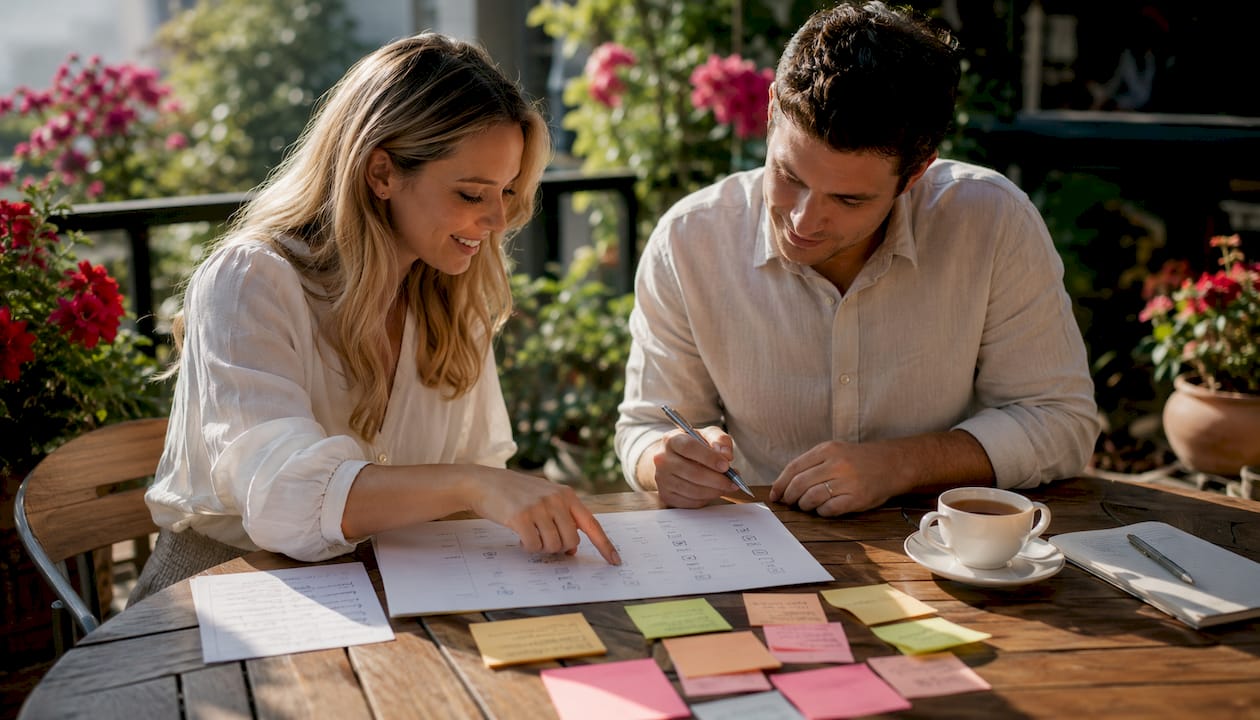
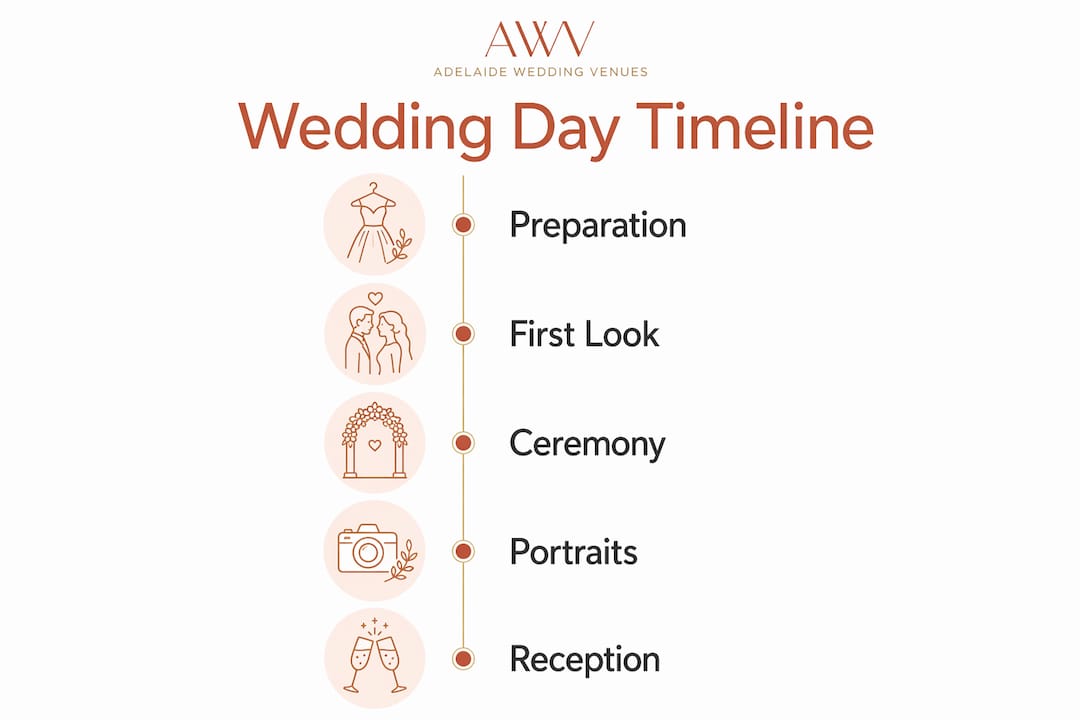
Australian ceremonies typically run between 3:00 PM and 4:30 PM to make the most of afternoon light, with adjustments for season. In South Australia, summer weddings benefit from later ceremonies to avoid harsh midday sun, while winter ceremonies can start earlier without sacrificing quality light.
Realistic time blocks to plan around:
- Preparation: 1–1.5 hours per party, or up to 1.5 hours if getting ready together
- Pre-ceremony buffer: 15 minutes for guest arrivals and setup detail shots
- Ceremony: approximately 30–45 minutes, though this varies widely
- Family and group portraits: 15–25 minutes immediately after the ceremony
- Wedding party photos: 20 minutes
- Couple portraits: 45 minutes to 1.5 hours
Common timeline mistakes include underestimating preparation time, not building buffers between locations, and locking in a rigid schedule before confirming venue logistics. Share the finalised timeline with every vendor, including your venue coordinator, photographer, celebrant, and catering team.
Pro Tip: Check the sunset time for your wedding date and location by searching your date, suburb, and “sunset” online. Build a 20-minute window into your reception schedule for golden hour portraits. That soft, warm light is worth protecting.
3. How photographers help couples look natural and relaxed in photos
Camera anxiety is genuinely common, even among people who are otherwise confident. Skilled photographers actively direct and engage couples during portrait sessions rather than waiting for natural moments to appear on their own.
What this looks like in practice:
- Active guidance: Photographers give clear, low-pressure direction, such as walking slowly together or whispering something to each other, which produces movement and genuine expression.
- Building rapport early: Many photographers suggest a pre-wedding shoot or engagement session so couples feel comfortable in front of the camera before the big day.
- Timing over posing: The best candid shots often come in the seconds after a posed shot, when couples relax and laugh at themselves.
- Creating a calm environment: A photographer who moves calmly and speaks quietly keeps the energy settled, which shows in the images.
- Reviewing full galleries: Before booking, ask to see complete galleries rather than curated highlights. Consistent quality across an entire day is the real indicator of skill.
Couples can help themselves by communicating preferences clearly, telling the photographer if they dislike certain poses, and trusting the process during portrait time.
4. Choosing the wedding photography style that fits your vision
Wedding photography broadly falls into four recognised styles, and most photographers blend elements of more than one.
- Documentary/photojournalistic: Minimal direction, maximum authenticity. The photographer observes and captures the day as it unfolds. Ideal for couples who want honest, story-driven images.
- Traditional/classic: Structured, posed portraits with consistent lighting. Suits formal weddings and families who prioritise clear, timeless group shots.
- Lifestyle/natural: A middle ground. The photographer guides couples into relaxed scenarios rather than rigid poses, producing images that feel candid but are gently directed.
- Fine art/editorial: Highly stylised, with deliberate composition, colour grading, and lighting. Often suits heritage venues, garden settings, and couples with a strong aesthetic vision.
Photography styles vary widely, and couples should consider which approach resonates with their wedding’s mood before shortlisting photographers. Venue style plays a role here too. A rustic barn suits a documentary or lifestyle approach; a grand heritage ballroom often photographs beautifully in a fine art or traditional style. Adelaideweddingvenues helps couples align venue and photography vision by filtering venues by type, style, and setting.
When meeting potential photographers, pay attention to communication style and personality. You will spend most of your wedding day with this person, so genuine rapport matters as much as portfolio quality.
5. What equipment and technical considerations matter on the day
Professional wedding photographers typically carry two camera bodies as a minimum, ensuring coverage if one fails. Fast prime lenses (such as 35mm, 50mm, and 85mm) handle low-light reception spaces without intrusive flash, while zoom lenses give flexibility during ceremonies where movement is restricted.
Lighting equipment matters in venues with challenging conditions. Ballrooms, barns, and heritage buildings with limited natural light often require off-camera flash or continuous lighting to maintain image quality. Ask your photographer how they handle your specific venue’s lighting before the day.
Memory card redundancy is standard practice. Cameras that write simultaneously to two cards protect against data loss. Confirm your photographer uses this approach, particularly for ceremony coverage where moments cannot be recreated.
Battery management, lens changes, and equipment transitions all take time. A photographer working alone needs slightly more buffer in the timeline than a two-photographer team. Factor this into your schedule when planning portrait sessions across multiple locations.
6. Common challenges on the wedding day and how photographers handle them
Weather is the most unpredictable variable in outdoor South Australian weddings. Experienced photographers scout indoor backup locations at the venue in advance and carry portable lighting to adapt quickly. A brief conversation with your venue coordinator about wet-weather contingencies before the day removes significant stress.
Running late is almost universal. Photographers build this expectation into their approach by prioritising the non-negotiable moments (ceremony, first kiss, family portraits) and adjusting the schedule around delays rather than rushing couples through shots. Sharing a detailed wedding runsheet with all vendors reduces the likelihood of cascade delays.
Difficult group dynamics during family portraits can slow things considerably. Nominating a family member as a coordinator for group shots, with a printed list of required combinations, keeps this segment moving efficiently.
Competing vendor schedules, particularly when a separate videographer is present, require clear pre-day communication. Photographers and videographers who have not worked together before benefit from a brief introduction and a shared understanding of the timeline. Adelaideweddingvenues recommends partnering photographers with venues early in the planning process to prevent these coordination gaps.
Key takeaways
Great wedding day photography depends on preparation, clear communication, and a timeline that protects the moments that matter most.
| Point | Details |
|---|---|
| Ask before you book | Cover at least 15 questions including packages, backup plans, delivery timelines, and venue familiarity. |
| Build a realistic timeline | Allow 1–1.5 hours for preparation, 45 minutes for couple portraits, and buffer time between every location. |
| See full galleries | Request complete wedding galleries, not just highlights, to assess consistent quality across an entire day. |
| Match style to venue | Choose a photography style that suits your venue’s character, whether documentary, lifestyle, traditional, or fine art. |
| Coordinate early | Share the finalised timeline with every vendor to protect key moments including golden hour portraits. |
FAQ
How far in advance should couples book a wedding photographer?
Most photographers in Adelaide and South Australia book out well in advance for peak season dates. Securing your photographer shortly after confirming your venue date is strongly recommended.
How long does it take to receive wedding photos?
Sneak peeks typically arrive within a week of the wedding. Full galleries generally take several weeks to a few months, depending on the photographer’s workload and editing process.
What is the difference between documentary and lifestyle wedding photography?
Documentary photography captures the day with minimal direction, while lifestyle photography involves gentle guidance from the photographer to create natural-looking but loosely directed moments.
Should couples provide a shot list to their photographer?
A shot list covering must-have family combinations and key details helps photographers stay on track. Keep it focused on group portraits and specific details rather than scripting every candid moment.
How does venue choice affect wedding photography?
Venue architecture, natural light, outdoor spaces, and surrounding scenery all directly shape the quality and style of wedding images. Adelaideweddingvenues lets couples search venues by style and setting to find locations that photograph beautifully.
