
TL;DR:
- A structured venue booking workflow helps couples confidently move from inquiry to reservation by reducing confusion and errors.
- Clear requirements, digital tools, and written contracts are essential to prevent misunderstandings and double-bookings.
Booking a wedding venue should be one of the most exciting steps in planning your big day. Instead, many couples and event planners find themselves buried in unanswered emails, unclear availability, and contracts that raise more questions than they answer. A structured venue booking workflow cuts through that confusion. It gives every step a clear purpose, reduces the risk of double-bookings, and helps you move from first enquiry to confirmed reservation with confidence. This guide walks you through exactly how to build and follow that process.
Key takeaways
| Point | Details |
|---|---|
| Start with clear requirements | Define your guest count, date flexibility, and venue type before making any enquiries. |
| Follow a status-based workflow | Move bookings through Inquiry, Tentative, and Confirmed stages to avoid gaps and errors. |
| Prioritise contract clarity | Ensure every verbal promise appears in writing before you sign anything. |
| Use deposit milestones | A structured payment schedule tied to your event date protects both parties financially. |
| Leverage digital tools | Electronic signatures and booking calendars speed up confirmation and reduce back-and-forth. |
Setting up your venue booking workflow
Before you contact a single venue, the groundwork you lay will determine how smooth the entire event booking process becomes. Couples who skip this stage often end up repeating themselves in every enquiry, losing track of which venues are available, and struggling to compare options fairly.
Start by defining your non-negotiables:
- Guest count. Know your approximate number before enquiring. Venues have minimum and maximum capacities, and wasting time on spaces that cannot fit your group is a common early mistake.
- Date flexibility. If you can move your date by a few weeks either side, you open up significantly more options and often better pricing.
- Venue type. Garden, winery, heritage building, beachside. Narrowing your preferred style helps you search more efficiently.
- Budget range. Having a realistic figure in mind prevents you from falling in love with a venue that is well outside your reach. The Adelaide Wedding Venues budgeting checklist for South Australia is a practical place to start.
Once you have those details pinned down, create a simple tracking document. List each venue, their contact details, estimated capacity, and any notes from initial conversations. This becomes your reference point throughout the entire process.
Understanding how bookings progress through stages is also worth knowing from the outset. Booking records typically move through statuses like Inquiry, Tentative, Confirmed, or Rejected after availability checks are completed. Knowing this language helps you understand where you stand at every point in the process.
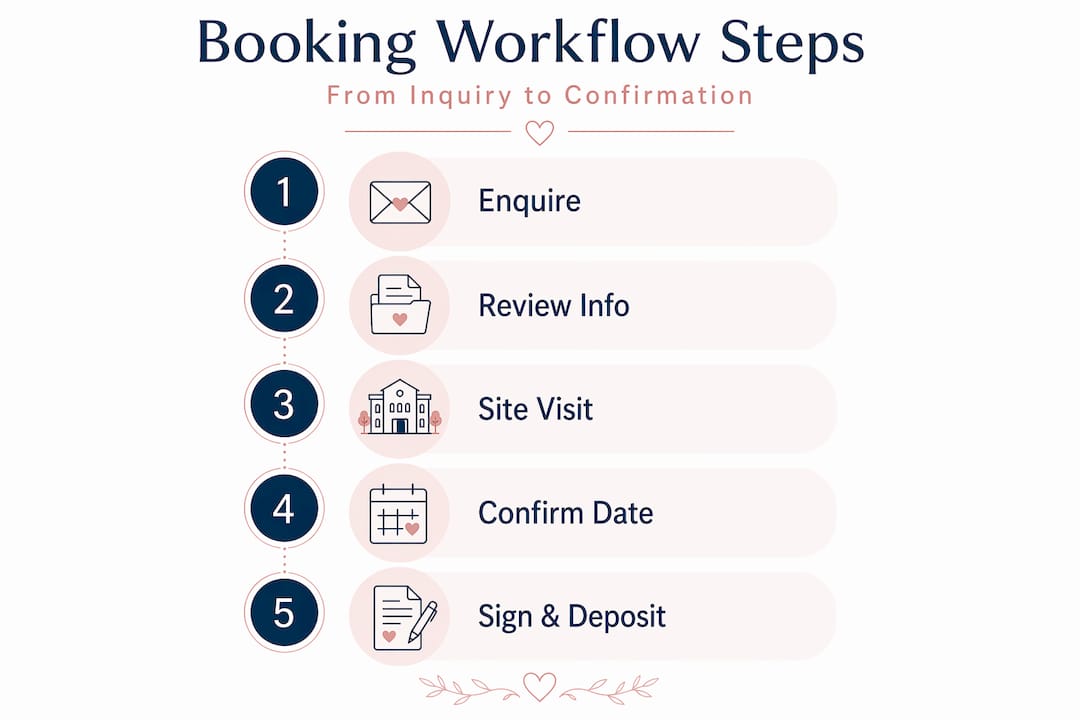
Visibility into availability is another critical piece. Secure booking calendars reduce repeated back-and-forth between couples and venue staff, showing public availability without exposing sensitive details. If a venue you are considering does not offer this, factor in extra time for communication delays.
Pro Tip: Ask each venue early whether they use an online availability calendar. If they do, you can check dates before sending an enquiry, saving everyone time and keeping your shortlist realistic from the start.
Steps for venue booking: from enquiry to confirmed reservation
This is where the venue booking workflow becomes concrete. Each step has a specific purpose, and skipping any one of them is where most booking problems originate.
-
Send a detailed initial enquiry. Include your event date, guest count, type of event, and any specific requirements. Vague enquiries get vague responses. The more precise you are, the faster a venue can give you a useful answer.
-
Receive and record the venue’s response. Note the date received, what was offered, and any conditions attached. If you are managing multiple enquiries at once, your tracking document is essential here.
-
Perform an availability and conflict check. Before proceeding further, confirm the date is genuinely free. Conflict prevention logic checks whether any existing booking overlaps with your proposed start and end times. Ask the venue directly whether the date has any existing holds.
-
Request a tentative hold. Most venues will place a short hold on your preferred date while you review their proposal. This is the Tentative stage. It is not a confirmed booking. Understand how long the hold lasts and what happens when it expires.
-
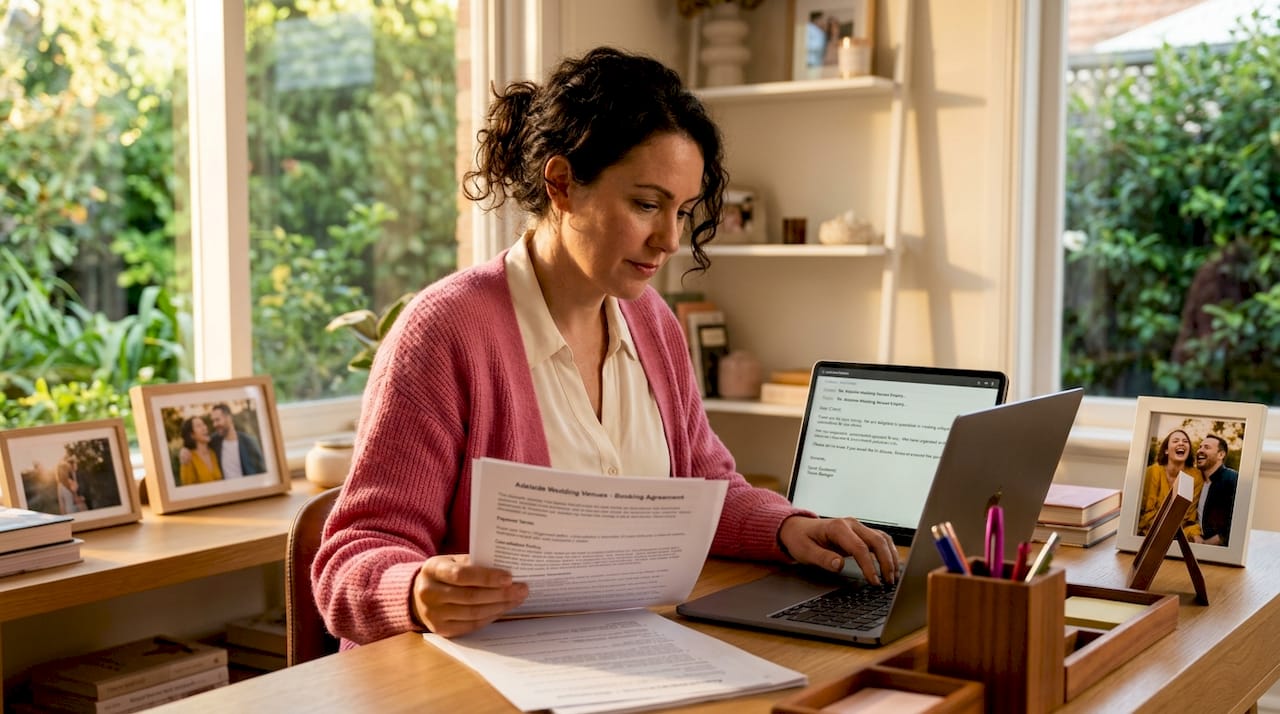
Review the proposal and contract carefully. This step deserves time. Request draft contracts at least seven days before you are expected to sign, so you have space to read everything thoroughly and raise questions. Cross-check the written terms against anything discussed verbally.
-
Sign the contract and pay the deposit. Once everything aligns, signing moves the booking to Confirmed status. Standard wedding venue deposits are commonly around 25% of the total cost, due within two weeks of date confirmation. Know your payment schedule before signing.
-
Schedule milestone payments. Your remaining balance is typically due closer to the event. Automated milestone payment links can be set up by venues, with a 30% deposit followed by the final balance due around seven days before the event date. Ask your venue how they handle this and get it documented.
-
Receive written confirmation and update your records. Once the deposit clears and the contract is signed, you should receive formal written confirmation. Update your tracking document to reflect Confirmed status.
| Stage | Status | Action required |
|---|---|---|
| Initial contact | Inquiry | Send detailed enquiry, await response |
| Date hold requested | Tentative | Review proposal, check terms |
| Contract reviewed and signed | Confirmed | Pay deposit, receive written confirmation |
| Event completed | Completed | Final payment, post-event feedback |
Pro Tip: Ask your venue whether they accept electronic signatures and online payment for deposits. Venues that use e-signature tools like DocuSign can have contracts signed and returned significantly faster. Targeting completion within seven to fourteen days keeps the process moving and your preferred date secured.
Avoiding common pitfalls in venue contracts
Even couples who follow a clear process can run into trouble if they underestimate the importance of contract clarity. This is the area where misunderstandings most often lead to real disputes.
The most critical issue is knowing exactly when your booking becomes legally binding. Contract formation guidance highlights that terms of trade must clearly specify what constitutes acceptance, whether that is signing, paying a deposit, or receiving written confirmation. If the contract is silent on this point, ask the venue directly and get the answer in writing.
Several other pitfalls are worth watching for:
- Verbal promises that do not make it into writing. If a venue coordinator tells you the garden will be freshly landscaped by your event date, or that a particular caterer has been pre-approved, that needs to be in the contract. Written contracts must mirror verbal agreements to avoid disputes later. Signing should be delayed until all details align.
- Unclear cancellation and refund conditions. What happens to your deposit if you cancel? What if the venue cancels? Both scenarios should be addressed with specific timelines and amounts.
- Inconsistent documents. If you have received a quote, a booking form, and a separate terms document, they need to be consistent. Failure to maintain a single authoritative document hierarchy between these increases dispute risk considerably.
- No double-booking protection clause. While conflict prevention is primarily a venue responsibility, your contract should state clearly what remedies are available if a scheduling error occurs.
Before signing any venue contract, use a simple checklist. Confirm the event date and times are correct, the deposit amount and due date are specified, cancellation terms are explicit, all verbal agreements are documented, and a contact name is listed for event-day coordination. This takes ten minutes and can prevent months of stress. For a thorough overview of what to look for, the guide to venue contracts on Adelaideweddingvenues covers the most common clauses couples overlook.
Using technology to manage your booking process
Digital tools have made the event booking process considerably more manageable for both couples and venue managers. The question is knowing which tools matter and how to use them effectively.
A publicly accessible, secure availability calendar is one of the most underrated features a venue can offer. When couples can check dates online without needing to email and wait, the entire enquiry cycle shortens. Embedding a booking calendar reduces staff workload and customer frustration simultaneously, showing availability without revealing private booking details.
Beyond calendars, here is how technology supports each stage of the venue booking workflow:
- Automated status alerts. A well-designed venue reservation system sends notifications when a booking moves from Inquiry to Tentative, or when a contract has been signed. Status-tracked enquiry systems with transitions from New through to Confirmed and Completed prevent enquiries from falling through the cracks.
- Contract generation and e-signatures. Rather than emailing PDFs back and forth, venues can generate contracts digitally and send them for signature in one step. Sending quotes within 48 hours and targeting electronic signature completion within seven to fourteen days has been shown to accelerate booking close times significantly.
- Payment reminders tied to milestones. Rather than chasing invoices manually, automated systems send reminders aligned to your event date. This benefits couples too, giving you a clear payment schedule to budget around rather than an unexpected request.
- Centralised document management. All quotes, contracts, and communications stored in one place removes the risk of working from outdated versions.
Pro Tip: When you first enquire with a venue, ask what booking management software they use. Venues with dedicated venue management solutions tend to have clearer processes, faster response times, and fewer administrative errors throughout your planning period.
My honest take on what makes venue booking work
In my experience working with Adelaide couples and venue operators, the single biggest source of booking stress is not the paperwork. It is the gap between what was said in conversation and what appears in the contract.
I have seen couples arrive at a venue expecting a setup that was mentioned in a site visit, only to find it was never written down and the venue has no record of the promise. That situation is entirely avoidable. Every commitment made verbally needs to be in the contract before a signature goes on anything.
The other thing I have noticed is that milestone payment scheduling genuinely changes how couples feel about their finances throughout the planning period. When you know exactly what is due and when, the budget feels manageable. When payments arrive as surprises, the stress compounds.
What works best is a combination of a clear digital workflow on the venue’s side and an organised tracking system on yours. You do not need sophisticated software as a couple. A shared document with each venue’s status, key dates, and contact details is enough. Pair that with a venue that uses proper booking management tools, and the whole process becomes far less overwhelming.
Technology is genuinely helpful here, but it does not replace clear communication. The best outcomes I have seen come from couples who ask direct questions early, get answers in writing, and choose venues that treat the booking process as a professional service, not an afterthought.
— Steven
How Adelaideweddingvenues can help you find and book your venue
Planning a wedding in Adelaide or South Australia means you have a remarkable range of venues to consider, from heritage estates to coastal gardens. The challenge is finding the right one without spending weeks on research that leads nowhere.
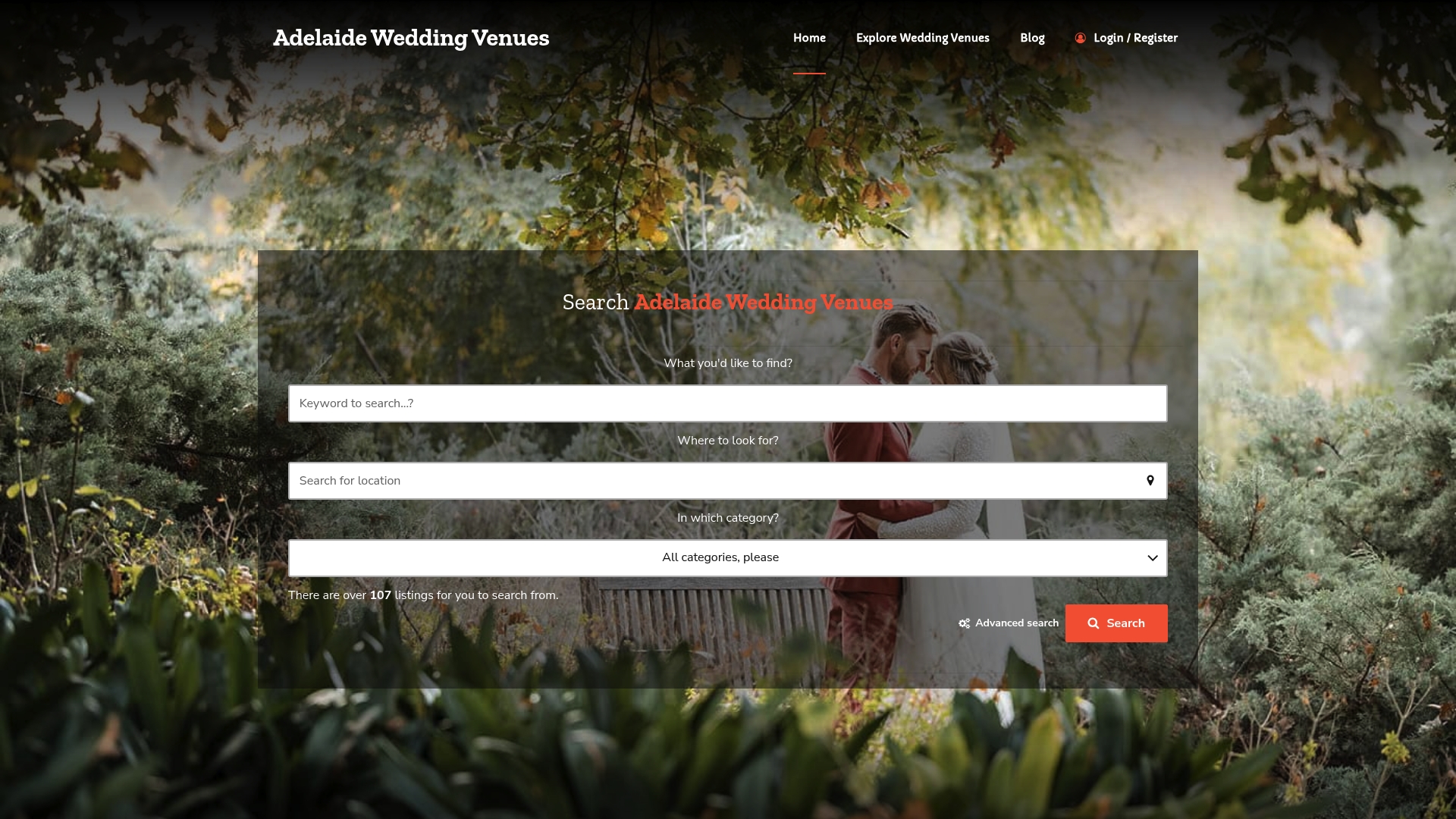
Adelaideweddingvenues is an online directory built specifically for this purpose. You can search by location, style, capacity, and budget to reach a curated list of venues matched to your needs. Each listing includes the details you need to assess fit before making any enquiries, which means fewer wasted conversations and a faster path to your shortlist. Browse All Adelaide Wedding Venues to compare options as you build your shortlist.
For couples starting the booking process, the ideal wedding venue guide on Adelaideweddingvenues walks through how to match venue style to your vision and budget. You will also find resources covering unexpected venue expenses and pre-booking questions to ask, so you arrive at every venue conversation prepared. Whether you are just beginning your search or ready to confirm, Adelaideweddingvenues is designed to reduce the friction at every stage of the process.
FAQ
What is a venue booking workflow?
A venue booking workflow is the structured sequence of steps that moves a booking from initial enquiry through to confirmed reservation. It typically includes inquiry recording, availability checking, tentative holds, contract signing, and deposit collection.
How do I avoid double-bookings when reserving a venue?
Ask the venue whether they use a conflict prevention system that checks for time overlaps before confirming dates. Conflict checks verify that no existing booking overlaps with your proposed start and end times before a tentative hold is placed.
When does a venue booking become legally binding?
This depends on the contract terms. Contract formation clarity requires that the terms specify whether acceptance occurs at signing, deposit payment, or written confirmation. Always check this before proceeding.
How much deposit should I expect to pay for a wedding venue?
Standard deposits are commonly around 25% of the total venue cost, typically due within two weeks of confirming your date. The remaining balance is usually collected closer to the event date.
How long should I allow to review a venue contract?
Request the draft contract at least seven days before you are expected to sign. This gives you time to check that all verbal agreements are documented and to seek advice if any terms are unclear.
